Freya Yang
+86 18318948097
+852 62667476
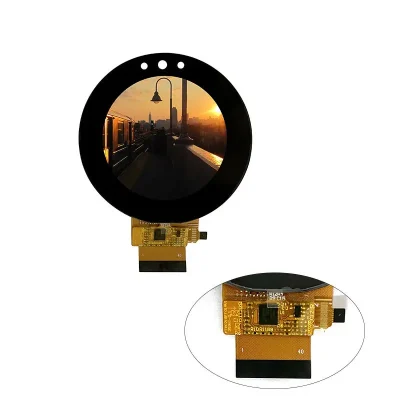
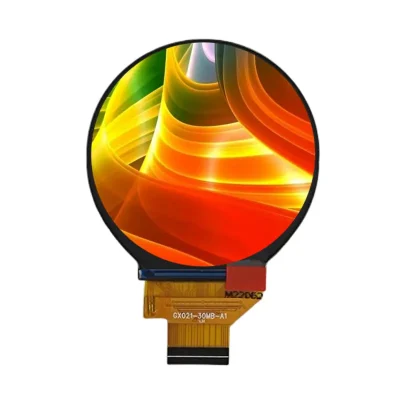
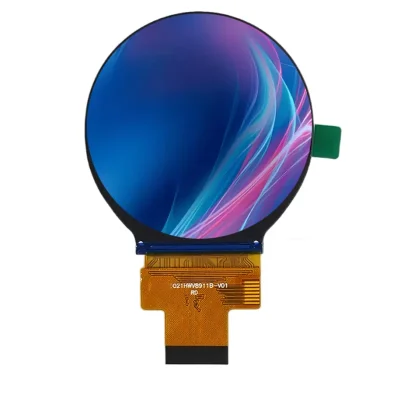
2.1 Inch Compact Circular TFT Touch Display Module for Handhelds
Model P/N
Size
Resolution
Brightness
Viewing Angle
Connector Type
Operating Temp
Overall(mm)
huisoar
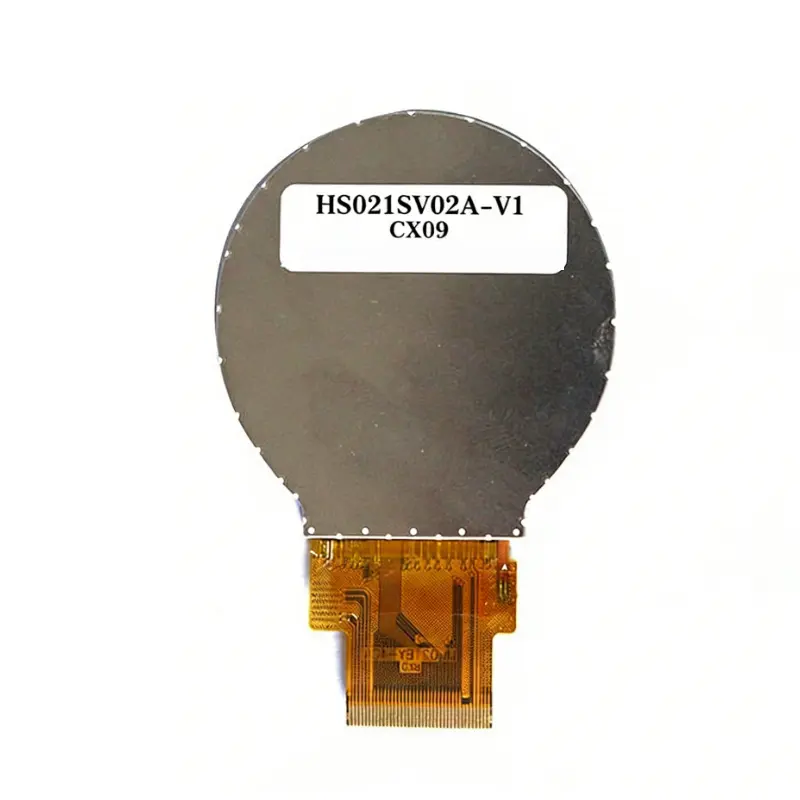
HS021SV02A-V1
Brand
Panel Size (inch)
Model P/N
Resolution
Brightness (nits)
Viewing Angle
Contrast Ratio
Response Time
Overall (mm)
Active Area (mm)
Refresh Rate
Display Colors
Panel Type
Connector Type
Surface Treatment
Operating Temp
Touchscreen Type
Storage Temp
Work Mode
Pixel Format
Input Voltage (V)
Control Type
Operating Environment
Designed For
2.1 Inch Compact Circular TFT Touch Display Module for Handhelds
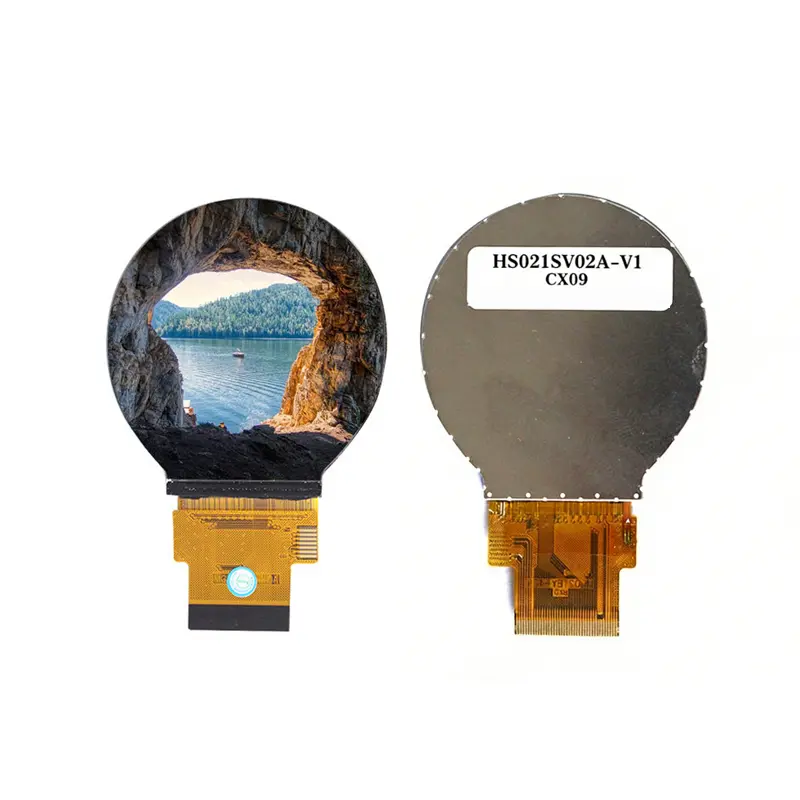
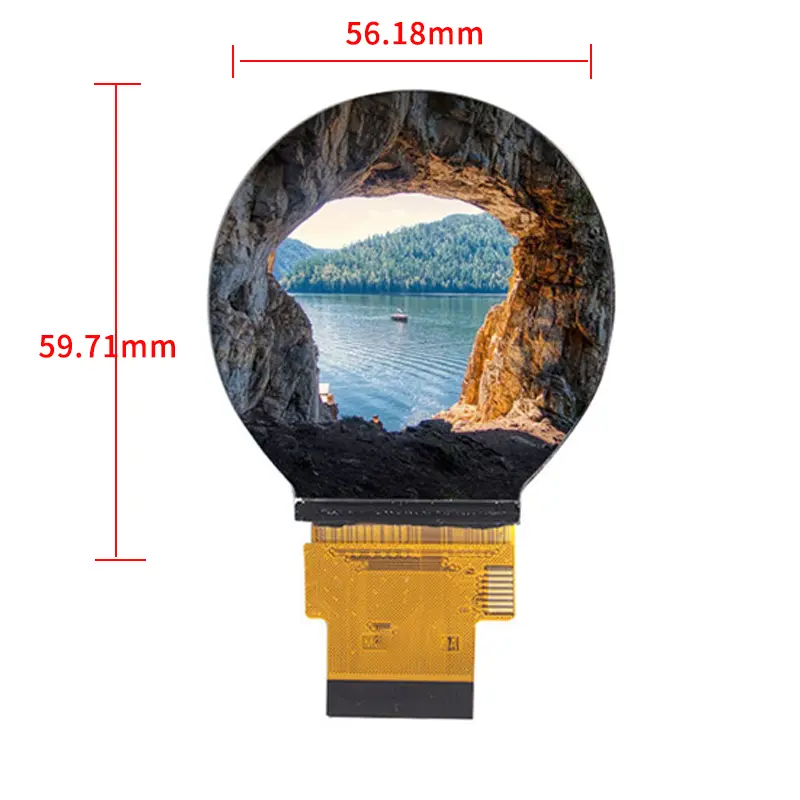
A 2.1-inch 480×480 IPS touch module for circular interfaces, using 3-wire SPI control and 18-bit RGB pixel data in a compact 56.18 × 59.71 × 2.20 mm envelope.
Product Summary
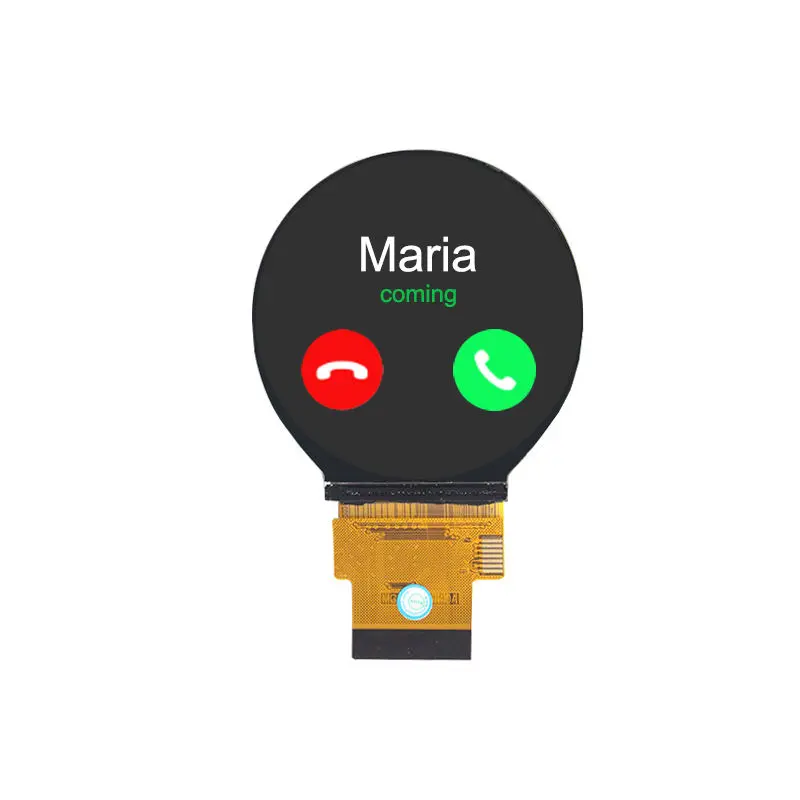
The Compact Circular TFT Touch Display Module combines a 480×480 round image area with capacitive touch for smart handheld controls, compact equipment interfaces, and smart-home dials. The normally black, transmissive TFT has an all-view designation, 320 cd/m² typical luminance, 16.7 million colors, and a 1000:1 maximum contrast ratio at the peak viewing angle.
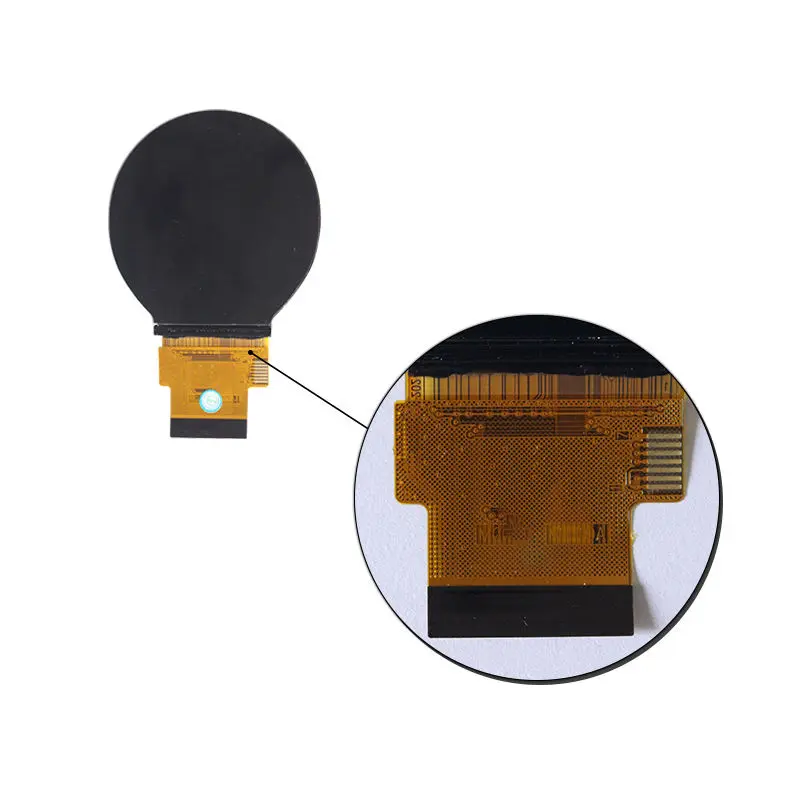
The LCD path uses a 40-pin RGB18+SPI connection and a 2.8 V module supply. A separate touch-pin block is shown, but the touch controller, protocol, supply rail, and firmware requirements must be confirmed for the ordered revision.
Matching size, resolution, driver name, or pin count does not establish compatibility.
Key Specifications at a Glance
| Parameter | Confirmed value |
|---|---|
| Display size | 2.1 inches |
| Resolution | 480 × 480 pixels |
| Active area | 53.28 × 53.28 mm |
| Module outline | 56.18 × 59.71 × 2.20 mm |
| Panel mode | IPS/all-view designation, normally black, transmissive |
| Luminance | 320 cd/m² typical |
| Contrast ratio | 1000:1 maximum at peak viewing angle |
| Display colors | 16.7M colors |
| Pixel pitch | 0.111 × 0.111 mm |
| Pixel density | 324 PPI |
| Display interface | 3-wire SPI + 18-bit RGB |
| LCD connection | 40-pin FPC |
| Module supply | 2.8 V |
| Touch | Capacitive touch panel |
| Driver IC | ST7701S |
| Response time | 30 ms typical |
| Backlight | LED; minimum 10,000-hour reference at 25°C and ILED = 15 mA |
| Operating temperature | −20°C to +70°C |
| Storage temperature | −30°C to +80°C |
Circular 480×480 UI Planning
Use a Round Safe Area
The 53.28 × 53.28 mm active area is square at the pixel level but presented through a circular display shape. Keep critical text, icons, and touch targets away from corner regions outside the visible circle.
Prepare assets at the native 480×480 raster. Confirm rotation, scan direction, pixel order, and touch-coordinate alignment before software release.
Check Pixel Density and Readability
The 0.111 × 0.111 mm pixel pitch produces 324 PPI. Evaluate small text and icons at the intended viewing distance and through the final cover stack.
Compact Circular TFT Touch Display Module Integration
Separate SPI Control and RGB Pixel Transport
The interface combines 3-wire SPI with an 18-bit parallel RGB bus. In this architecture, SPI normally configures the display, while the RGB bus carries the continuous pixel stream. The host therefore needs the required RGB lines, pixel clock, synchronization or data-enable signals, and approved command package.
A conventional low-pin-count SPI display port is not automatically sufficient.
Qualify the 40-Pin LCD Connection
Confirm the full 40-pin assignment, FPC contact side, insertion direction, connector pitch, signal voltage, RGB mapping, reset behavior, and backlight pins. Another 40-pin ST7701S display can use a different definition.
Keep the Touch Path Separate
Capacitive touch is included, but the touch controller and interface are not identified in the confirmed product data. Review the touch pin assignment, supply, reset, interrupt, coordinate mapping, firmware, and supported touch-point count before PCB release.
Do not assume touch data travels over the LCD SPI path.
320 cd/m² Optical Performance
Validate Brightness Behind the Final Cover
For the Compact Circular TFT Touch Display Module, 320 cd/m² typical luminance is intended for indoor and controlled-light equipment. It does not establish outdoor or direct-sun readability.
The touch stack, cover lens, printing, adhesive, air gaps, fingerprints, and ambient reflections can reduce front-of-screen contrast. Evaluate the complete optical stack under actual lighting.
Preserve the Contrast Grade
The 1000:1 value is a maximum at the peak viewing angle, not a guaranteed typical value across every angle and temperature. Use the approved optical test conditions when setting acceptance criteria.
Power, Backlight, and Driver Documentation
Treat Panel and Backlight Requirements Separately
The module supply is 2.8 V. The LED backlight has separate electrical requirements, and a four-LED circuit is shown. Confirm backlight voltage, current, dimming method, startup behavior, and protection before selecting a driver.
Apply the Lifetime Condition Correctly
The minimum 10,000-hour reference applies at 25°C with ILED = 15 mA. Different current, temperature, duty cycle, or decay criteria can change the achieved lifetime.
Use the Exact ST7701S Package
ST7701S identifies the driver family but does not prove generic initialization-code compatibility. Obtain the exact command sequence, RGB timing, gamma settings, reset timing, and power sequence.
The driver RAM field is marked as no RAM, so host frame-buffer responsibility must be reviewed.
Mechanical Fit and Touch Stack
Distinguish Active Area from Module Outline
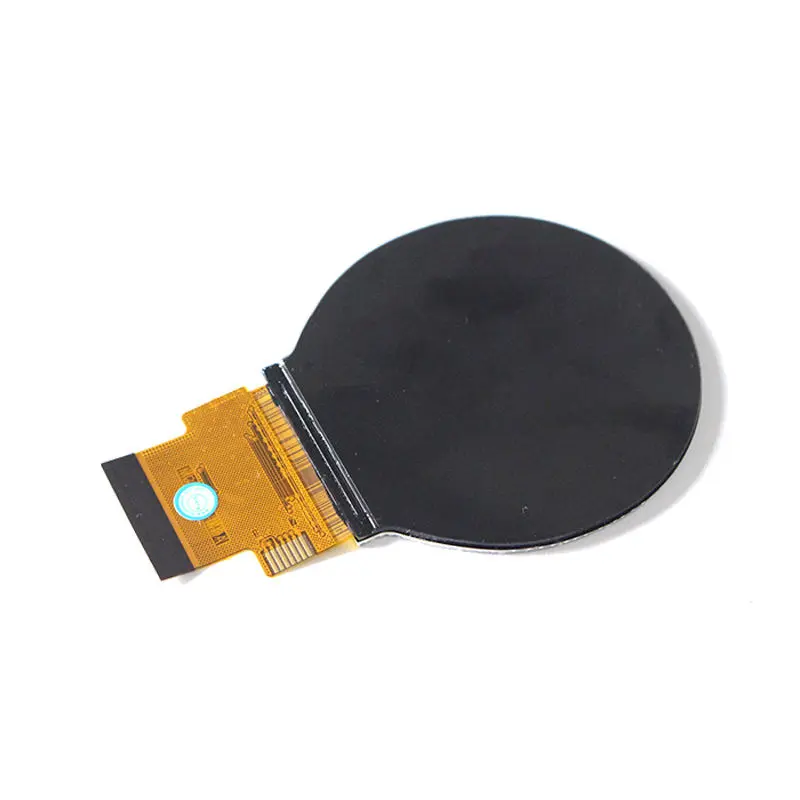
The 53.28 × 53.28 mm active area controls the visible circular opening. The 56.18 × 59.71 × 2.20 mm outline controls the cavity, support surfaces, and FPC clearance.
Allow space for the bottom tail, bend radius, connector access, tolerances, and any custom cover-lens border.
Avoid Stress on the Circular Panel
Support the module without twisting the glass or applying point pressure near the circular edge. Check touch performance after the bezel, adhesive, and cover-lens stack are assembled.
Environmental and Application Boundaries
The operating range is −20°C to +70°C, and the storage range is −30°C to +80°C. These values do not establish waterproofing, condensation resistance, ultraviolet durability, vibration grade, medical certification, or automotive qualification.
The Compact Circular TFT Touch Display Module can be evaluated for smart handheld controllers, compact industrial interfaces, smart-home dials, portable instruments, circular status panels, and prototype VR/AR controls. Each application requires host, touch, optical, mechanical, thermal, and environmental qualification.
Customization and Procurement
FPC geometry, pin definition, touch tuning, cover-lens shape, printed border, surface treatment, optical bonding, luminance, backlight, branding, and packaging may be reviewed by project.
Custom configurations are generally reviewed from 500 pieces, subject to tooling requirements, material availability, and the requested specification. Sample and standard-module quantities are confirmed separately.
Procurement Checklist
Confirm before sample approval:
- Assigned model HS021SV02A-V1 and supplier model MTF021SV02A-V1.
- Resolution, rotation, circular safe area, and touch-coordinate mapping.
- Complete 40-pin LCD assignment and separate touch-pin definition.
- 3-wire SPI command path and 18-bit RGB timing, mapping, clock, sync, or DE mode.
- ST7701S initialization, gamma, reset, and power-sequence package.
- 2.8 V module supply and touch-supply requirements.
- LED-backlight voltage, current, circuit, enable, dimming, and thermal limits.
- 53.28 × 53.28 mm active area and 56.18 × 59.71 × 2.20 mm fit.
- 320 cd/m² target behind the final touch and cover stack.
- The conditional 10,000-hour backlight test grade.
- Operating environment, sample criteria, quantity, and annual demand.
FAQ
About 2.1 Inch Compact Circular TFT Touch Display Module
What must be checked before connecting the 40-pin display to a host?
Can the 3-wire SPI path carry the complete 480×480 image?
What information is required to qualify the capacitive-touch function?
Is 320 cd/m² sufficient for a handheld device?
Which dimensions should control enclosure release?
Freya Yang
+86 18318948097