Freya Yang
+86 18318948097
+852 62667476
1.54 Inch Smartwatch Square MIPI Display for Touch Wearables
Model P/N
Size
Resolution
Brightness
Viewing Angle
Connector Type
Operating Temp
Overall(mm)
huisoar
HS16C15012Q-CTP
Brand
Panel Size (inch)
Model P/N
Resolution
Brightness (nits)
Viewing Angle
Contrast Ratio
Response Time
Overall (mm)
Active Area (mm)
Refresh Rate
Display Colors
Panel Type
Connector Type
Operating Temp
Touchscreen Type
Storage Temp
Work Mode
Pixel Format
Operating Environment
Motherboard Type
Designed For
1.54 Inch Smartwatch Square MIPI Display for Touch Wearables
This compact square IPS module combines 320 × 320 graphics, 500 cd/m² typical luminance and projected touch for wrist-mounted interfaces.
Product Summary
The Smartwatch Square MIPI Display provides a compact 1.54-inch visual and touch interface for smartwatches, fitness wearables and miniature embedded products. Its square 320 × 320 pixel matrix supports watch faces, health data, status icons, notifications and compact navigation layouts without requiring a circular content mask.
The display uses IPS technology with 85/85/85/85° typical viewing angles in the left, right, up and down directions. A 500 cd/m² typical luminance supports clear use in normal indoor and moderately bright operating environments, while the projected capacitive touch layer enables direct interaction with the wearable user interface.
Key Specifications
| Specification | Value |
|---|---|
| Display size | 1.54 inch |
| Resolution | 320 × 320 pixels |
| Aspect ratio | 1:1 |
| Panel technology | a-Si IPS TFT-LCD |
| Display mode | Transmissive |
| Active area | 27.74 × 27.74 mm |
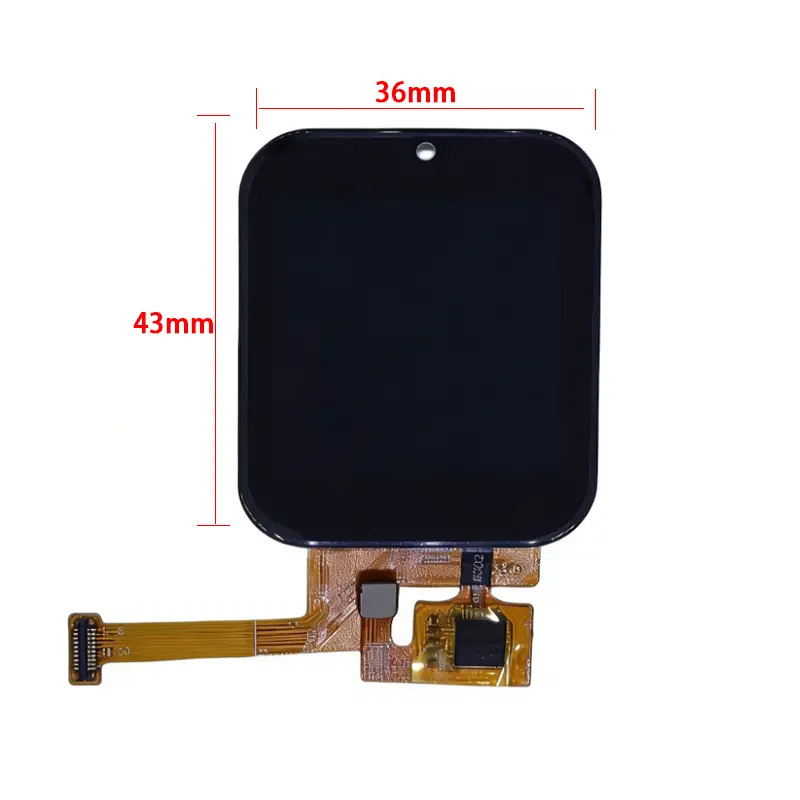
| Module outline | 36 × 43 × 3 mm |
| Typical luminance | 500 cd/m² |
| Typical contrast | 250:1 |
| Viewing angle | 85/85/85/85° typical, L/R/U/D |
| Display colors | 262K |
| Display interface | MIPI |
| Connector | 20 pins |
| Touch technology | Projected capacitive touch |
| Driver identifier | ST7796S |
| Backlight | WLED with 3 white LEDs |
| Operating temperature | −10°C to +60°C |
| Storage temperature | −20°C to +70°C |
Square 320 × 320 Wearable Interface
Balanced Square UI Layout
The 320 × 320 matrix provides a symmetrical canvas for square watch faces and compact status screens. Designers can arrange time, date, heart-rate indicators, activity values, battery state and notification icons without the corner clipping associated with circular masks.
A square UI can support:
- Full-width notification cards
- Four-corner status indicators
- Grid-based menus
- Vertical scrolling lists
- Central activity rings
- Numeric dashboards
- Compact charts
- Touch buttons near the screen edges
The 1:1 pixel matrix also simplifies rotation between interface orientations because the horizontal and vertical pixel counts are identical.
IPS Viewing for Wrist-Mounted Devices
Wearable displays are frequently viewed at an angle while the wrist is moving. The IPS panel provides a typical viewing-angle sequence of 85/85/85/85° in the confirmed left, right, up and down order.
This helps maintain the appearance of icons, text and status colors when the user does not hold the display directly perpendicular to the eye.
The viewing-angle specification does not eliminate the need to evaluate the finished cover lens, adhesive stack and enclosure geometry.
Smartwatch Square MIPI Display Integration
20-Pin Host Compatibility
The display uses a 20-pin MIPI connection. The host processor must provide a compatible display interface and must be evaluated against the approved module documentation.
A 20-pin connector does not by itself guarantee compatibility with another 20-pin MIPI display.
Before schematic release, confirm:
- Pin numbering
- Connector pitch
- Contact orientation
- Lane count
- Clock-lane assignment
- Data-lane assignment
- Logic voltage
- Power rails
- Reset signal
- Backlight control
- Ground distribution
- FPC insertion direction
- Display timing
- Initialization requirements
- Power-up and power-down sequence
The ST7796S identifier should be included in the engineering review, but it does not independently prove which registers, commands or initialization steps the host must use.
Display and Touch Paths
The module includes projected capacitive touch, but the touch-controller model and touch communication interface are not confirmed in the available product-specific parameters.
The display interface and touch-control path must be qualified separately.
Engineering should obtain:
- Touch-controller part number
- Touch-interface type
- Touch pin assignment
- Touch supply voltage
- Interrupt and reset signals
- Supported touch-point count
- Gesture support
- Firmware revision
- Cover-lens stack
- Touch calibration procedure
Do not assume that the touch signals are carried through the 20-pin display interface unless the approved pinout confirms that arrangement.
Mechanical Integration in Compact Wearables
Active Area and Cover Opening
The active image area measures 27.74 × 27.74 mm, while the full module outline is 36 × 43 × 3 mm.
The enclosure drawing should distinguish between:
- Active image area
- Visible cover opening
- Black border
- Touch-sensitive area
- LCD outline
- FPC exit
- Component keep-out region
- Connector clearance
- Adhesive area
The active-area dimension should control the visible display window, while the full outline and FPC geometry should control internal housing clearance.
FPC Routing and Connector Clearance
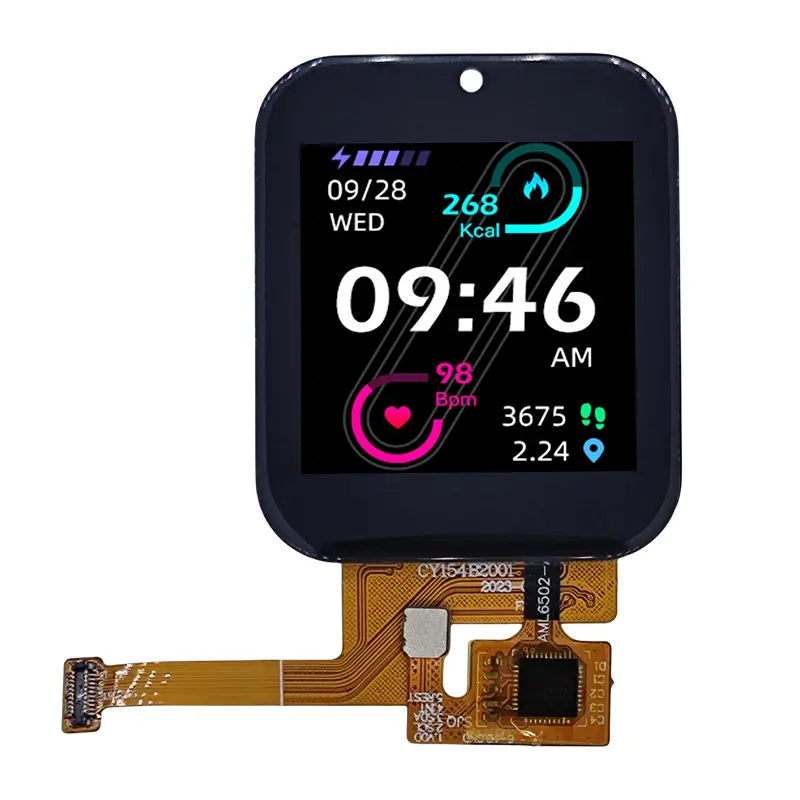
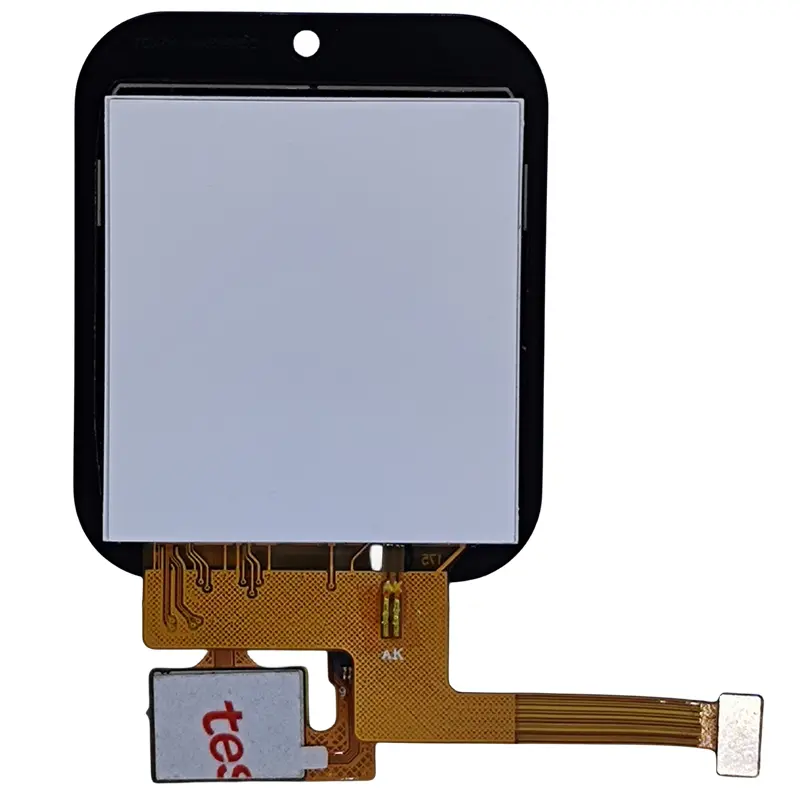
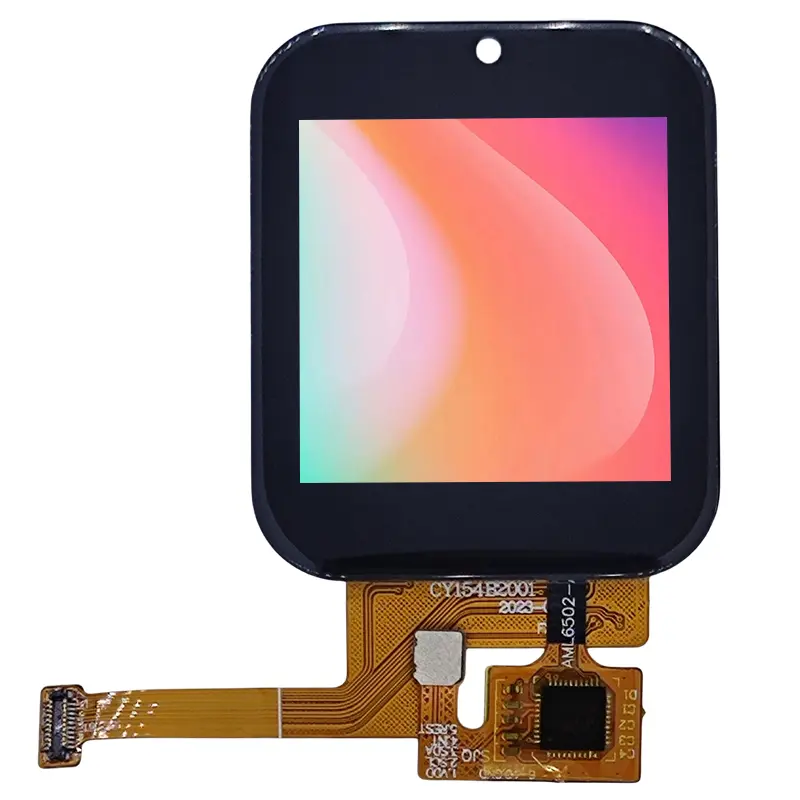
The product image shows a lower flexible circuit extending from the display assembly. Mechanical design should avoid sharp bends, compression and interference near the component area.
Review:
- Minimum FPC bend radius
- Connector position
- Insertion direction
- Cable folding sequence
- Battery clearance
- Enclosure screw positions
- Adhesive overlap
- Touch-sensor routing
- Antenna separation
- Component-height keep-outs
- Assembly and service access
The 3 mm module thickness does not include unconfirmed enclosure, gasket or rear-clearance requirements.
Optical Performance and Use Conditions
The 500 cd/m² value is specified as typical luminance. It offers useful visibility for normal wearable interfaces and moderately bright conditions.
A 500 cd/m² panel does not establish finished-device sunlight readability behind the cover lens.
Finished optical performance depends on:
- Cover-lens transmittance
- Surface reflection
- Bonding method
- Printed border
- Air gap
- Ambient-light direction
- UI color selection
- Backlight drive
- Enclosure shadowing
- Power-management limits
The typical contrast ratio is 250:1. Interface designers should use clear icon shapes, appropriate font sizes and sufficient foreground/background contrast, particularly for small text.
Touch Qualification
Projected capacitive touch supports direct finger interaction, but the final touch behavior must be validated with the selected cover lens and controller configuration.
Qualification should include:
- Tap accuracy
- Swipe response
- Edge-touch detection
- Small-button selection
- Accidental-touch rejection
- Water-droplet behavior
- Wrist movement
- Display wake interaction
- Long-press recognition
- Gesture support
- Touch under the final cover lens
- Touch after temperature cycling
Do not claim multi-touch, glove touch, wet-finger operation or stylus support without controller-specific evidence.
Recommended Applications
Smartwatches
The square active area can support time, activity data, notification cards, battery indicators and app menus in a compact wearable enclosure.
Fitness Trackers
The 320 × 320 resolution supports step counts, heart-rate graphs, training timers and compact progress indicators.
Wrist-Mounted Status Devices
The module can display work status, alerts, task information or equipment data where a small wrist-mounted interface is required.
Compact Personal Monitors
It can be evaluated for non-diagnostic personal monitoring interfaces after product-level safety, reliability and compliance requirements are defined.
Miniature Embedded Controls
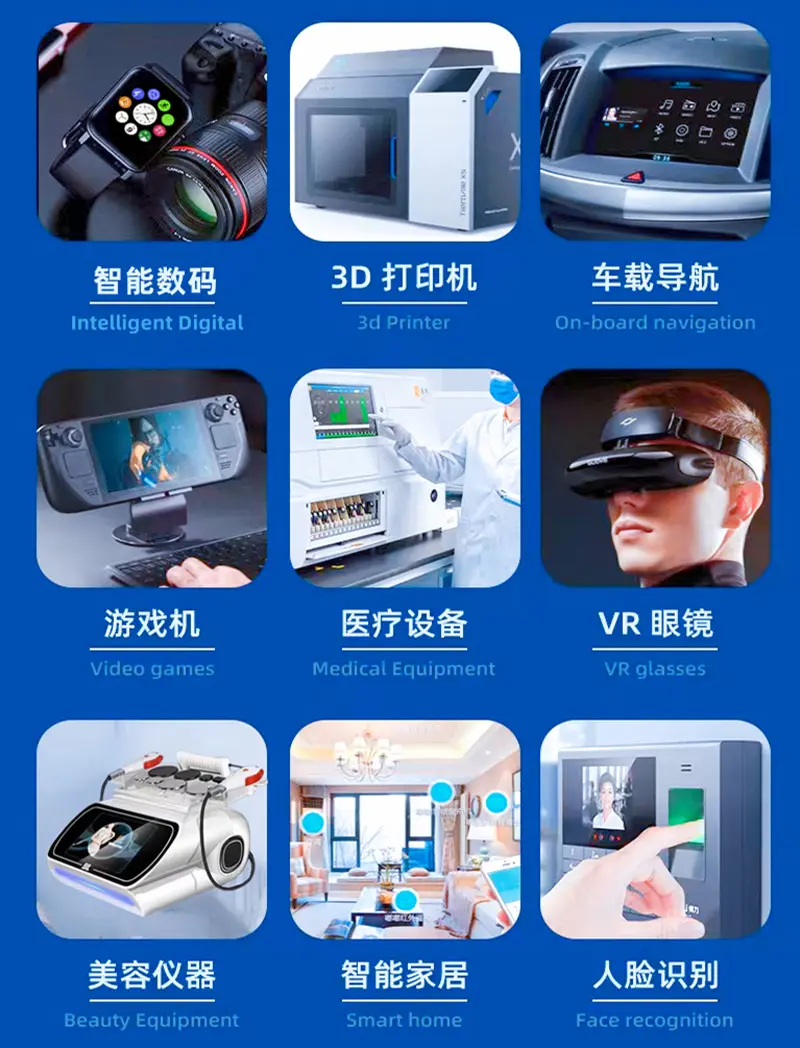
The square screen can also be used in small appliance controls, handheld accessories and compact status panels where MIPI host support is available.
These application examples do not establish medical, waterproof, automotive or outdoor certification.
Customization Scope
Project-specific review can cover:
- Cover-lens outline
- Cover-lens printing
- Touch active area
- Touch-controller selection
- Touch FPC
- LCD FPC length
- Connector orientation
- MIPI pin assignment
- Display luminance target
- Surface treatment
- Bonding method
- Backlight configuration
- Logo and packaging
- Mechanical alignment
- Operating-temperature targets
Custom configurations are generally reviewed from 500 pieces, subject to tooling requirements, material availability and the requested specification. Sample and standard-module quantities are confirmed separately.
Procurement Checklist
Submit:
- Approved module drawing
- Complete 20-pin assignment
- MIPI lane count
- MIPI timing requirements
- Logic and power voltages
- Reset and control signals
- Power sequence
- ST7796S supporting documentation
- Touch-controller model
- Touch-interface definition
- Touch pin assignment
- Touch-point requirement
- Cover-lens drawing
- Visible-area drawing
- FPC orientation
- Connector details
- Backlight electrical requirements
- Brightness target
- Enclosure drawing
- Battery and antenna position
- Environmental requirements
- Sample quantity
- Annual demand
- Development schedule
FAQ
About 1.54 Inch Smartwatch Square MIPI Display
What must be checked before connecting this module to a wearable processor?
Does the projected touch layer use the same MIPI connection as the display?
Is 500 cd/m² sufficient for an outdoor smartwatch?
Which dimensions should control the enclosure opening?
What does the ST7796S identifier establish?
Freya Yang
+86 18318948097