Freya Yang
+86 18318948097
+852 62667476
17 Inch Industrial HMI LCD Panel for SXGA Control Industrial HMI
Model P/N
Size
Resolution
Brightness
Viewing Angle
Connector Type
Operating Temp
Overall(mm)
huisoar
HS170ENT-GE15
Brand
Panel Size (inch)
Model P/N
Resolution
Brightness (nits)
Viewing Angle
Contrast Ratio
Response Time
Overall (mm)
Active Area (mm)
Refresh Rate
Bezel Opening
Display Colors
Panel Type
Connector Type
Surface Treatment
Operating Temp
Touchscreen Type
Storage Temp
Work Mode
Pixel Format
Input Voltage (V)
Weight (g)
Designed For
4:3 SXGA TFT-LCD Module with High Brightness, LVDS Interface, and Anti-Glare Surface
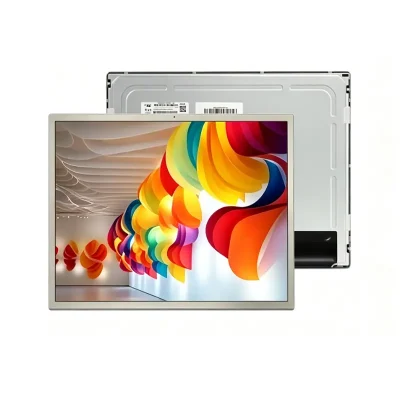
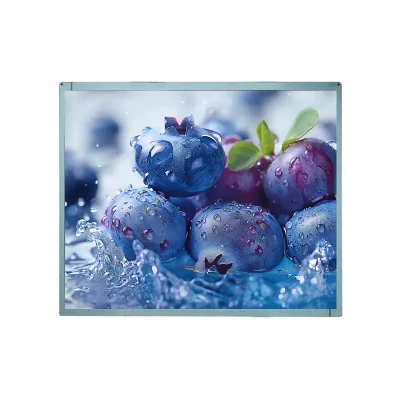
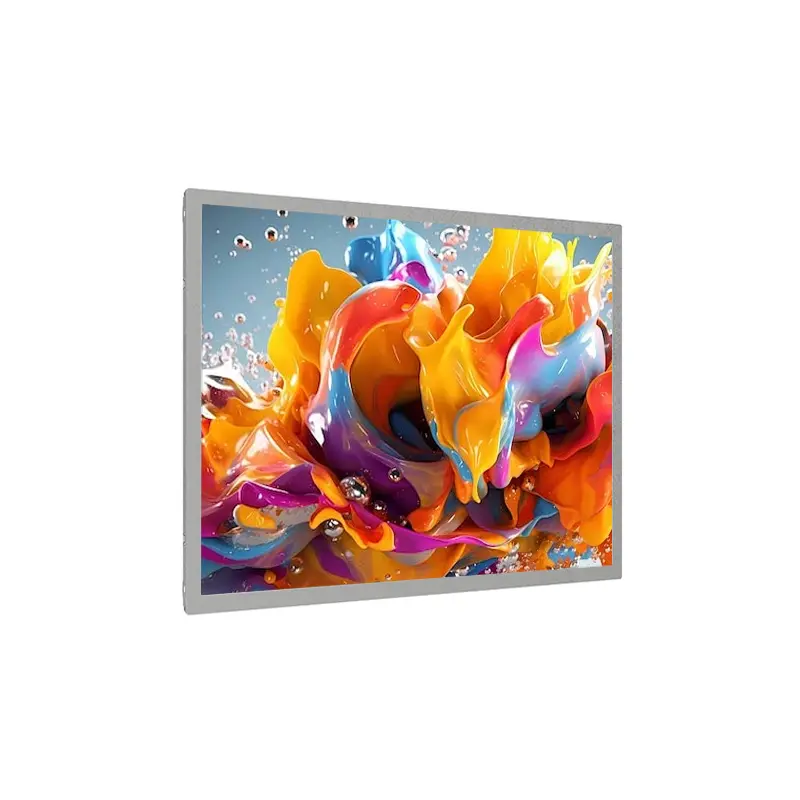
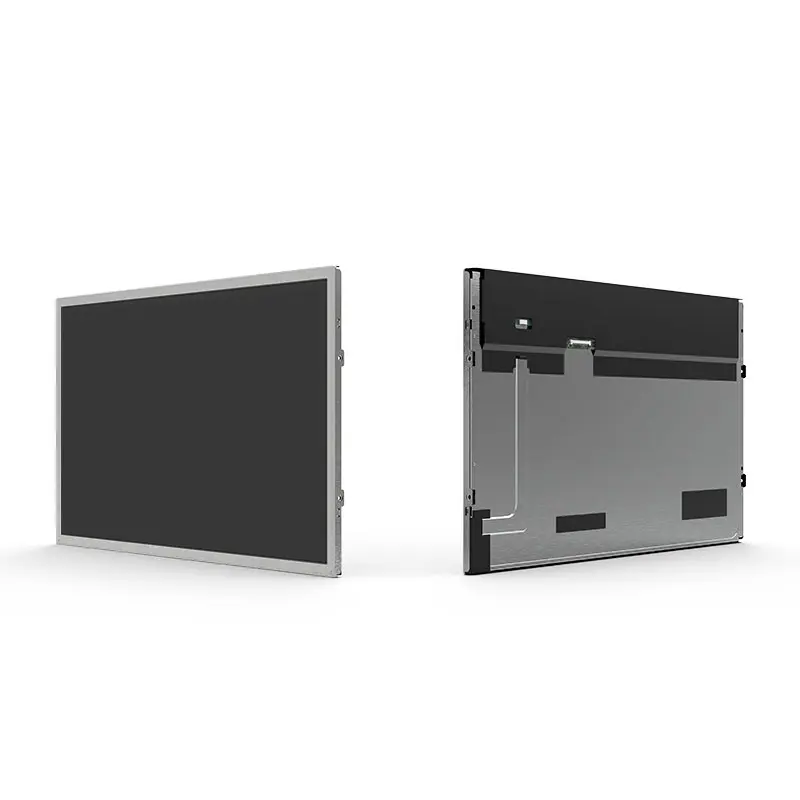
A 17 Inch Industrial HMI LCD Panel is a 4:3 SXGA TFT-LCD module for control terminals, factory equipment, self-service systems, and monitoring interfaces that need readable screen content without moving to a widescreen layout. With 1280 × 1024 resolution, 500–1500 nits brightness options, 89-degree viewing in all directions, anti-glare 3H surface treatment, and a 30-pin LVDS interface, it gives OEM engineers a practical display foundation for legacy-format industrial systems and high-ambient-light operator panels.
At a Glance: 17 Inch 4:3 SXGA Industrial LCD Highlights
- 17.0-inch 4:3 TFT-LCD format supports legacy HMI layouts, equipment panels, and control terminals.
- 1280 × 1024 SXGA resolution provides clear space for status data, diagrams, alarms, and multi-window interfaces.
- 500–1500 nits brightness range helps engineers match readability to indoor, bright indoor, or semi-outdoor use conditions.
- 89/89/89/89 viewing angle supports side-view readability for operators, technicians, and monitoring stations.
- 30-pin LVDS, 2-channel, 8-bit interface supports common industrial controller and embedded display architectures.
- Anti-glare 3H hard coating helps reduce surface reflection and improves practical durability in equipment-facing use.
- WLED backlight with 50,000-hour lifetime supports long service planning for industrial display projects.
Product Overview of the 17 Inch Industrial HMI LCD Panel
The 17 Inch Industrial HMI LCD Panel is built for equipment manufacturers that need a stable 4:3 display format for industrial control, machine operation, and embedded monitoring systems. Many industrial HMIs still use square-format layouts because their software, enclosure openings, and operator workflows were designed around 4:3 screens. A 17.0-inch SXGA panel can support these layouts without forcing a mechanical redesign or a full user-interface shift to widescreen.
This module combines a 1280 × 1024 SXGA pixel layout with high-brightness capability from 500 to 1500 nits. That balance is useful when the display must show machine status, measurement values, diagnostic screens, alarms, or operating diagrams under stronger ambient light than a standard office display would face. The 96 PPI pixel density also supports readable text and interface graphics at typical HMI viewing distances.
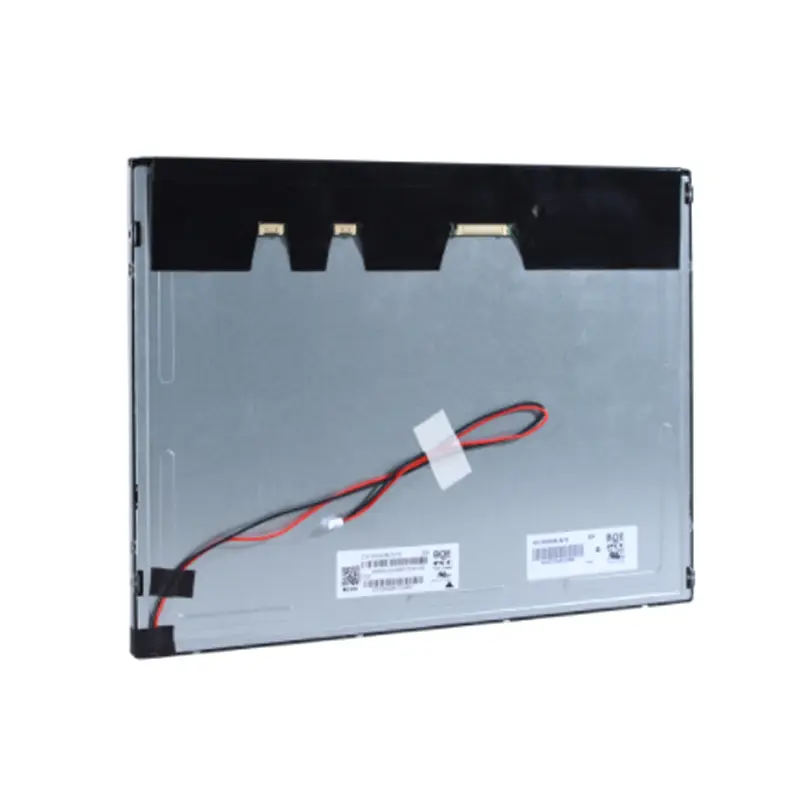
For system integration, the panel uses a 30-pin LVDS, 2-channel, 8-bit interface and a 5.0 V typical input. It is supplied as a no-touch LCD module, which can be helpful when the equipment design requires a separate cover glass plan, a custom front bezel, or a later touch-panel decision. The IPS normally black transmissive display mode, anti-glare hard coating, and wide operating temperature range make it suitable for industrial HMI, kiosk, diagnostic, monitoring, and control-panel projects.
Key Features of the 17 Inch Industrial HMI LCD Panel
The 17 Inch Industrial HMI LCD Panel gives engineers a practical mix of 4:3 layout compatibility, high brightness, LVDS integration, and industrial readability.
| Key Feature | B2B Value |
|---|---|
| 17.0-inch 4:3 screen format | Supports legacy industrial HMI interfaces, control cabinets, and equipment panels that were not designed for widescreen LCDs. |
| 1280 × 1024 SXGA resolution | Provides enough pixel space for status data, icons, diagrams, multi-window control screens, and alarm information. |
| 500–1500 nits brightness range | Allows brightness selection based on indoor, bright indoor, or semi-outdoor viewing conditions. |
| 89/89/89/89 viewing angle | Helps maintain readability when operators view the display from the side, above, or below. |
| IPS normally black transmissive mode | Supports consistent visual performance for industrial interfaces and monitoring screens. |
| Anti-glare 3H surface treatment | Reduces distracting reflections and adds surface hardness for equipment-facing environments. |
| 30-pin LVDS interface | Fits many embedded industrial controller architectures that rely on LVDS display output. |
| WLED backlight, 50,000-hour lifetime | Supports long service planning and stable operation for long-running industrial systems. |
| No-touch module configuration | Gives OEM teams flexibility to evaluate separate cover glass, touch panel, or front-panel structure. |
| -20°C to 70°C operating range | Supports broader industrial installation conditions than standard indoor consumer display modules. |
Technical Specifications of the 17 Inch 4:3 SXGA LCD Panel
The 17-inch 4:3 SXGA LCD panel provides a clear technical baseline for enclosure design, interface matching, brightness selection, and HMI system evaluation.
| Specification | Value |
|---|---|
| Product Type | Industrial HMI LCD Panel |
| Display Size | 17.0 inch |
| Resolution | 1280 × 1024 SXGA |
| Brightness | 500–1500 nits |
| Interface | 30-pin LVDS, 2-channel, 8-bit |
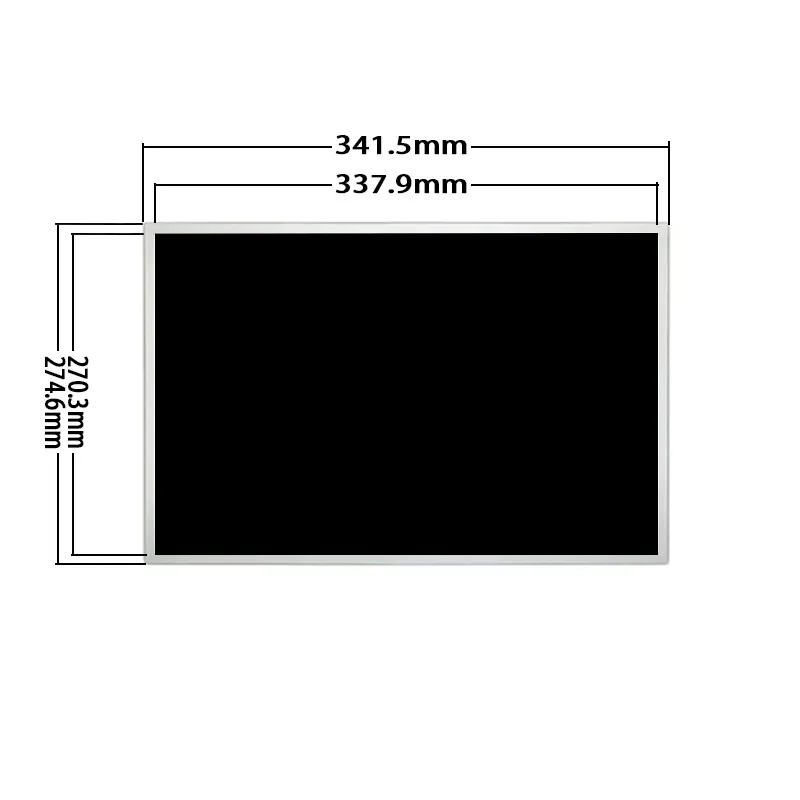
| Active Area | 337.92 × 270.336 mm |
| Overall / Bezel Opening | 341.5 × 274.6 mm |
| Viewing Angle | 89/89/89/89 |
| Operating Temperature | -20°C to 70°C |
| Input Voltage | 5.0 V typ. |
These specifications should be reviewed together rather than separately. The active area and outline dimensions determine front-opening fit, the LVDS interface determines controller compatibility, and brightness selection should be matched to the real installation environment. For enclosure projects, engineers should confirm drawing clearance, cable route, heat dissipation, and front-cover requirements before sample approval.
Why Choose This 17 Inch SXGA Industrial LCD Panel?
This 17 inch SXGA industrial LCD panel is a practical choice when an equipment platform requires 4:3 screen compatibility, readable interface content, and stable industrial integration.
4:3 SXGA LCD Format for Legacy HMI Enclosure Fit
The 4:3 format remains important in industrial systems because many machine-control screens, test instruments, and cabinet openings were designed before widescreen panels became common. Replacing such displays with a wide-format screen can create mechanical mismatch, software scaling issues, or unused screen areas. A 17.0-inch 1280 × 1024 panel helps preserve the intended interface layout while still giving enough resolution for detailed status data and graphical control screens.
SXGA resolution is also useful for operator interfaces that must display more than simple icons. It can support trend charts, equipment states, multi-zone menus, warning messages, and diagnostic information. For OEM teams maintaining an established HMI platform, this panel format can reduce redesign pressure while improving brightness and viewing performance.
High-Brightness LVDS Panel for Control-Terminal Readability
The 500–1500 nits brightness range gives buyers more flexibility than a fixed low-brightness display. For shaded indoor industrial equipment, a lower brightness option may be sufficient. For bright workshops, window-facing terminals, or semi-outdoor control points, the higher-brightness configuration should be evaluated with the enclosure, cover glass, and thermal design.
The 30-pin LVDS interface also matters for control-terminal integration. LVDS remains common in industrial embedded systems because it can connect panel modules to controller boards in a direct and predictable way. Engineers should still confirm pin assignment, timing, cable length, grounding, and control-board compatibility before production, but the interface type is familiar for many industrial display designs.
Display Performance of the 17 Inch High-Brightness LCD Panel for HMI Readability
The display performance of this high-brightness LCD panel is centered on readable SXGA content, wide viewing, and surface treatment for practical industrial use.
500–1500 Nits Brightness for Bright Industrial Work Areas
Brightness should be selected according to the real viewing environment, not only by maximum value. A 500-nit configuration may fit many indoor operator stations, while a higher-brightness version may be better for strong ambient light or semi-outdoor equipment. For direct sunlight exposure, system-level evaluation should include cover glass, optical bonding, anti-glare treatment, enclosure ventilation, and thermal dissipation.
The brightness range also helps procurement teams align cost and performance. Instead of selecting one universal brightness for every project, engineers can compare viewing distance, ambient light, duty cycle, and enclosure design. That makes the panel more adaptable for HMI terminals, kiosk screens, and monitoring systems that share the same display size but face different light conditions.
1280 × 1024 Resolution, 89-Degree Viewing, and 16.7M Colors
The 1280 × 1024 resolution gives the panel a familiar industrial display format for status-heavy interfaces. It is suitable for equipment diagrams, alarm lists, basic graphics, and multi-window layouts where vertical space is valuable. The 89/89/89/89 viewing specification helps operators read the screen from multiple positions around a machine, cabinet, or test bench.
Color support of 16.7M colors with 72% NTSC can help interface designers separate warnings, status levels, diagrams, and menu states clearly. The 1000:1 typical contrast ratio also supports readable content in normal transmissive LCD use. These values should be validated in the final enclosure because cover glass, bonding method, brightness setting, and ambient light can affect perceived readability.
Anti-Glare 3H Surface for Equipment-Facing Conditions
The anti-glare hard coating is valuable for industrial HMI use because displays are often exposed to overhead lighting, workshop reflections, and frequent operator viewing. A 3H surface does not replace protective glass or a rugged enclosure, but it gives the LCD module a more practical surface specification than a purely glossy panel.
For environments with dust, moisture, outdoor exposure, impact risk, or frequent cleaning, the LCD should be evaluated as part of a complete front-panel system. Cover glass, sealing design, gasket structure, optical bonding, and IP-rated enclosure requirements depend on the final equipment design and should not be assumed from the panel specification alone.
Integration and Mounting Options for 30-Pin LVDS Industrial Display Projects
Integration planning for this 30-pin LVDS industrial display should start with electrical compatibility, mechanical fit, front structure, and thermal review.
30-Pin LVDS Interface and Driver Board Integration
The module uses a 30-pin LVDS, 2-channel, 8-bit interface. This is relevant for industrial controller boards, embedded PCs, and custom display boards that support LVDS timing. Before sample approval, engineers should confirm LVDS pinout, signal mapping, supply voltage, backlight control, cable type, connector orientation, and electromagnetic design requirements.
If the existing system does not provide a matching LVDS output, a driver board or control-board matching process may be required. In that case, the buyer should provide the host interface, operating system, display timing requirements, and mechanical constraints. This helps the engineering team evaluate whether a standard control board, custom cable, or interface adaptation is needed.
Mechanical Drawing, Bezel Opening, and Cable Planning
Mechanical fit is one of the main reasons to choose a 17-inch 4:3 module. The active area of 337.92 × 270.336 mm and the listed outline / bezel opening of 341.5 × 274.6 mm give engineers a starting point for front-panel evaluation. However, the final structure should also consider mounting tabs, cable exit direction, tolerance, gasket compression, and protective cover design.
For control cabinets and kiosk terminals, cable planning is just as important as panel size. LVDS cable length, bend radius, connector access, service space, and grounding should be reviewed early. A display that fits the front opening can still create integration issues if cable routing or back-cover clearance is not planned.
Power Input and Thermal Review for High-Brightness HMI Panels
The 5.0 V typical input provides a clear electrical reference for system planning, but total system power depends on brightness configuration, backlight control, and driver-board design. Higher brightness generally requires more careful thermal management at the system level. Engineers should evaluate airflow, heat paths, enclosure material, and operating duty cycle before finalizing the display configuration.
For semi-outdoor or window-facing installations, brightness and thermal design should be reviewed together. A high-brightness panel can improve visibility, but the enclosure must also manage heat and protect the display from environmental stress. Sample testing under real installation conditions is recommended before moving to bulk procurement.
Recommended Applications for Industrial HMI and Monitoring Display Systems
This industrial HMI and monitoring display format fits applications where 4:3 layout compatibility, readable SXGA content, and stable integration are more important than consumer-style appearance.
Factory Control Terminals with Legacy 4:3 HMI Screens
Factory-floor control terminals often rely on established interface layouts that show machine states, alarms, recipes, and operating parameters. A 17-inch 4:3 panel helps preserve those layouts while offering higher brightness and wide viewing. It is especially relevant when operators need to read the display from standing positions or from the side of a machine.
Test and Measurement Equipment Requiring Clear Data Screens
Test benches and measurement systems may display graphs, numeric values, status indicators, and menu controls for long periods. The SXGA resolution gives enough working area for dense information, while the anti-glare surface helps reduce reflection under laboratory or production-line lighting. The no-touch configuration can also suit systems that rely on physical controls or an external input method.
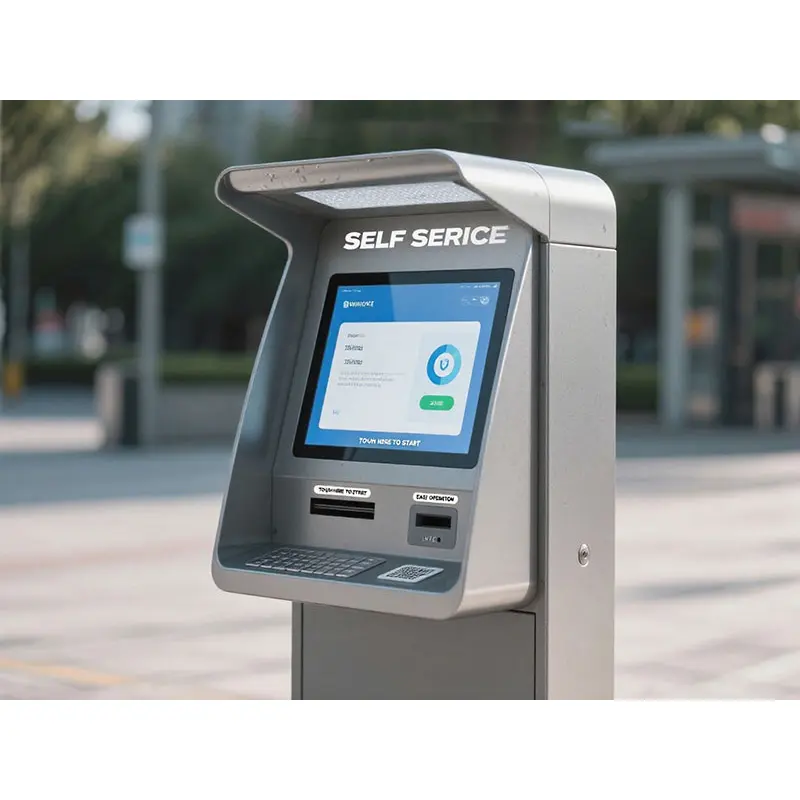
Self-Service Kiosks and Embedded Service Terminals
Self-service equipment often needs a durable display format that can be integrated behind a custom front panel. The 17-inch high-brightness LCD panel can be evaluated for kiosk terminals, service machines, access systems, and equipment interfaces where visibility and enclosure fit are key. For public-facing use, cover glass, touch integration, sealing, and mechanical protection should be reviewed as project-level options.
Transportation and Power-System Monitoring Panels
Transportation monitoring systems, server monitoring stations, and power-station control interfaces need stable readability over long operating periods. The wide viewing angle, WLED backlight life, and industrial temperature range support these applications when the complete system is designed correctly. For harsh environments, project validation should include enclosure protection, thermal conditions, vibration expectations, and maintenance access.
Customization Options for 17 Inch Industrial LCD Panel Projects
Customization for 17 inch industrial LCD panel projects should be evaluated around brightness, front structure, interface matching, and installation environment. Brightness selection can be reviewed across the 500, 1000, and 1500-nit family depending on viewing distance and ambient light. Cover glass, anti-glare surface strategy, optical bonding, and touch-panel integration can be evaluated when the display must be used in a more demanding front-panel structure.
For embedded systems, project review may include LVDS cable customization, driver-board matching, control-board selection, enclosure layout, mounting support, and thermal planning. If the application is outdoor-facing or exposed to dust, moisture, vibration, or frequent user contact, IP-rated enclosure design and protective structure should be evaluated at system level. These options should be confirmed through drawings, samples, and application testing rather than assumed as default panel specifications.
Procurement and Engineering Checklist for 17 Inch LCD Panel Selection
A strong procurement decision should verify both panel specifications and system-level integration conditions before moving from sample evaluation to bulk order.
- Confirm whether the application truly requires a 17.0-inch 4:3 display rather than a widescreen panel.
- Match SXGA 1280 × 1024 resolution with the existing HMI software layout and scaling requirements.
- Select brightness based on indoor, bright indoor, semi-outdoor, or window-facing viewing conditions.
- Review LVDS pinout, signal timing, cable route, connector orientation, and control-board compatibility.
- Check active area, outline dimensions, front opening, mounting clearance, and back-cover depth.
- Evaluate whether no-touch configuration is sufficient or whether touch, cover glass, or bonding is needed.
- Confirm operating temperature, enclosure ventilation, and thermal path for high-brightness operation.
- Request sample validation under real lighting, duty cycle, and installation conditions before bulk purchase.
Brightness / Interface / Mounting Selection Guide for 17 Inch Industrial HMI Panels
For shaded indoor HMI stations, the lower brightness configuration may be appropriate if the display is not exposed to strong ambient light. For bright workshops, kiosks, or semi-outdoor terminals, a higher brightness version should be tested with the actual cover glass and enclosure. Interface selection should start with the host controller: if the system already supports 30-pin LVDS timing, integration may be more direct; if not, driver-board matching is needed. Mounting should be reviewed from drawings, not only from the active area, because cable direction and rear clearance can determine whether the module fits the final equipment.
FAQ
About 17 Inch Industrial HMI LCD Panel Selection
What is a 17 Inch Industrial HMI LCD Panel used for?
Is 1280 × 1024 SXGA suitable for industrial HMI interfaces?
How should I choose between 500, 1000, and 1500 nits?
Does this panel include a touch screen?
What interface should the controller board support?
Can this panel be used in semi-outdoor equipment?
Why choose a 4:3 industrial LCD instead of a widescreen panel?
What drawings should buyers provide for engineering review?
What should be tested before bulk procurement?
Can the display be customized for OEM or ODM projects?
Freya Yang
+86 18318948097