Freya Yang
+86 18318948097
+852 62667476
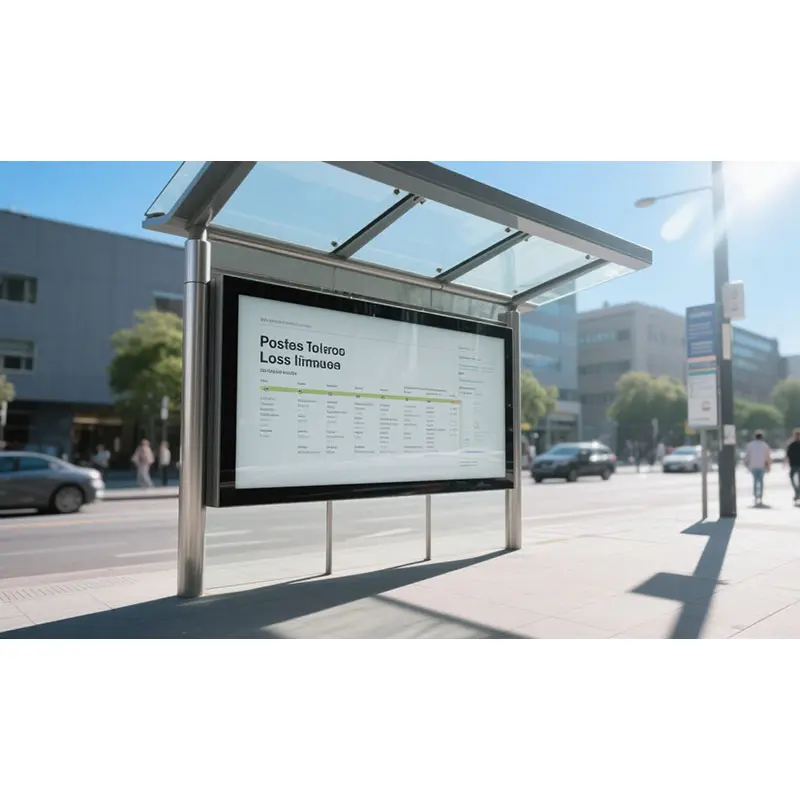
32–65 Inch Bus Stop Digital Signage for Transit Information
Model P/N
Size
Resolution
Brightness
Viewing Angle
Connector Type
Operating Temp
Overall(mm)
huisoar
HS861EQL-GD40
Brand
Panel Size (inch)
Model P/N
Resolution
Brightness (nits)
Viewing Angle
Contrast Ratio
Response Time
Overall (mm)
Active Area (mm)
Refresh Rate
Display Colors
Panel Type
Connector Type
Surface Treatment
Operating Temp
Touchscreen Type
Storage Temp
Work Mode
Pixel Format
Motherboard Type
Designed For
32–65 Inch Bus Stop Digital Signage for Transit Information
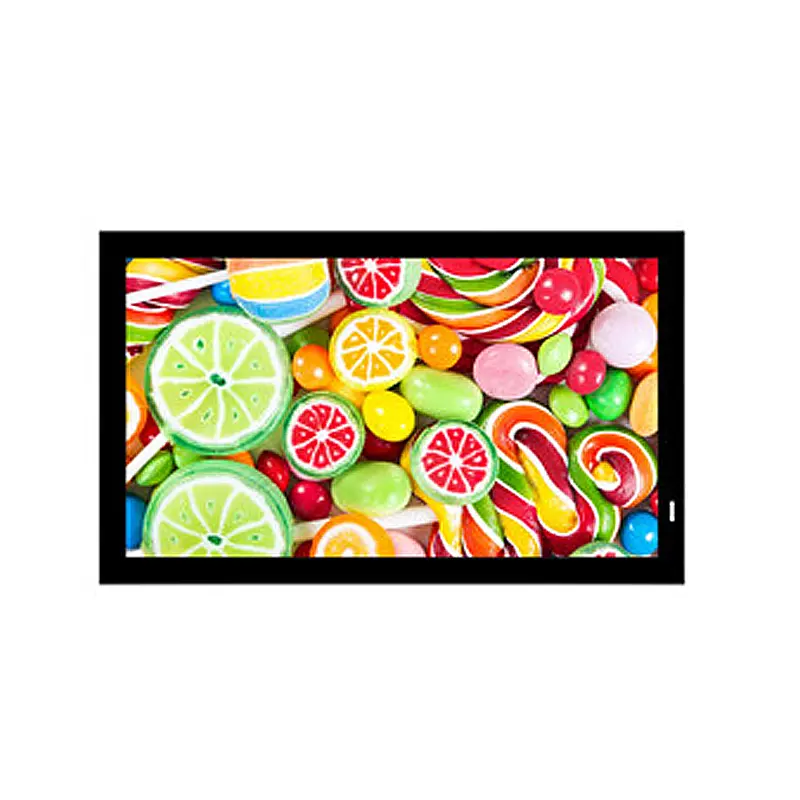
This outdoor IP65 display family combines size-specific high brightness, smart dimming, protective AR glass, and configurable media or touch functions for public-transport information systems.
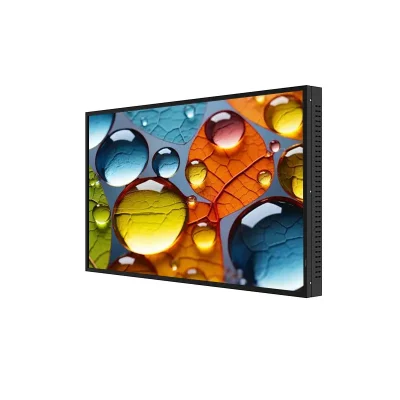
Bus Stop Digital Signage gives passengers a clear place to read arrival times, route changes, service alerts, wayfinding instructions, and public announcements. This configurable outdoor display family covers 32-inch, 43-inch, 49-inch, 55-inch, and 65-inch formats, with Full HD or UHD options depending on size. IP65 protection, 5 mm AR tempered glass, intelligent temperature control, and wide viewing support make it suitable for shelter-mounted or station-based information systems where ordinary indoor screens are not designed for the installation environment.
Product Summary
This display family is a finished IP65 outdoor signage system, not a bare LCD panel.
The 32-inch, 49-inch, 55-inch, and 65-inch configurations use 2000-nit display specifications, while the 43-inch configuration uses 4000 nits. The family supports 16:9 content, a 1300:1 contrast ratio, a raw 89/89/89/89 minimum viewing-angle sequence, and 6/9 ms typical Tr/Td response. Smart dimming and intelligent temperature control help the finished system respond to changing outdoor conditions, while remote-control support simplifies commissioning and routine operation.
Key Specifications at a Glance
| Item | Confirmed configuration |
|---|---|
| Display sizes | 32, 43, 49, 55, and 65 inches |
| Resolution | 1920 × 1080 for 32 and 43 inches; 1920 × 1080 or 3840 × 2160 for 49, 55, and 65 inches |
| Brightness | 32 inch: 2000 nits; 43 inch: 4000 nits; 49/55/65 inch: 2000 nits |
| Aspect ratio | 16:9 |
| Contrast ratio | 1300:1 |
| Viewing data | 89/89/89/89 minimum, CR ≥ 10; direction order requires configuration confirmation |
| Response time | 6/9 ms typical, Tr/Td |
| Backlight | DLED; 50,000-hour reference |
| Protection | Outdoor IP65 enclosure; 5 mm AR tempered glass |
| System input | AC 110/220 V, 50/60 Hz |
| Media I/O | HDMI, VGA, and DVI |
| Operating range | −20°C to +70°C |
| Optional functions | Android or computer motherboard, Wi-Fi/3G/4G, and 10-point or 20-point capacitive touch |
Outdoor Readability for Passenger Information
Size-Specific Brightness Selection
Brightness should be selected together with shelter depth, screen orientation, surrounding reflections, and the final viewing distance. The 2000-nit versions provide a high-brightness foundation for covered or partially exposed transit installations, while the 4000-nit 43-inch version offers a stronger optical margin for more demanding exposure. A 2000-nit or 4000-nit rating does not guarantee site readability until glass reflection, orientation, and solar load are evaluated.
AR Tempered Glass and Wide Public Viewing
The 5 mm AR tempered-glass front helps control reflection while protecting the display assembly. The 89/89/89/89 viewing data supports broad off-axis access, which matters when passengers approach from different directions or stand at varying distances. The exact direction order should be confirmed in the approved configuration rather than inferred from the four-angle sequence.
Bus Stop Digital Signage System Integration
Media Inputs and Motherboard Routes
HDMI, VGA, and DVI provide practical connections for external media players and transit-information controllers. Projects that need an integrated content platform can evaluate an Android motherboard or computer motherboard instead. These are different system architectures: an external-player deployment should define the required video input, while an integrated deployment should define the operating environment, application, storage, startup behavior, and content-management workflow.
Remote Updates and Network Options
Wi-Fi, 3G, and 4G are configurable network routes for centralized content delivery. They can support scheduled notices, advertising playlists, and service-message updates when paired with a suitable content-management system. Real-time arrival data still requires an approved software and data integration path; network hardware alone does not establish compatibility with GTFS, AVL, API, or municipal transport platforms.
Optional touch, Android, and network functions are configuration choices rather than standard inclusions.
Mechanical and Environmental Planning
Size, Weight, and Power by Version
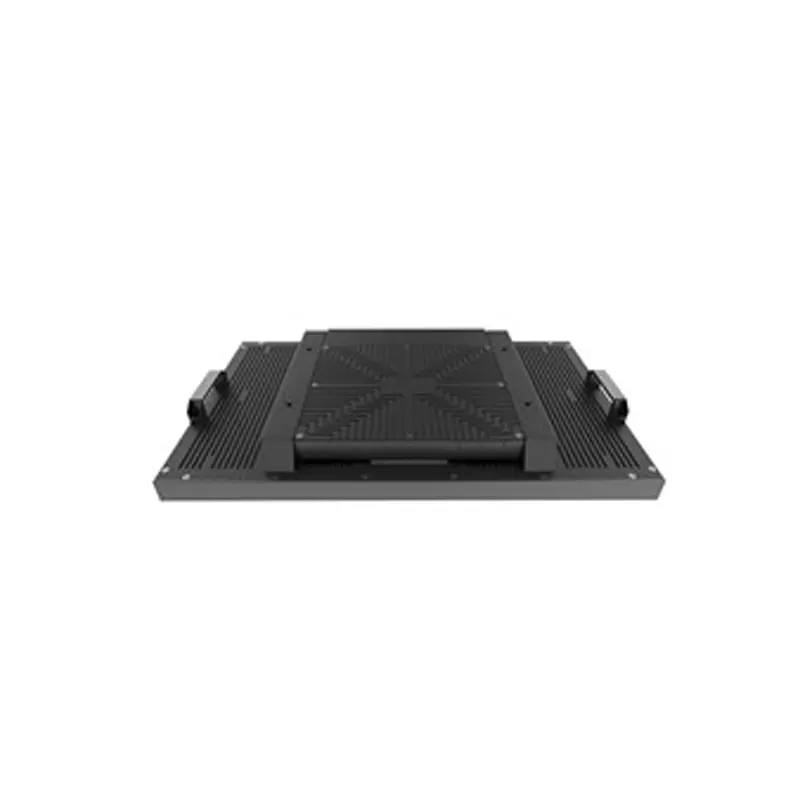
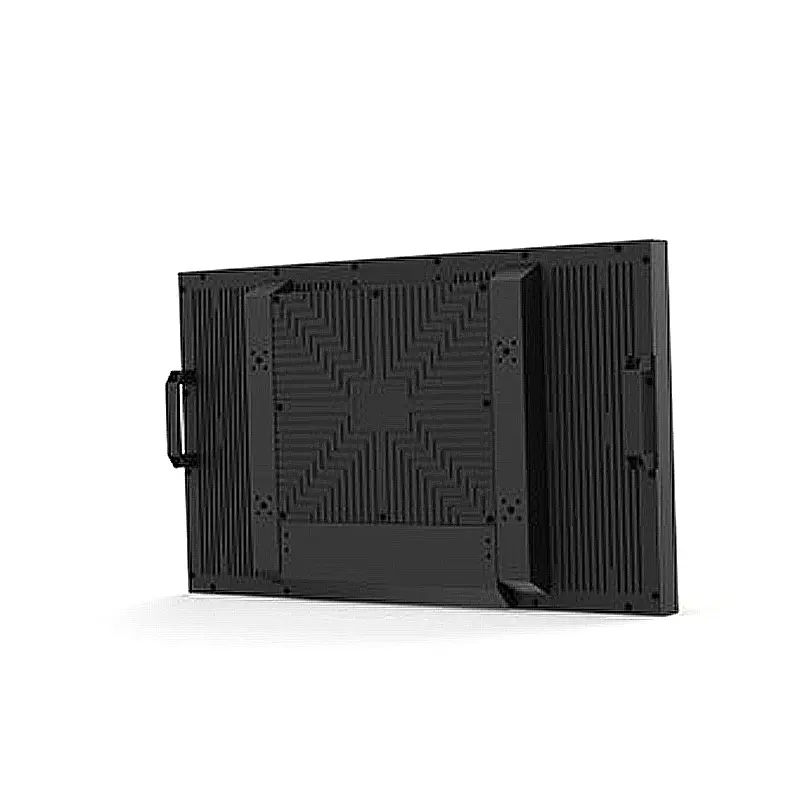
The enclosure grows substantially across the family. The 32-inch unit is 798 × 491 × 108 mm and 30 kg, while the 65-inch unit is 1524 × 899 × 120 mm and 80 kg. Maximum power also varies by size: 80 W for 32 inches, 280 W for 43 inches, 180 W for 49 inches, 240 W for 55 inches, and 300 W for 65 inches. Mounting structures, lifting access, wall strength, service clearance, and cable routing should be engineered for the selected version rather than copied from another size.
IP65 Boundaries and Outdoor Installation
IP65 protection depends on the approved enclosure, doors, gaskets, cable entries, connectors, and installation method remaining within the qualified design. Unapproved drilling, open cable glands, or altered service panels can weaken the environmental boundary. The sheet-metal enclosure, outdoor powder coating, intelligent temperature control, and −20°C to +70°C operating range provide a practical basis for transit deployments, but site-specific solar heating, ventilation, drainage, corrosion exposure, and maintenance access still require review.
Transit Information and Commercial Content
Bus Stop Digital Signage can combine passenger information with public-service and commercial content. Typical layouts include arrival predictions, route numbers, stop maps, disruption alerts, accessibility notices, weather messages, and time-based advertising. The screen should reserve the most prominent zones for service-critical information, with legible text sizes and contrast that remain usable from the intended viewing distance.
For multi-site networks, content templates should be standardized by screen size and orientation. The 49-inch, 55-inch, and 65-inch versions may use Full HD or UHD, so the ordered resolution must be fixed before artwork, media-player output, and remote templates are approved. Displaying native-resolution content reduces scaling artifacts and keeps timetable text and route graphics consistent.
Configuration Options
Projects can evaluate an Android or computer motherboard, Wi-Fi/3G/4G communication, optional 10-point or 20-point capacitive touch, and size-specific media architecture. Touch selection changes the front stack, controller requirements, user-interface design, service procedure, and validation plan. Brightness, resolution, network, and interaction requirements should therefore be defined as one system configuration rather than ordered as unrelated options.
Procurement Checklist
Confirm the selected screen size, Full HD or UHD resolution, installation orientation, shelter or wall structure, ambient-light exposure, viewing distance, and required IP65 boundary. Submit the media-player or motherboard route, HDMI/VGA/DVI needs, CMS and real-time data-feed requirements, Wi-Fi/3G/4G plan, touch specification, AC supply, power budget, cable-entry design, operating-temperature target, sample quantity, and annual demand.
FAQ
About 32–65 Inch Bus Stop Digital Signage
How bright should Bus Stop Digital Signage be for an exposed shelter?
What must be checked before approving the IP65 installation?
How should remote content management be specified?
When should the optional touch configuration be selected?
Freya Yang
+86 18318948097