Freya Yang
+86 18318948097
+852 62667476
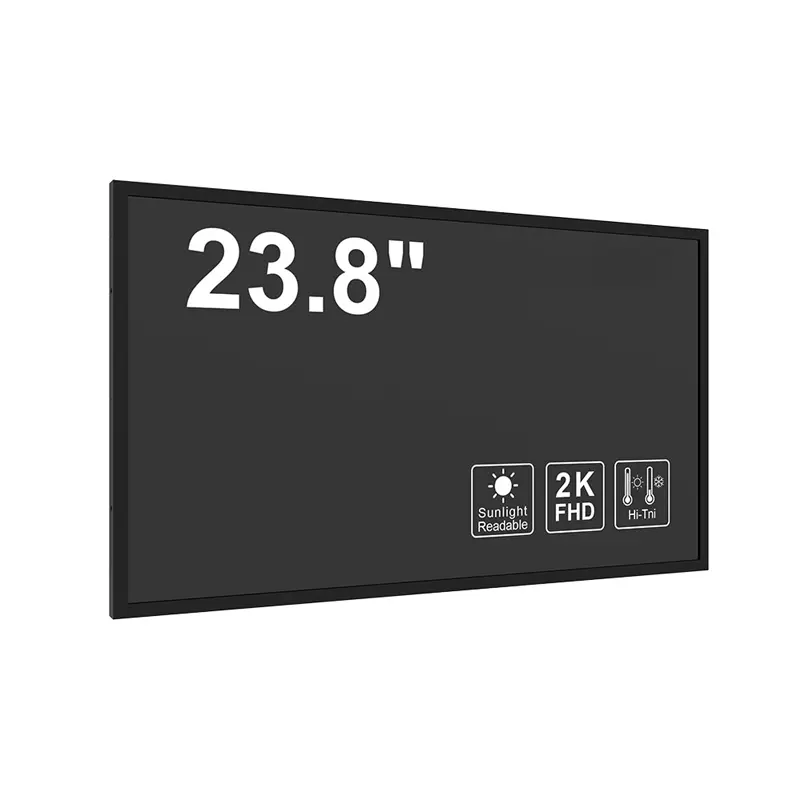
23.8 Inch Ultra High Luminance FHD LCD Panel for Industrial HMI
Model P/N
Size
Resolution
Brightness
Viewing Angle
Connector Type
Operating Temp
Overall(mm)
huisoar
HS238ENT-GE15
Brand
Panel Size (inch)
Model P/N
Resolution
Brightness (nits)
Viewing Angle
Contrast Ratio
Response Time
Overall (mm)
Active Area (mm)
Refresh Rate
Bezel Opening
Display Colors
Panel Type
Connector Type
Surface Treatment
Operating Temp
Touchscreen Type
Storage Temp
Work Mode
Pixel Format
Input Voltage (V)
Weight (g)
Operating Environment
Designed For
23.8 Inch Ultra High Luminance FHD LCD Panel for Industrial HMI
This Ultra High Luminance FHD LCD Panel combines a selected 1500 cd/m² output, IPS viewing and dual-channel LVDS for bright-ambient equipment.
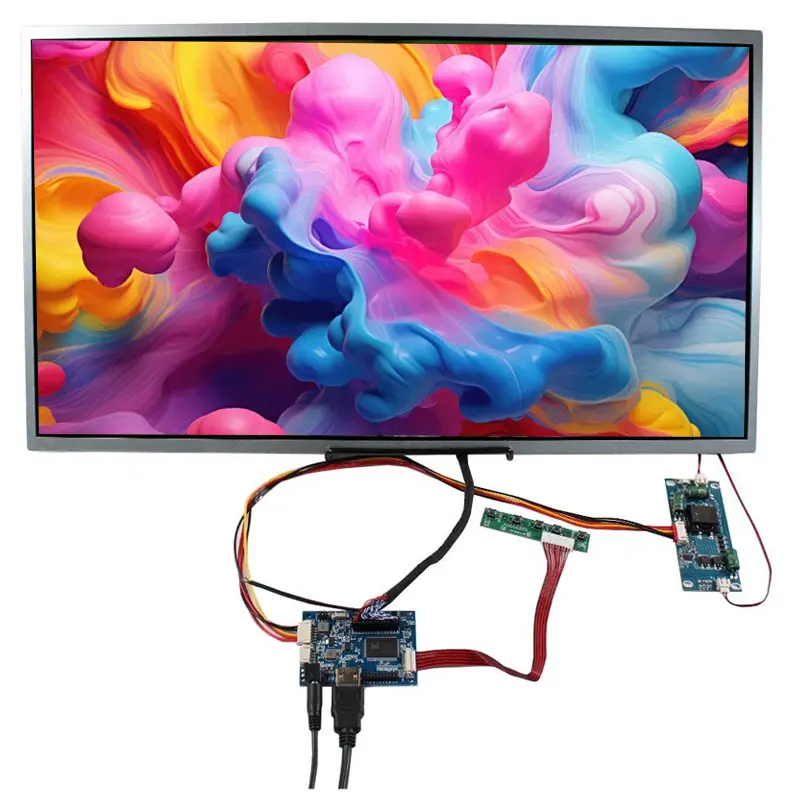
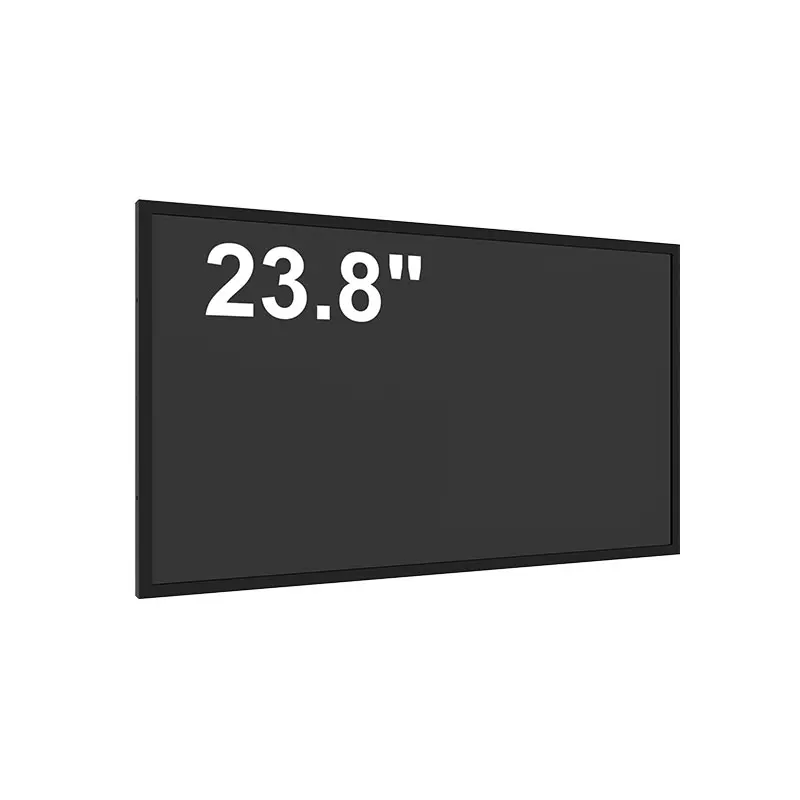
The Ultra High Luminance FHD LCD Panel is a 23.8-inch component display for industrial HMI, production monitoring, digital signage and professional equipment. The selected configuration combines 1920 × 1080 resolution, 1500 cd/m² luminance, IPS normally-black optics, an anti-glare 3H surface and a 30-pin dual-channel LVDS interface.
Its 5.0 V typical panel supply and 75 Hz standard frame rate provide a practical basis for embedded integration. Compatibility still depends on native timing, LVDS mapping, connector orientation, cable construction and separate backlight-driver planning.
Key Specifications
| Item | Selected value |
|---|---|
| Display size | 23.8 inches |
| Native resolution | 1920 × 1080 pixels, FHD, 92 PPI |
| Selected luminance | 1500 cd/m² |
| Display mode | IPS, normally black, transmissive |
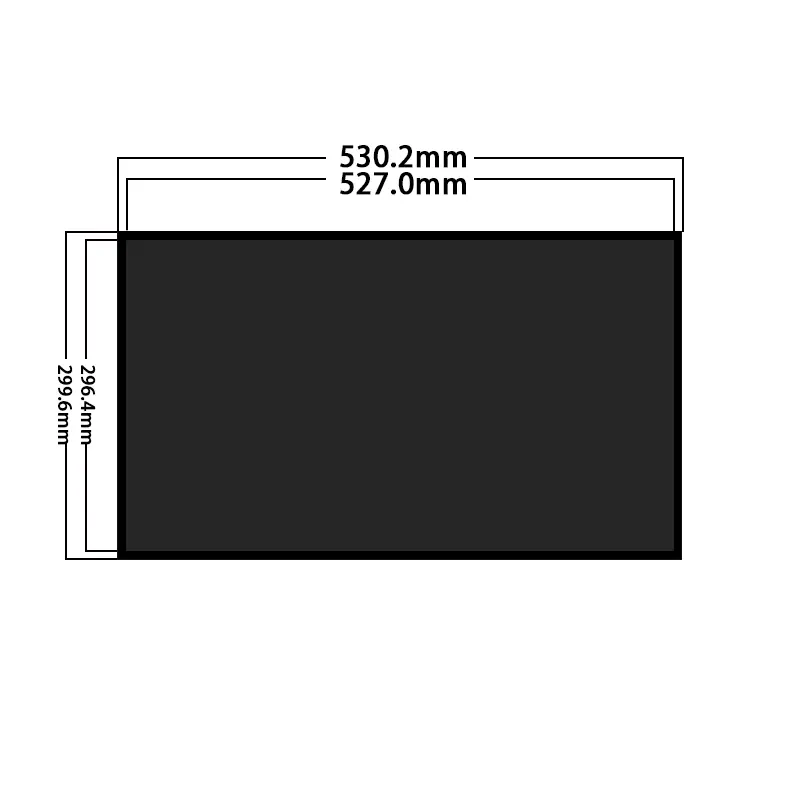
| Active area | 527.04 × 296.46 mm |
| Bezel opening | 530.2 × 299.6 mm |
| Surface | Anti-glare, hard coating 3H |
| Viewing angle | 89° left/right/up/down at CR ≥10 |
| Contrast ratio | 1000:1 typical |
| Response time | 14 ms typical, G-to-G |
| Color support | 16.7M colors, 72% NTSC |
| Interface | 30-pin LVDS, two channels, 8-bit |
| Panel supply | 5.0 V typical |
| Standard frame rate | 75 Hz |
| Backlight | WLED [18S2P], driverless |
| Backlight reference | 30,000 hours |
| Weight | 2.00 kg typical / 2.10 kg maximum |
| Operating temperature | −20°C to +70°C |
| Storage temperature | −30°C to +80°C |
The fixed luminance is taken from the RS238ENT-GE15 model entry rather than the broader 500–2500-nit family range.
Full HD Workspace for Industrial Interfaces
Native 16:9 Content Planning
The 1920 × 1080 raster provides a familiar 16:9 workspace for process diagrams, camera feeds, alarm lists, production data and multi-window control layouts. Native-resolution assets should be used whenever possible so text, icons and thin graphical elements remain sharp.
The 527.04 × 296.46 mm active area should be checked against viewing distance, font size and mounting orientation.
IPS Viewing for Shared Equipment
The panel is specified with 89° viewing in the left, right, up and down directions at a contrast-ratio threshold of at least 10. This supports terminals and displays that may be viewed from standing, seated or off-axis positions.
Cover glass, air gaps, bonding, enclosure angle and ambient reflections can change the final viewing result.
Bright-Ambient Optical Performance
Selected 1500 cd/m² Configuration
The assigned configuration corresponds to a 1500 cd/m² model within a broader 500–2500 cd/m² product family. Using one fixed luminance value keeps electrical, thermal and optical qualification tied to the ordered version rather than mixing specifications from other brightness grades.
A 1500 cd/m² panel can support bright industrial interiors and controlled semi-outdoor installations, but brightness alone does not establish finished-system sunlight readability. Front-window transmission, reflection, optical bonding, content contrast, solar loading and thermal management all influence usable visibility.
Anti-Glare 3H Surface
The anti-glare, 3H hard-coated surface reduces mirror-like reflections at the panel level and provides a defined surface-hardness reference. A separate protective window may still be required by the finished equipment.
When an external lens is added, review anti-reflective treatment, haze, air-gap depth and bonding method together.
Integrating the Ultra High Luminance FHD LCD Panel
Dual-Channel LVDS Qualification
The panel uses a 30-pin, two-channel, 8-bit LVDS interface. A matching 30-pin connector does not establish LVDS compatibility.
Engineering approval should confirm native FHD timing, LVDS mapping, pin assignment, connector geometry and cable orientation. Another 23.8-inch controller may still use different voltage or mapping.
Panel and Backlight Power Boundaries
The listed 5.0 V value applies to the panel supply. It does not define the voltage, current, enable, dimming or protection requirements for the driverless WLED backlight.
The WLED structure is identified as 18S2P with a 30,000-hour reference. Backlight performance must be qualified against the selected 1500 cd/m² grade, operating current, thermal environment, duty cycle and the project’s brightness-control method.
Mechanical and Thermal Integration
Active Area, Bezel and Weight
The 527.04 × 296.46 mm active area and 530.2 × 299.6 mm bezel opening support preliminary front-window planning. They do not replace the approved outline drawing, which must define the complete module envelope, thickness, mounting points, connector location, tolerances and keep-out zones.
The module weighs 2.00 kg typical and 2.10 kg maximum. Brackets and chassis structures should be designed for the maximum value plus the load of any cover glass, bonding material, cables or touch assembly.
Temperature and Frame-Rate Planning
The operating range is −20°C to +70°C, with storage from −30°C to +80°C. Finished-equipment validation should include cold start, enclosure heat rise and high-luminance operation.
The standard frame rate is 75 Hz. Higher-frame and MEMC modes shown for the product family require configuration-specific confirmation and should not be treated as standard until the ordered panel, controller and backlight arrangement are approved.
Application Fit
The panel is suitable for industrial HMI, factory monitoring, control-room displays, digital signage, kiosks and professional monitors. Medical-equipment use requires finished-system qualification.
It is most valuable where a standard indoor screen lacks optical margin but the project still needs FHD and LVDS integration.
Customization and Configuration Control
Project review may cover fixed luminance selection, LVDS cable and controller matching, cover glass, anti-reflective or anti-fingerprint treatments, optical bonding, touch integration, enclosure adaptation, mounting support, brightness control, thermal design, branding and packaging.
Custom configurations are generally reviewed from 500 pieces, subject to tooling requirements, material availability and the requested specification. Sample and standard-module quantities are confirmed separately.
Procurement Checklist
- Confirm the assigned panel and supplier model revision.
- Lock the 1500 cd/m² luminance grade and tolerance.
- Obtain the native 1920 × 1080 timing specification.
- Confirm the complete 30-pin dual-channel 8-bit LVDS assignment.
- Verify connector pitch, contact side and cable orientation.
- Confirm the 5.0 V panel rail and current requirement.
- Obtain WLED voltage, current, enable and dimming data.
- Confirm the scope of the driverless backlight design.
- Approve the active area and bezel opening.
- Obtain the full mechanical drawing and tolerances.
- Define the cover-window and bonding stack.
- Confirm touch, brightness-control and frame-rate requirements.
- Validate operating and storage temperatures.
- Define sample tests, quantity, annual demand and schedule.
FAQ
About 23.8 Inch Ultra High Luminance FHD LCD Panel
What must be checked before connecting a 30-pin LVDS controller?
Is 1500 cd/m² sufficient for a direct-sun installation?
How should the driverless WLED backlight be powered?
Which dimensions control enclosure release?
When should a higher-frame configuration be selected?
Freya Yang
+86 18318948097