Freya Yang
+86 18318948097
+852 62667476
43 Inch Ultra-Bright LCD Panel for Transit Hubs
Model P/N
Size
Resolution
Brightness
Viewing Angle
Connector Type
Operating Temp
Overall(mm)
huisoar
HS430ENT-GD50
Brand
Panel Size (inch)
Model P/N
Resolution
Brightness (nits)
Viewing Angle
Contrast Ratio
Response Time
Overall (mm)
Active Area (mm)
Refresh Rate
Bezel Opening
Display Colors
Panel Type
Connector Type
Surface Treatment
Operating Temp
Touchscreen Type
Storage Temp
Work Mode
Pixel Format
Input Voltage (V)
Weight (g)
Operating Environment
Designed For
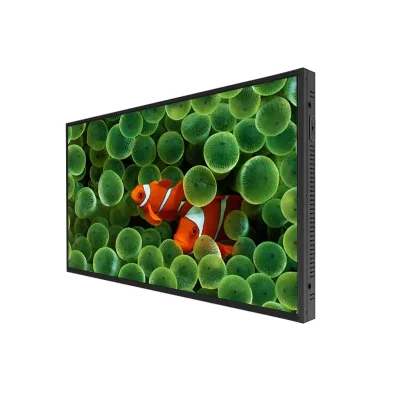
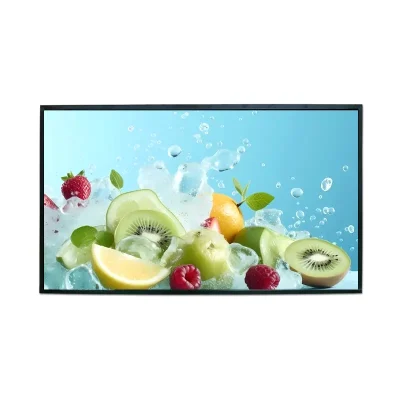
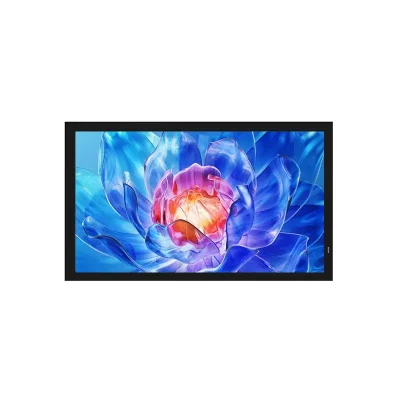
43 Inch Ultra-Bright LCD Panel for Transit Hubs
This 43-inch FHD S-IPS module combines a 5000 cd/m² configuration, 51-pin LVDS signaling, a matte 3H surface and wide-temperature operation for passenger-information systems.
Product Summary
The Ultra-Bright LCD Panel for Transit Hubs is a 43-inch a-Si TFT-LCD module for passenger information, public guidance and commercial equipment exposed to strong ambient light. Its native 1920 × 1080 format supports timetable layouts, service notices, advertising media and wayfinding content without the controller demands of a 4K panel.
The GD50 configuration is identified at 5000 cd/m² in the model table. Another line states 2000 nits, so the ordered luminance and tolerance should be confirmed before optical, power and thermal release. The panel also provides 89° viewing in four named directions, a 1100:1 typical contrast ratio and 16.7M colors.
Key Specifications
| Parameter | Confirmed value |
|---|---|
| Screen size | 43 inches |
| Resolution | 1920 × 1080 pixels, FHD, 51 PPI |
| Panel mode | S-IPS, normally black, transmissive |
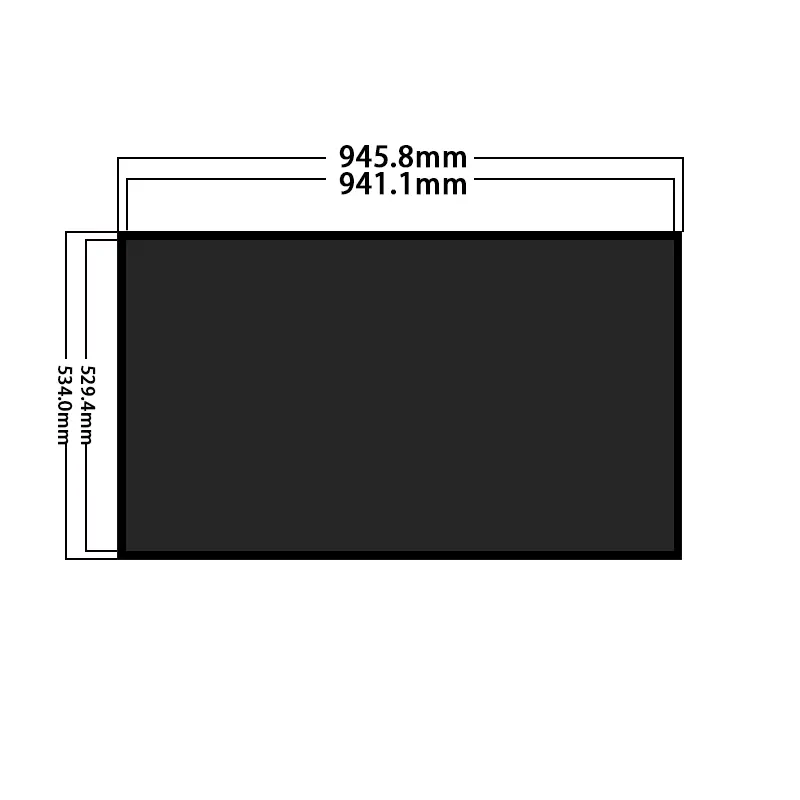
| Active display area | 941.184 × 529.416 mm |
| Listed viewing area | 945.8 × 534.02 mm |
| Selected configuration | 5000 cd/m², subject to order confirmation |
| Viewing angle | 89°/89°/89°/89° left/right/up/down at CR ≥ 10 |
| Contrast ratio | 1100:1 typical |
| Response time | 12 ms typical, Tr+Td |
| Display colors | 16.7M colors, 68% NTSC |
| Signal interface | 51-pin, two-channel, 8-bit LVDS |
| Panel voltage | 12.0 V typical |
| Weight | 7.50 kg typical |
| Surface treatment | Matte, 1% haze, 3H hard coating |
| Backlight | Two-string WLED; driver not included |
| Backlight reference | 50,000 hours listed |
| Operating temperature | −20°C to +70°C |
| Storage temperature | −30°C to +80°C |
FHD Content Planning for Passenger Information
Native 1920 × 1080 Layout
Full HD provides a familiar 16:9 canvas for arrival boards, route information, gate or platform notices, emergency messages and advertising loops. Content should be transmitted at the native raster to preserve small text and line graphics.
A 43-inch format provides visual presence in concourses and waiting areas while remaining easier to package than very large displays. Viewing distance, font height and information density should still be tested in the intended installation.
Wide-Angle S-IPS Presentation
The listed 89° left, right, up and down viewing angles support audiences approaching from different positions. S-IPS, normally black operation also suits dark-background timetable designs and high-contrast alert screens.
Evaluate off-axis text, colored route identifiers and emergency graphics behind the intended front window. Panel values do not account for reflection, tint or contamination on the completed protective stack.
5000 cd/m² Optical Qualification
Confirm the GD50 Output
The model table associates GD50 with 5000 nits, while the page hero carries a conflicting 2000-nit statement. Procurement documents should lock the nominal luminance, tolerance, measurement point, backlight condition and dimming requirement.
Use one approved value for the production configuration. Do not combine the family range with the exact model value in the purchasing specification.
Test the Final Front Window
High panel luminance does not alone determine installed readability. Front-glass transmission, internal reflections, surface treatment, bonding, solar load and viewing direction affect perceived contrast.
The standard panel has a matte surface with 1% haze and 3H hard coating. Anti-reflective treatment or optical bonding may be reviewed when a separate protective window is used, but these options require complete-stack evaluation.
Integrating the Ultra-Bright LCD Panel for Transit Hubs
51-Pin LVDS Compatibility
The interface is 51-pin, two-channel, 8-bit LVDS. A matching connector count does not establish compatibility. Engineering must confirm the complete pin assignment, mapping convention, connector orientation, native timing, voltage levels and cable construction.
Validate the standard input at 1920 × 1080 before selecting an enhanced motion mode. The page lists 60 Hz plus 120 Hz and 240 Hz MEMC-related configurations; the panel, backlight and controller combination for those modes requires confirmation.
12.0 V Panel Rail and Backlight Driver Boundary
The panel supply is 12.0 V typical. The WLED backlight is described as two strings with the driver not included, so separate data are required for backlight voltage, current, enable, dimming, protection and startup behavior.
Do not infer the backlight power budget from the panel-voltage field. Review the 5000 cd/m² configuration with the driver design and enclosure thermal path.
Mechanical and Environmental Release
Active Area, Viewing Area and Overall Drawing
The 941.184 × 529.416 mm active area defines the pixel region. The listed 945.8 × 534.02 mm viewing area may support front-window planning, but it does not replace an approved overall drawing.
Obtain the outline, mounting points, connector keep-outs, edge limits and tolerances before cabinet release. The 7.50 kg typical weight requires distributed support that avoids twist and concentrated edge loading.
Temperature and Enclosure Boundaries
The panel operates from −20°C to +70°C and stores from −30°C to +80°C. These are component limits, not proof of a waterproof, impact-rated or finished outdoor enclosure.
Generic IP-rated chassis, wide-voltage power, networking and embedded operating-system options are separate system configurations and must be documented for the final assembly.
Applications and Configuration Options
Transit Passenger Information
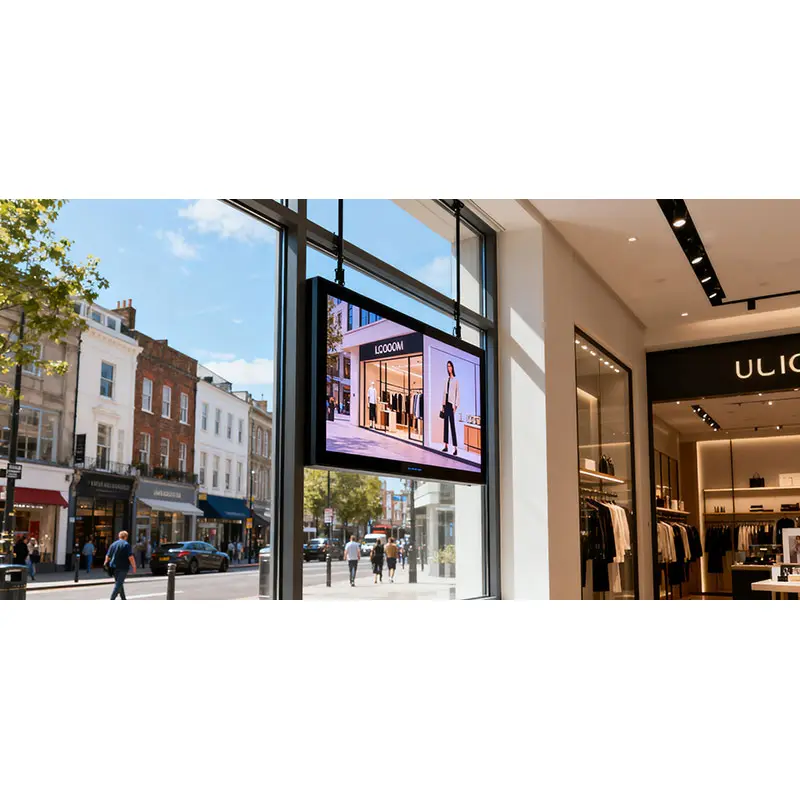
The Ultra-Bright LCD Panel for Transit Hubs can be evaluated for airport, railway, metro and bus-terminal information systems requiring Full HD content, wide viewing and strong ambient-light performance. Content may include schedules, platform or gate changes, service disruptions, public notices and advertising.
High-brightness, wide-angle commercial displays are commonly used for flight, gate, baggage and public-information functions in busy transportation facilities.
Retail, Industrial and Commercial Displays
Other suitable directions include retail advertising, corporate display boards, industrial HMI terminals and indoor or semi-outdoor digital signage. Each deployment should be qualified for optics, operating temperature, mounting, controller compatibility and service access.
Customization review may include fixed luminance selection, LVDS cable and controller matching, optical bonding, AR/AG/AF treatments, enclosure adaptation, mounting and thermal management. Custom configurations are generally reviewed from 500 pieces, subject to tooling, material availability and the requested specification. Samples and standard-module quantities are confirmed separately.
Procurement Checklist and FAQ
Procurement Checklist
- Confirm the assigned and supplier model revision.
- Lock the 5000 cd/m² configuration, tolerance and test method.
- Provide native 1920 × 1080 timing and intended frame rate.
- Supply the complete 51-pin LVDS definition and mapping convention.
- Confirm connector orientation, mating part and cable length.
- Define the 12.0 V panel-rail current.
- Provide WLED voltage, current, enable and dimming requirements.
- Confirm the backlight-driver architecture and thermal budget.
- Obtain the approved overall mechanical drawing.
- Verify active area, viewing area, mounting and keep-outs.
- Design distributed support for the 7.50 kg panel.
- Define front-window transmission and reflection targets.
- Confirm non-touch use or a separately engineered touch route.
- Validate operating conditions with a representative sample.
- State sample quantity, annual demand and production schedule.
FAQ
About 43 Inch Ultra-Bright LCD Panel
What must be checked before connecting a 51-pin LVDS controller?
Does the GD50 suffix guarantee a 5000 cd/m² shipment?
Is the 12.0 V input sufficient to design the complete power system?
Which dimensions control the enclosure opening?
When should optional 120 Hz or 240 Hz modes be selected?
Freya Yang
+86 18318948097