Freya Yang
+86 18318948097
+852 62667476
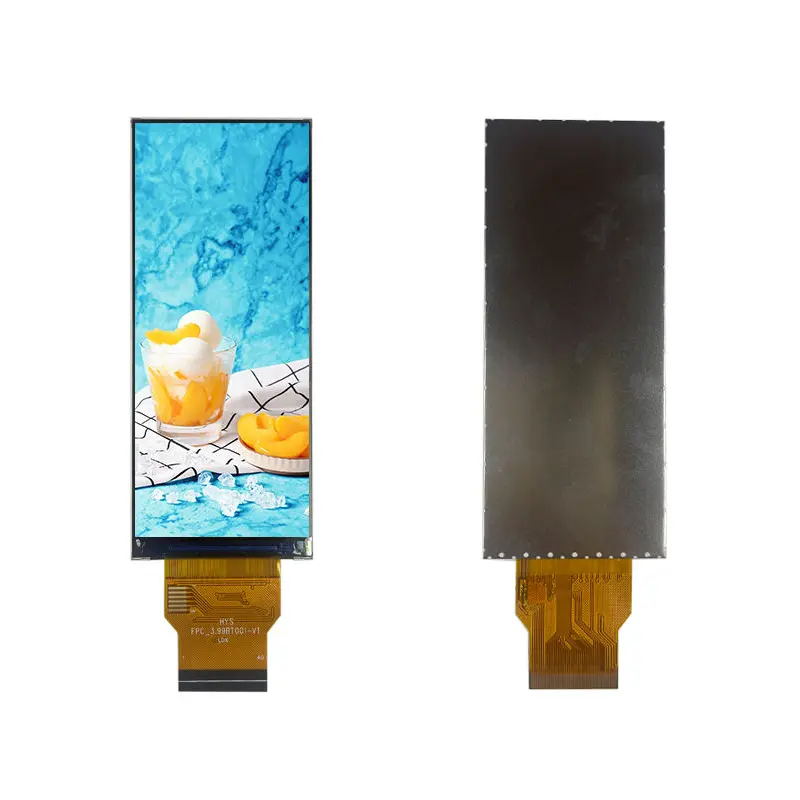
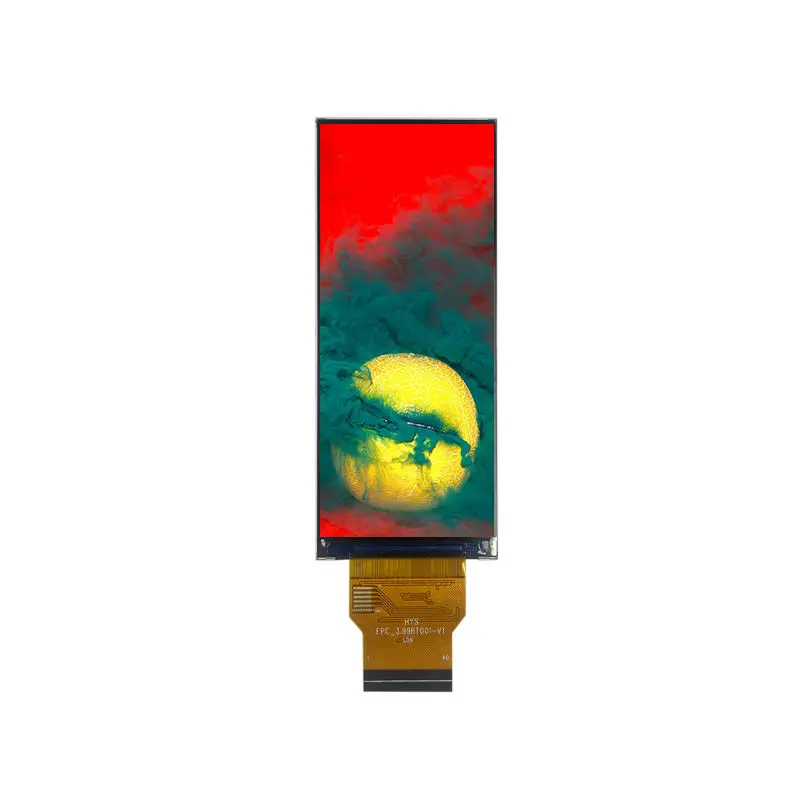
4 Inch Bar Type TFT Display 400×960 SPI RGB for Embedded Devices
Model P/N
Size
Resolution
Brightness
Viewing Angle
Connector Type
Operating Temp
Overall(mm)
huisoar
HS040AA27A-V
Brand
Panel Size (inch)
Model P/N
Resolution
Brightness (nits)
Viewing Angle
Contrast Ratio
Response Time
Overall (mm)
Active Area (mm)
Refresh Rate
Display Colors
Panel Type
Connector Type
Surface Treatment
Operating Temp
Touchscreen Type
Storage Temp
Work Mode
Pixel Format
Input Voltage (V)
Weight (g)
Designed For
400×960 Vertical TFT LCD Module with SPI+RGB Interface and 400 Nits Brightness
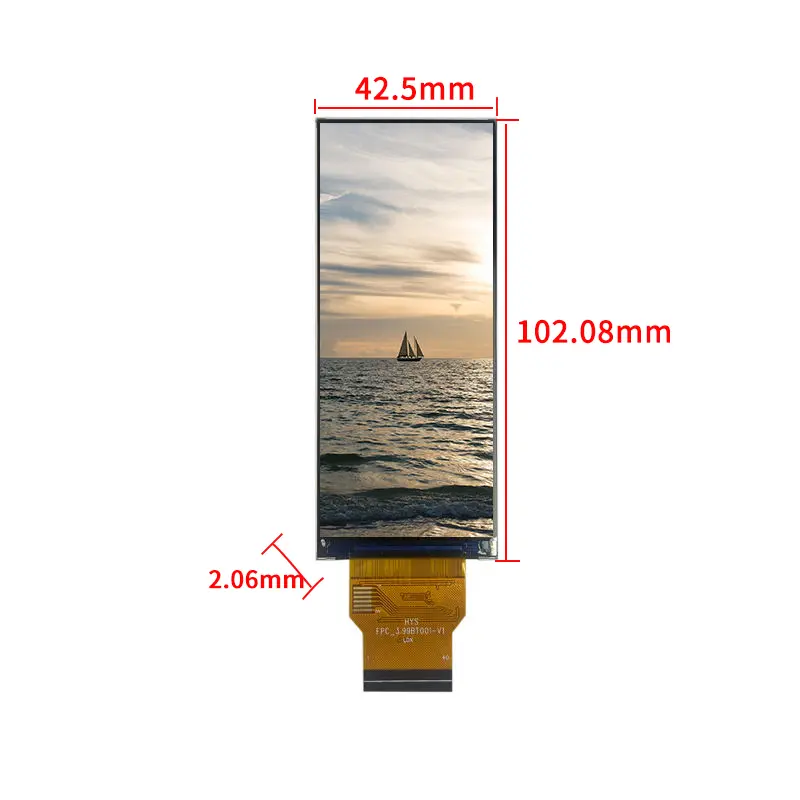
The 4 Inch Bar Type TFT Display is a compact 400×960 vertical TFT LCD module for embedded devices, industrial terminals, compact control equipment, and specialized product interfaces. It combines 400 nits brightness, SPI+RGB communication, ST7701 driver IC support, 262K color output, ALL-view direction, and a slim 42.5 × 102.08 × 2.06 mm LCM outline. This makes it suitable for projects that need a narrow display window, readable color graphics, and practical controller-side integration in space-constrained equipment.
At a Glance: 4 Inch Vertical TFT LCD Module Highlights
- 4.0 inch TFT display module designed for vertical, narrow, and bar-type embedded interfaces.
- 400 × 960 resolution supports tall menus, status indicators, compact graphics, and equipment UI layouts.
- 400 nits brightness provides practical readability for indoor and controlled-light industrial environments.
- SPI+RGB interface supports flexible display control planning for embedded controller projects.
- ST7701 driver IC gives engineers a defined basis for firmware and control-board matching.
- 39.18 × 94.03 mm active area and 42.5 × 102.08 × 2.06 mm outline support compact enclosure design.
- 262K colors and RGB stripe pixel arrangement support functional icons, warnings, and UI differentiation.
Product Overview of the 4 Inch Bar Type TFT Display
The 4 Inch Bar Type TFT Display solves a specific mechanical and interface-design challenge: how to add a readable color screen to a product with a narrow front panel or vertical display space. Instead of using a conventional wide 4:3 or 16:9 module, this 400×960 TFT display gives engineers a tall display area that can show menus, status bars, instrument values, indicator graphics, and compact controls in a slim enclosure.
This module is most relevant for embedded device manufacturers, industrial terminal developers, control equipment designers, and OEM teams that need a small but visually useful display. The 400 nits brightness supports many indoor and controlled-light equipment environments, while the ALL-view direction helps maintain readability when the product is installed at different heights or operating angles.
For engineering selection, the most important factors are the SPI+RGB interface, ST7701 driver IC, active area, outline size, display orientation, FPC route, controller-board support, and final enclosure window. The display should be evaluated with the real UI layout, drawing, brightness environment, and target device structure before moving into mass production.
Key Features of the 4 Inch Bar Type TFT Display
| Key Feature | B2B Value |
|---|---|
| 4.0 inch vertical TFT format | Supports narrow front panels, compact terminals, and tall equipment-interface layouts. |
| 400 × 960 resolution | Provides enough pixel structure for icons, menus, status values, vertical UI sections, and graphics. |
| SPI+RGB interface | Gives hardware teams a practical communication path for embedded display control. |
| ST7701 driver IC | Helps engineers plan firmware, initialization, and display-driver matching. |
| 400 nits brightness | Supports readable indoor and controlled-light use in industrial and commercial devices. |
| 262K color output | Supports color-coded warnings, menu states, function icons, and graphical interface differentiation. |
| ALL-view direction | Helps maintain visibility across different equipment positions and user viewing angles. |
| Slim 42.5 × 102.08 × 2.06 mm outline | Supports compact mechanical design where enclosure depth and width are limited. |
Technical Specifications of the 4 Inch Vertical TFT LCD Module
| Specification | Value |
|---|---|
| Product Type | 4 Inch Bar Type TFT LCD Display |
| Display Size | 4.0 inch |
| Resolution | 400 × 960 |
| Brightness | 400 nits |
| Interface | SPI+RGB |
| Driver IC | ST7701 |
| Active Area | 39.18(W) × 94.03(L) mm |
| LCM Outline Size | 42.5(W) × 102.08(L) × 2.06(H) mm |
| Display Color | 262K |
| Operating Temperature | -20°C to 70°C |
These specifications are most useful when reviewed as a complete integration package. The 400×960 resolution affects UI design, the SPI+RGB interface affects controller-board selection, the ST7701 driver IC affects firmware work, and the 42.5 × 102.08 × 2.06 mm outline affects the product’s enclosure, FPC route, and viewing window.
Why Choose This 4 Inch Vertical TFT Display?
This 4 inch vertical TFT display is useful when the project needs a narrow color screen that fits a specialized enclosure rather than a common rectangular display window. It is a strong candidate for embedded products where a conventional horizontal screen would consume too much front-panel area.
400×960 Bar-Type Format for Tall Embedded Interfaces
The 400×960 resolution gives the display a tall layout that can support vertical menu structures, status columns, narrow dashboards, compact graphics, and real-time device feedback. For industrial terminals and specialized embedded electronics, this can be more efficient than forcing a wide panel into a narrow product body.
The vertical format can also help product designers separate data into stacked UI zones. A compact device might show operating mode at the top, main values in the center, and warnings or navigation prompts at the bottom. This type of interface is easier to plan when the display itself matches the physical direction of the product.
SPI+RGB Interface and ST7701 Driver for Controller Matching
The SPI+RGB interface gives engineering teams a defined integration direction for embedded controller planning. Because the accessible data also identifies the ST7701 driver IC, firmware and hardware teams have a clearer starting point for display initialization, timing review, and control-board matching.
This does not remove the need for validation. Engineers should still confirm pin definition, voltage requirements, FPC design, driver commands, refresh behavior, and display timing with the selected control board. Sample testing is especially important when the product has a custom enclosure or unusual display orientation.
Display Performance of the 4 Inch TFT LCD Module for Industrial Interfaces
The 4 inch TFT LCD module is built for functional readability in compact equipment, not for outdoor signage or large-format multimedia display. Its 400 nits brightness, 262K colors, RGB stripe arrangement, and ALL-view direction support practical embedded-device visualization.
400 Nits Brightness for Indoor and Controlled-Light Equipment
The 400 nits brightness level is suitable for many indoor industrial terminals, compact control panels, device settings screens, and semi-bright equipment locations. Brightness should be reviewed with the final cover glass, UI color palette, viewing distance, and installation angle.
For outdoor, direct-sunlight, or window-facing products, a system-level review is required. Anti-glare coating, optical bonding, cover reflection, thermal design, and higher-brightness alternatives may need to be evaluated before positioning the finished product for high ambient-light use.
262K Color and RGB Stripe Pixel Arrangement for Functional UI
The 262K color capability is practical for embedded products that need more than monochrome output but do not require a premium multimedia panel. It can support warning colors, icon states, menu highlights, progress indicators, and simple graphical differentiation.
The RGB stripe pixel arrangement should be considered during UI design. Engineers and designers should test font size, icon thickness, line spacing, and color contrast on a real sample to confirm that information remains readable on the 39.18 × 94.03 mm active area.
ALL-View Direction for Flexible Installation Positions
The ALL-view direction is useful for equipment that may be viewed from different angles, installed vertically, or operated by users at different heights. In compact products, the display may be mounted on a handheld device, a narrow control box, or a machine-side terminal where the viewing angle is not always centered.
The final viewing result still depends on front-cover material, bezel depth, installation angle, and lighting. For recessed display windows or thick cover structures, sample testing should confirm that the visible area and contrast remain acceptable.
Integration and Mounting Options for SPI+RGB Embedded TFT Display Projects
SPI+RGB embedded TFT display projects should be planned around the control board, driver IC, mechanical drawing, FPC route, and enclosure window. A compact display can still create integration risk if the electrical and mechanical details are not reviewed together.
SPI+RGB Interface and ST7701 Driver Board Integration
The SPI+RGB interface should be matched with the selected controller board, display timing, signal definition, and firmware resources. ST7701 support should be confirmed through the driver library, initialization code, display orientation settings, and any required command sequence.
For OEM projects, early sample validation should include startup behavior, display rotation, color rendering, refresh stability, sleep and wake behavior, and long-duration operation. If the module is used in a battery-powered or compact industrial device, firmware power behavior should also be checked.
Mechanical Mounting, FPC Routing, and Narrow Enclosure Planning
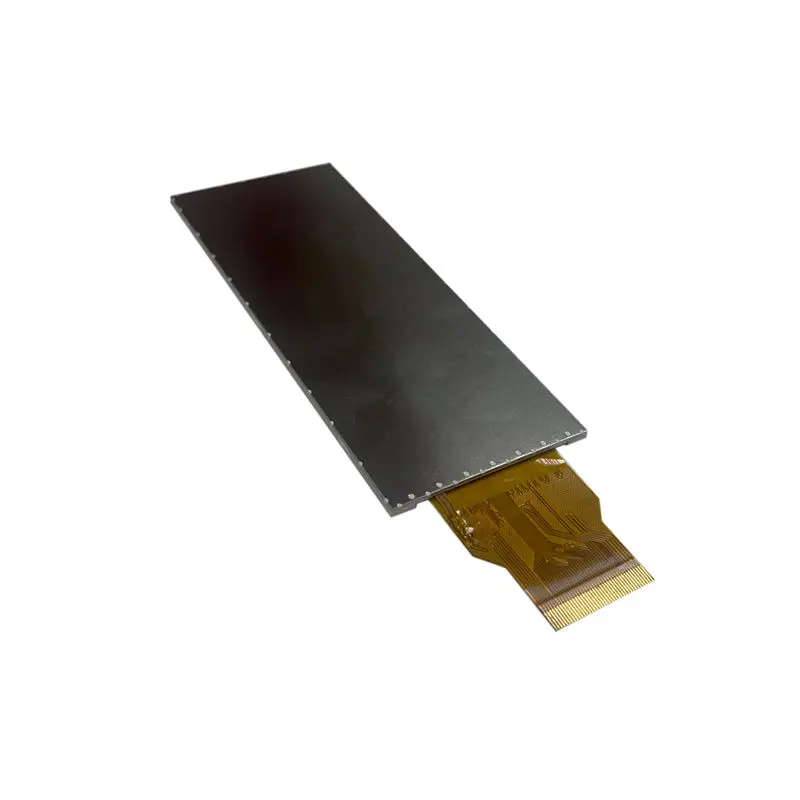
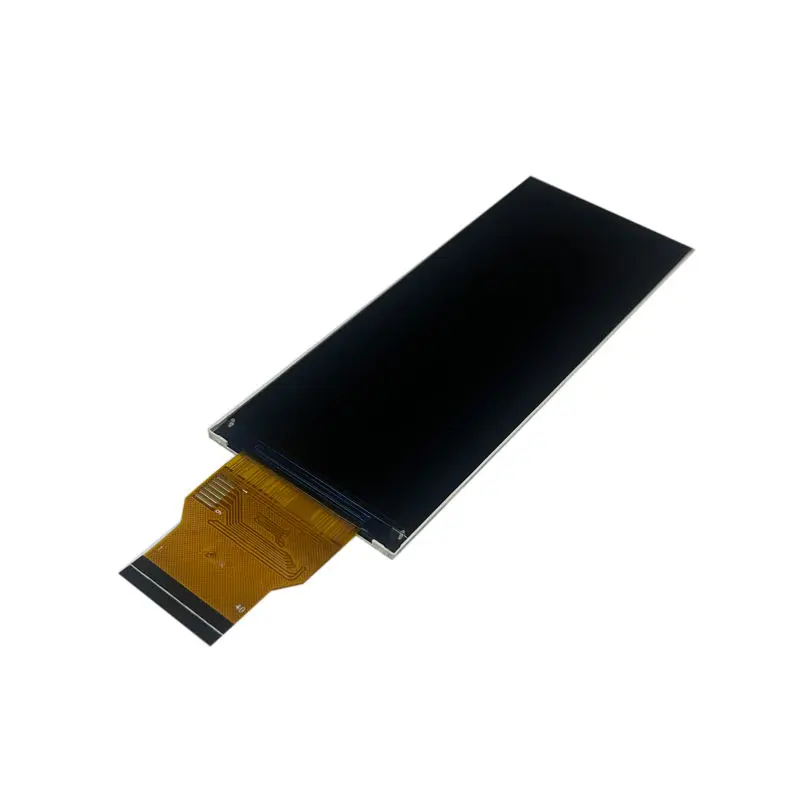
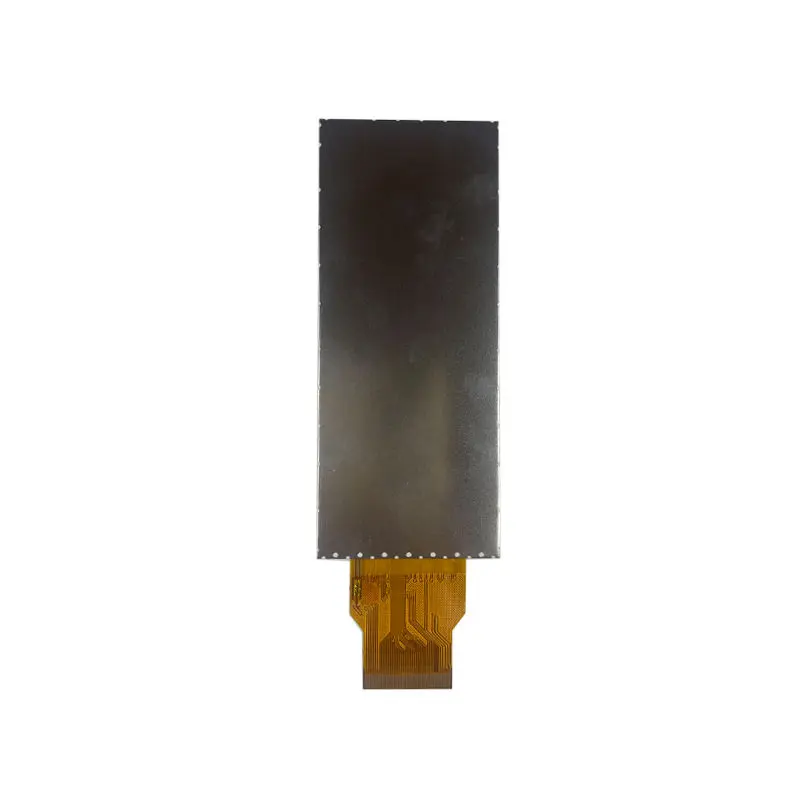
The 42.5 × 102.08 × 2.06 mm outline makes this module suitable for narrow structures, but the enclosure still needs careful review. Mechanical teams should check the active display window, bezel allowance, FPC bend radius, connector location, adhesive area, support ribs, and internal clearance.
Because the screen is tall and slim, the product’s front-panel design should align with the display orientation. If the UI is vertical, button placement, labels, icons, and warning zones should be designed around the screen’s physical shape rather than adapted from a horizontal template.
Power, Thermal, and System-Level Validation
The supplied source data confirms brightness, interface, driver IC, outline dimensions, operating temperature, and color capability, but it does not provide a full power specification. Engineers should confirm input voltage, backlight circuit, current requirements, and thermal behavior through the datasheet and sample testing.
The operating temperature range of -20°C to 70°C supports many industrial and embedded equipment environments. The final system may still be limited by the controller board, battery, housing material, adhesive, cover glass, or installation location, so system-level validation remains necessary.
Recommended Applications for Compact Embedded Display Interfaces
This display is best suited for products that need a narrow, color, vertical interface rather than a wide panel. Its 400×960 resolution and compact mechanical structure make it relevant for specialized embedded product design.
Industrial Terminals with Narrow Status and Menu Areas
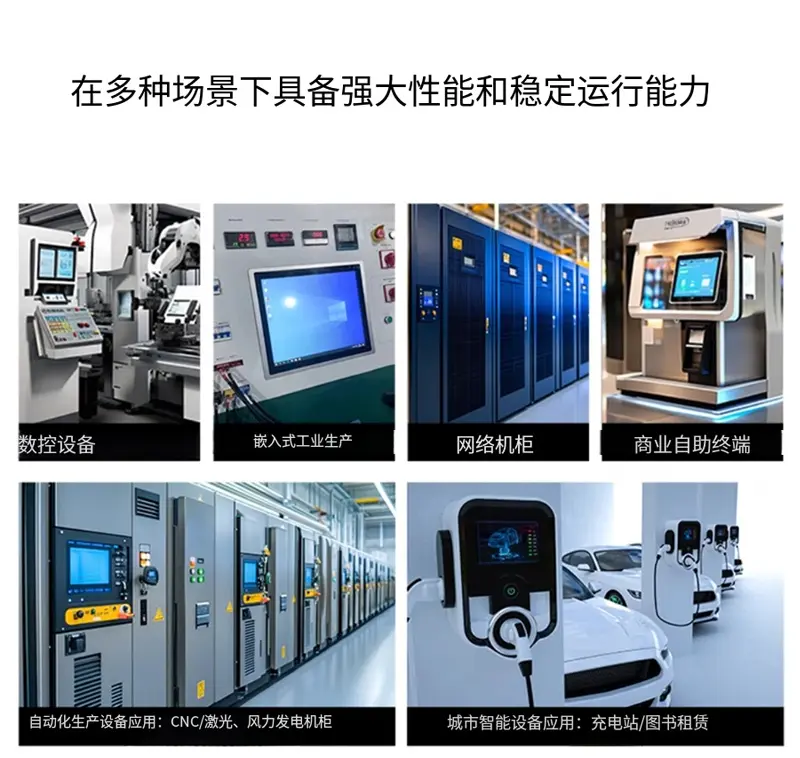
Industrial terminals often need to show operating mode, menu selections, status values, alarms, and simple icons in a small front-panel area. This display’s vertical format allows information to be stacked efficiently, helping designers build compact interfaces without expanding the enclosure.
Compact Control Equipment with Space-Constrained Front Panels
Control equipment such as handheld tools, machine-side modules, compact controllers, and specialized instruments may have limited front-panel space. A narrow TFT display can provide more visual feedback than indicator LEDs while remaining easier to integrate than a larger landscape display.
Specialized Embedded Electronics with Custom Screen Orientation
Some embedded electronics require a non-standard screen orientation because of product shape or user workflow. The 400×960 bar-type format can support vertical navigation, measurement display, device status, and simple graphics in products where a standard screen would reduce mechanical efficiency.
Industrial Application Devices Requiring Custom Display Matching
The source information identifies industrial application use and customization ability. For OEM projects, this means buyers can evaluate drawing-based matching, sample-based validation, interface adaptation, FPC routing, cover needs, and mechanical fit according to the final device design.
Customization Options for 4 Inch TFT Display Module Projects
Customization for 4 inch TFT display module projects can be evaluated through drawing-based review, sample-based validation, interface matching, FPC routing, brightness planning, cover glass selection, touch panel evaluation, and mechanical adaptation. These should be treated as project-evaluation options unless confirmed in a drawing, quotation, or final specification.
For embedded devices, common customization discussions include FPC length and direction, connector position, interface adaptation, cover lens shape, silk-screen printing, touch feasibility, housing clearance, and optical stack. If a project requires anti-glare, anti-reflection, anti-fingerprint treatment, optical bonding, or IP-rated enclosure evaluation, those requirements should be reviewed at the system level.
The best customization path begins with the product drawing and controller-board plan. Buyers should provide the display window size, enclosure limitation, UI orientation, target brightness, interface requirement, quantity, and application environment before requesting a final proposal.
Procurement and Engineering Checklist for Bar Type TFT Display Selection
A bar type TFT display selection should confirm mechanical fit, interface compatibility, UI suitability, and environmental performance before bulk procurement. Use the following checklist during engineering review.
- Confirm screen orientation: verify that a 400×960 vertical layout fits the product UI and user workflow.
- Check mechanical fit: review 42.5 × 102.08 × 2.06 mm outline, active area, bezel, display window, and FPC route.
- Match the interface: confirm SPI+RGB pinout, controller support, signal timing, and firmware resources.
- Verify ST7701 support: review driver initialization, rotation setting, display command sequence, and sample behavior.
- Test brightness in real use: evaluate 400 nits with the final cover glass, UI colors, and viewing distance.
- Review color and graphics: test fonts, icons, warnings, and menu contrast on the real 262K-color panel.
- Confirm operating environment: compare -20°C to 70°C display operation with the complete device conditions.
- Plan sample validation: test display startup, refresh stability, cable route, enclosure assembly, and long-duration operation.
SPI+RGB Interface / Brightness / Mounting Selection Guide for Bar Type TFT Projects
For bar type TFT projects, interface, brightness, and mounting should be reviewed together. SPI+RGB affects the controller-board plan, 400 nits brightness affects visibility, and the slim vertical outline affects enclosure design. A successful project should validate all three with the final UI, mechanical drawing, and control board before mass production.
FAQ
About 4 Inch Bar Type TFT Display
What is a 4 Inch Bar Type TFT Display used for?
What resolution does this display provide?
Does this module support SPI+RGB interface?
Which driver IC is used?
Is 400 nits brightness suitable for industrial equipment?
Is this a touch display?
What are the main mechanical dimensions?
Can this display be customized for OEM projects?
What should buyers provide before requesting a quotation?
Is this module suitable for vertical menu screens?
Freya Yang
+86 18318948097