Freya Yang
+86 18318948097
+852 62667476
55 Inch Public Transit Signage Display for Bright Stations
Model P/N
Size
Resolution
Brightness
Viewing Angle
Connector Type
Operating Temp
Overall(mm)
huisoar
HS550DPY-01
Brand
Panel Size (inch)
Model P/N
Resolution
Brightness (nits)
Viewing Angle
Contrast Ratio
Response Time
Overall (mm)
Active Area (mm)
Refresh Rate
Display Colors
Panel Type
Connector Type
Surface Treatment
Operating Temp
Touchscreen Type
Storage Temp
Work Mode
Pixel Format
Operating Environment
Designed For
55 Inch Public Transit Signage Display for Bright Stations
A 55-inch Full HD signage unit with 3000 cd/m² luminance, light-sensitive dimming and AC-powered media inputs for bright public spaces.
Product Summary
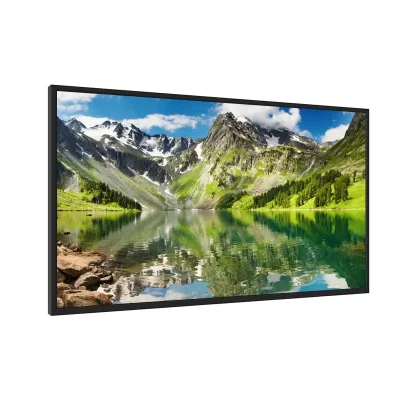
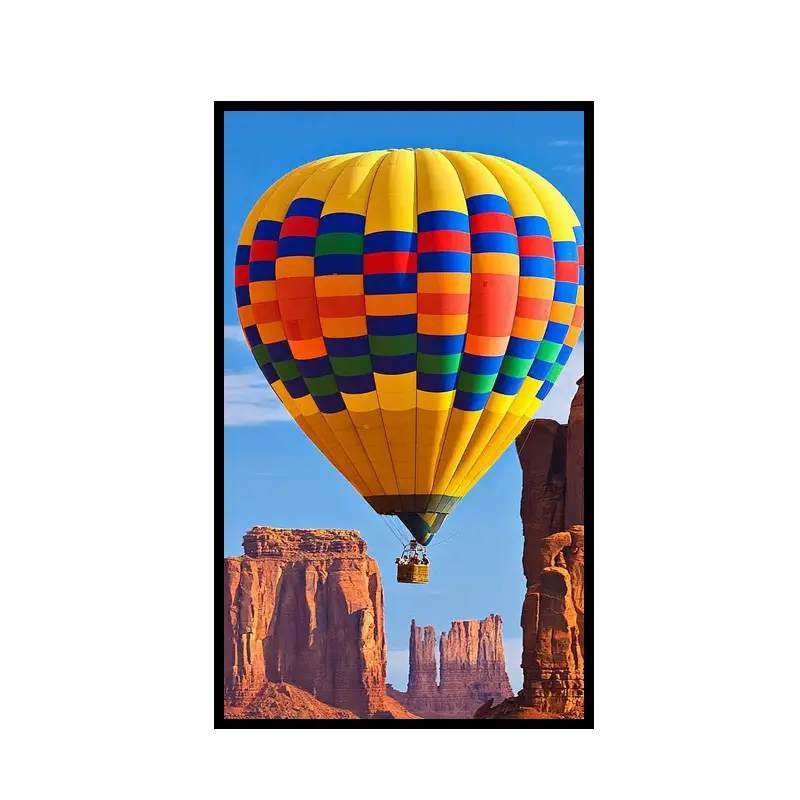
The Public Transit Signage Display is a finished 55-inch communication unit for stations, airports, retail windows and other public locations exposed to strong ambient light. Its 3000 cd/m² luminance, 1920 × 1080 resolution and 178° horizontal and vertical viewing specification support advertising, passenger notices and scheduled messaging where a conventional indoor screen may appear washed out.
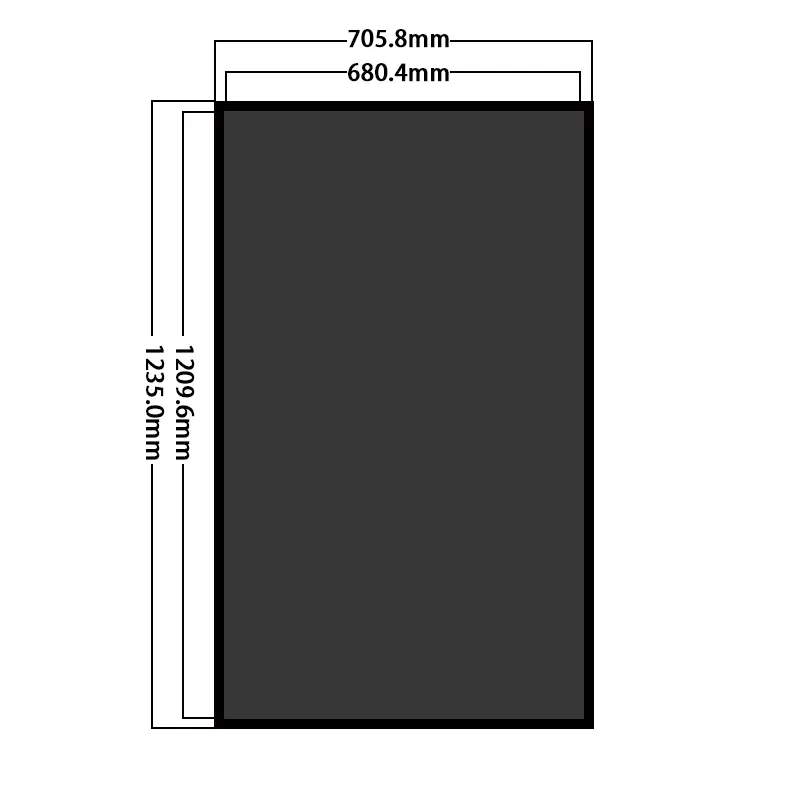
The display has a 1209.6 × 680.4 mm active area and a listed 1235 × 705.8 mm overall size. Light-sensitive dimming operates across 40%–100%. The standard specification also includes intelligent air cooling, AC 100–240 V input and 280 W power consumption.
Key Specifications
| Parameter | Confirmed value |
|---|---|
| Screen size | 55 inches |
| Resolution | 1920 × 1080 pixels |
| Aspect ratio | 16:9 |
| Luminance | 3000 cd/m² |
| Brightness control | Light-sensitive dimming, 40%–100% |
| Active area | 1209.6 × 680.4 mm |
| Overall size | 1235 × 705.8 mm; thickness not specified |
| Viewing angle | 178° horizontal / 178° vertical |
| Contrast ratio | 1000:1 |
| Pixel pitch | 0.630 × 0.630 mm |
| Display colors | 16.7M colors |
| Color saturation | 70% NTSC |
| Response time | 14 ms typical, Tr/Td notation |
| Input power | AC 100–240 V |
| Power consumption | 280 W |
| Cooling | Intelligent air cooling |
| Mounting | M8, 400 × 400 mm pattern |
| Operating temperature | −20°C to +60°C |
| Storage temperature | −30°C to +80°C |
3000 cd/m² Optical Planning
Match Luminance to the Installed Environment
A 3000 cd/m² panel provides substantially more luminance than a standard indoor advertising screen, but finished readability still depends on orientation, reflections, cover materials and solar exposure. The installation review should identify whether the display faces a window, sits under a platform canopy or receives direct sunlight.
Acceptance testing should use the planned content, viewing distance and ambient conditions. White-background timetables, dark promotional video and emergency notices can perform differently under reflected light.
Commission the Light-Sensitive Dimming Range
The 40%–100% dimming range should be commissioned after the ambient-light sensor position is fixed. A blocked or shaded sensor can command a backlight level that does not represent the light reaching the display face.
Define minimum and maximum brightness, transition timing and nighttime limits. This preserves daytime visibility while limiting unnecessary nighttime output and thermal load.
Planning a Public Transit Signage Display Installation
Verify the Media and Control Architecture
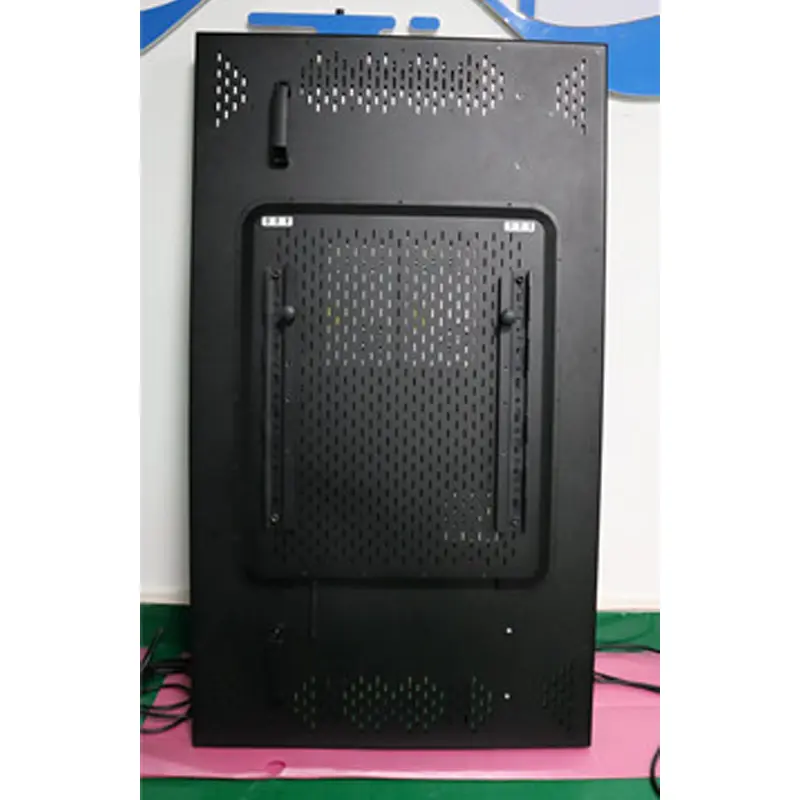
The listed connections include HDMI, VGA, DVI, audio input, DC input and a light-sensor input. Confirm exact port quantities and connector placement on the approved rear-interface drawing because the published interface line contains duplicated HDMI wording.
No operating system, CPU, RAM or storage configuration is specified. Define whether content comes from an external media player, transport-information controller, PC or another signal device. Confirm output timing, cable length and remote-management requirements before sample approval.
Release the Enclosure from the Correct Dimensions
The 1209.6 × 680.4 mm active area describes the image region, while 1235 × 705.8 mm is the listed two-dimensional envelope. Thickness, cable clearance, service access and airflow space are not established by those values.
Mechanical release requires the full drawing, total depth, connector clearance, mounting loads and the M8 400 × 400 mm pattern. Keep the cooling path open inside any wall recess or housing.
Thermal and Environmental Review
Use the Temperature Range as a Qualification Boundary
The operating range is −20°C to +60°C, with storage from −30°C to +80°C. These limits do not guarantee that every enclosure remains within range under solar loading.
Review the 280 W power level, air cooling, ventilation, filter access and heat absorbed through the front surface. Measure internal temperature at the intended orientation during representative high-ambient operation.
Keep Weather Protection Separate from Brightness
High luminance and wide temperature limits do not establish an IP rating. The standard technical table does not state product-specific ingress protection, protective-glass grade or impact resistance.
Exposed installations should define rain, dust, condensation, drainage, corrosion, vandal resistance and service-door sealing separately. Custom options become part of the product only when included in the approved configuration.
Image Performance for Public Messaging
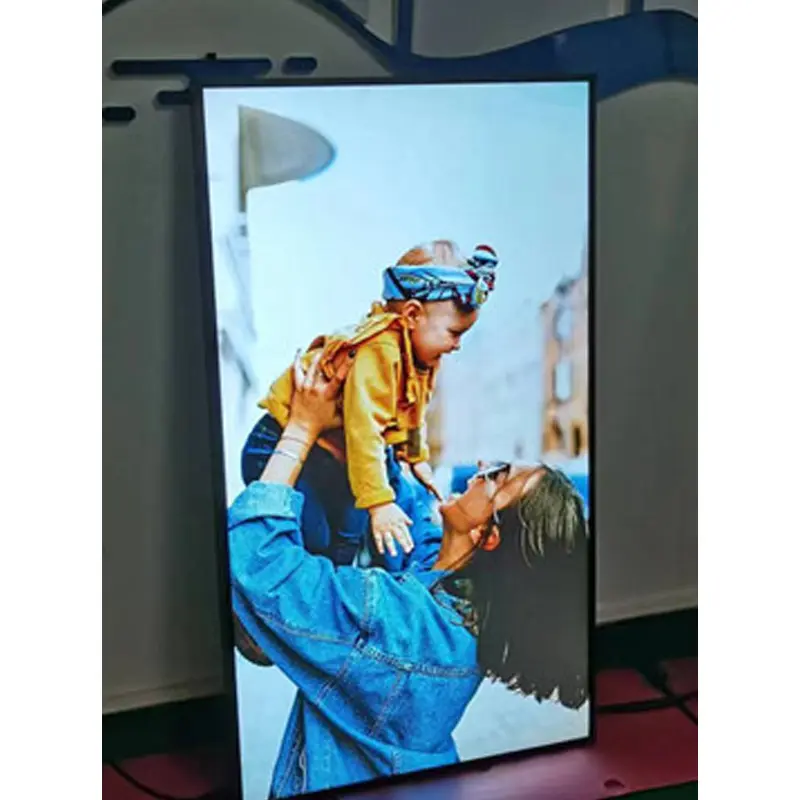
The 1920 × 1080 raster provides a familiar Full HD canvas for timetable pages, platform notices, advertising loops and public announcements. A 1000:1 contrast ratio, 16.7M colors and 70% NTSC color saturation support mixed text, image and video content.
For public information, prioritize legibility: large type, strong contrast, short message blocks and safe margins. Check content from off-axis positions because viewers in concourses and waiting areas rarely stand directly in front of the screen.
Application Fit
The Public Transit Signage Display can be evaluated for train stations, airports, bus-terminal waiting areas, bright retail windows and public-information zones. It suits passive communication such as advertising, route notices, safety messages, wayfinding support and scheduled announcements. Transportation signage is widely used for live passenger information, alerts, wayfinding and commercial messaging across stations and terminals.
No touch specification is confirmed, so interactive kiosk functions should not be assumed. Touch, networked media players, CMS software, IP-rated construction and specialized protective glass require separately defined configurations.
Customization and Procurement
Shell shape, housing color and logo treatment may be reviewed for OEM projects. Broader chassis, optical, interface and embedded-system options remain custom configurations rather than standard features.
Request the approved specification, full mechanical drawing, rear-interface layout, electrical diagram, sensor definition and configuration-specific test criteria. Sample acceptance should cover luminance, dimming, image uniformity, input switching, cooling and the intended mounting orientation.
Procurement Checklist
- Assigned model and revision
- 55-inch Full HD configuration
- 3000 cd/m² tolerance and test condition
- Sensor location and 40%–100% dimming behavior
- Native timing and accepted input resolutions
- Exact HDMI, VGA, DVI, audio and DC connector layout
- External player or controller architecture
- AC 100–240 V input and 280 W power planning
- Full 1235 × 705.8 mm drawing with depth
- M8 400 × 400 mm mounting and load limits
- Ventilation and service clearances
- −20°C to +60°C operating qualification
- Front-window reflection and solar-load test
- Required IP, impact and protective-glass grade
- Sample criteria, quantity and annual demand
FAQ
About 55 Inch Public Transit Signage Display
What must be tested before installation in direct or reflected sunlight?
How should the 40%–100% dimming range be commissioned?
Does the temperature range confirm that the unit is weatherproof?
What is required to select a media player or controller?
Which dimensions control cabinet and wall-mount design?
Freya Yang
+86 18318948097