Freya Yang
+86 18318948097
+852 62667476
4.2 Inch Tricolor Electronic Paper Module for Shelf Labels
Model P/N
Size
Resolution
Brightness
Viewing Angle
Connector Type
Operating Temp
Overall(mm)
huisoar
HS042TC09ASL-V1
Brand
Panel Size (inch)
Model P/N
Resolution
Viewing Angle
Response Time
Overall (mm)
Active Area (mm)
Refresh Rate
Display Colors
Panel Type
Connector Type
Operating Temp
Touchscreen Type
Storage Temp
Work Mode
Control Type
Operating Environment
Designed For
4.2 Inch Tricolor Electronic Paper Module for Shelf Labels
A compact 400×300 e-paper panel for clear retail pricing and promotion graphics.
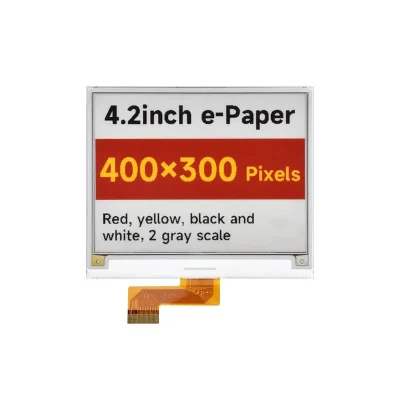
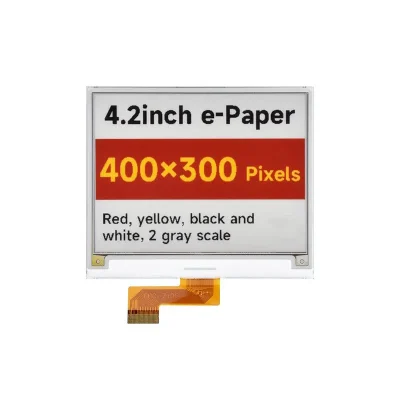
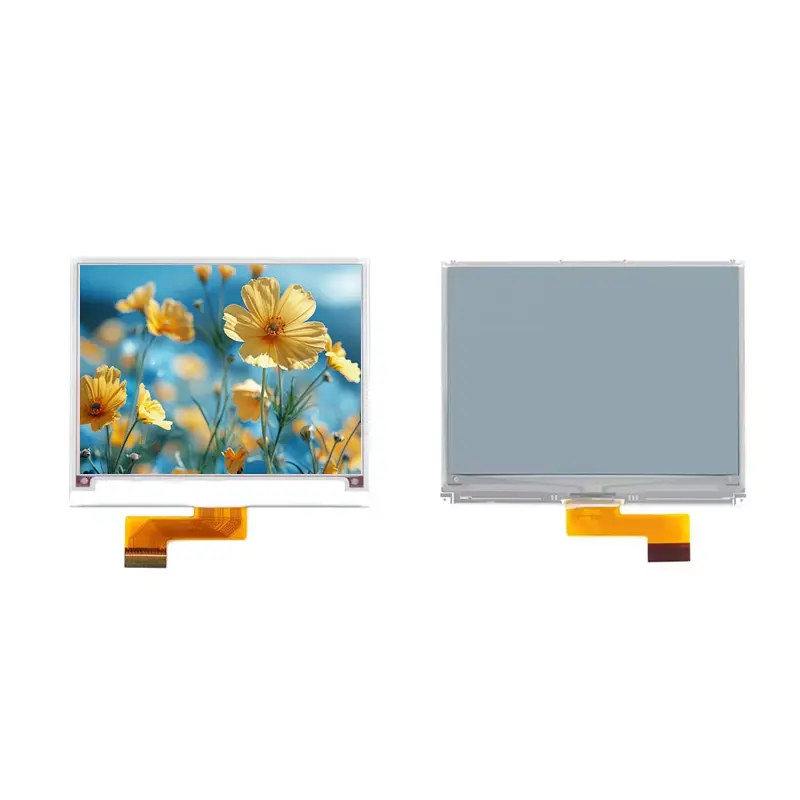
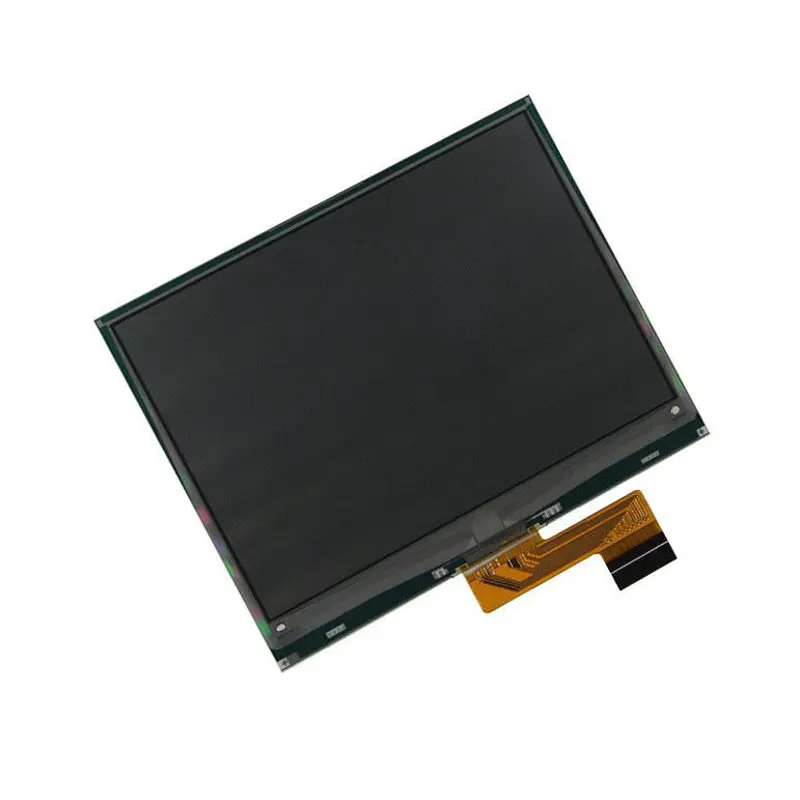
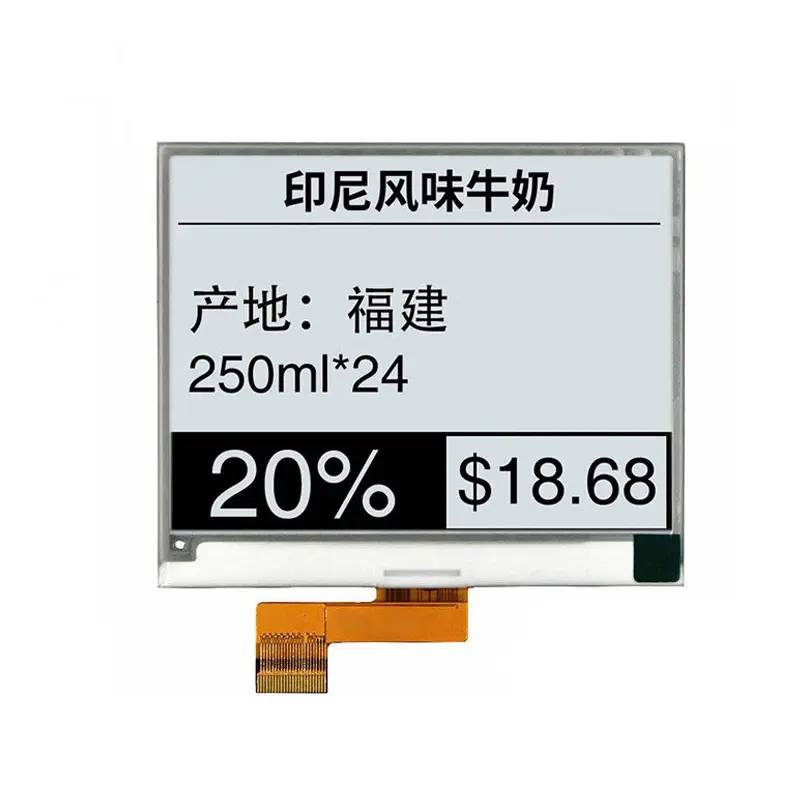
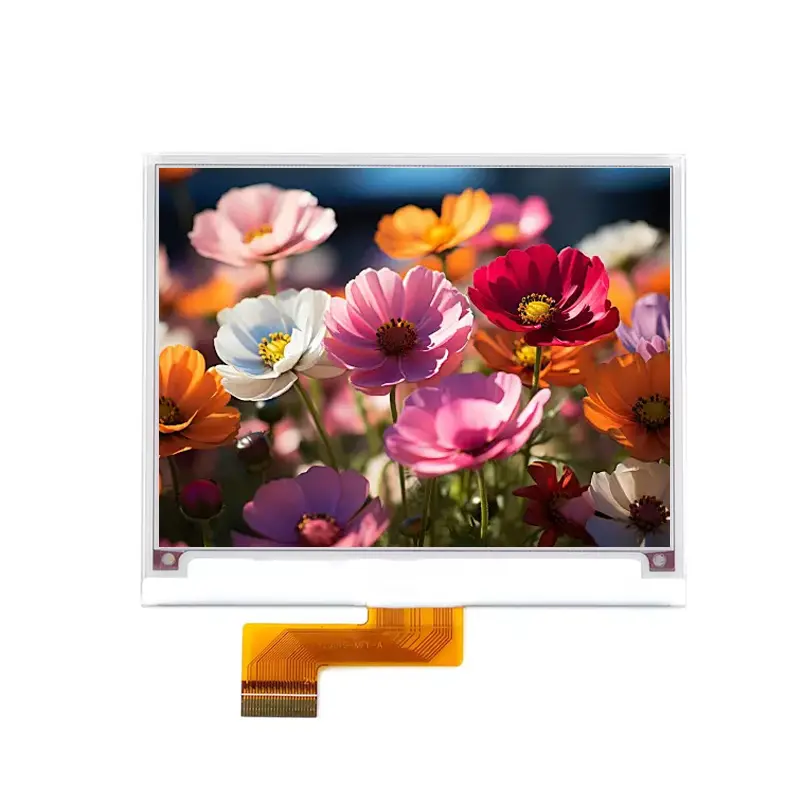
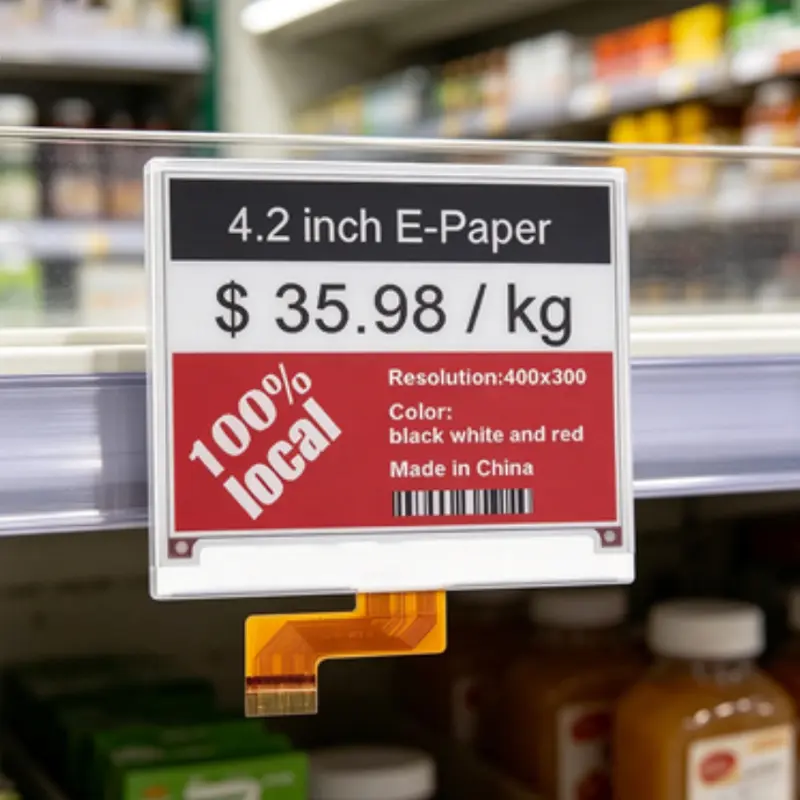
The 4.2 Inch Tricolor Electronic Paper Module is a 400×300 display component for electronic shelf labels, retail price cards, promotion tags, and compact information panels. Its black, white, and red image format supports clear product details while reserving red for promotional emphasis, warnings, or priority information. The module provides an 84.8 × 63.6 mm active area and is shown with a flexible printed cable for embedded integration.
The communication interface remains TBD, so controller compatibility cannot be established from the screen size or resolution alone.
Key Specifications at a Glance
| Parameter | Value |
|---|---|
| Display size | 4.2 inch |
| Resolution | 400 × 300 |
| Display type | Tricolor electronic paper |
| Image colors | Black, white, and red |
| Active area | 84.8 × 63.6 mm |
| Stated overall dimensions | 104.5 × 87.5 × 12.7 mm |
| Connection evidence | Bottom FPC visible |
| Communication interface | TBD |
| Intended application | Electronic shelf labels and retail information cards |
The interface, pin assignment, electrical limits, controller requirements, update waveform, and final mechanical drawing must be approved for the selected configuration.
Product Overview
The 400×300 pixel matrix provides space for product names, prices, unit information, barcodes, compact logos, stock indicators, and promotional messages. The three-color image format creates a simple visual hierarchy without requiring a full-color graphics pipeline.
The 4.2 Inch Tricolor Electronic Paper Module is best positioned as a display component within a larger shelf-label design. A complete ESL product may also require a controller, memory, wireless communication, battery or power circuit, housing, mounting method, and label-management system.
Black and white for primary information
Black text on a white field is suitable for prices, item descriptions, product codes, weights, and ordinary status information. Interface designers should select type sizes and line spacing that remain readable within the 84.8 × 63.6 mm active area.
Red for controlled visual emphasis
Red can distinguish promotions, low-stock warnings, discount notices, or category markers. It should be used selectively so important information remains visually prominent.
Native 400×300 content design
Images should be prepared for the native 400×300 canvas. The final controller workflow must define image conversion, color mapping, memory layout, orientation, and update commands.
Tricolor Content for Electronic Shelf Labels
A three-color panel is useful where retail information requires more emphasis than a monochrome label but does not justify a full-color display system. The fixed black-white-red palette encourages clear templates and consistent information hierarchy across a store or warehouse.
Pricing and product-information layouts
A typical label template can reserve the largest text for price, use smaller black text for product details, and place red graphics around promotions or urgent notices. Barcode and QR-code performance should be tested with the intended module, update process, scanning distance, and printed-equivalent layout.
Promotion graphics
Red areas can support sale banners, percentage reductions, membership pricing, or limited-stock indicators. Graphic density should be tested because the controller and waveform requirements are not yet defined.
Interface and Controller Qualification
The communication interface is marked TBD. It would be unsafe to assume SPI, I²C, UART, parallel data, NFC, or any other protocol without an approved module specification.
A controller board must match the panel’s pin assignment, electrical limits, image-memory structure, color encoding, update waveform, and timing requirements.
FPC and pinout review
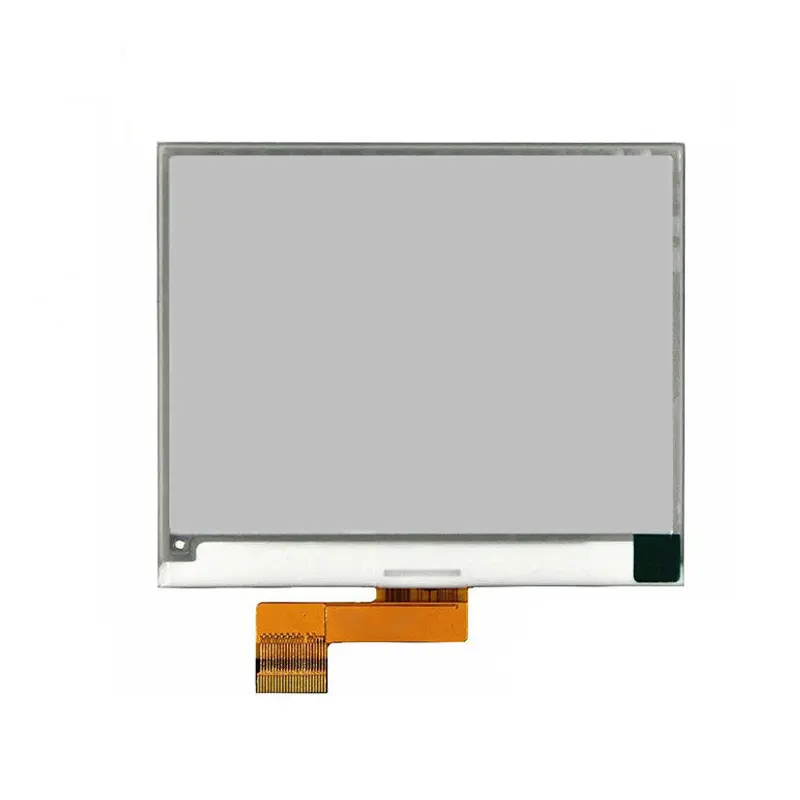
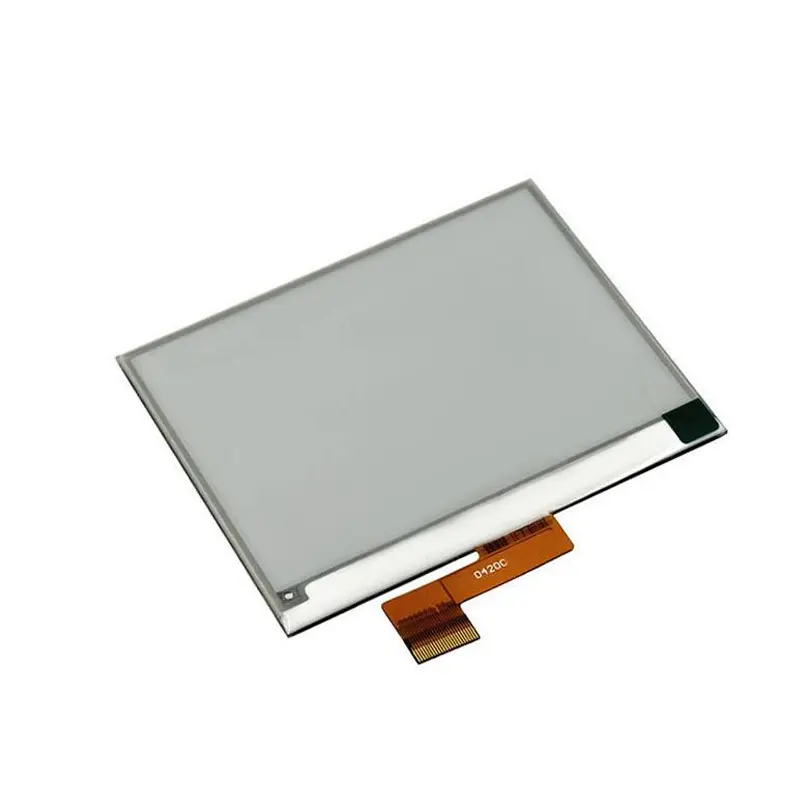
The product images show a flexible printed cable, but they do not confirm the pin count, pitch, contact side, orientation, or signal assignment. These details must be checked against the PCB connector and enclosure layout.
Waveform and update control
Tricolor electronic-paper panels generally require a defined update process, but the required controller, waveform data, temperature compensation, and refresh sequence for this module are not confirmed. They must be obtained with the approved technical documentation.
Prototype validation
A development sample should be tested with the proposed controller before PCB tooling or volume purchasing. Validation should cover image orientation, three-color output, update completion, repeated refreshes, power behavior, and recovery after interrupted updates.
Mechanical Fit and Display Area
The active image area measures 84.8 × 63.6 mm. The stated product dimensions are 104.5 × 87.5 × 12.7 mm. Because 12.7 mm is substantial for a bare display panel, the production drawing should clarify whether this value represents the raw module, an assembled label configuration, packaging, or another mechanical reference.
Enclosure opening
The viewing window should be based on the approved bezel and active-area drawing rather than the active area alone. The frame should avoid covering edge pixels or placing pressure on the display structure.
FPC clearance
The enclosure and PCB must allow room for the FPC exit, bend radius, connector insertion, and strain relief. Sharp folds and compression near the cable-to-panel transition should be avoided.
Front protection
A protective front window may be considered for retail handling, cleaning, or impact exposure. Material, thickness, optical appearance, adhesive, and mounting pressure require separate mechanical review.
When to Choose This Module
This module is a relevant candidate when the project needs:
- A compact 4.2-inch label format
- Native 400×300 content
- Black, white, and red information graphics
- A bare electronic-paper component for custom integration
- An 84.8 × 63.6 mm active image area
- Retail or warehouse labels with intermittent content changes
- A project where the controller and interface can be qualified separately
Another display route may be more appropriate when the application needs video, rapid animation, continuous touch interaction, full-color images, an integrated wireless ESL product, or a prequalified controller board.
Recommended Applications
Appropriate project directions include:
- Electronic shelf labels
- Supermarket pricing cards
- Retail promotion tags
- Product-information labels
- Warehouse bin and location labels
- Inventory status cards
- Low-update-frequency embedded status displays
A shelf-label deployment still requires system-level evaluation of the controller, communication network, power architecture, enclosure, mounting, update frequency, and label-management workflow.
Customization and Project Configuration
Project evaluation may include FPC geometry, interface definition, connector selection, front protection, enclosure fit, orientation, label template, controller matching, and packaging.
No fixed customization MOQ is stated because tooling, material availability, interface development, and mechanical scope are not defined. Sample quantities, standard-module quantities, and custom production requirements should be confirmed separately.
Procurement and Sample Approval Checklist
Confirm the following before purchase or PCB release:
- Native 400×300 content layout
- Black-white-red image conversion workflow
- Communication-interface protocol
- Controller and waveform requirements
- Complete pin assignment
- FPC pitch, contact side, and orientation
- Electrical voltage and current limits
- Active area and bezel opening
- Meaning of the 104.5 × 87.5 × 12.7 mm dimensions
- Enclosure and front-window drawing
- Update-frequency target
- Environmental requirements
- Sample quantity
- Estimated annual demand
- Production schedule
- Need for a controller or development board
FAQ
About 4.2 Inch Tricolor Electronic Paper Module
Is the module supplied with a complete ESL controller?
Does the module use SPI?
Can it display full-color product images?
Does the screen include touch input?
Does electronic paper consume no power?
What should be tested on a sample?
Freya Yang
+86 18318948097