Freya Yang
+86 18318948097
+852 62667476
7 Inch OLED AMOLED Industrial Module for HMI Panels
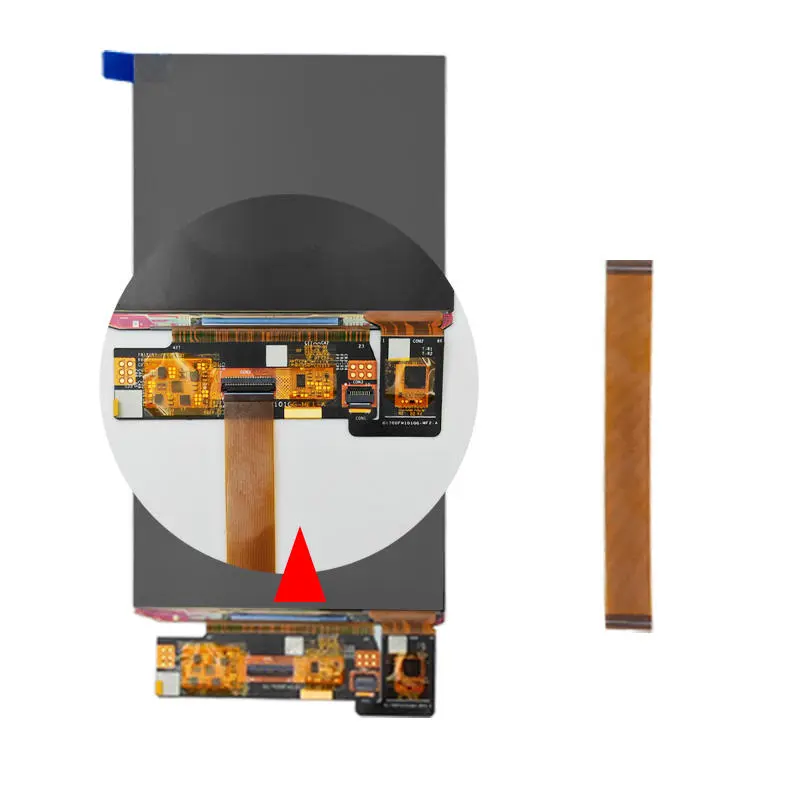
Model P/N
Size
Resolution
Brightness
Viewing Angle
Connector Type
Operating Temp
Overall(mm)
huisoar
HS070P4001-01
Brand
Panel Size (inch)
Model P/N
Resolution
Brightness (nits)
Contrast Ratio
Response Time
Overall (mm)
Active Area (mm)
Refresh Rate
Display Colors
Panel Type
Connector Type
Operating Temp
Touchscreen Type
Storage Temp
Work Mode
Pixel Format
Operating Environment
Designed For
7 Inch OLED AMOLED Industrial Module for HMI Panels
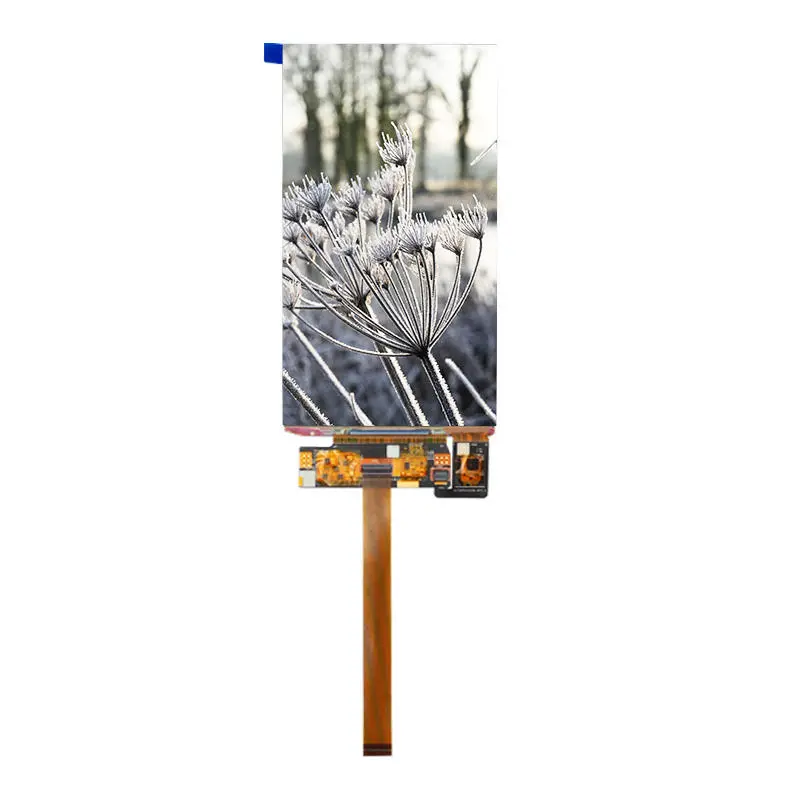
A 1080×1920 portrait AMOLED module with 800 cd/m² typical luminance, four-lane MIPI, a 39-pin connector, and integrated on-cell touch.
The OLED AMOLED Industrial Module for HMI is a 7-inch portrait display component developed for high-resolution control interfaces and professional equipment. It combines a native 1080×1920 raster, 800 cd/m² typical luminance, maximum 165 Hz support, a four-lane MIPI display link, and on-cell touch in an 89.13 × 160.9 mm footprint.
This is a component-level display rather than a complete monitor or panel PC. The host processor, MIPI timing, power architecture, touch-controller path, enclosure, cover glass, and software package must be qualified for the selected production revision.
Product Summary
The 7-inch AMOLED format provides a tall portrait workspace for machine settings, process values, status graphics, alarm lists, diagnostic data, and touch-based navigation. Its active area measures 87.1344 × 154.90 mm, supporting compact equipment designs that need more vertical content than a conventional landscape panel.
The module is identified with a four-lane MIPI interface and a 39-pin connector. A matching 39-pin connector does not guarantee MIPI compatibility. Lane rate, command or video mode, voltage levels, timing, initialization data, connector orientation, and the complete pin assignment must also match.
Key Specifications at a Glance
| Parameter | Value |
|---|---|
| Display size | 7 inches |
| Resolution | 1080 × 1920 pixels |
| Display technology | AMOLED |
| Active area | 87.1344 × 154.90 mm |
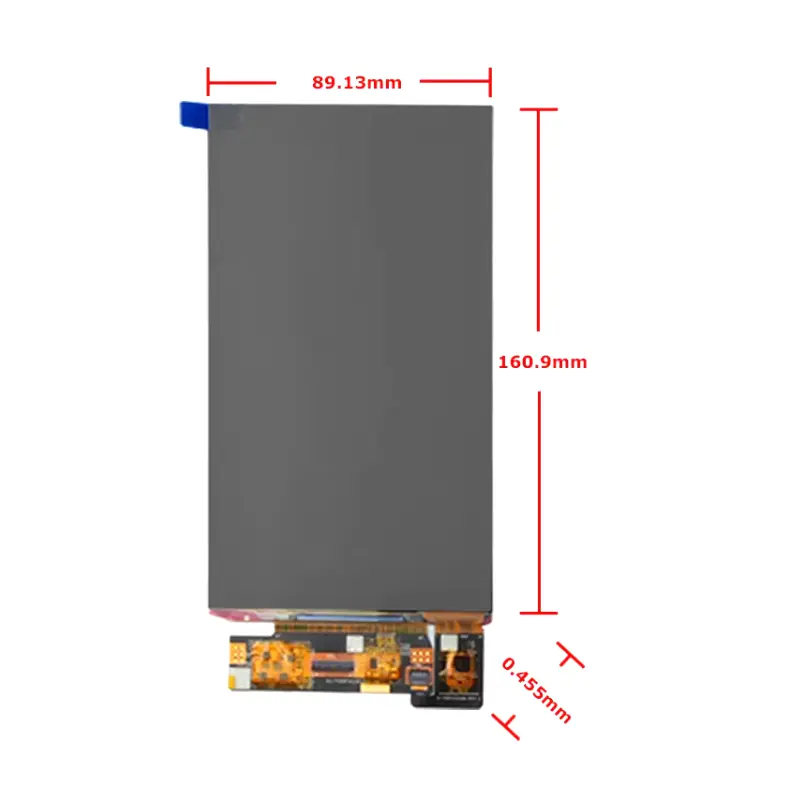
| Outline footprint | 89.13 × 160.9 mm |
| Luminance | 800 cd/m² typical |
| Frame-rate support | Maximum 165 Hz |
| Display interface | Four-lane MIPI |
| Connector | 39 pins |
| Touch structure | On-cell touch |
| Operating temperature | −20°C to +70°C |
| Storage temperature | −40°C to +80°C |
FHD Portrait Graphics and High-Refresh Operation
Native 1080×1920 content
The native portrait raster supports detailed text, graphics, charts, animated controls, and vertically arranged menus. UI assets should be prepared directly for 1080×1920 rather than relying on uncontrolled scaling from another aspect ratio. The host framebuffer, rotation settings, timing, and pixel mapping should be verified with the approved display documentation.
One configuration selector uses 1082×1920 wording, while the repeated technical tables and mechanical drawing identify 1080×1920. The ordered specification should explicitly confirm the 1080×1920 format before software and mechanical release.
Maximum 165 Hz Requires Timing Qualification
The maximum frame-rate value is listed as 165 Hz. The maximum 165 Hz value does not guarantee that every host or ordered revision can operate at 165 Hz. The production configuration must be checked for lane rate, blanking intervals, data format, command or video mode, display timing, thermal behavior, and the host’s sustained bandwidth.
Projects that do not require the maximum rate should define the intended operating refresh during sample approval. This helps align visual performance, system power, touch behavior, and software timing.
OLED AMOLED Industrial Module for HMI Integration
Qualify the Four-Lane MIPI Link
The display path uses four MIPI lanes through a 39-pin connection. Compatibility review should cover the complete connector definition, lane mapping, reset and control signals, power rails, initialization commands, timing table, polarity, FPC contact side, and mating connector.
HDMI, USB, LVDS, eDP, and parallel RGB are not direct replacements for the confirmed MIPI display input. Hosts using those outputs need a matched bridge or controller solution with firmware developed for the selected module.
Treat On-Cell Touch as a Separate Control Path
On-cell touch confirms that touch sensing is integrated into the display structure, but it does not define the touch controller, communication bus, firmware, interrupt behavior, supply voltage, touch-point count, or connector mapping.
On-cell touch does not define the touch controller, communication bus, firmware, or connector mapping. These items must be included in the approved touch specification and tested with the intended operating system or embedded software.
Optical Performance and Finished-Stack Validation
800 cd/m² Typical Luminance
The panel is rated at 800 cd/m² typical luminance. This provides additional optical margin for bright workshops, professional terminals, and equipment with protective front structures. Actual delivered brightness can change after adding cover glass, printed borders, adhesive, anti-glare treatment, sealing layers, or an air gap.
The listed 800 cd/m² panel luminance does not by itself establish direct-sunlight readability behind a finished cover. Approve the optical result using a representative assembly under the intended ambient-light conditions.
AMOLED Power and Control Requirements
AMOLED technology does not use an LCD backlight, but the display still requires a confirmed power architecture, rail sequence, timing package, and control implementation. System power depends on the panel-driving conditions and displayed content, so the final host and power design should be evaluated with representative UI screens and refresh settings.
Mechanical Integration and Thickness Control
Active Area and Outline Serve Different Functions
The 87.1344 × 154.90 mm active area defines the visible pixel region. The 89.13 × 160.9 mm outline defines the panel footprint before adding cover-glass overhang, FPC routing, support features, adhesive, gasket, or enclosure tolerances.
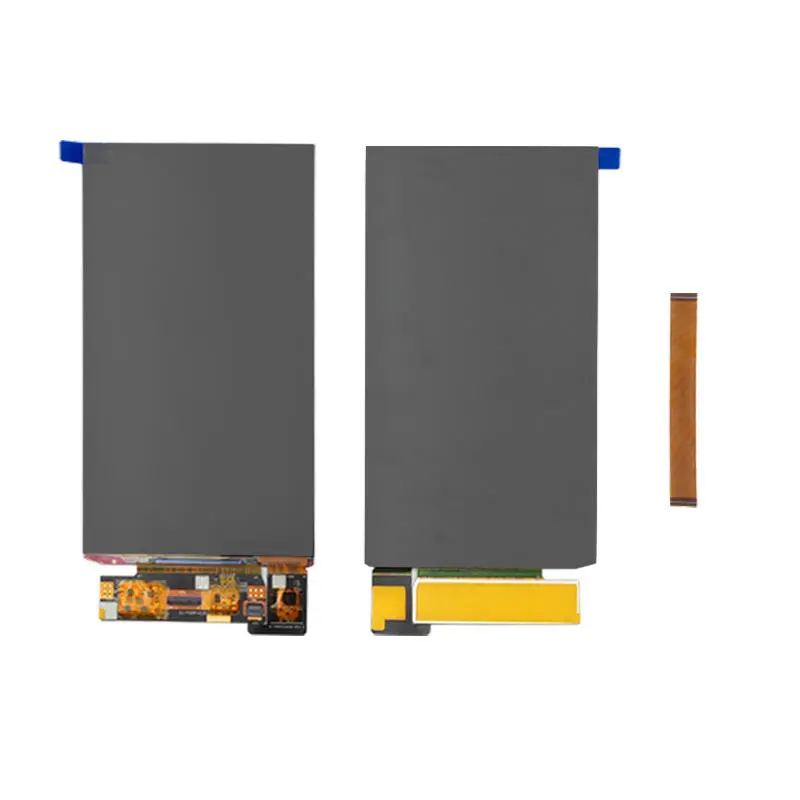
These dimensions should be entered separately in the mechanical CAD model. The lower circuit and FPC area also require clearance for connector engagement, bend radius, strain relief, and assembly handling.
Reconcile the Two Thickness Values
One table identifies a 0.455 mm thickness, while the mechanical drawing identifies 1.095 ± 0.15 mm total thickness. These values may refer to different layers or stack definitions, but they must not be treated as interchangeable.
The two thickness values must be reconciled before enclosure tooling is released. Request the controlled mechanical drawing for the exact production revision and define whether each value represents the OLED cell, encapsulated panel, touch stack, or complete module.
Environmental and Application Boundaries
Component Temperature Range
The module is specified for operation from −20°C to +70°C and storage from −40°C to +80°C. These component limits do not establish resistance to vibration, humidity, condensation, UV exposure, chemical cleaning, ingress, or mechanical shock.
Any finished industrial or regulated product requires system-level testing using the final enclosure, cover, cable routing, mounting structure, controller hardware, and operating software.
Suitable Project Directions
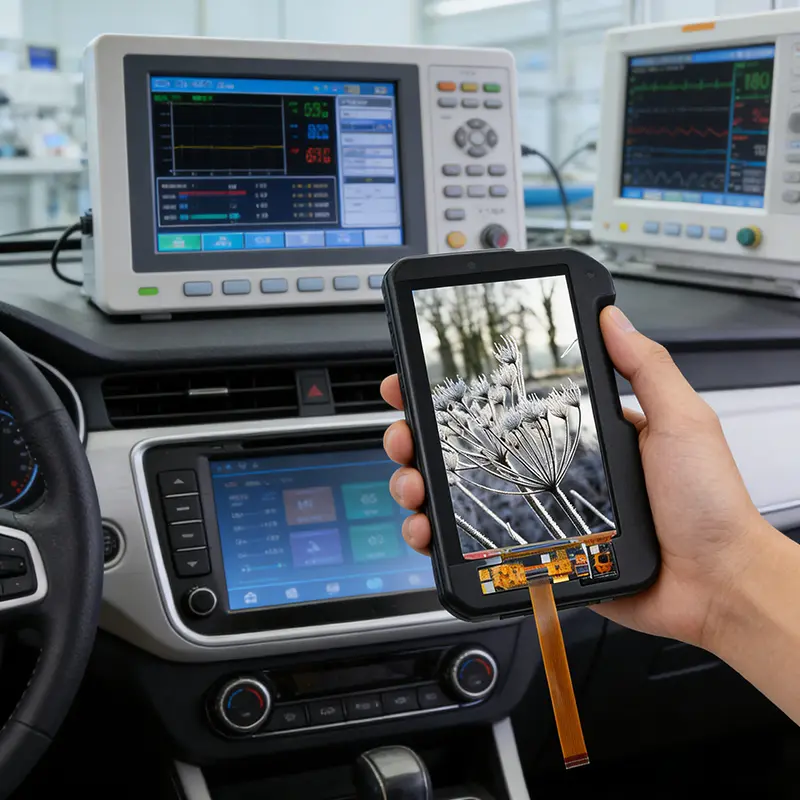
This configuration can be evaluated for industrial HMI panels, professional control interfaces, high-refresh equipment terminals, inspection systems, and portable test or service equipment.
Medical-equipment interface development is also possible as a project direction, but the display parameters alone do not establish medical certification or suitability for a particular clinical function. Optical, electrical, EMC, software, reliability, cleaning, and regulatory requirements must be qualified separately.
The OLED AMOLED Industrial Module for HMI is most appropriate where a portrait FHD layout, high luminance, touch interaction, and a slim AMOLED structure justify the additional host-integration work associated with a high-bandwidth MIPI panel.
Customization and Prototype Support
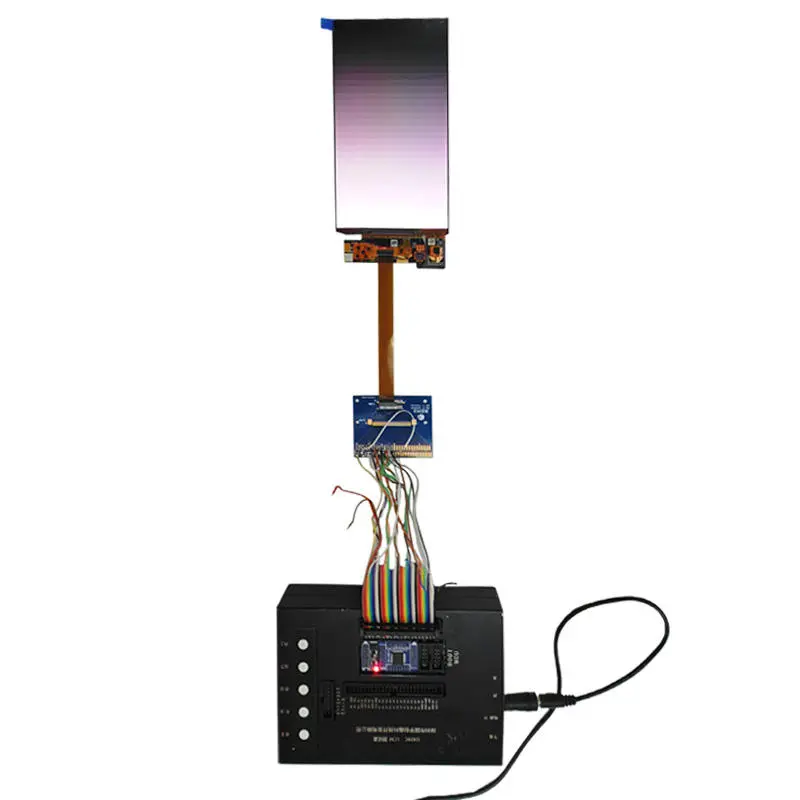
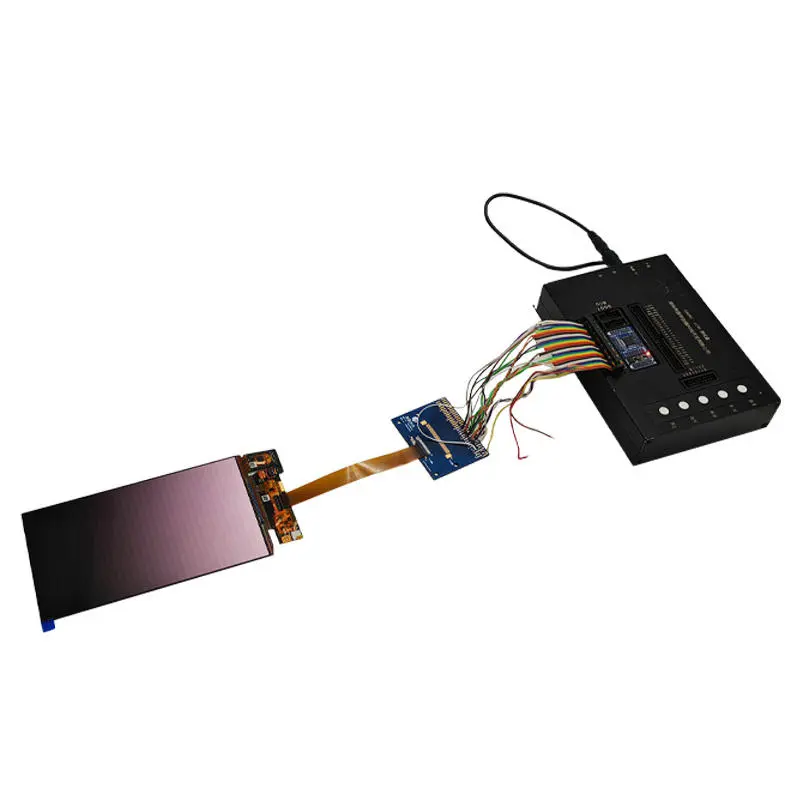
Cover-glass geometry, printed borders, FPC length and routing, connector definition, touch-controller integration, and mechanical support can be evaluated for custom projects. An optional testing jig and connection cable can also be requested for development or incoming inspection.
Custom configurations are generally reviewed from 500 pieces, subject to tooling requirements, material availability, and the requested specification. Samples and standard-module quantities are confirmed separately.
Procurement Checklist
Before sample approval, submit:
- host processor or display-controller model;
- required MIPI mode, four-lane configuration, lane rate, and timing;
- complete 39-pin assignment and connector orientation;
- display initialization and command package requirements;
- all display and touch power rails and sequencing;
- intended operating refresh rate;
- touch-controller, communication, firmware, and touch-point requirements;
- enclosure, cover-glass, adhesive, and FPC drawings;
- required finished-stack luminance;
- operating environment and qualification targets;
- sample quantity, annual demand, and schedule.
FAQ
What must be checked before replacing another 39-pin MIPI AMOLED panel?
Does maximum 165 Hz mean that any four-lane MIPI host can run the display at 165 Hz?
What touch information is required when the module has on-cell touch?
Which thickness should be used for the enclosure design?
Is 800 cd/m² sufficient for outdoor or medical-equipment use?
What is the typical lead time for custom LCD controller board integration with your display modules?
Lead time for custom LCD controller board integration depends on your specific requirements and current production schedule. Typically, custom integration projects require a design review and qualification phase, which can take several weeks. We recommend contacting our engineering team with your detailed specifications to receive an accurate timeline. For standard modules, lead times are shorter, but custom work involves additional steps such as firmware development and testing. We will provide a project-specific schedule after evaluating your needs.
What is the response time and refresh rate of your TFT displays for dynamic content in industrial HMIs?
The response time for this AMOLED module is not explicitly listed, but AMOLED technology inherently offers fast response times suitable for dynamic content. The module supports a maximum refresh rate of 165 Hz, which ensures smooth motion in industrial HMI applications. For precise response time values, please request the datasheet from our engineering team. This high refresh rate, combined with AMOLED's fast pixel switching, minimizes motion blur and enhances the user experience for real-time data display.
What are the packaging options for shipping displays to prevent damage during transit?
We offer robust packaging options to protect displays during transit, including anti-static bags, foam cushioning, and rigid cartons. Each module is individually packed to prevent damage from shock and vibration. For bulk orders, we use custom-designed packaging that ensures secure stacking and handling. If you have specific packaging requirements, such as moisture barrier bags or ESD-safe materials, we can accommodate them. Please confirm your shipping destination and volume to receive a packaging proposal that meets your needs.
Can you provide high brightness displays with 1000+ nits that maintain performance in direct sunlight for outdoor industrial applications?
While this specific module offers 800 nits brightness, which is suitable for many indoor industrial environments, for direct sunlight outdoor applications we recommend displays with higher luminance. We can discuss options for high-brightness modules, but please note that 1000+ nits may require different panel technology or optical bonding. Our engineering team can evaluate your application's ambient light conditions and recommend a solution that maintains readability. Contact us with your requirements to explore available high-brightness options.
Can you integrate a touch controller and provide a fully assembled display module?
Yes, this module includes integrated on-cell touch functionality, providing a fully assembled display with touch capability. The touch controller is part of the module, but the host system must integrate the touch interface. We can also provide additional assembly services, such as cover glass lamination or custom cabling, to deliver a complete display module ready for your HMI. For a fully integrated solution, please share your mechanical and electrical specifications so we can tailor the assembly to your needs.
Freya Yang
+86 18318948097