Freya Yang
+86 18318948097
+852 62667476
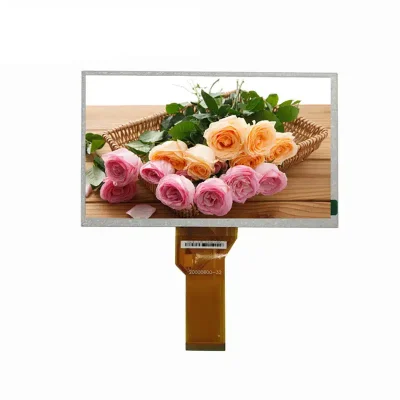
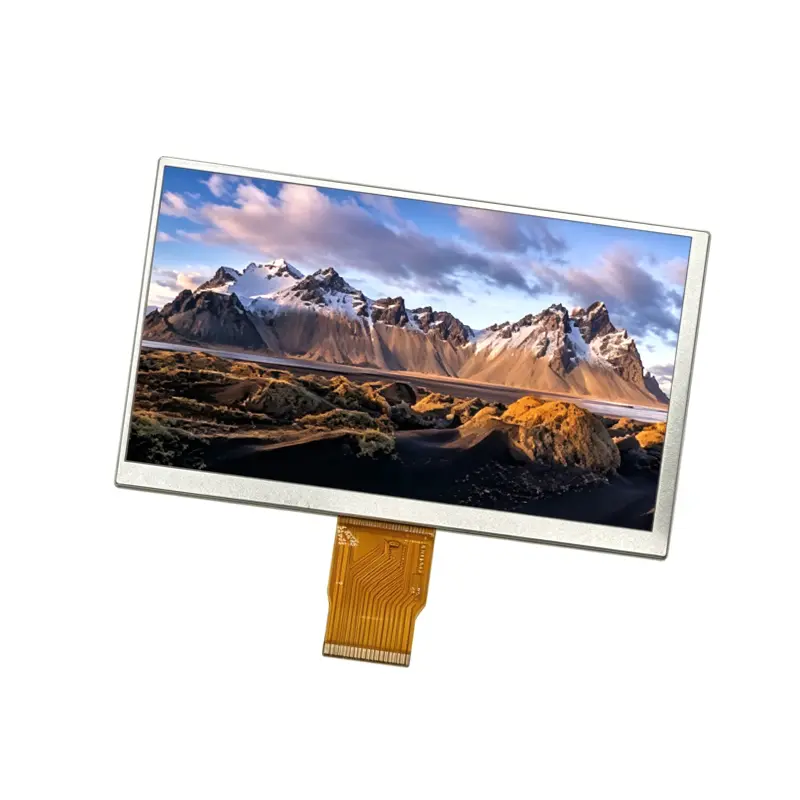
7 Inch TTL IPS LCD Display 1024×600 450 Nits for Industrial HMI Control
Model P/N
Size
Resolution
Brightness
Viewing Angle
Connector Type
Operating Temp
Overall(mm)
huisoar
HS700076N0
Brand
Panel Size (inch)
Model P/N
Resolution
Brightness (nits)
Viewing Angle
Contrast Ratio
Response Time
Overall (mm)
Active Area (mm)
Refresh Rate
Display Colors
Panel Type
Connector Type
Operating Temp
Touchscreen Type
Storage Temp
Work Mode
Pixel Format
Input Voltage (V)
Designed For
1024×600 RGB 24-Bit TFT Module for Vehicle, HMI, and Embedded Control Systems
A 7 Inch TTL IPS LCD Display is a compact 1024×600 TFT-LCD module for industrial HMI panels, vehicle displays, embedded controllers, and smart terminal equipment that need stable image quality in a manageable mechanical footprint. It combines 450 cd/m² brightness, IPS wide-view performance, RGB 24-bit TTL signaling, a 50-pin interface, and a -20 to 70 °C operating range, giving product teams a practical display platform for indoor and semi-bright equipment environments where clarity, interface compatibility, and space efficiency all matter.
At a Glance: 7 Inch TTL IPS LCD Module Highlights
- 7-inch TFT-LCD module with 1024 × 600 resolution for compact HMI and embedded display layouts.
- 450 cd/m² typical brightness supports clear viewing in indoor and moderate ambient-light environments.
- IPS hard-screen structure provides 85/85/85/85 viewing angles for multi-angle operation.
- RGB 24-bit TTL interface with 50 pins supports embedded controller and board-level integration.
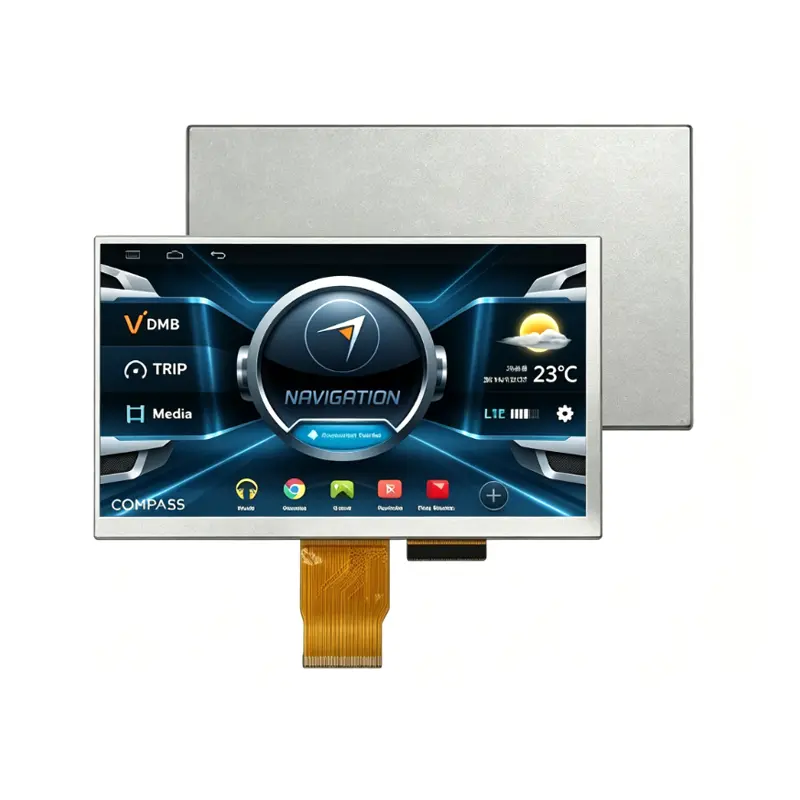
- 154.21 × 85.92 mm active area helps engineers plan UI layout, bezel design, and enclosure opening.
- No-touch panel configuration fits equipment that uses buttons, external touch overlays, or separate control methods.
- -20 to 70 °C operating range supports industrial, vehicle, and smart-device deployment conditions.
Product Overview of the 7 Inch TTL IPS LCD Display
The 7 Inch TTL IPS LCD Display is designed for equipment builders who need a compact screen with stable visibility, predictable embedded integration, and a cost-effective interface path. Its 1024 × 600 resolution provides enough detail for menus, icons, operating status, vehicle information, device settings, and compact dashboards without requiring a large enclosure. For OEM and ODM projects, this makes the module suitable for industrial control panels, vehicle-mounted displays, smart terminals, automation devices, and portable equipment.
The product’s 450 cd/m² brightness gives it a balanced optical profile. It is not positioned as an ultra-high-brightness outdoor display; instead, it is more suitable for indoor equipment, operator panels, vehicle cabins, workshops, and semi-bright areas where a standard low-brightness screen may feel weak. The IPS viewing structure is important because industrial and vehicle displays are often viewed from fixed installation angles rather than straight on.
For developers, the RGB 24-bit TTL interface is the key integration feature. TTL remains useful in many embedded display systems where the controller board is designed for direct RGB signal output. The 50-pin structure, 164 × 100 mm class outline, and no-touch configuration also help engineers evaluate cable routing, front-panel design, and enclosure constraints early in the project.
Key Features of the 7 Inch TTL IPS LCD Display
| Key Feature | B2B Value |
|---|---|
| 7-inch compact TFT-LCD format | Fits industrial panels, vehicle dashboards, smart terminals, and embedded equipment with limited front-panel space. |
| 1024 × 600 resolution | Supports readable menus, monitoring screens, icons, and compact graphical interfaces. |
| 450 cd/m² brightness | Provides better visibility than many basic indoor LCD modules while remaining suitable for balanced power and thermal design. |
| IPS hard-screen viewing | Helps maintain readable images from angled viewing positions in operator or vehicle environments. |
| RGB 24-bit TTL interface | Supports controller-board matching for embedded platforms that use TTL/RGB display output. |
| 50-pin signal structure | Gives engineers a defined interface basis for cable planning and board-level evaluation. |
| No-touch configuration | Allows projects to use physical buttons, external touch overlays, or custom front-panel control methods. |
| Wide operating range | The -20 to 70 °C operating range supports equipment used beyond standard office conditions. |
Technical Specifications of the 7 Inch TTL IPS LCD Module
| Specification | Value |
|---|---|
| Product Type | 7 inch TFT-LCD module |
| Display Size | 7 inch |
| Resolution | 1024 × 600 |
| Brightness | 450 cd/m² |
| Interface | RGB 24-bit TTL, 50 pins |
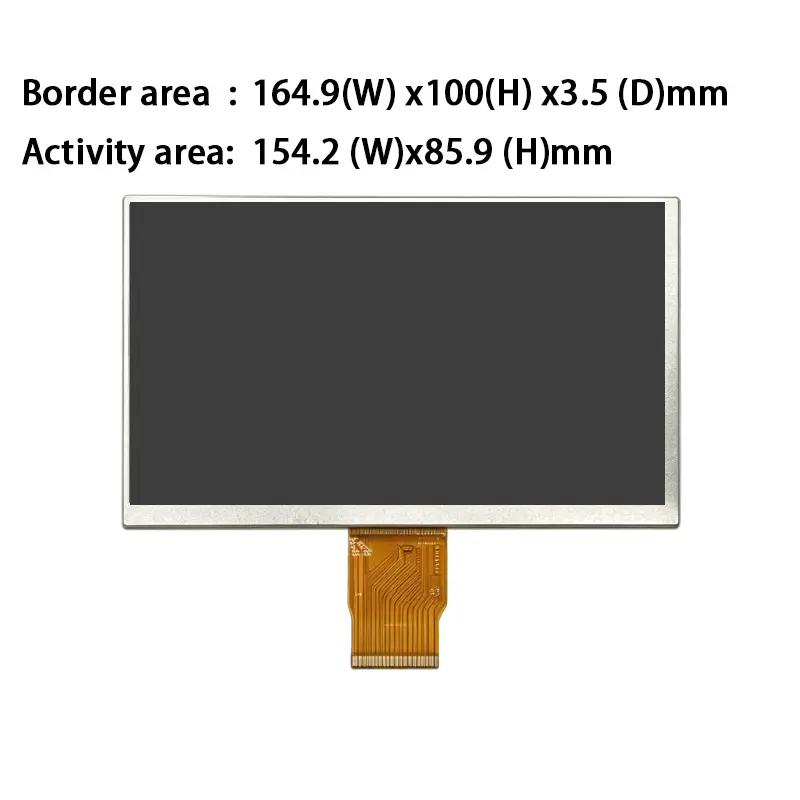
| Active Area | 154.21 × 85.92 mm |
| Overall Size | 164 × 100 mm class outline |
| Viewing Angle | 85/85/85/85 |
| Contrast Ratio | 800:1 typical |
| Operating Temperature | -20 to 70 °C |
These specifications show that the module is best evaluated as a compact embedded display rather than a finished monitor. Engineers should confirm the TTL pinout, cable length, controller compatibility, front-frame opening, viewing direction, and final brightness requirement before sample approval. For equipment exposed to dust, moisture, vibration, or direct sunlight, cover glass, bonding, sealing, and thermal design should be reviewed at system level.
Why Choose This 7 Inch IPS TFT Display?
The 7 inch IPS TFT display format gives product teams a practical balance between screen area, enclosure size, and interface simplicity. It is large enough for readable industrial UI layouts but compact enough for handheld terminals, dashboard panels, and embedded equipment.
1024×600 Resolution for Compact HMI Layouts
A 1024 × 600 display provides more usable space than lower-resolution small panels while staying manageable for compact control systems. In industrial HMIs, that resolution can support status icons, numeric data, menu trees, alarm messages, and simple video or image previews. In vehicle displays, it can support navigation, equipment status, or auxiliary information without forcing a larger mechanical design.
The 16:9 format is also useful for modern interface layouts. Designers can create horizontal information zones, split control and status areas, or use graphics-driven dashboards while preserving a familiar widescreen ratio. This is valuable when upgrading from older low-resolution modules to a cleaner embedded display interface.
450 cd/m² Brightness with TTL Interface for Embedded Projects
The 450 cd/m² brightness level makes this module suitable for general industrial and vehicle environments where lighting is stronger than a typical office but not equivalent to direct outdoor sunlight. For shaded control panels, vehicle cabins, workshop equipment, and indoor smart terminals, it provides a practical optical baseline. For outdoor-facing use, higher brightness, anti-glare cover glass, optical bonding, and enclosure-level protection should be evaluated separately.
The RGB 24-bit TTL interface is especially relevant for embedded product teams. Compared with using a finished monitor path, a component-level TTL panel can support tighter internal integration when the controller board, cable, housing, and front panel are designed together. This is why the 7 Inch TTL IPS LCD Display is a useful option for OEM products that require board-level display control rather than a standard external video input.
Display Performance of the 7 Inch Industrial LCD for Embedded Control
This module supports stable visual performance for industrial and embedded equipment by combining moderate brightness, IPS viewing, and 16.7M color support in a compact panel structure.
450 cd/m² Readability for Indoor and Semi-Bright Equipment
The 450 cd/m² brightness specification should be treated as a balanced visibility level. It can improve readability compared with basic low-brightness LCD modules, especially in operator panels, vehicle interiors, equipment rooms, and industrial control stations. It is not a substitute for a high-brightness outdoor LCD when direct sunlight is expected, so project teams should match brightness to the actual viewing environment.
Brightness selection also affects power, heat, and backlight behavior. For enclosed equipment, optical performance should be reviewed together with ventilation, cover material, and operating temperature. Sample testing under real lighting remains the safest way to confirm readability.
IPS Viewing Angle for Vehicle and Operator Positions
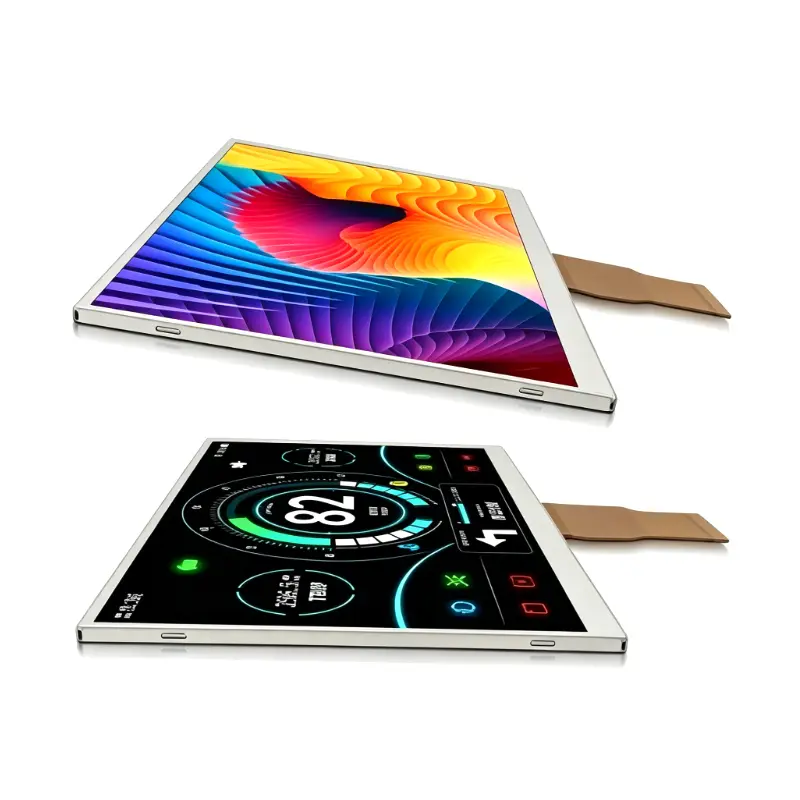
The IPS hard-screen structure provides 85/85/85/85 viewing angles, helping the image remain more readable when users view the display from the side, above, or below. This matters in vehicle dashboards, mounted control panels, and shared equipment interfaces where the screen cannot always face every user directly.
Wide viewing also helps with installation flexibility. If the product is mounted slightly above eye level, below a console, or at a fixed tilt, a wider viewing profile can reduce the risk of washed-out or distorted viewing. For final design, engineers should still verify the installed viewing direction and front cover effect.
800:1 Contrast and 16.7M Colors for Practical UI Clarity
The 800:1 typical contrast ratio and 16.7M color support make the display suitable for practical interface graphics, alert colors, icons, and visual dashboards. These values are helpful for HMI screens where users need to distinguish states quickly, such as normal operation, warning, error, maintenance, or navigation status.
For industrial applications, color performance should support usability rather than entertainment-grade color claims. The panel can present clear and readable UI elements, but final visual quality also depends on controller settings, backlight driving, UI design, cover lens selection, and ambient light.
Integration and Mounting Options for TTL Embedded LCD Systems
The main integration value of this display is the RGB 24-bit TTL interface, which supports board-level design for embedded systems that do not require HDMI, LVDS, MIPI, or eDP input paths.
RGB 24-Bit TTL Interface and 50-Pin Connector Planning
The 50-pin TTL interface must be matched carefully with the host controller, pin definition, voltage logic, timing requirements, and cable design. TTL display integration is often sensitive to signal integrity, cable length, grounding, and EMI layout. Engineering teams should review the display timing and controller-board output before committing to mass production.
Because the product is a component module, it should be validated with the intended control board rather than assumed compatible from size and resolution alone. A sample test can confirm boot behavior, color order, timing stability, backlight control, and display orientation.
Mechanical Fit for 164 × 100 mm Class Enclosures
The 164 × 100 mm class outline helps equipment designers evaluate front opening, gasket space, PCB clearance, and mounting structure. The active area of 154.21 × 85.92 mm gives a basis for UI layout and viewing window planning. Since the provided screenshots show thickness values in the 3 to 3.5 mm range, mechanical drawings should be confirmed before tooling.
For finished products, the display may require a bracket, bezel, cover lens, or enclosure fixture. If a touch layer is added later, the optical stack height, cover glass thickness, cable path, and front-frame design should be rechecked.
Power, Thermal, and System-Level Review
Input voltage was not confirmed in the readable source materials, so the final power design should be validated through the datasheet or sample documentation. Brightness, backlight driving, operating temperature, and enclosure design all influence thermal behavior. For equipment that runs continuously, thermal testing should be performed inside the real housing.
System-level review should also include cable strain relief, connector access, backlight control, firmware timing, and serviceability. These checks reduce the risk of integration delays during pilot production.
Recommended Applications for Industrial HMI and Vehicle Display Systems
This display is best suited for compact equipment that needs readable graphics, embedded controller compatibility, and stable viewing from multiple angles.
Industrial Control Panels with Space-Constrained HMI Layouts
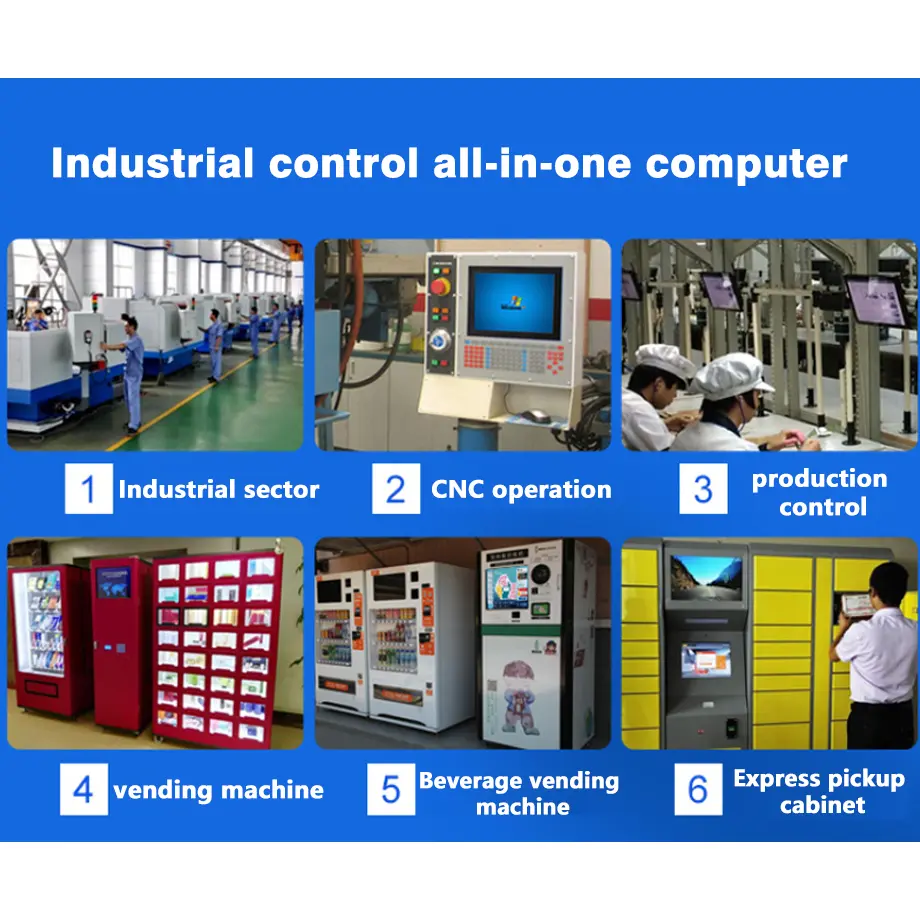
Industrial control panels often require compact displays that can show operating data, machine status, alarms, and menu controls without occupying too much cabinet space. This 7-inch module fits those systems because it combines 1024 × 600 resolution, IPS viewing, and a compact outline. It is especially suitable when a physical button interface or external touch solution is planned.
Vehicle Dashboards and Auxiliary Equipment Displays
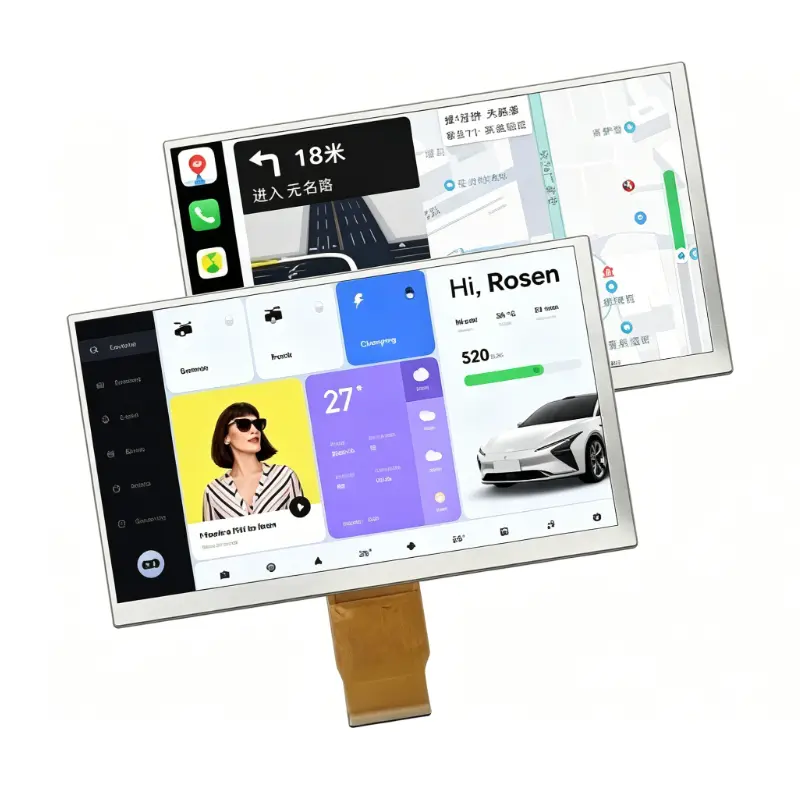
Vehicle-mounted systems need displays that remain readable from driver or operator positions. The wide viewing angle helps reduce visibility problems caused by angled mounting, while the 450 cd/m² brightness can support typical cabin or semi-bright conditions. Applications may include navigation displays, auxiliary dashboards, equipment panels, and mobile machinery interfaces.
Smart Terminals and Embedded Device Interfaces
Smart terminals, portable devices, and embedded control products often need a screen that is small, clear, and easy to integrate with a custom controller board. The TTL interface can be useful when the hardware platform already supports RGB display output. The no-touch configuration also gives product teams flexibility to choose physical keys, external touch, or custom front-panel operation.
Customization Options for 7 Inch TFT LCD Display Projects
Customization should be evaluated at project level so the display can match the final application environment, control board, and enclosure design. Depending on project requirements, engineering review can include brightness validation, cover glass, anti-glare treatment, optical bonding, touch-panel add-on, custom cable, control-board matching, mounting bracket, and housing design.
For applications facing strong light, anti-glare cover glass and optical bonding may be worth evaluating. For equipment exposed to dust, vibration, or moisture, the finished enclosure—not only the LCD module—must be reviewed for protection. For touch-based products, projected capacitive or resistive touch integration should be assessed with the front cover, thickness, controller, and software requirements.
Procurement and Engineering Checklist for 7 Inch LCD Module Selection
Procurement teams should evaluate this module through both commercial and engineering checkpoints before confirming sample or bulk order.
- Confirm whether the 1024 × 600 resolution matches the UI layout, icon size, and viewing distance.
- Check whether 450 cd/m² brightness is sufficient for the actual lighting environment.
- Verify TTL/RGB 24-bit controller compatibility, timing, cable length, and 50-pin pinout.
- Review the active area, outline size, thickness, and mounting space against the mechanical drawing.
- Confirm whether the no-touch configuration matches the control method or whether a touch add-on is required.
- Validate operating temperature needs against the -20 to 70 °C specification.
- Test the display with the intended control board before mass production.
- Review cover glass, bonding, sealing, and enclosure protection if the product will face harsh conditions.
Brightness / Interface / Mounting Selection Guide for 7 Inch TFT LCD Projects
For indoor industrial equipment, 450 cd/m² may be suitable when the display is not exposed to direct sunlight. For vehicle cabins or semi-bright locations, sample testing should confirm readability at the actual installation angle. For outdoor-facing products, higher brightness, cover glass, optical bonding, anti-glare treatment, and thermal design should be evaluated together.
For interface selection, TTL is a good fit only when the host board supports RGB timing and the cable path can maintain signal integrity. For mounting, engineers should review bezel opening, active area, cable exit, connector clearance, and service access before finalizing the enclosure.
FAQ
About 7 Inch TTL IPS LCD Display
What is the main use of a 7 Inch TTL IPS LCD Display?
Is 450 cd/m² brightness enough for industrial equipment?
What does the TTL interface mean for integration?
Does this 7 inch display include touch?
Why is IPS viewing important for this module?
Can this display be used in vehicle-mounted systems?
What should engineers confirm before sample testing?
Is this display suitable for outdoor equipment?
What applications fit this display best?
How should buyers request a matching display solution?
Freya Yang
+86 18318948097