
~
~
~
~
~
~
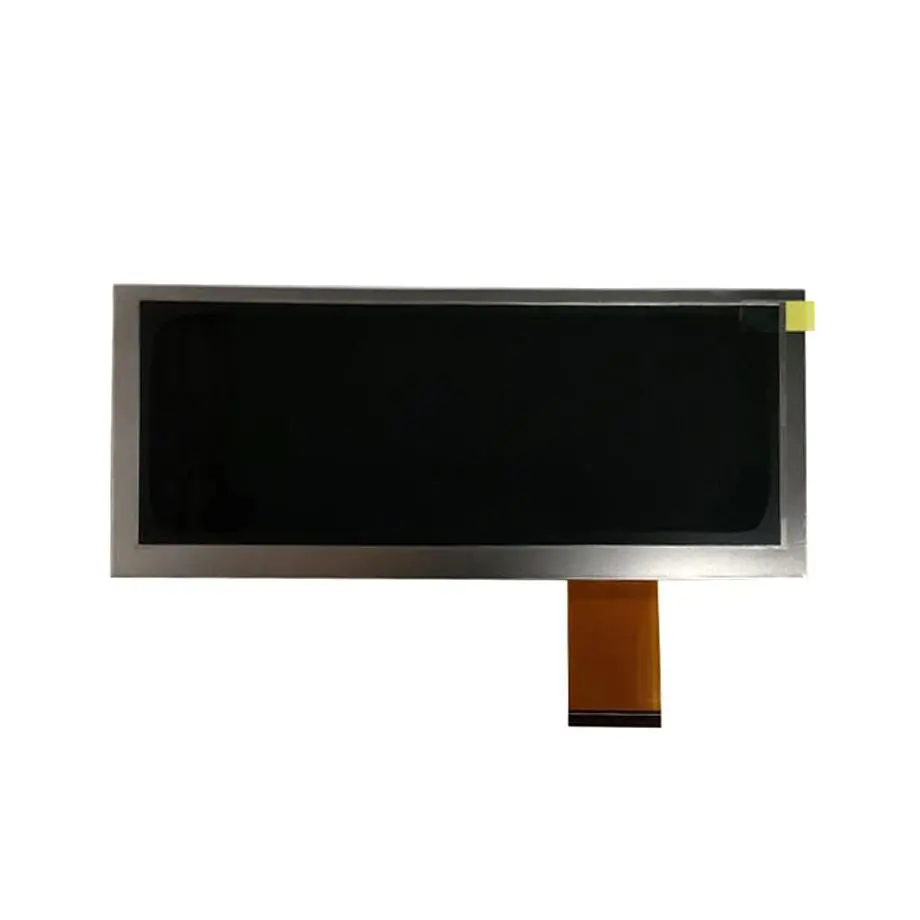
COG-VLSZT047-01 1.3%-Reflection PCAP Portrait LCD 15.6in BOE
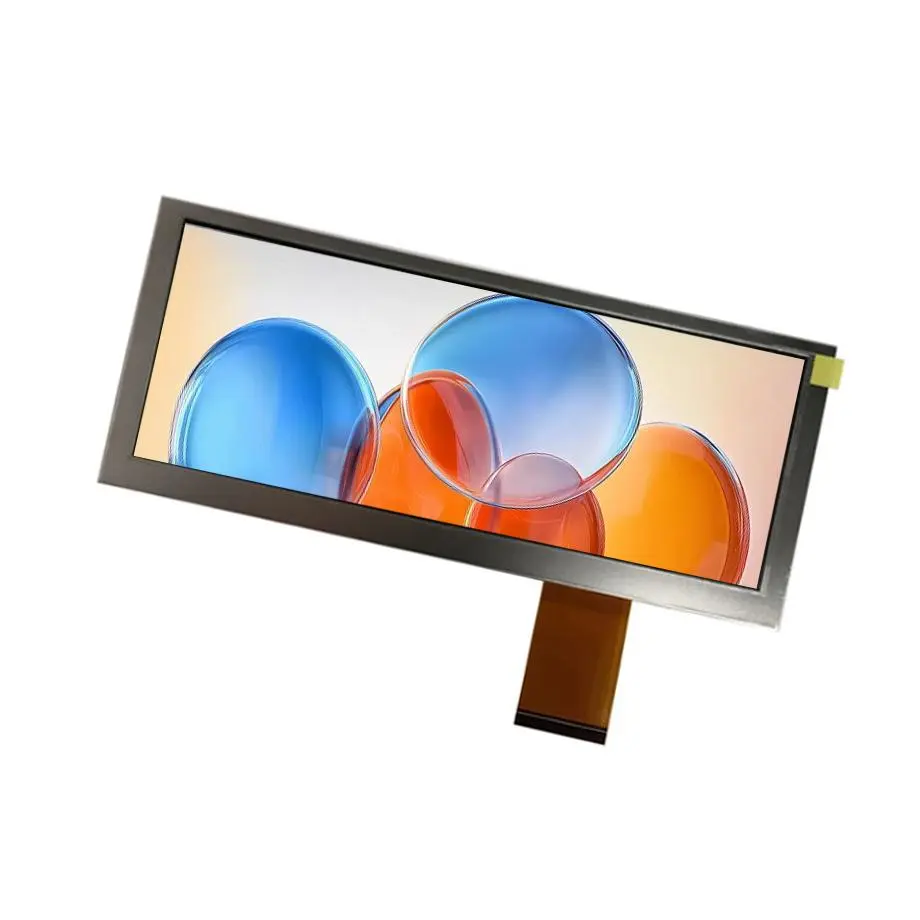
Model P/N
Size
Resolution
Brightness
Viewing Angle
Connector Type
Operating Temp
Overall(mm)
boe
COG-VLSZT047-01
Brand
Panel Size (inch)
Model P/N
Resolution
Brightness (nits)
Viewing Angle
Contrast Ratio
Response Time
Overall (mm)
Active Area (mm)
Refresh Rate
Display Colors
Panel Type
Connector Type
Surface Treatment
Operating Temp
Touchscreen Type
Storage Temp
Work Mode
Pixel Format
Input Voltage (V)
Touch Interface
Vibration Resistance
Weight (g)
Designed For
Product Details
Product Summary for Outdoor Touch Integration
The COG-VLSZT047-01 1.3%-Reflection PCAP Portrait LCD combines a 15.6-inch BOE portrait LCD with projected-capacitive touch in one assembly. The display area is 210.384 × 336.6144 mm and the native image is 1200×1920 WUXGA in a 10:16 orientation. BOE lists 1000 cd/m² typical luminance, 1200:1 typical contrast, ADS normally-black transmissive operation, 85/85/85/85 typical viewing angles at CR≥10, 16.7 million colors and 75% NTSC coverage.
Two interfaces must be planned independently: two-channel 8-bit LVDS on a 50-pin connector for video, and I²C for the PCAP touch path. The panel input is 12 V typical. The WLED backlight is listed with a 50K-hour reference and without an integrated driver. Environmental figures include -40 to 85 °C operation, -40 to 90 °C storage and 10.0G vibration. The surface stack adds anti-fingerprint and antiglare treatment, 7H hard coating and 1.3% typical reflection.
Key Specifications at a Glance
| Model | COG-VLSZT047-01 |
|---|---|
| Image format | 15.6 inch; 1200×1920 WUXGA portrait |
| Touch | PCAP with I²C host interface |
| Brightness | 1000 cd/m² typical |
| Video | 2-channel 8-bit LVDS, 50-pin |
| Panel power | 12 V typical |
| Surface | Anti-fingerprint + antiglare; 7H hard coat; 1.3% typical reflection |
| Environment | -40 to 85 °C operation; 10.0G vibration |
Three Core Buyer Value Propositions
- Display and touch functions are defined as separate engineering paths. LVDS carries the 1200×1920 image while I²C serves the PCAP subsystem. That gives controller designers a clear checklist for video timing, touch firmware, reset/interrupt handling and cable allocation without implying that the two interfaces are interchangeable.
- The optical stack is specified beyond brightness alone. 1000 cd/m² typical luminance is paired with antiglare and anti-fingerprint treatment, 7H hard coating and 1.3% typical reflection. These are useful inputs for outdoor-display evaluation, while final readability still has to be verified in the installed cover, bonding and ambient-light configuration.
- Mechanical and environmental data support early rugged-screening work. A 178.5 × 303 × 12.8 mm outline, 480 g typical mass, -40 to 85 °C operating range and 10.0G vibration figure help teams assess enclosure and environment fit. They do not replace project-specific qualification evidence.
Why must LVDS and I²C be validated separately?
The COG-VLSZT047-01 1.3%-Reflection PCAP Portrait LCD does not present one universal host connection. The LCD image path is a native LVDS interface, while the touch controller communicates through I²C. Analog Devices LVDS implementation guidance explains the differential-signaling principles behind LVDS, and Microchip maXTouch I²C interface guidance illustrates the host-side considerations of an I²C-connected capacitive touch controller. Those references are useful engineering context, not substitutes for the exact BOE model documentation.
LVDS image path
The controller must generate the panel’s native 1200×1920 timing at 60 Hz and match the 50-pin two-channel 8-bit LVDS definition. Connector count alone is not enough. Verify clocking, data-lane mapping, bit order, power pins, grounds and any enable signals. A bridge board can be used only after its output is shown to match the panel requirements.
I²C touch path
PCAP integration requires the touch-controller documentation for address, reset, interrupt behavior, firmware protocol, coordinate mapping and power sequencing. I²C is a control/data bus for the touch subsystem; it does not carry the LCD video. During software bring-up, confirm coordinate orientation against the portrait image and verify edge behavior, wake-up and noise performance with the final harness.
How should the optical stack be assessed for outdoor use?
Outdoor readability is a system property. This assembly provides a useful starting point with 1000 cd/m² typical brightness, antiglare treatment and 1.3% typical reflection, but the final result also depends on the protective lens, bonding method, air gaps, enclosure shading, dimming control and ambient conditions. BOE’s BOE digital signage display guidance describes high-brightness outdoor display applications at a system level, which is why finished-product testing should be performed rather than turning a panel luminance number into a blanket sunlight-readability promise.
The 7H hard-coating and anti-fingerprint features are relevant to a touch-facing surface, but they do not establish impact rating, waterproofing or chemical-resistance certification. If the application requires a protective cover, glove behavior, wet-touch operation or a specific cleaning agent, request the appropriate touch and cover-lens data and validate the assembled unit.
Key Specifications
| Active area | 210.384 × 336.6144 mm |
|---|---|
| Outline | 178.5 × 303 × 12.8 mm |
| Weight | 480 g typical |
| Mode | ADS, normally black, transmissive |
| Contrast | 1200:1 typical |
| Viewing | 85/85/85/85 typical at CR≥10 |
| Color | 16.7M; 75% NTSC |
| Response | 35 ms typical Tr+Td |
| Refresh | 60 Hz |
| Backlight | WLED; 50K-hour reference; external driver required |
What are the mechanical priorities for a 15.6-inch portrait assembly?
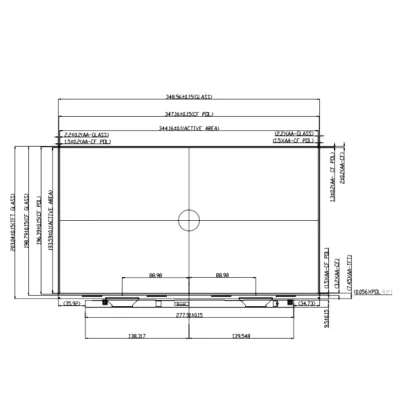
The active area is 210.384 × 336.6144 mm inside a 178.5 × 303 × 12.8 mm listed outline, with 480 g typical mass. Mechanical design should use the current drawing to confirm mounting points, cable exits, connector access and the relationship between the touch surface and LCD body. The diagonal size does not define those details. Allow space for the external WLED driver and for cable routing that does not load the touch or display connectors.
Portrait UI planning
The 10:16 orientation can support vertically stacked controls, navigation, status information or process data. For a touch HMI, verify that the application software, touch coordinates and display rotation all use the same orientation. A portrait mechanical layout may also change thermal airflow and cable routing compared with a landscape reference design.
Surface and cover considerations
Because the assembly already includes PCAP, adding another conductive or thick cover layer can change touch sensitivity. Treat any protective lens, adhesive, gasket or bonding process as part of the touch design. Validate touch performance at temperature extremes and in the expected electromagnetic environment rather than assuming the controller will compensate for every stack change.
Where can this assembly fit, and what does it not prove?
The documented application direction includes rugged industry, automotive display and outdoor high brightness. Those are appropriate screening scenarios for the COG-VLSZT047-01 1.3%-Reflection PCAP Portrait LCD because they align with the wide temperature range, vibration figure, brightness and integrated PCAP. They are not certification labels. BOE’s broader BOE automotive display solutions shows the range of automotive display applications, but a vehicle program still needs model-specific qualification, reliability and change-control evidence.
Likewise, a rugged application should define its own ingress, shock, EMC, ESD, optical and chemical requirements. The panel’s 10.0G vibration figure is not an enclosure IP rating, and the 7H surface coating is not a statement about complete-system impact resistance.
How should a replacement candidate be compared?
For replacement work, compare the 1200×1920 native timing, 50-pin LVDS mapping, 12 V panel input, I²C touch implementation, active area, outline, thickness, mass, backlight-driver requirement and environmental limits. Also compare the surface stack because a different reflection or cover construction can change appearance and touch behavior even when the electrical interface looks similar.
Do not assume that another 15.6-inch WUXGA touch panel is drop-in compatible. The same nominal size and resolution can hide different connector positions, touch controllers, LVDS maps, power sequencing and mechanical datums. Build the comparison from released drawings and interface documents, then bench-test the candidate in the actual controller and enclosure.
What should procurement request before design freeze?
Procurement should obtain the current BOE specification and drawing, LVDS timing and pin definition, touch-controller information, WLED electrical requirements, surface-stack details and the environmental/qualification evidence required by the program. The COG-VLSZT047-01 1.3%-Reflection PCAP Portrait LCD appears in third-party sourcing information as an in-production model, but that does not establish current HS-LCD stock, guaranteed lead time, MOQ, second-source status or a fixed support horizon.
Record the approved panel revision together with the controller firmware and touch configuration. If a later revision changes the touch controller, optical stack or mechanical drawing, the program can then assess the change against a controlled baseline instead of relying only on the model name.
Engineering Answers in Brief
The COG-VLSZT047-01 uses LVDS for video and I²C for PCAP touch; those are separate interfaces.
The 1000 cd/m², antiglare and low-reflection data support outdoor evaluation but do not guarantee sunlight readability.
The WLED backlight is part of the assembly, but its driver is not integrated and must be matched separately.
The wide-temperature and vibration figures support rugged and automotive-display screening without proving automotive-grade certification.
Integration Checklist
- Confirm 50-pin LVDS pinout, timing and lane mapping from the current BOE documentation.
- Obtain the PCAP controller protocol, I²C details, reset/interrupt behavior and firmware requirements.
- Design the external WLED driver from model-specific electrical data.
- Verify the 178.5 × 303 × 12.8 mm mechanical envelope and connector access in the enclosure.
- Test optical and touch behavior with the final cover, bonding and ambient-light conditions.
- Request program-specific qualification and lifecycle evidence before production approval.
Sample Qualification Sequence
Bring up the LCD and PCAP functions as separate test items before combining them in the final UI. First confirm 1200×1920 image timing, lane mapping and stable backlight operation. Then verify touch coordinates, edge response, reset and interrupt behavior with the intended host software. Repeat touch checks after the final cover, gasket or bonding stack is installed because those layers can change capacitive performance. Temperature testing should include both display startup and touch recovery at the program limits. Keep the panel revision, touch-controller configuration, host firmware and optical-stack build in the sample record so procurement and engineering can identify the cause of any later variation.
Recommended: Same Size
(15.6")
Applications & Value of LCD Panel

- Fast sourcing with in-stock panels & cross-reference alternatives
- Stable supply chain with long-term availability
- Engineering-level support from panel to integration
- Custom solutions: cable, touch & optical bonding
- Strict quality control with IQC / OQC / aging test
- Full traceability system for quality assurance
- Complete technical documentation & drawings
- Compliance support: RoHS & certification files
