
~
~
~
~
~
~
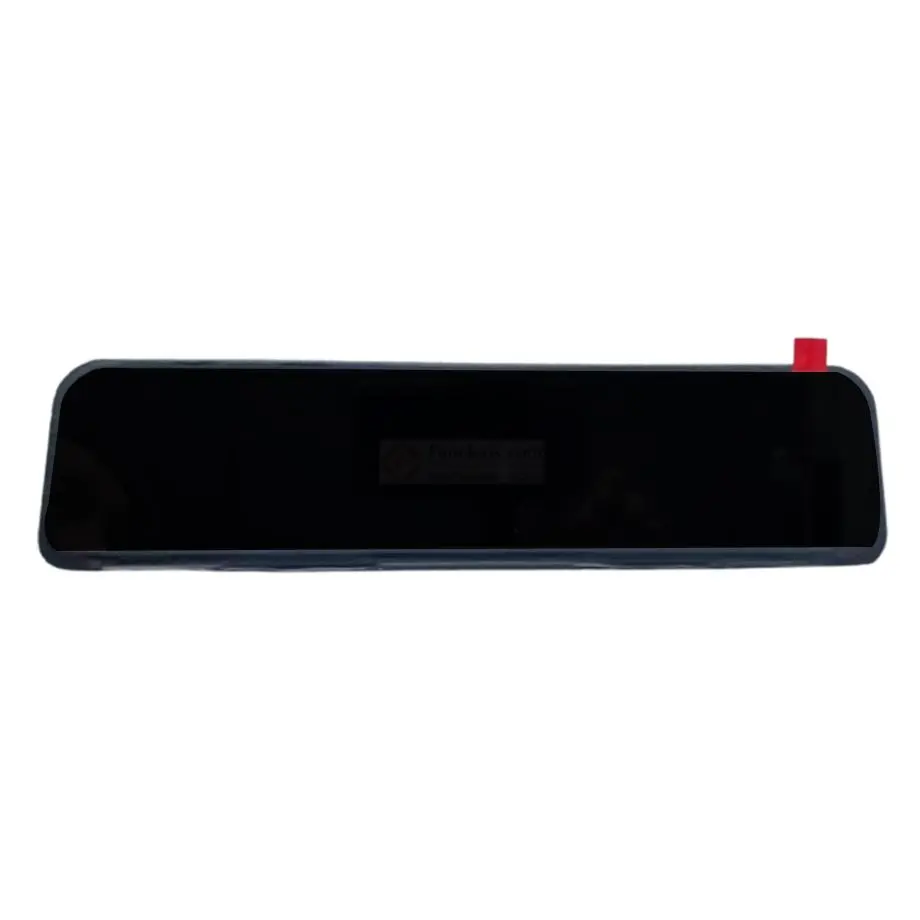
COG-VLSZT051-01 1920×720 8:3 Touch Assembly 12.3in BOE
Model P/N
Size
Resolution
Brightness
Viewing Angle
Connector Type
Operating Temp
Overall(mm)
boe
COG-VLSZT051-01
Brand
Panel Size (inch)
Model P/N
Resolution
Brightness (nits)
Viewing Angle
Contrast Ratio
Response Time
Overall (mm)
Active Area (mm)
Refresh Rate
Display Colors
Panel Type
Connector Type
Surface Treatment
Operating Temp
Touchscreen Type
Storage Temp
Work Mode
Pixel Format
Input Voltage (V)
Touch Interface
Vibration Resistance
Weight (g)
Designed For
Product Details
Ultra-Wide Display Overview
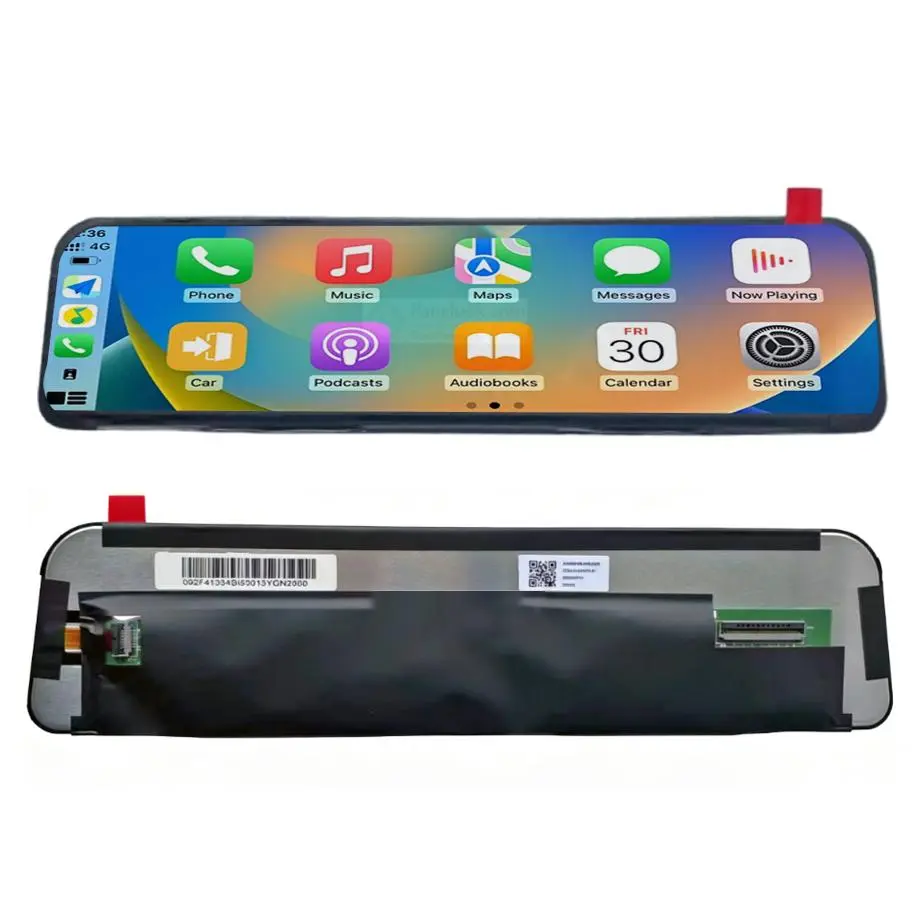
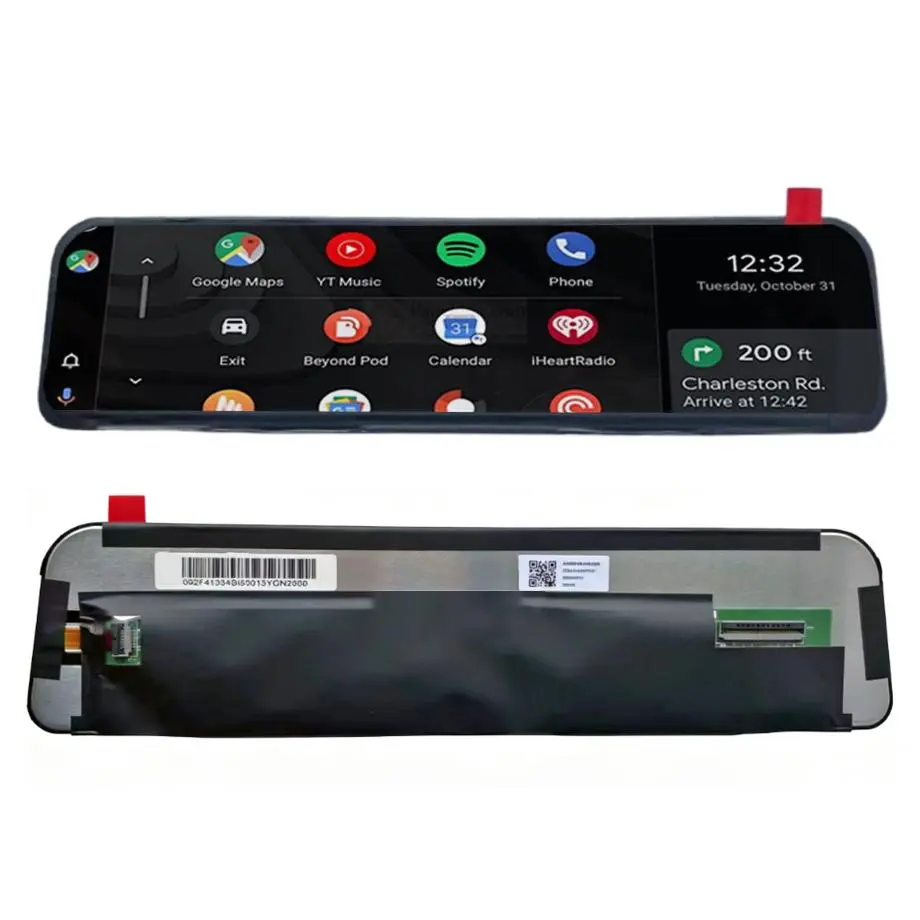
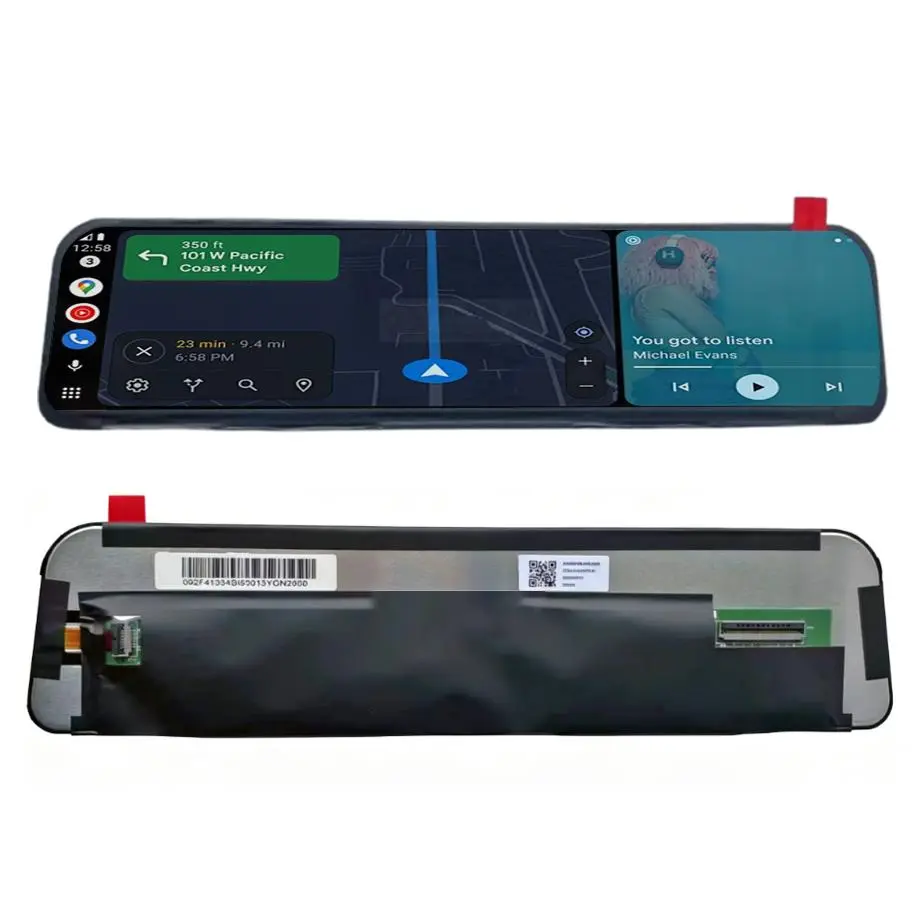
The COG-VLSZT051-01 1920x720 8:3 Touch Assembly is a 12.3-inch BOE display-and-touch assembly with a 1920×720 native image and an 8:3 ultra-wide aspect ratio. Its active area is 292.032 × 109.512 mm, making the product notably wider than a conventional 16:9 panel. The optical specification lists 1000 cd/m² typical luminance, 1200:1 typical contrast, ADS normally-black transmissive operation, 85/85/85/85 typical viewing angles at CR≥10, 16.7 million colors and 75% NTSC.
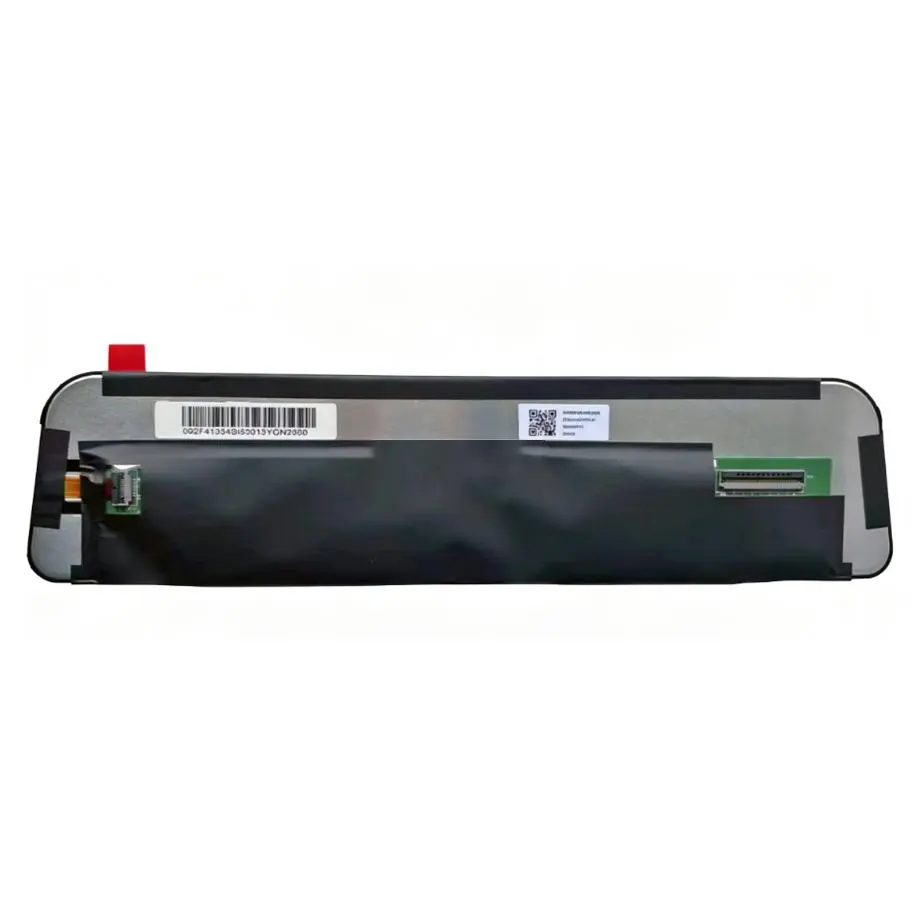
The assembly combines PCAP touch over I²C with a separate two-channel 8-bit LVDS video interface on a 50-pin connector. Panel input is 12 V typical. The WLED light source has a 50K-hour reference and no integrated backlight driver. Operating temperature is -40 to 85 °C, storage is -40 to 90 °C and vibration is listed at 10.0G. One mechanical caution is important: the supplied outline transcription is internally inconsistent with the 292.032 mm active-area width, so enclosure design must use the current BOE mechanical drawing rather than that transcription.
Three Core Buyer Value Propositions
- Ultra-wide native geometry for horizontally dense interfaces. The 1920×720, 8:3 format and 292.032 mm active width can support panoramic status, vehicle, navigation or multi-zone HMI layouts. UI suitability still depends on the target viewing distance, software design and installed position.
- Integrated touch with explicitly separate host interfaces. PCAP touch uses I²C while the image uses two-channel 8-bit LVDS. That separation gives hardware and software teams a clear bring-up plan and avoids treating the touch bus as a video interface.
- High-brightness and wide-temperature inputs for demanding environments. 1000 cd/m² typical luminance, -40 to 85 °C operation and 10.0G vibration support rugged and automotive-display screening. The figures do not establish automotive-grade certification, ingress protection or a finished-system sunlight-readability guarantee.
Key Specifications at a Glance
| Manufacturer / model | BOE COG-VLSZT051-01 |
|---|---|
| Display | 12.3 inch; 1920×720; 8:3 ultra-wide format |
| Active area | 292.032 × 109.512 mm |
| Brightness | 1000 cd/m² typical |
| Touch | PCAP; I²C interface |
| Video | 2-channel 8-bit LVDS; 50-pin connector |
| Panel input | 12 V typical |
| Environment | -40 to 85 °C operating; -40 to 90 °C storage; 10.0G vibration |
What makes the 8:3 format different from a standard panel?
The 1920×720 raster concentrates pixels across a long horizontal field. That can be useful when information needs to be distributed across several zones without stacking multiple separate displays. In a cockpit or machine console, for example, designers may allocate regions for status, navigation, controls or alerts. The COG-VLSZT051-01 1920x720 8:3 Touch Assembly should still be evaluated as one native display surface; software composition, scaling and touch-coordinate mapping need to be designed for the full 8:3 canvas.
UI and graphics implications
Controllers and operating systems must expose a 1920×720 mode that matches the panel timing rather than stretching a conventional 1920×1080 image. Graphics teams should test text size, edge controls and touch targets at the real viewing distance. If the application rotates or mirrors the image, the touch coordinate system must follow the same transformation.
Mechanical drawing is a release requirement
The active area is clearly listed as 292.032 × 109.512 mm, but the supplied outline transcription is not physically consistent with that width. No corrective dimension is inferred here. Before any bracket, bezel, cover glass or cable is released, request the current BOE mechanical drawing and confirm width, height, thickness, mounting datums and connector position. This is a case where a drawing review is more important than a secondary database transcription.
How should video, touch and backlight be partitioned?
The COG-VLSZT051-01 1920x720 8:3 Touch Assembly has three distinct integration domains. LVDS carries the display image, I²C serves the PCAP touch controller, and the WLED system needs external driving. Analog Devices LVDS implementation guidance provides useful background on LVDS signaling, while Microchip maXTouch I²C interface guidance shows typical host considerations for I²C-connected capacitive touch controllers. For this BOE model, use the current model-specific documents for the actual pinout, timing, touch protocol and electrical limits.
On the video side, verify two-channel 8-bit LVDS mapping, clocking, connector power pins and 1920×720 timing at 60 Hz. On the touch side, verify I²C address, reset, interrupt, coordinate orientation and firmware requirements. On the illumination side, obtain LED string voltage/current and dimming requirements before choosing a driver. Keeping those domains separate simplifies fault isolation during bring-up.
Key Specifications
| Display mode | ADS, normally black, transmissive |
|---|---|
| Contrast | 1200:1 typical |
| Viewing | 85/85/85/85 typical at CR≥10 |
| Colors | 16.7M; 75% NTSC |
| Response | 35 ms typical Tr+Td |
| Refresh | 60 Hz |
| Weight | 500 g typical |
| Surface | Anti-fingerprint + antiglare; 7H hard coat; 2.1% typical reflection |
| Backlight | WLED; 50K-hour reference; no integrated driver |
| Mechanical outline | Confirm against current BOE drawing; the supplied outline transcription is internally inconsistent with the 292.032 mm active-area width |
Does 1000-nit brightness make it an outdoor-ready system?
Not by itself. The panel provides 1000 cd/m² typical brightness plus antiglare and anti-fingerprint treatment, 7H hard coating and 2.1% typical reflection. Those are useful optical inputs, but installed readability depends on the protective lens, bonding, ambient light, viewing geometry, enclosure shading and dimming strategy. BOE’s BOE digital signage display guidance discusses outdoor display systems with high-brightness design, illustrating the broader system context in which luminance is evaluated.
If a vehicle or outdoor enclosure adds cover glass, coatings or an air gap, measure the complete stack. PCAP sensitivity also needs to be checked after any cover change. Surface hardness does not imply impact certification, and reflection data does not imply a particular sunlight-readable rating.
Why is this model relevant to automotive-display screening?
The documented application direction includes automotive display, and the ultra-wide geometry is consistent with display concepts used in instrument and control areas. BOE’s BOE automotive display solutions provides broader context for automotive display applications. For the specific COG-VLSZT051-01 1920x720 8:3 Touch Assembly, however, application direction plus -40 to 85 °C operation must not be promoted as proof of automotive-grade qualification. Vehicle programs should request the exact reliability, change-control and qualification evidence required by the OEM or Tier-1 process.
Environmental boundaries
The listed -40 to 90 °C storage range and 10.0G vibration figure are valuable screening data. They do not define the full test method, duration, axis, shock performance, humidity resistance, EMC behavior or ingress protection of the finished system. Treat those requirements as separate program specifications and verify them at the assembly and system levels.
What should a replacement study compare?
Begin with native 1920×720 timing and the 8:3 active area, then compare the 50-pin two-channel LVDS definition, 12 V panel input, I²C touch implementation, 500 g typical mass, surface stack, WLED-driver requirement and environmental limits. Because the mechanical outline transcription requires confirmation, do not approve a replacement or enclosure based on the secondary outline numbers. Obtain both candidates’ released mechanical drawings and compare mounting datums directly.
Also check software assumptions. A replacement with a different touch controller may require firmware changes even if both products advertise I²C PCAP. Likewise, an LVDS connector with the same pin count can use a different lane map or power arrangement. Electrical and mechanical similarity should be demonstrated, not inferred from marketing labels.
How should procurement manage documentation and lifecycle?
Before design freeze, procurement should request the current BOE specification, mechanical drawing, LVDS timing, touch-controller documentation, WLED electrical data, environmental test conditions and the qualification evidence required by the target program. The COG-VLSZT051-01 is described by third-party sourcing information as in production, but that is not a guarantee of HS-LCD stock, MOQ, lead time, second-source availability or a fixed service horizon.
For a long program, maintain a controlled record of the approved panel revision, controller firmware, touch configuration, backlight-driver setup and enclosure drawing. When a change notice or alternate part is proposed, that baseline makes it easier to identify which tests must be repeated.
Engineering Answers in Brief
The COG-VLSZT051-01 is a native 1920×720 ultra-wide display, so the controller should output the correct 8:3 timing rather than scale a 16:9 mode.
LVDS video and I²C PCAP touch are separate host interfaces and must be validated independently.
The WLED backlight does not include its driver, so LED power and dimming remain system-design tasks.
The mechanical outline needs confirmation from the current BOE drawing because the supplied transcription is internally inconsistent with the active-area width.
Program Review Checklist
- Obtain the current BOE mechanical drawing before enclosure or bezel release.
- Confirm 1920×720 timing and the exact 50-pin two-channel LVDS mapping.
- Verify the PCAP controller, I²C protocol, reset/interrupt behavior and coordinate orientation.
- Design the external WLED driver from model-specific electrical requirements.
- Test the full optical and touch stack in representative ambient light and temperature.
- Request automotive or rugged qualification evidence only to the level required by the actual program.
First-Article Validation Priorities
The first mechanical action is to obtain the released BOE drawing and resolve the inconsistent outline transcription before machining a bezel or bracket. Electrical bring-up should then confirm native 1920×720 timing, the exact LVDS lane map and the 12 V panel-power sequence. Touch validation should cover I²C communication, coordinate mapping across the full 8:3 surface and behavior after the final cover stack is fitted. Run backlight and touch checks at the required temperature extremes, and evaluate the finished optical stack under the real viewing geometry. Freeze the drawing revision, touch configuration, controller firmware and backlight-driver settings in the approval record.
Recommended: Same Size
(12.3")
Applications & Value of LCD Panel

- Fast sourcing with in-stock panels & cross-reference alternatives
- Stable supply chain with long-term availability
- Engineering-level support from panel to integration
- Custom solutions: cable, touch & optical bonding
- Strict quality control with IQC / OQC / aging test
- Full traceability system for quality assurance
- Complete technical documentation & drawings
- Compliance support: RoHS & certification files
