~
~
~
~
~
~
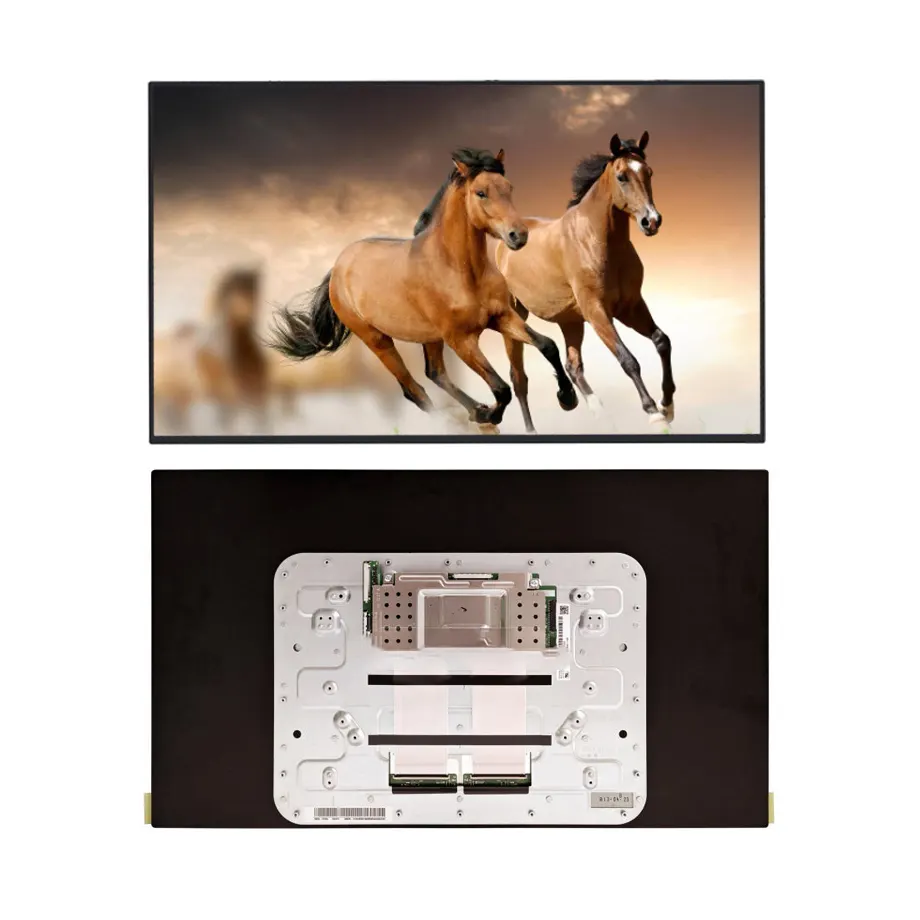
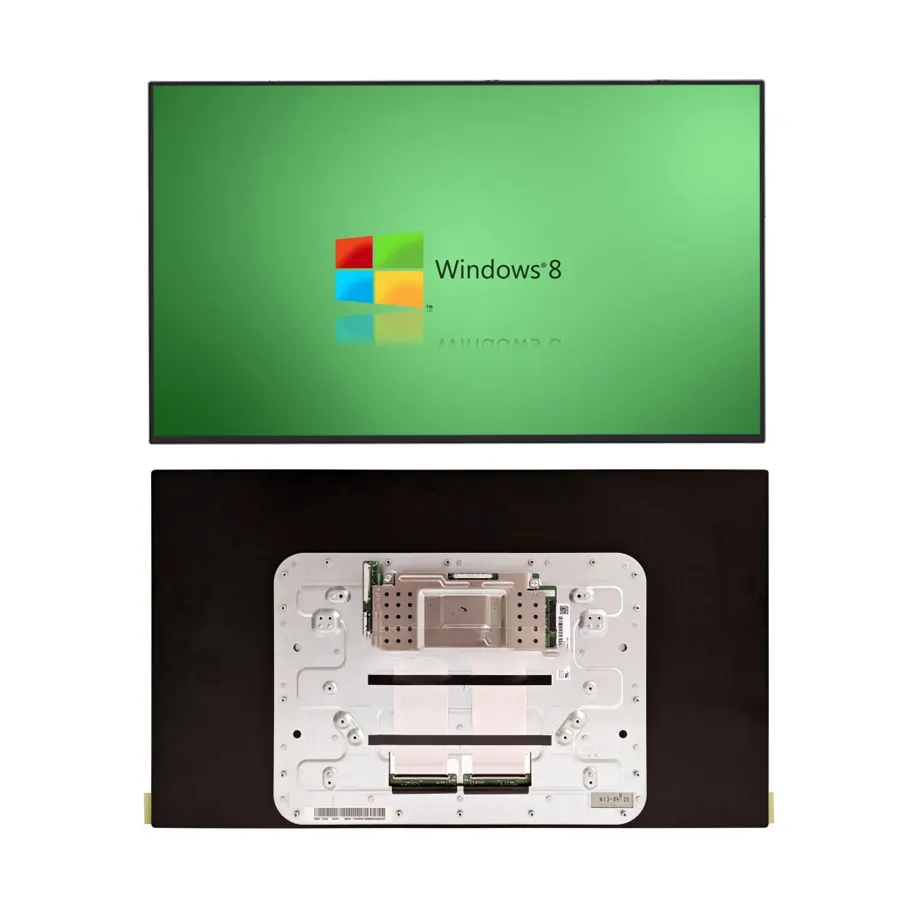
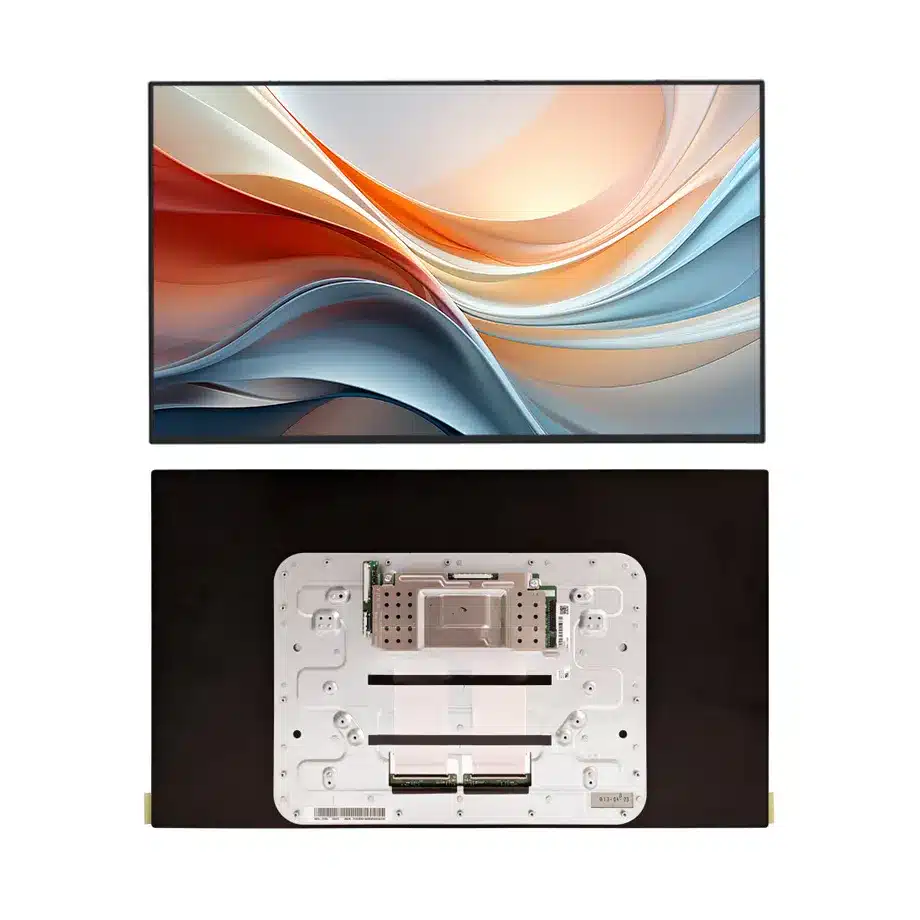
LW270AHQ-ESG3 QHD RGBW OLED Panel 27″ Monitor LG Display
Model P/N
Size
Resolution
Brightness
Viewing Angle
Connector Type
Operating Temp
Overall(mm)
lg-display
LW270AHQ-ESG3
Brand
Panel Size (inch)
Model P/N
Resolution
Brightness (nits)
Viewing Angle
Contrast Ratio
Response Time
Overall (mm)
Active Area (mm)
Refresh Rate
Display Colors
Panel Type
Connector Type
Surface Treatment
Operating Temp
Touchscreen Type
Storage Temp
Work Mode
Pixel Format
Input Voltage (V)
Designed For
Product Details
Product Overview
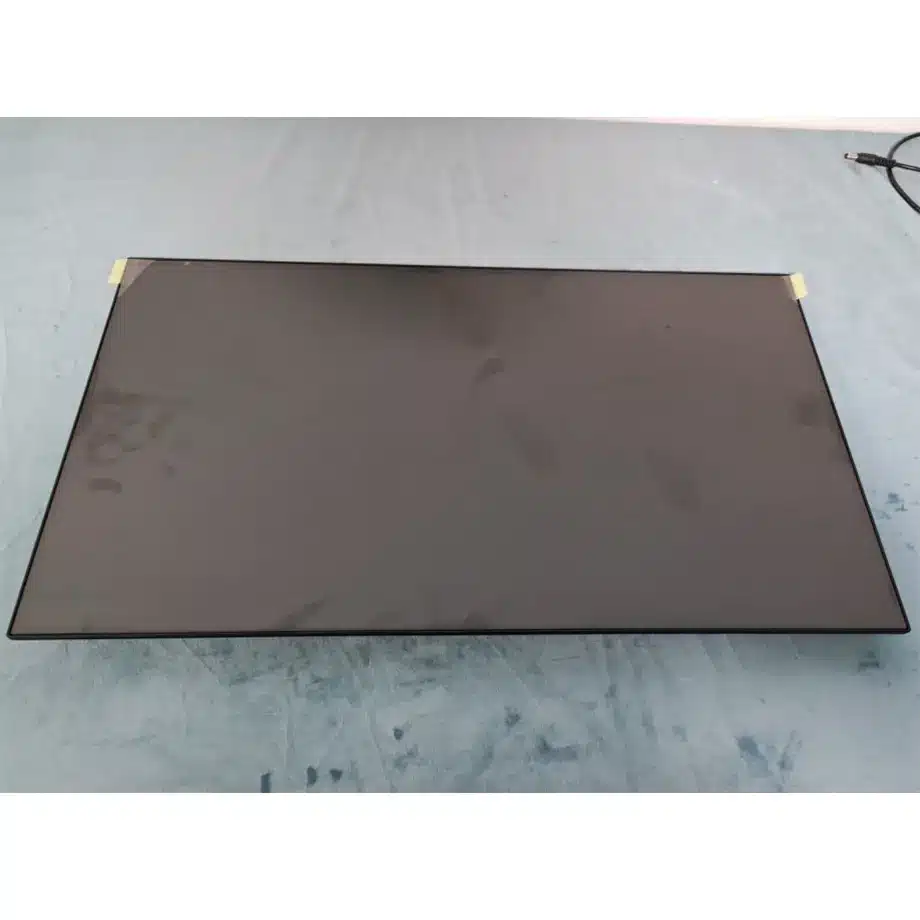
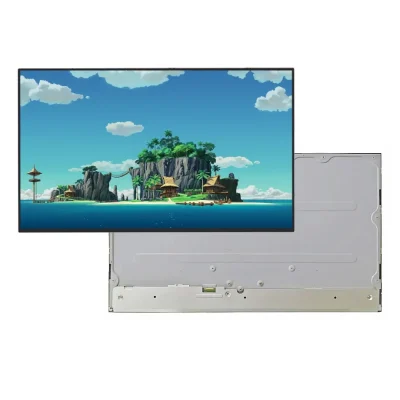
LW270AHQ-ESG3 QHD RGBW OLED Panel is a 27.0-inch LG Display AM-OLED full module developed for desktop-monitor and gaming-display integration. Its native image format is 2560(RWGB)×1440 Quad-HD at 16:9 with an RGBW vertical-stripe layout, 240 Hz refresh rate and self-emissive OLED architecture. Confirmed optical data includes 275 cd/m² typical luminance, a 1,500,000:1 typical contrast ratio, 1.07B colors and 97% DCI-P3. The module is supplied without touch.
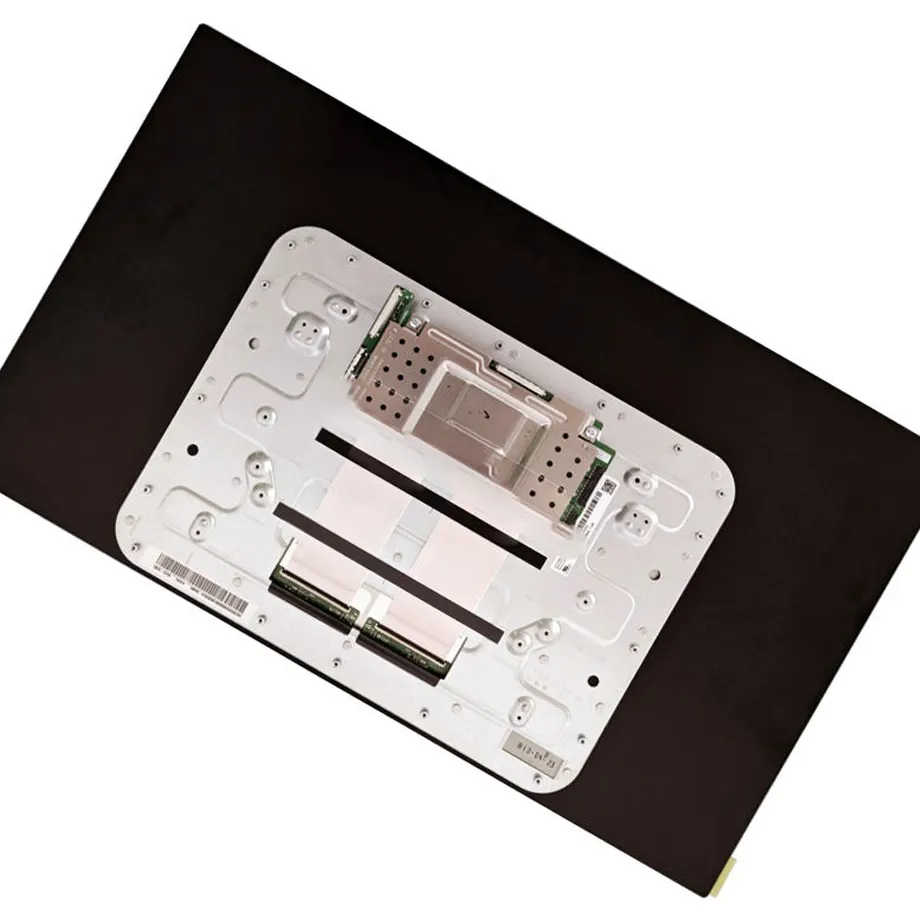
The panel should be engineered as an internal display component, not as a complete gaming monitor. Its native video path is listed as V-by-One with 16 lanes on a 112-pin 0.5 mm connector, while the electrical input is 12/19.5 V typical for VDD/ELVDD. A controller, timing architecture, power design, mechanical frame, thermal system and monitor I/O remain system-level responsibilities and must be matched to the panel documentation.
Three Core Buyer Value Propositions
1. High-refresh QHD motion platform with a fast pixel-response reference
The 2560×1440 format and 240 Hz refresh rate give monitor engineers a clear target for high-refresh QHD designs. The 0.1 ms typical G-to-G response-time value supports fast-motion evaluation, but it does not prove a specific overdrive mode, end-to-end input latency or every transition behavior in the finished monitor.
2. Self-emissive contrast and wide-gamut starting point
The self-emissive AM-OLED structure is specified with a 1,500,000:1 typical contrast ratio, 1.07B display colors and 97% DCI-P3. These facts give display teams a strong optical starting point for dark-scene detail and wide-gamut content. The boundary is calibration and certification: the data does not establish factory color accuracy, a particular gamma target, panel-uniformity tolerance or formal HDR certification beyond the documented HDR600 feature wording.
3. Defined electrical and mechanical inputs for monitor integration
A 16-lane V-by-One interface, 112-pin connector, 12/19.5 V typical VDD/ELVDD inputs and 605.22 × 351.02 mm outline provide concrete integration anchors. The module is also listed at 3.2/3.4 kg typical/maximum, which matters for frame and stand loading. These values reduce early ambiguity, but final controller compatibility, connector mating, cable construction, mounting points and thermal paths still require the exact panel documentation and prototype validation.
Key Specifications at a Glance
| Parameter | Confirmed value |
|---|---|
| Manufacturer / model | LG Display LW270AHQ-ESG3 |
| Display size | 27.0 inch |
| Panel type | AM-OLED, OLED full module |
| Native resolution | 2560(RWGB)×1440, Quad-HD, 16:9 |
| Pixel layout | RGBW Vertical Stripe |
| Active area | 586.75 × 330.05 mm |
| Outline | 605.22 × 351.02 mm; thickness not confirmed |
| Weight | 3.2 / 3.4 kg typical / maximum |
| Brightness | 275 cd/m² typical; HDR600 feature wording |
| Contrast ratio | 1,500,000:1 typical |
| Viewing-angle values | 60/60/60/60 minimum |
| Response time | 0.1 ms typical G-to-G |
| Display colors | 1.07B, 97% DCI-P3 |
| Surface | Antiglare, Haze 35%; Reflection 2.0% typical |
| Refresh rate | 240 Hz |
| Native interface | V-by-One, 16 lanes, 112-pin 0.5 mm connector |
| Panel input | 12/19.5 V typical, VDD/ELVDD |
| Power usage | 25.85 W typical |
| Emission / life reference | Self-emissive; 30K hrs listed under light-source data |
| Touch | Without touch screen |
| Operating / storage temperature | 0 to 45 °C / -20 to 60 °C |
What Does 240 Hz Change in a QHD OLED Monitor Design?
The 240 Hz refresh rate is a system requirement as much as a panel specification. LW270AHQ-ESG3 QHD RGBW OLED Panel must receive correctly timed 2560×1440 image data at the required frame rate through its native interface, while the controller and source pipeline must sustain the corresponding bandwidth and timing behavior. A 240 Hz panel does not make an arbitrary controller, scaler or input board capable of 240 Hz operation.
The 0.1 ms typical G-to-G response-time reference is useful for motion-oriented designs because pixel transition speed can reduce one source of blur. It should not be presented as total monitor latency. Input processing, frame buffering, scaling, synchronization and the source device contribute separately to end-to-end latency. For gaming-monitor qualification, test the complete electronics chain at the intended resolution, refresh rate and image modes.
How Should the 16-Lane V-by-One Interface Be Integrated?
The documented native interface is V-by-One with 16 lanes and a 112-pin 0.5 mm connector. THine, the developer of V-by-One technology, lists V-by-One, V-by-One HS and V-by-One HS plus as distinct interface families. Because the supplied panel fact says V-by-One, do not silently rewrite it as V-by-One HS or assume a serializer/deserializer implementation without exact documentation.
System engineers should verify the panel-side pin assignment, lane mapping, clocking and control behavior, connector mating, cable impedance and required power rails. The 12/19.5 V typical values are identified as VDD/ELVDD, so a power board must reproduce the intended rail functions and sequencing rather than treating them as one interchangeable monitor input voltage. HDMI, DisplayPort or USB-C connectors on a finished monitor belong to the controller board, not to the panel-native interface.
What Does the HDR600 Wording Prove?
HDR600 appears in the confirmed feature data for LW270AHQ-ESG3, alongside 275 cd/m² typical luminance. That wording can be preserved as a documented feature label, but it should not automatically be expanded into a formal certification claim. VESA explains that DisplayHDR is a defined compliance-test specification covering luminance, color gamut, bit depth and rise time. Without model-specific certification evidence, this page does not claim VESA DisplayHDR 600 certification.
For product development, treat the panel’s 275 cd/m² typical value, self-emissive contrast behavior, 97% DCI-P3 color-gamut wording and any HDR operating modes as separate qualification topics. A finished monitor’s HDR result also depends on driving strategy, tone mapping, ABL behavior, thermal limits and firmware. Those system behaviors are not derived from the panel model number alone.
Optical Architecture: RGBW, Contrast and Surface
The panel uses an RGBW vertical-stripe layout rather than a conventional RGB-only description. For display processing, text rendering and subpixel-sensitive content, validate the finished monitor with representative desktop, game and media workloads rather than assuming behavior from an RGB panel. The native raster remains 2560×1440, while the supplied pixel-layout wording identifies the subpixel architecture.
The surface is specified as antiglare with 35% haze and 2.0% typical reflection. Those values matter because surface scatter and reflectance influence perceived black level and fine-detail appearance under ambient light. They do not establish the reflectance of any added cover, filter or monitor front glass. If the final product adds a protective layer, qualify the complete optical stack under the intended room lighting.
Mechanical, Thermal and Power Considerations
The active area is 586.75 × 330.05 mm inside a 605.22 × 351.02 mm outline. No full thickness value is confirmed in the current evidence, so enclosure depth, mounting clearance and rear-electronics space should be checked from the current drawing or a controlled sample. The listed 3.2/3.4 kg typical/maximum weight should be included in frame, bracket and stand-load calculations.
Power usage is listed as 25.85 W typical at panel level. It is not a maximum monitor-power rating and is therefore not stored as a “Maximum Power” fact. The finished product must separately budget controller, interface conversion, USB functions, audio, lighting, fans and power-supply losses. The panel’s 0 to 45 °C operating range and -20 to 60 °C storage range should also be assessed against internal hot spots and enclosure airflow.
Application Fit for Desktop and Gaming Monitors
LW270AHQ-ESG3 QHD RGBW OLED Panel is supported for desktop-monitor and gaming applications. Its QHD raster, 240 Hz refresh rate, self-emissive OLED structure, wide-gamut color wording and V-by-One panel interface make it relevant to monitor platforms built around those exact requirements. Same-model product pages also position it as a 27-inch OLED gaming panel, which supports the gaming-monitor application without proving compatibility with a particular retail monitor model.
No touch function is documented, so interactive-monitor projects would require a separate touch architecture and mechanical stack. Likewise, no industrial, medical or automotive qualification is inferred from the OLED technology or temperature range. This product should remain classified as an OLED/AMOLED display component for monitor integration unless project-specific evidence establishes another vertical.
Procurement and Qualification Checklist
- Confirm the exact LG Display model LW270AHQ-ESG3 / LW270AHQ (ES)(G3) on the panel label and documentation.
- Match 2560×1440 native timing, RGBW pixel structure and 240 Hz operation.
- Verify the 16-lane V-by-One implementation, 112-pin 0.5 mm connector, pinout and cable design.
- Design the required 12/19.5 V VDD/ELVDD rails and validate sequencing against the exact specification.
- Check the 605.22 × 351.02 mm outline, unknown thickness, mounting details and 3.2/3.4 kg mass against the chassis.
- Validate the 275 cd/m² typical luminance, HDR feature behavior, 97% DCI-P3 wording and antiglare surface in the complete optical stack.
- Confirm that a non-touch panel is appropriate for the target monitor.
- Verify current revision, sourcing status and change information at procurement time; do not convert a stock or production-status listing into a supply-duration guarantee.
For broader OLED sourcing, compare exact specifications through the HS-LCD panel inventory. When a project requires LW270AHQ-ESG3 QHD RGBW OLED Panel, provide the controller architecture, target refresh rate, connector/cable requirements, mechanical drawing, quantity and optical acceptance criteria so qualification can remain tied to this exact panel rather than a similar OLED family member.
Recommended: Same Size
(27")
Applications & Value of LCD Panel

- Fast sourcing with in-stock panels & cross-reference alternatives
- Stable supply chain with long-term availability
- Engineering-level support from panel to integration
- Custom solutions: cable, touch & optical bonding
- Strict quality control with IQC / OQC / aging test
- Full traceability system for quality assurance
- Complete technical documentation & drawings
- Compliance support: RoHS & certification files