~
~
~
~
~
~
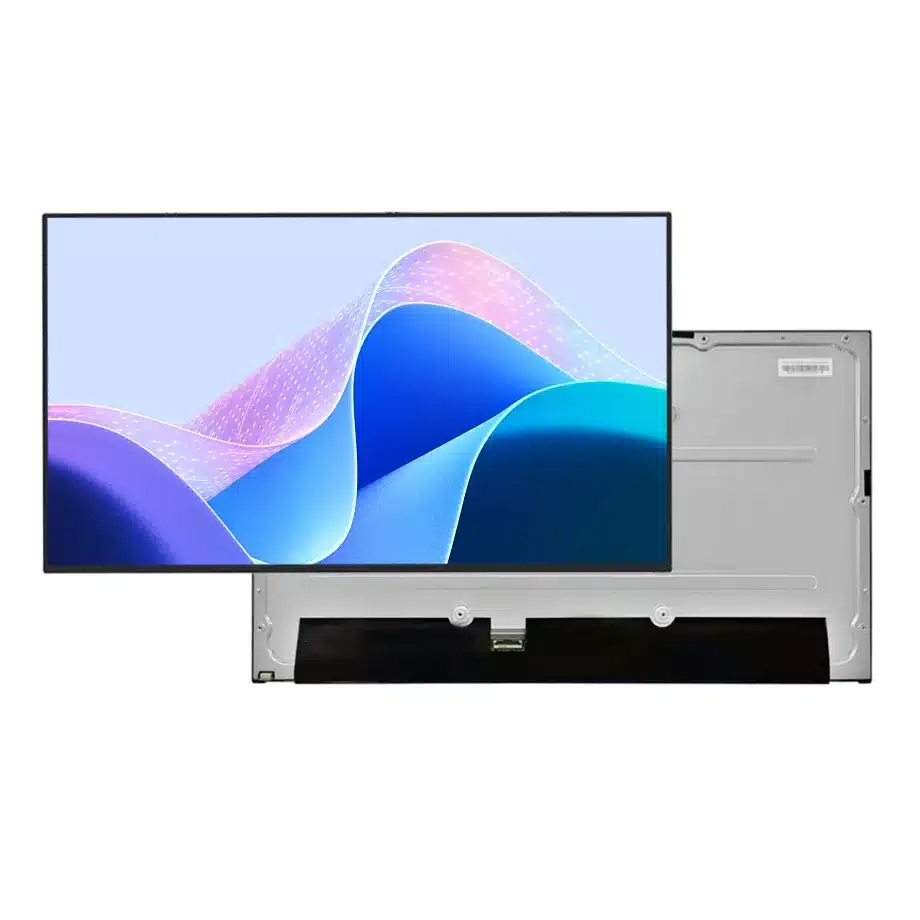
MG215HB07-1 LVDS sRGB Monitor Display Module WLED 21.5in CSOT
Model P/N
Size
Resolution
Brightness
Viewing Angle
Connector Type
Operating Temp
Overall(mm)
csot
MG215HB07-1
Brand
Panel Size (inch)
Model P/N
Resolution
Brightness (nits)
Viewing Angle
Contrast Ratio
Response Time
Overall (mm)
Active Area (mm)
Refresh Rate
Display Colors
Panel Type
Connector Type
Surface Treatment
Operating Temp
Touchscreen Type
Storage Temp
Work Mode
Pixel Format
Input Voltage (V)
Weight (g)
Designed For
Product Details
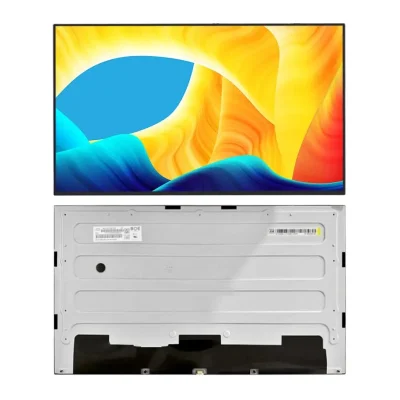
MG215HB07-1 LVDS sRGB Monitor Display Module is a 21.5-inch CSOT a-Si TFT-LCD LCM for desktop-monitor integration, combining a native 1920×1080 FHD image, 250 cd/m² typical luminance, 100 Hz refresh and 99% sRGB color coverage. The exact-model specification uses IPS, Normally Black, Transmissive operation with 89/89/89/89 degree viewing angles and a 1300:1 typical contrast ratio. Its active area is 476.064 × 267.786 mm inside a 484.464 × 284.486 × 12 mm module outline, with a typical mass of 1.84 kg. Native video is dual-channel 8-bit LVDS through a 30-pin 1.0 mm connector at a 5.0 V typical panel supply.
The module includes a four-string WLED backlight with a 30K-hour life reference, but the backlight is specified without an integrated LED driver. That distinction is central to system design: the monitor electronics must provide a compatible external backlight driver and dimming path. The panel's 9.58 W typical power-consumption entry is a useful component reference, but it should not be treated as total finished-monitor consumption because the scaler, backlight driver, power conversion, USB functions and other electronics add their own loads.
Product architecture for 100 Hz FHD monitor designs
The 1920×1080 image uses an RGB vertical-stripe pixel arrangement. At 21.5 inches, this is a conventional desktop-monitor geometry, while the 100 Hz refresh gives a higher motion target than a basic 60 or 75 Hz office display. The exact application is Desktop Monitor; the current evidence does not explicitly label this model for gaming, so Designed For wording remains centered on desktop-monitor integration rather than broadening the product beyond documented use.
The surface uses antiglare treatment with 25% haze and a 3H hard coating. Those characteristics are relevant to office and general desktop environments where reflections and durability matter, but they do not establish sunlight readability or outdoor suitability. Low Blue Light is listed alongside 16.7 million colors and 99% sRGB. Any formal eye-care, color-accuracy or regulatory claim must be supported by separate finished-product evidence.
Three Core Buyer Value Propositions
1. 100 Hz FHD provides a smoother desktop timing target without changing native resolution
The 100 Hz native refresh offers a defined higher-frequency mode for desktop interfaces, scrolling and motion content while preserving the familiar FHD pixel format. This gives the scaler and source architecture a concrete timing requirement. The panel capability alone does not guarantee that every external input or graphics source will expose 100 Hz; the monitor controller, EDID, firmware and input bandwidth must be configured and tested for the intended mode.
2. 99% sRGB and IPS wide viewing support general-purpose monitor image quality
The exact model specifies 99% sRGB, 16.7 million colors, 1300:1 typical contrast and wide 89-degree viewing angles. These facts support office, productivity and general desktop-display evaluation where consistent off-axis viewing and an sRGB-oriented gamut are useful. They do not guarantee factory calibration, professional color tolerances or HDR behavior, so the finished monitor should be measured against its own acceptance criteria.
3. Defined LVDS plus external WLED driving makes system responsibilities clear
Dual-channel 8-bit LVDS, a 30-pin 1.0 mm connector and 5.0 V panel supply establish the native display link. Separately, the four-string WLED backlight is explicitly listed without a driver. This separation helps procurement and engineering avoid a common integration mistake: the monitor needs both a compatible LVDS controller path and a properly specified LED driver/dimming circuit.
Key Specifications at a Glance
| Specification | MG215HB07-1 value |
|---|---|
| Display size | 21.5 inch |
| Panel type | a-Si TFT-LCD, LCM |
| Resolution | 1920(RGB)×1080, FHD, 16:9 |
| Active area | 476.064 × 267.786 mm |
| Outline | 484.464 × 284.486 × 12 mm |
| Weight | 1.84 kg (Typ.) |
| Brightness | 250 cd/m² (Typ.) |
| Contrast | 1300:1 (Typ.) |
| Viewing angle | 89/89/89/89 (Typ.)(CR≥10) |
| Response | 14 ms (Typ.)(G to G) |
| Color | 16.7M, 99% sRGB, Low Blue Light |
| Refresh | 100 Hz |
| Interface | LVDS, 2 ch, 8-bit, 30-pin 1.0 mm |
| Panel supply | 5.0 V (Typ.) |
| Backlight | 4-string WLED, 30K hrs, no driver |
| Operating / storage | 0 to 50°C / -20 to 60°C |
LVDS controller integration and 100 Hz validation
MG215HB07-1 LVDS sRGB Monitor Display Module should be driven with the exact native timing through its dual-channel 8-bit LVDS link. A generic FHD LVDS output is only a starting point. The controller board must support the 100 Hz timing, correct bit mapping, clock behavior and 30-pin pinout specified for the panel. Connector orientation and cable routing also matter because an electrically similar cable can still be mechanically reversed or mapped for a different panel family.
Bring-up should include cold boot, input switching, repeated power cycles, sleep/wake and sustained 100 Hz content. The monitor's external HDMI or DisplayPort inputs, if used, must feed a scaler capable of generating the required internal LVDS timing. EDID and firmware should expose supported modes without advertising an unsupported combination. Stable image output at one refresh rate does not prove that the complete 100 Hz path has been qualified.
External backlight-driver requirements
The panel includes four WLED strings and lists a 30K-hour backlight-life reference, but no LED driver is integrated. The system must therefore include a driver architecture sized for the exact LED current, voltage, dimming method and protection requirements documented for this model. The 5.0 V panel supply is for the LCD electronics and should not be assumed to be the complete LED-string supply.
Prototype qualification should measure brightness range, dimming stability, flicker behavior, startup and shutdown sequencing, and thermal conditions at sustained luminance. A 250 cd/m² typical panel target should be confirmed on the finished assembly using the intended driver and optical system. The 30K-hour backlight specification is a component reference under defined conditions and should not be promoted into a complete monitor service-life warranty.
Optical quality and antiglare surface
The IPS normally-black transmissive mode provides wide viewing angles, while 1300:1 typical contrast supports a conventional desktop viewing profile. The antiglare surface with 25% haze can reduce mirror-like reflections, although room lighting and screen angle still influence perceived glare. The surface treatment does not make the product an outdoor display, and the 250 cd/m² luminance should not be converted into a sunlight-readable claim.
Color capability is listed as 16.7 million colors with 99% sRGB. For a general-purpose desktop monitor, that is a useful gamut baseline. If the finished product requires calibrated color, the manufacturer should define white point, gamma, grayscale and gamut tolerances and test those parameters after the scaler, backlight and final enclosure are assembled. Low Blue Light wording should remain a feature descriptor unless a specific certification is separately documented.
Mechanical fit and chassis planning
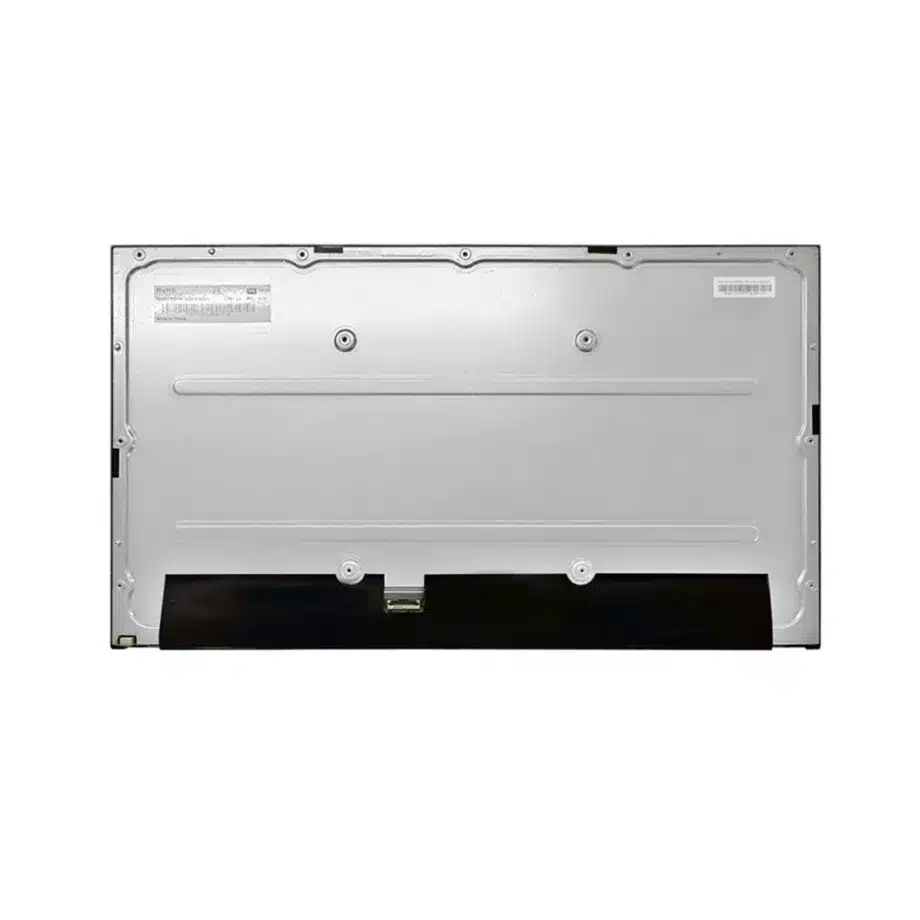
The 484.464 × 284.486 × 12 mm module outline and 1.84 kg typical weight are relevant to monitor chassis, rear cover and stand design. The active image area is 476.064 × 267.786 mm. Bezel opening, mounting points, connector clearance and cable bend space should be taken from the exact drawing, not derived only from the active area. A 21.5-inch FHD panel from another supplier can have a similar image size but different rear mechanics.
During sample assembly, check for frame pressure, panel twist and cable strain. Surface inspection should include scratches, pressure marks and coating damage before the module is mounted. If a supplier proposes a substitute model, the new part should be compared electrically and mechanically rather than approved solely because the diagonal, resolution and LVDS label appear similar.
Power and thermal planning
The exact record lists 9.58 W typical power consumption for the panel configuration. That figure is useful for estimating component-level thermal load but does not represent the complete monitor. The external LED driver, scaler, DC/DC conversion, audio, USB hub and other features add consumption. Power architecture should therefore be sized from the full system budget, with the panel entry retained as one documented input.
Operation is specified from 0 to 50°C and storage from -20 to 60°C. These are panel-level limits, not proof of rugged or industrial qualification. A desktop enclosure should be evaluated at sustained brightness and 100 Hz content to make sure internal air and panel temperatures remain within specification. Thermal testing should include the chosen backlight driver because driver losses also contribute to enclosure heat.
Application fit: desktop-monitor integration
Desktop Monitor is the documented application. That supports office, productivity and general FHD monitor projects requiring a 100 Hz panel and an sRGB-oriented image target. The evidence does not explicitly document Gaming as an application for this exact suffix, so the production Designed For field remains desktop-monitor focused even though a 100 Hz refresh may also be attractive for smoother motion.
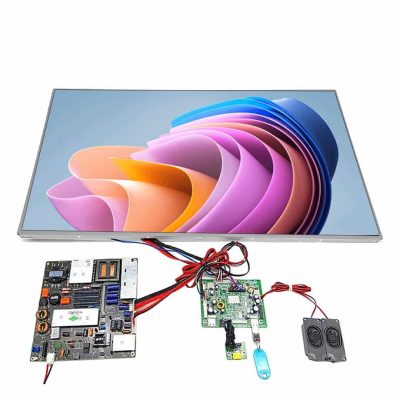
MG215HB07-1 LVDS sRGB Monitor Display Module is a complete LCM rather than a backlightless CELL, but the external LED-driver requirement means the monitor electronics still own an important part of the illumination system. This combination can be suitable for OEM designs where the controller and power board are developed around the panel's LVDS and WLED requirements. Exact board compatibility must be demonstrated, not assumed from signal-family names.
Procurement and incoming-quality checklist
Confirm MG215HB07-1 identity on the incoming label and compare the outline, active area and mass with the approved mechanical drawing. Check the 30-pin 1.0 mm connector, no-touch configuration and four-string WLED arrangement. Functional testing should prove native FHD 100 Hz operation, brightness control, stable LVDS signaling and normal power-state transitions using the production controller and backlight driver.
Optical inspection should cover uniformity, antiglare surface condition, brightness, contrast and representative color patterns. Keep the controller firmware, LVDS cable, LED-driver revision and approved panel sample linked in the qualification record. MG215HB07-1 LVDS sRGB Monitor Display Module should enter volume purchasing only after these system-level checks pass; current stock, lead time and lifecycle require separate supplier confirmation.
Engineering summary
MG215HB07-1 LVDS sRGB Monitor Display Module combines a 21.5-inch FHD IPS image, 250 cd/m² typical luminance, 99% sRGB, 100 Hz refresh and dual-channel 8-bit LVDS in a CSOT desktop-monitor LCM. The module includes a four-string WLED backlight but requires an external LED driver. Its safest integration path is to qualify the exact LVDS timing, backlight driver, mechanics, optics and thermal behavior together before production release.
Applications & Value of LCD Panel

- Fast sourcing with in-stock panels & cross-reference alternatives
- Stable supply chain with long-term availability
- Engineering-level support from panel to integration
- Custom solutions: cable, touch & optical bonding
- Strict quality control with IQC / OQC / aging test
- Full traceability system for quality assurance
- Complete technical documentation & drawings
- Compliance support: RoHS & certification files