
~
~
~
~
~
~
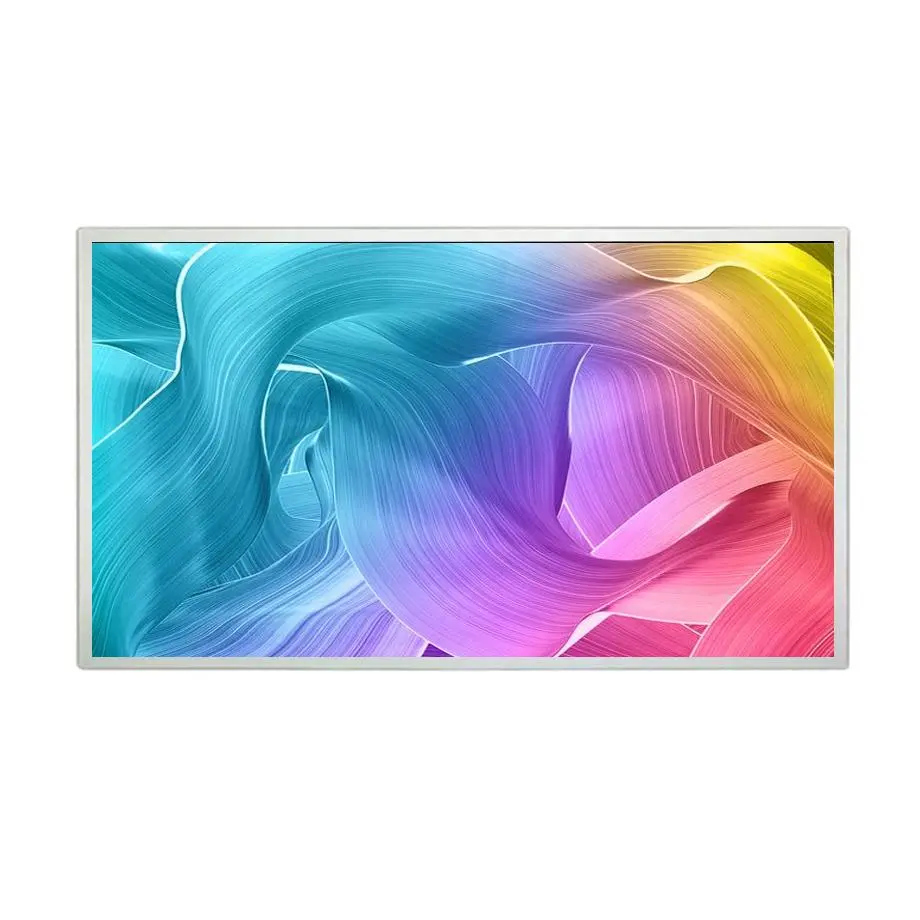
NV110C9M-L60 Portrait MIPI Tablet LCD Module 11 Inch 51-Pin BOE
Model P/N
Size
Resolution
Brightness
Viewing Angle
Connector Type
Operating Temp
Overall(mm)
boe
NV110C9M-L60
Brand
Panel Size (inch)
Model P/N
Resolution
Brightness (nits)
Viewing Angle
Contrast Ratio
Response Time
Overall (mm)
Active Area (mm)
Refresh Rate
Display Colors
Panel Type
Connector Type
Surface Treatment
Operating Temp
Touchscreen Type
Storage Temp
Work Mode
Pixel Format
Input Voltage (V)
Weight (g)
Designed For
Product Details
Product Overview
The NV110C9M-L60 Portrait MIPI Tablet LCD Module is an 11.0-inch BOE a-Si TFT-LCD LCM intended for pad and tablet integration. It uses a 1200(RGB)×2000 portrait raster in a 3:5 aspect ratio, with a 143.1 × 238.5 mm active area inside a 148.4 × 247.1 × 3.7 mm module outline. The panel is specified for 400 cd/m² typical luminance, 1400:1 typical contrast, ADS normally-black transmissive operation and 16.7 million colors at 72% NTSC.
The native display interface is MIPI with four data lanes on a 51-pin connector. Power is not a single-rail desktop-panel input: the supplied values are 1.8 V, 5.7 V and -5.7 V typical for VDDI, AVDD and AVEE respectively. The module contains a 9S4P WLED backlight but no backlight driver, and it is supplied without touch. These boundaries matter when a tablet mainboard, display cable and illumination circuit are being selected as one qualified assembly.
Three Core Buyer Value Propositions
Portrait 1200×2000 geometry supports high-density tablet layouts
The 3:5 portrait format gives an embedded tablet project a tall, information-dense canvas while preserving a compact 11-inch module envelope. The 143.1 × 238.5 mm active area and 148.4 × 247.1 × 3.7 mm overall dimensions allow mechanical teams to compare the visible window and the full package separately before committing to tooling. This is useful for a portrait-first UI, but it does not prove fit with a particular tablet because connector position, support features and cable routing still require the exact drawing.
Four-lane MIPI provides a mobile-oriented internal display path
The four-data-lane MIPI connection is aligned with the type of embedded display architecture commonly used in tablets and other mobile devices. MIPI Alliance describes DSI as a high-speed serial interface between a host processor and display module and notes widespread use in tablets and embedded displays (MIPI DSI overview). For this BOE module, “MIPI” alone is not a compatibility guarantee: lane configuration, clocking, commands, initialization sequence and connector mapping must match the target host.
400 cd/m² with external backlight driving separates optics from power design
The module provides a 400 cd/m² typical optical target while keeping the LED driver external. That gives the display designer a clear measured brightness baseline and a separate illumination-electronics task. The 9S4P WLED topology and 15,000-hour backlight-life reference help frame the driver review, but they do not define LED current, string voltage, dimming method or a system service-life guarantee. Those values must come from the current model documentation and the completed tablet thermal design.
Key Specifications at a Glance
| Parameter | Specification |
|---|---|
| Manufacturer / model | BOE NV110C9M-L60 |
| Size / type | 11.0 inch a-Si TFT-LCD, LCM |
| Resolution | 1200(RGB)×2000, 3:5 portrait |
| Active area / outline | 143.1 × 238.5 mm / 148.4 × 247.1 × 3.7 mm |
| Mass | 130 g maximum |
| Brightness / contrast | 400 cd/m² typical / 1400:1 typical |
| Viewing / response | 80/80/80/80 typical at CR≥10 / 20 ms maximum Tr+Td |
| Display mode / color | ADS normally black transmissive / 16.7M colors, 72% NTSC |
| Native interface | MIPI, 4 data lanes, 51-pin connector |
| Panel rails | 1.8 / 5.7 / -5.7 V typical (VDDI / AVDD / AVEE) |
| Backlight | 9S4P WLED, 15,000-hour reference, without driver |
| Refresh rate | 60 Hz |
| Surface / touch | Hard coating / without touch |
| Temperature | Operating 0 to 50 °C; storage -20 to 60 °C |
How Should the Four-Lane MIPI Path Be Qualified?
The NV110C9M-L60 Portrait MIPI Tablet LCD Module should be treated as an embedded display endpoint rather than as a monitor with a universal external input. MIPI Alliance states that DSI provides a high-speed serial connection between a host processor and a display module and operates on MIPI physical-layer technology such as D-PHY (MIPI DSI). Its D-PHY overview describes a clock-forwarded link with a dedicated clock lane and scalable data lanes. These standards provide architecture context, while the exact NV110C9M-L60 initialization and timing still require model documentation.
Connector count does not define protocol compatibility
A 51-pin connector match is only a mechanical starting point. The tablet mainboard must use the correct MIPI protocol mode, four-lane mapping, clocking, panel reset and power-control behavior, and the cable must preserve the required contact arrangement. A replacement panel with the same resolution and pin count can still fail if its initialization commands, timing or rail sequence differs. Obtain the current BOE interface and power-sequencing documentation before releasing a cable, adapter board or mainboard design.
For sample approval, test native 1200×2000 content at 60 Hz through the production host platform. Include cold and warm starts, sleep/wake transitions, repeated panel enable/disable cycles and long-duration operation. Verify that portrait orientation is handled by the graphics/UI stack as intended and that no intermittent link, initialization or image-retention issue appears during the target use pattern.
Why Is the Multi-Rail Power Requirement Important?
The user-supplied values identify three typical panel rails: 1.8 V VDDI, 5.7 V AVDD and -5.7 V AVEE. This is different from a single 3.3 V, 5 V or 12 V module input and should be preserved as a multi-rail requirement in the power architecture. VDDI is identified separately from the positive and negative analog rails, so the system designer should not collapse the three values into one “input voltage” when selecting regulators or documenting the cable.
Sequence and tolerance need model-specific confirmation
The current product packet gives nominal rail values but not current draw, tolerance, ramp order, discharge behavior or sequencing delays. Those missing details matter because a correct nominal voltage does not establish a safe startup or shutdown sequence. The power tree should therefore be designed from the current BOE electrical specification, with measurement points that allow the rails and reset behavior to be checked during prototype qualification.
Backlight power must also remain separate from these panel rails. The 9S4P WLED source is present, but the LED driver is not. Its electrical input and boosted output can be different from VDDI, AVDD and AVEE. Treat the display logic/analog supplies and the illumination driver as separate but coordinated subsystems rather than assuming one regulator chain covers both.
What Does the Portrait 1200×2000 Format Change Mechanically?
The active image measures 143.1 × 238.5 mm, while the module outline is 148.4 × 247.1 × 3.7 mm. That leaves a relatively narrow border around a tall portrait image. For a tablet or embedded terminal, the visible opening, chassis recess and cable exit should be checked independently. The 130 g maximum mass is useful for lid or housing load calculations, but mounting pressure and glass support should be determined from the exact drawing and mechanical guidance.
The 3:5 aspect ratio should also be reflected in software and enclosure planning. A design originally built around a 16:10 or 16:9 panel may require different UI scaling, camera or sensor placement, bezel proportions and connector routing even when the overall diagonal is similar. Rotation in software cannot correct a mechanical mismatch, and a portrait-native panel should not be described as drop-in compatible merely because the host can rotate the framebuffer.
Hard coating is not a complete front-protection specification
The supplied surface description is “Hard coating.” It does not establish haze, antiglare percentage, cover glass, optical bonding, scratch-class certification or impact resistance beyond that wording. If the tablet requires a protective lens or touch overlay, define that front stack as a separate project item. The base module is explicitly non-touch, so a touch interface and controller must not be implied by the display’s tablet application.
How Should External Backlight Driving Be Planned?
The NV110C9M-L60 Portrait MIPI Tablet LCD Module contains a 9S4P WLED light source but is specified without a backlight driver. The 400 cd/m² typical luminance is therefore a module optical result associated with the intended illumination conditions, while the host product must still provide suitable LED-driving electronics. The supplied facts do not define string voltage, LED current or brightness-control method, so those values remain model-documentation items rather than fields to infer from the 9S4P notation.
The 15,000-hour backlight-life figure should also remain a reference, not a tablet lifetime or warranty claim. LED lifetime depends on the manufacturer’s test basis, current, thermal conditions and end-of-life criterion. During qualification, measure display-area temperature after the processor, regulators and LED driver have reached steady state, and confirm that the module remains within its 0 to 50 °C operating range during the intended duty cycle.
Replacement and Procurement Decisions
A replacement decision should match the exact BOE model or prove compatibility across the complete electrical and mechanical stack. Compare 1200×2000 timing, four-lane MIPI architecture, 51-pin connector mapping, the three panel rails, non-touch status, module outline and cable position. A nearby 11-inch 1200×2000 panel can share search terms yet use another touch configuration, outline, MIPI initialization sequence or environmental range.
A supporting row description says NV110C9M-L60 entered mass production in Q2 2022 and is currently listed in production. That status is useful sourcing context but is not a guaranteed support horizon. Before a volume order, ask BOE or an authorized supply channel to confirm the offered revision, current lifecycle, traceability, available quantity and applicable PCN/EOL information. Aggregator stock counts are not HS-LCD inventory and are not carried into the formal product record.
Once a sample is approved, retain the exact module revision, mainboard and firmware, 51-pin cable, rail measurements, LED-driver design, mechanical drawing and optical-test conditions. This converts a one-time “image works” result into a controlled baseline that later purchasing and engineering teams can use when evaluating additional lots or potential substitutes.
Engineering Answers in Brief
NV110C9M-L60 is an 11-inch BOE portrait tablet LCM with a native 1200×2000 raster and 400 cd/m² typical luminance.
Its native display link uses four MIPI data lanes through a 51-pin connector, while the panel requires 1.8 V, 5.7 V and -5.7 V typical rails.
The module includes a 9S4P WLED source but no backlight driver, so illumination electronics remain a system-level responsibility.
The base display is non-touch; any touch sensor, cover lens or bonding stack must be defined separately.
Procurement Checklist
- Specify BOE NV110C9M-L60 and confirm the exact offered revision.
- Request the current four-lane MIPI timing, initialization, 51-pin assignment and power-sequencing documentation.
- Verify 1200×2000 at 60 Hz using the intended application processor, production firmware and cable.
- Validate the 1.8 V VDDI, 5.7 V AVDD and -5.7 V AVEE rails rather than treating the panel as a single-supply module.
- Check the 148.4 × 247.1 × 3.7 mm outline and 143.1 × 238.5 mm active area against the enclosure and visible opening.
- Design and qualify the external driver for the 9S4P WLED backlight using model-specific electrical limits.
- Keep touch, protective lens and optical bonding as separate requirements because the standard module is non-touch.
- Reconfirm lifecycle status, source traceability and any PCN/EOL information before volume commitment.
The NV110C9M-L60 Portrait MIPI Tablet LCD Module provides a compact BOE display platform with portrait 1200×2000 geometry, four-lane MIPI connectivity and a defined 400 cd/m² optical target. Successful integration depends on matching the MIPI initialization, multi-rail power tree, external backlight driver, enclosure and sourcing controls to the exact module revision.
Recommended: Same Size
(11")
Applications & Value of LCD Panel

- Fast sourcing with in-stock panels & cross-reference alternatives
- Stable supply chain with long-term availability
- Engineering-level support from panel to integration
- Custom solutions: cable, touch & optical bonding
- Strict quality control with IQC / OQC / aging test
- Full traceability system for quality assurance
- Complete technical documentation & drawings
- Compliance support: RoHS & certification files
