Freya Yang
+86 18318948097
+852 62667476
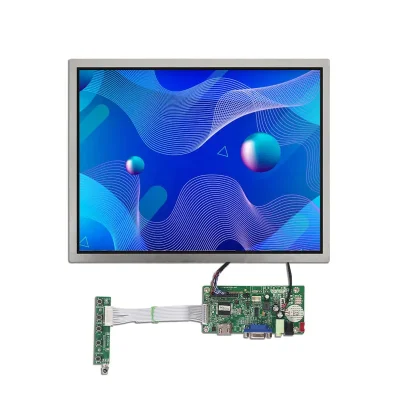
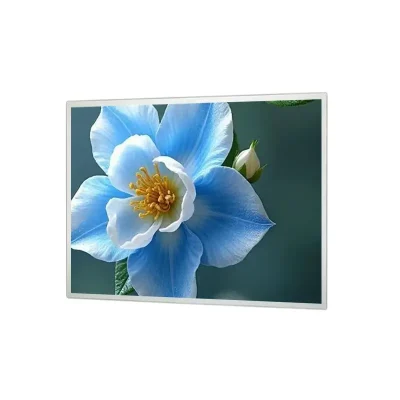
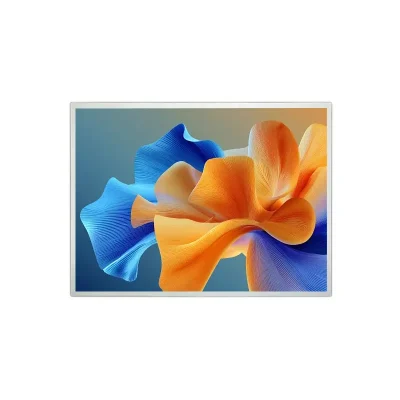
15 Inch Outdoor Information Display Panel for Signage Systems


Model P/N
Size
Resolution
Brightness
Viewing Angle
Connector Type
Operating Temp
Overall(mm)
huisoar
HS0150GB03-C100
Brand
Panel Size (inch)
Model P/N
Resolution
Brightness (nits)
Viewing Angle
Contrast Ratio
Response Time
Overall (mm)
Active Area (mm)
Refresh Rate
Bezel Opening
Display Colors
Panel Type
Connector Type
Operating Temp
Touchscreen Type
Storage Temp
Work Mode
Pixel Format
Control Type
Operating Environment
Motherboard Type
Designed For
15 Inch Outdoor Information Display Panel for Signage Systems
This 15-inch XGA panel provides 1000 cd/m² typical luminance, a 4:3 active format and 1-channel 8-bit LVDS input for public-information and signage assemblies.
Product Summary
The Outdoor Information Display Panel is designed for equipment that presents schedules, instructions, status information, transaction prompts or public messages in a traditional 4:3 format. Its native 1024 × 768 resolution supports existing XGA software layouts and information-terminal designs without requiring content to be reformatted for a widescreen panel.
A 1000 cd/m² typical luminance configuration provides additional optical headroom for bright indoor locations, covered outdoor installations and semi-outdoor equipment. Final visibility still depends on front glass, reflections, enclosure depth, backlight control, ambient light and panel temperature.
The panel is a non-touch LCD component. It requires a compatible LVDS host, a suitable backlight drive circuit, mechanical support and any protective front assembly needed by the finished system.
Key Specifications
| Parameter | Value |
|---|---|
| Display size | 15.0 inch |
| Native resolution | 1024 × 768 pixels |
| Resolution class | XGA |
| Aspect ratio | 4:3 |
| Typical luminance | 1000 cd/m² |
| Active area | 304.128 × 228.096 mm |
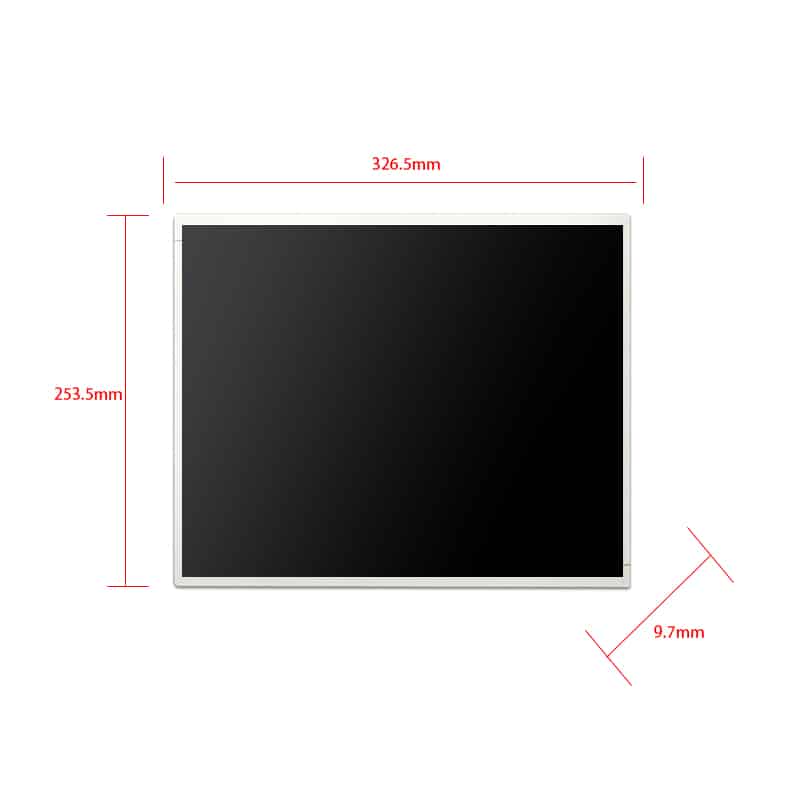
| Outline dimensions | 326.5 × 253.5 × 9.7 mm |
| Signal interface | 1-channel, 8-bit LVDS |
| Backlight | WLED |
| Contrast ratio | 1000:1 |
| Viewing-angle sequence | 89/89/89/89 |
| Touch | None |
| Operating temperature | −20°C to +70°C |
Planning 4:3 XGA Information Content
Layout Advantages of 1024 × 768
The 1024 × 768 resolution provides a 4:3 workspace suited to information systems that display structured content rather than widescreen video.
Typical layouts can include:
- timetable or schedule grids
- directional information
- equipment status
- transaction instructions
- parcel-compartment selection
- charging-session data
- vending menus
- public notices
- maps and simple diagrams
- persistent navigation and alert regions
The 4:3 format can be particularly useful when replacing an existing XGA panel because it may preserve the original interface proportions and software layout.
Preparing Signage and Operator Content
Content should be designed at the native 1024 × 768 resolution whenever possible. Native rendering avoids unnecessary scaling and helps maintain clear text, icons and line graphics.
Before software approval, confirm:
- native timing
- refresh rate
- pixel-clock range
- LVDS mapping
- color depth
- screen orientation
- startup image
- scaling behavior
- sleep and wake operation
- backlight-dimming logic
- fault-screen behavior
Text size and contrast should be tested behind the intended front glass under the actual ambient-light conditions.
Outdoor Information Display Panel Integration
Qualifying the 1-Channel LVDS Interface
The panel uses a 1-channel, 8-bit LVDS signal format. This description alone is not enough to establish compatibility with a controller or embedded motherboard.
Engineering should confirm:
- connector manufacturer and part number
- pin count
- complete pin assignment
- LVDS pair mapping
- clock polarity
- panel timing
- data format
- supply voltage
- panel-enable logic
- backlight-enable logic
- dimming method
- cable contact side
- cable length
- grounding arrangement
A controller board advertised for a 15-inch XGA panel may still use a different pinout, supply rail or backlight circuit.
Confirming the Brightness Grade
The assigned configuration is treated as 1000 cd/m² typical. One separate table identifies 1500 nits, creating a grade conflict that must be resolved before sample approval.
Use the model-specific datasheet, panel label and measured sample configuration to confirm:
- typical luminance
- minimum luminance
- backlight current
- backlight voltage
- dimming range
- thermal limits
- luminance uniformity
- approved backlight assembly
Do not release optical or power-system requirements using the unverified 1500-nit value.
Separating the Panel from the Finished Outdoor System
The LCD panel itself does not create a complete outdoor display.
A finished outdoor or semi-outdoor assembly may also require:
- protective front glass
- anti-reflective or anti-glare treatment
- sealed enclosure
- gasket design
- condensation management
- solar-load control
- forced or passive cooling
- drainage
- UV-resistant materials
- backlight thermal control
- ambient-light sensing
- EMC design
- surge protection
Outdoor performance depends on the panel, front glass, enclosure, thermal design and ambient conditions.
Mechanical and Optical Integration
The active image area measures 304.128 × 228.096 mm. The complete panel envelope is 326.5 × 253.5 × 9.7 mm.
The mechanical design should consider:
- visible opening dimensions
- active-area centering
- panel-edge clearance
- mounting-bracket location
- rear-component clearance
- cable exit direction
- LVDS cable bend radius
- backlight connector access
- front-glass overlap
- gasket compression
- chassis tolerance
- thermal expansion
- service replacement path
The 9.7 mm panel thickness does not include the depth required for cabling, controller electronics, glass, mounting brackets or thermal hardware.
The raw viewing-angle sequence is 89/89/89/89. The directional order should be confirmed before specifying the panel orientation or relying on a particular top, bottom, left or right viewing grade.
Suitable Information and Signage Applications
Public Information Terminals
The 4:3 XGA format can support schedules, directions, notices and status information in protected public-facing equipment.
Charging-Station Interfaces
The panel can be evaluated for charging-status, instruction and session-information screens when the enclosure, temperature and interface requirements are independently validated.
Parcel and Delivery Lockers
A 15-inch screen can present locker selection, pickup instructions and service information in non-touch systems using external controls or an optional separately engineered touch overlay.
Vending and Dispensing Equipment
The panel can display product menus, availability, pricing and operating prompts. User-input hardware must be integrated separately because the standard panel has no touch function.
Bus-Stop and Transit Information
The component can be assessed for covered passenger-information assemblies that need XGA content and higher luminance than a standard indoor panel.
Community and Facility Information Displays
The panel can support notices, maps, visitor guidance and facility status in protected information enclosures.
These are integration routes, not certification claims for unattended outdoor use.
Customization and Engineering Review
Project review can cover:
- approved brightness grade
- backlight drive
- cable and connector matching
- controller-board selection
- front-cover glass
- surface treatment
- optical bonding
- protective enclosure
- mounting frame
- thermal management
- ambient-light control
- logo and bezel printing
- display orientation
- brightness-control strategy
Custom configurations are generally reviewed from 500 pieces, subject to tooling requirements, material availability and the approved specification. Sample and standard-module quantities are confirmed separately.
Procurement Checklist
Before approving a sample or production design, confirm:
- exact panel model and revision
- approved 1000 cd/m² brightness grade
- resolution and timing
- refresh rate
- 1-channel, 8-bit LVDS mapping
- connector part number
- complete pinout
- FPC or cable contact direction
- panel input voltage
- panel current
- backlight voltage
- backlight current
- backlight enable
- dimming interface
- active area
- outline dimensions
- thickness
- mounting details
- cable-exit direction
- viewing-angle order
- contrast ratio
- surface treatment
- operating temperature
- storage temperature
- humidity range
- backlight lifetime
- power consumption
- no-touch requirement
- front-glass specification
- enclosure sealing
- condensation strategy
- cooling method
- compliance documentation
- sample quantity
- annual demand
FAQ
About 15 Inch Outdoor Information Display Panel
What must be checked before connecting a 1-channel, 8-bit LVDS host?
How should 1024 × 768 signage content be prepared?
Does 1000 cd/m² guarantee readability in direct sunlight?
Which dimensions control the enclosure design?
How should the 1000-versus-1500 cd/m² conflict be resolved?
Freya Yang
+86 18318948097