Freya Yang
+86 18318948097
+852 62667476
15 Inch 4:3 Industrial TFT LCD Panel for Vending Machines
Model P/N
Size
Resolution
Brightness
Viewing Angle
Connector Type
Operating Temp
Overall(mm)
huisoar
HS150LW-NE05
Brand
Panel Size (inch)
Model P/N
Resolution
Brightness (nits)
Viewing Angle
Contrast Ratio
Response Time
Overall (mm)
Active Area (mm)
Refresh Rate
Display Colors
Panel Type
Connector Type
Operating Temp
Touchscreen Type
Storage Temp
Work Mode
Input Voltage (V)
Operating Environment
Designed For
15 Inch 4:3 Industrial TFT LCD Panel for Vending Machines
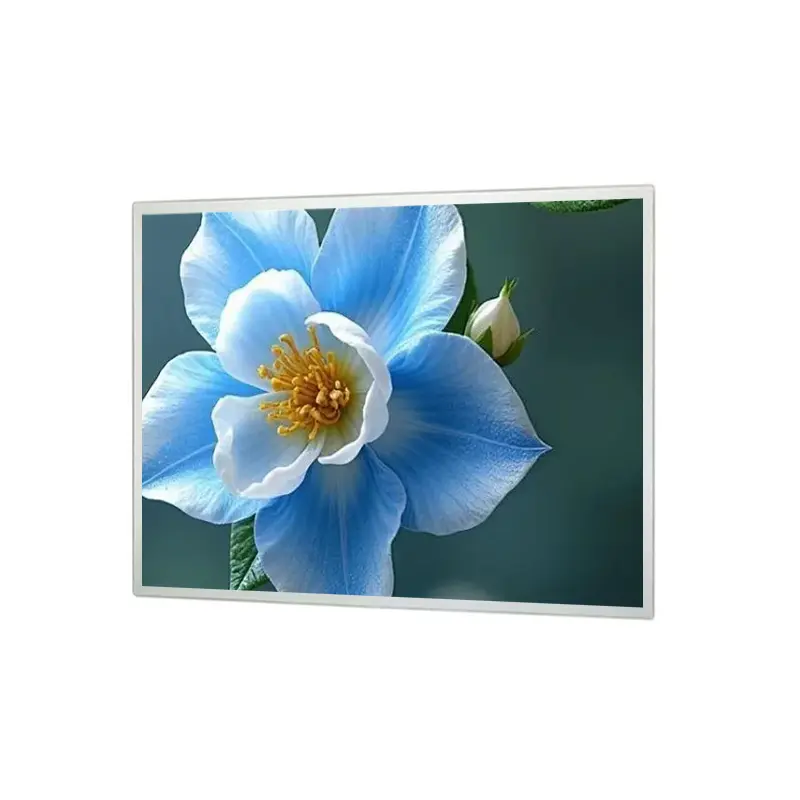
This 4:3 Industrial TFT LCD Panel for Vending Machines combines XGA resolution, 500 cd/m² luminance and 20-pin LVDS for compact equipment integration.
Product Summary
The 4:3 Industrial TFT LCD Panel for Vending Machines is a 15-inch component display for equipment that benefits from a traditional 1024 × 768 interface layout. Its 4:3 image format is practical for vending-machine menus, equipment status pages, charging information, digital signage and control-oriented interfaces that do not require a widescreen UI.
The panel combines an a-Si IPS TFT-LCD structure with transmissive operation, 500 cd/m² typical luminance, 700:1 typical contrast and WLED backlighting. A 20-pin LVDS connection and 3.3 V typical panel input provide the electrical basis for embedded integration, while the standard configuration remains non-touch.
Key Specifications
| Item | Confirmed value |
|---|---|
| Screen size | 15 inches |
| Native resolution | 1024 × 768 pixels |
| Aspect ratio | 4:3 |
| Panel type | a-Si IPS TFT-LCD |
| Display mode | Transmissive |
| Luminance | 500 cd/m² typical |
| Contrast | 700:1 typical |
| Colors | 16.7M |
| Backlight | WLED |
| Interface | LVDS, 20 pins |
| Panel input | 3.3 V typical |
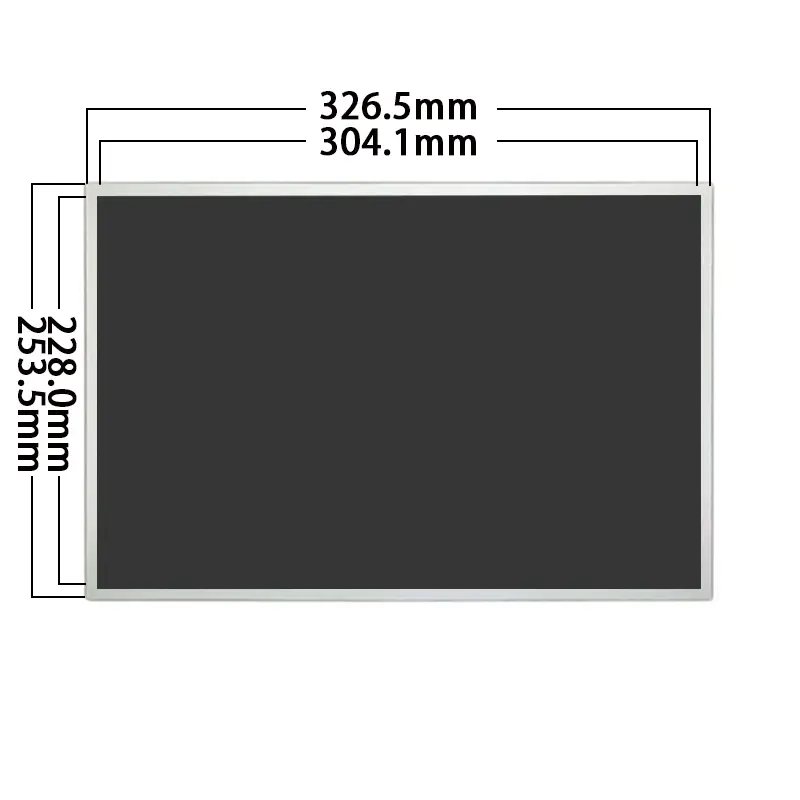
| Active area | 304.128 × 228.096 mm |
| Module envelope | 326.5 × 253.5 × 10.1 mm maximum |
| Touch | Non-touch |
| Operating temperature | 0°C to +50°C |
| Storage temperature | −20°C to +60°C |
Why the 4:3 XGA Format Still Matters
1024 × 768 UI Fit
A 1024 × 768 raster provides a native 4:3 workspace that can be useful when an equipment platform was originally designed around square-format or legacy XGA screens. This matters in replacement and equipment-refresh projects because moving to a widescreen panel can affect the enclosure opening, graphics layout, software scaling and operator workflow.
For a vending machine, the 4:3 format can support vertically balanced menu areas, status zones and instructional content without requiring a wide front-panel opening. Native-resolution output should be used whenever practical so text and interface graphics are not softened by unnecessary scaling.
500 cd/m² for Bright Indoor Equipment
The 500 cd/m² typical luminance provides more optical headroom than many standard office-oriented panels, but it should not be treated as a universal direct-sun specification.
The 500 cd/m² panel rating should be validated behind the final vending-machine front window under the intended lighting. Protective glass, reflection, tint, air gaps and installation angle can all change effective contrast. For equipment located directly in strong sunlight, the complete optical stack should be qualified rather than relying on the bare-panel luminance alone.
Integrating the 4:3 Industrial TFT LCD Panel for Vending Machines
20-Pin LVDS Host Qualification
The module uses a 20-pin LVDS interface. This defines the signal family and connector count, but it does not establish plug-and-play interchangeability with every other 20-pin panel.
A matching 20-pin LVDS connector does not guarantee timing, voltage, channel mapping, bit depth or pin compatibility.
Before controller or cable release, the engineering team should confirm native 1024 × 768 timing, complete pin assignment, LVDS mapping, connector pitch, contact side, cable orientation and required control signals. The 3.3 V figure should be treated as the panel-input reference; WLED backlight electrical requirements need their own approved values.
Mechanical Fit and Enclosure Planning
The active image area is 304.128 × 228.096 mm. The complete module envelope is 326.5 × 253.5 mm with a maximum thickness of 10.1 mm.
Those dimensions perform different jobs in mechanical design. The active area determines where the visible image should align with the front opening, while the full module dimensions affect brackets, cable clearance, support points and cabinet depth. The complete production drawing should control tooling rather than using the active area as a substitute for the module outline.
IPS Viewing and Installation Geometry
The IPS hard-screen structure supports a broad-viewing product direction, which is useful where customers may approach a vending or information terminal from different positions.
The exact angle grade should nevertheless be locked to the approved production revision before it is used as a formal procurement requirement. Mechanical validation should also consider screen height and tilt because even a wide-view panel can perform differently when the user's normal eye line is significantly above or below the display center.
Operating Environment and Non-Touch Architecture
Temperature Boundaries
The panel operates from 0°C to +50°C and stores from −20°C to +60°C. These values are suitable for controlled commercial and industrial equipment when internal cabinet temperatures remain inside the specified range.
The 0°C to +50°C operating range does not establish weatherproof or all-season outdoor suitability. Charging terminals, gate equipment or machines located outdoors still need system-level evaluation for sealing, solar heat, condensation, humidity and any required low-temperature startup behavior.
Separate Touch Integration
The standard panel is non-touch.
The standard module is non-touch, so interactive input requires a separately qualified touch assembly or another input method.
If a touch version is needed, the project should define the touch technology, controller, interface, cover glass, bonding method, total thickness, optical transmission and mechanical stack separately. This keeps the LCD video path and the user-input path technically distinct during qualification.
Application Fit
The 4:3 Industrial TFT LCD Panel for Vending Machines is most relevant to equipment where a traditional XGA interface, moderate panel depth and panel-level LVDS integration are more important than a modern widescreen format.
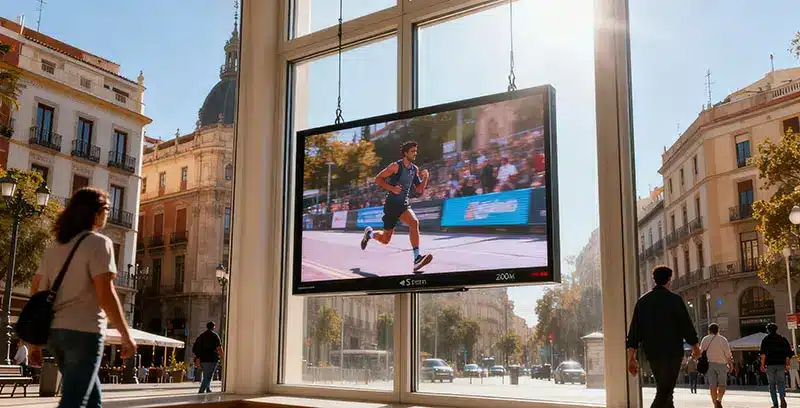
Suitable directions include vending-machine displays, charging-pile information screens, gate and access equipment, digital signage and industrial embedded interfaces. For protected high-ambient-light installations, the 500 cd/m² grade can be evaluated with the intended front window. Applications involving direct sun, weather exposure or temperatures outside the module range require a different optical or environmental configuration.
Customization and Project Qualification
Project evaluation can cover LVDS controller and cable matching, full 20-pin definition, cover glass, anti-glare or anti-reflective treatment, optical bonding, enclosure adaptation and a separately engineered touch system.
Custom configurations are generally reviewed from 500 pieces, subject to tooling requirements, material availability and the requested specification. Sample and standard-module quantities are confirmed separately.
Procurement Checklist
Confirm the assigned panel revision and native 1024 × 768 timing; obtain the complete 20-pin LVDS assignment, channel/bit mapping, connector orientation and panel-current requirements; obtain the WLED voltage, current, enable and dimming requirements; approve the 304.128 × 228.096 mm active area and 326.5 × 253.5 × 10.1 mm maximum envelope; lock the 500 cd/m² luminance tolerance and 700:1 contrast grade; resolve the viewing-angle revision; confirm non-touch status, front-window optics, 0°C to +50°C operation, −20°C to +60°C storage, sample criteria, project quantity and annual demand.
FAQ
About 15 Inch 4:3 Industrial TFT LCD Panel
What must be checked before replacing another 20-pin LVDS panel?
Is 500 cd/m² sufficient behind a vending-machine cover window?
When is a 4:3 XGA panel preferable to a widescreen replacement?
What is required if the vending machine needs touch input?
Which environmental limits matter for charging or outdoor-adjacent equipment?
Freya Yang
+86 18318948097