Freya Yang
+86 18318948097
+852 62667476
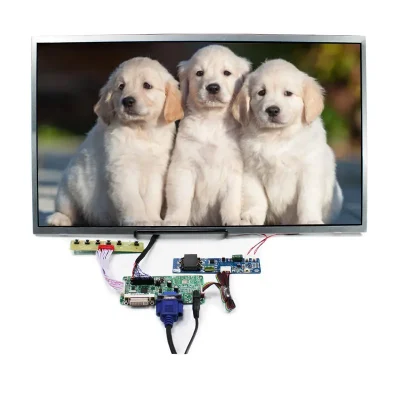
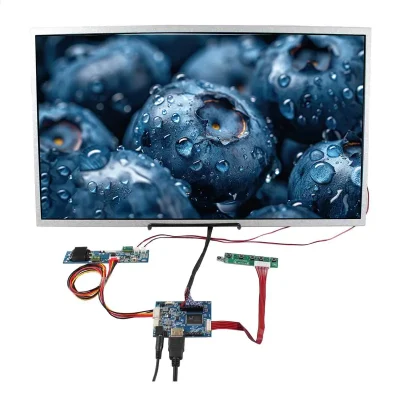
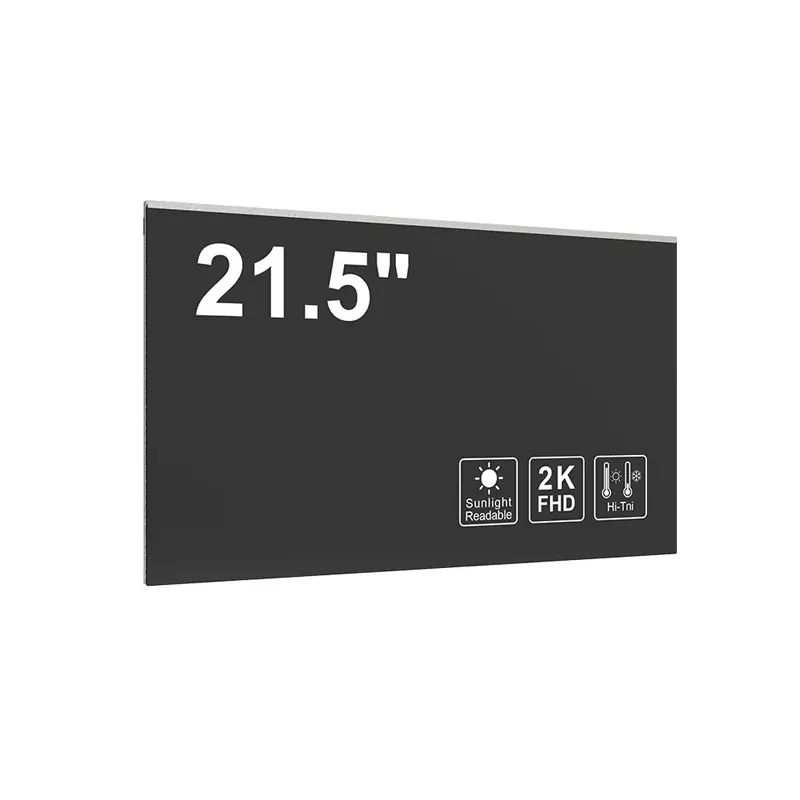
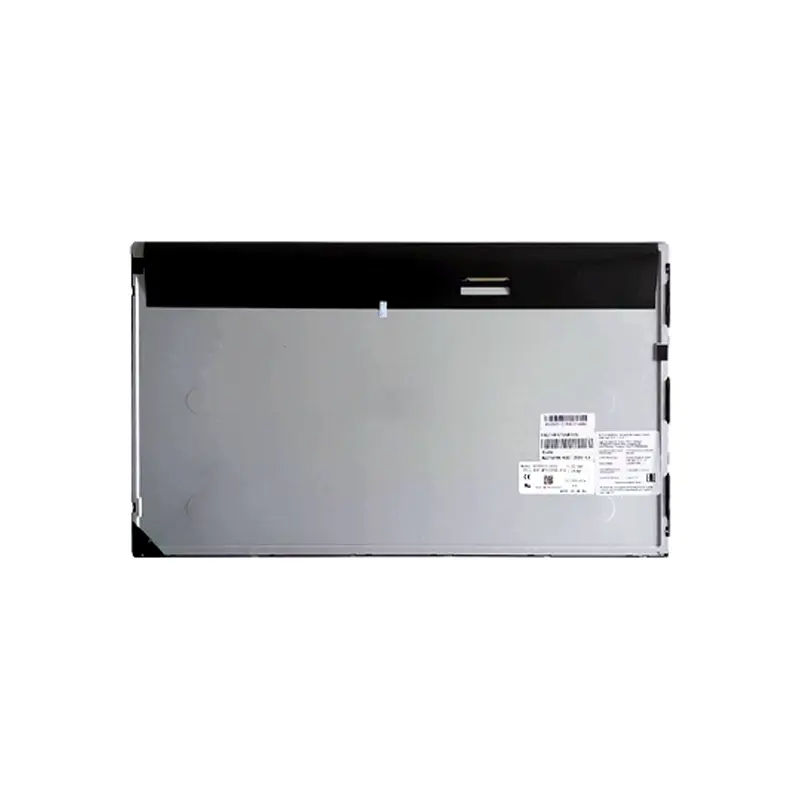
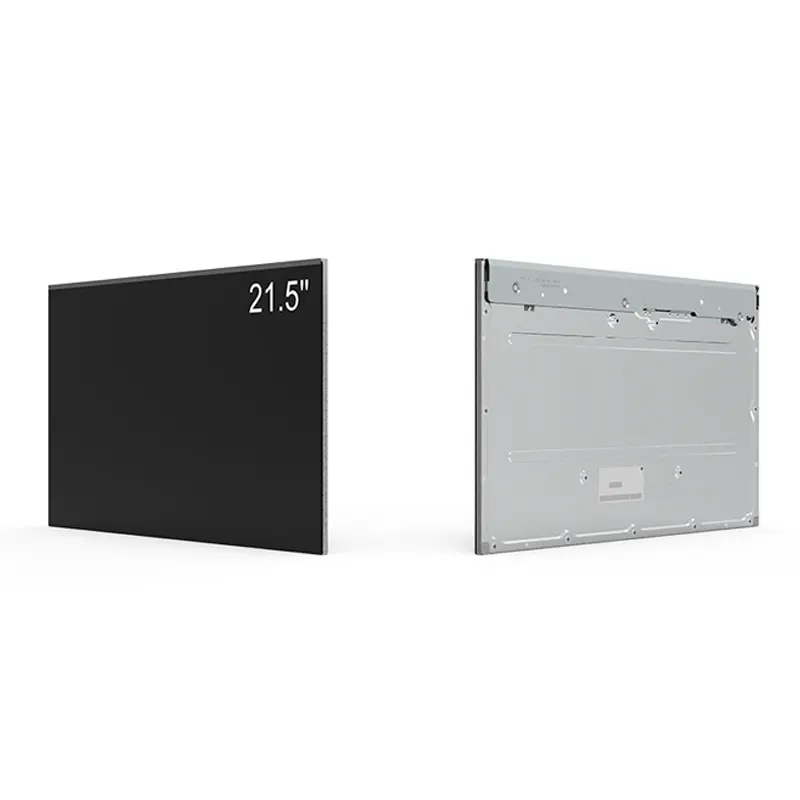
21.5 Inch Factory Automation LCD Panel Sunlight Readable Screen for Industrial HMI
Model P/N
Size
Resolution
Brightness
Viewing Angle
Connector Type
Operating Temp
Overall(mm)
huisoar
HS215ENT-NE10
Brand
Panel Size (inch)
Model P/N
Resolution
Brightness (nits)
Viewing Angle
Contrast Ratio
Response Time
Overall (mm)
Active Area (mm)
Refresh Rate
Bezel Opening
Display Colors
Panel Type
Connector Type
Surface Treatment
Operating Temp
Touchscreen Type
Storage Temp
Work Mode
Pixel Format
Input Voltage (V)
Weight (g)
Operating Environment
Designed For
21.5 Inch Factory Automation LCD Panel Sunlight Readable Screen for Industrial HMI
Built for HMI and process-monitoring equipment, this 21.5-inch Full HD panel combines 1000 cd/m² luminance with AHVA viewing and dual-channel LVDS integration.
Product Summary
The Factory Automation LCD Panel is a 21.5-inch Full HD component display for control stations, production monitoring, test equipment, equipment dashboards, and industrial information terminals. Its 476.064 × 267.786 mm active area provides a familiar widescreen workspace for alarms, trends, machine status, process graphics, and operator menus.
The NE10 configuration has a fixed panel luminance of 1000 cd/m². It combines AHVA normally-black transmissive operation, 89° viewing in four directions, a 1000:1 typical contrast ratio, anti-glare 3H treatment, and 16.7M-color output. The native signal path is 30-pin two-channel 8-bit LVDS with a 5.0 V typical panel rail.
A matching 30-pin connector does not prove LVDS compatibility. The timing, channel mapping, bit width, voltage, pin assignment, connector orientation, and cable construction must all be verified before powering a sample.
Key Specifications at a Glance
| Item | Controlled value |
|---|---|
| Screen size | 21.5 inches |
| Native resolution | 1920 × 1080 pixels |
| Pixel format | RGB vertical stripe, 102 PPI |
| Active area | 476.064 × 267.786 mm |
| Viewing/opening reference | 479.8 × 271.3 mm |
| Luminance | 1000 cd/m² |
| Optical mode | AHVA, normally black, transmissive |
| Contrast ratio | 1000:1 typical |
| Viewing angle | 89°/89°/89°/89° L/R/U/D |
| Surface | Anti-glare, hard coating 3H |
| Response time | 12/10 ms typical Tr/Td |
| Color | 16.7M colors, 72% NTSC |
| Backlight | 12S4P WLED; external driver required |
| Backlight reference | Listed 50,000 hours; operating conditions require confirmation |
| Standard frequency | 60 Hz |
| Native interface | 30-pin two-channel 8-bit LVDS |
| Panel voltage | 5.0 V typical |
| Standard touch status | Non-touch |
Full HD Visibility for Industrial HMI
Fixed 1000 cd/m² Configuration
The NE10 version should be specified as a 1000 cd/m² panel rather than described with the entire family’s 500–2500 cd/m² range. Other luminance levels use separate model variants and should be ordered explicitly.
A 1000 cd/m² panel gives useful headroom for bright workshops, window-adjacent equipment, and high-ambient-light operator stations. It does not by itself guarantee direct-sun readability after cover glass, reflections, optical gaps, and installation conditions are applied. Final approval should use the intended front stack and representative ambient lighting.
AHVA Wide Viewing and Anti-Glare Surface
AHVA normally-black operation supports wide viewing for applications where an operator may not remain directly in front of the display. The anti-glare 3H surface helps control reflection and handling wear, while the 1000:1 typical contrast ratio supports machine graphics, warning states, charts, and text-heavy interfaces.
The finished front window still affects reflection, contrast, and perceived brightness. Cover-lens material, surface treatment, air gap, bonding method, and enclosure geometry should be reviewed together.
Native Full HD UI Planning
The native 1920 × 1080 raster should be used for HMI layouts whenever possible. Prepare dashboards, process diagrams, alarms, and video windows at the intended scale, then test text size and contrast at the real operator distance.
Scaling from another resolution can soften text or distort interface elements. Controller qualification should therefore include native timing, pixel clock, synchronization, color depth, and the expected operating frequency.
Factory Automation LCD Panel Integration
30-Pin Dual-Channel LVDS Qualification
The native interface is identified as two-channel 8-bit LVDS through a 30-pin connector. Controller matching requires more than the connector count: the panel timing, supply requirements, LVDS mapping, complete pin assignment, connector orientation, and cable definition must agree.
Controller manufacturers request the panel specification because compatibility depends on resolution, timing, interface, backlight requirements, and cable configuration.
5.0 V Panel and Separate WLED Driver
The 5.0 V typical value applies to the panel rail. The 12S4P WLED backlight requires separate electrical documentation and an external LED driver. Confirm string voltage, string current, driver input, enable, dimming, protection, and worst-case power before releasing the power design.
Panel logic and backlight power should not be treated as a single undifferentiated supply. The production specification should define sequencing and control requirements where applicable.
Standard 60 Hz and MEMC Boundaries
Standard operation is 60 Hz. The higher-rate wording refers to MEMC-related 120 Hz, combined panel/backlight modes, or 240 Hz operation from a 60 Hz input. Those descriptions do not establish a native 120 Hz or 240 Hz panel rate.
A project requiring enhanced motion performance should document the accepted input, processing path, panel output timing, backlight behavior, latency, and controller configuration before making a public refresh-rate claim.
Mechanical and Environmental Qualification
Active Area and Viewing Opening
The active image area is 476.064 × 267.786 mm. The 479.8 × 271.3 mm figure can guide front-window planning, but it does not define the complete panel outline, thickness, mounting points, connector location, or keep-out zones.
An approved mechanical drawing should control the enclosure opening, edge support, cable route, tolerances, service access, and front-stack clearance.
Weight and Temperature Approval
Use an approved production datasheet to fix the final weight and environmental limits. Current technical data contain both 1.74 kg and 1.8 kg typical weight values, together with different operating and storage temperature ranges.
The released enclosure, support structure, cooling design, and qualification plan should use one confirmed model-specific set of values rather than combining limits from different documents or family variants.
Non-Touch Front-Stack Planning
The standard panel configuration is non-touch. Interactive use requires a separately qualified touch sensor, controller, interface, cover lens, bonding method, firmware, and mechanical stack.
Touch integration can change optical transmission, reflection, thickness, bezel geometry, power, grounding, and electromagnetic performance. These effects should be included in sample approval.
Applications in Factory and Equipment Systems
This Factory Automation LCD Panel can support machine-control HMIs, production dashboards, process-monitoring stations, test and measurement equipment, industrial information terminals, and protected high-brightness kiosks. The Full HD canvas provides space for multiple data regions without moving to an oversized display.
Navigation, marine, or professional imaging projects require application-specific environmental, safety, optical, and regulatory qualification. The panel specification alone does not establish medical certification, marine approval, weatherproofing, or a finished-system duty grade.
Customization and Model-Family Selection
The 21.5-inch family includes separate 500, 1000, 1500, 2000, and 2500 cd/m² variants. Select the model from measured ambient light, front-stack transmission, power, thermal limits, and operating schedule rather than assuming the highest value is required for every installation.
Project review can cover brightness selection, LVDS controller and cable matching, backlight driver, cover glass, anti-reflective treatment, optical bonding, touch overlay, enclosure adaptation, mounting, thermal design, branding, and packaging. Custom configurations are generally reviewed from 500 pieces, subject to tooling requirements, material availability, and the requested specification. Samples and standard-panel quantities are confirmed separately.
Procurement Checklist
Confirm the approved model mapping; exact 1000 cd/m² configuration; native 1920 × 1080 timing at 60 Hz; two-channel 8-bit LVDS mapping; complete 30-pin assignment; connector orientation; 5.0 V panel rail; 12S4P WLED voltage, current, enable, and dimming; external driver; active area; viewing opening; complete outline and thickness; support zones; final weight; front-glass transmission and reflection; touch status; approved operating and storage limits; sample criteria; quantity; and annual demand.
FAQ
About 21.5 Inch Factory Automation LCD Panel Sunlight Readable Screen
What must be checked before using a 30-pin LVDS controller?
When should the 1000 cd/m² version be selected instead of another family version?
Which dimensions control front-window and enclosure design?
How should the 120 Hz and 240 Hz options be interpreted?
What is required to add touch to the standard panel?
Which weight and temperature values should control qualification?
Freya Yang
+86 18318948097