Freya Yang
+86 18318948097
+852 62667476
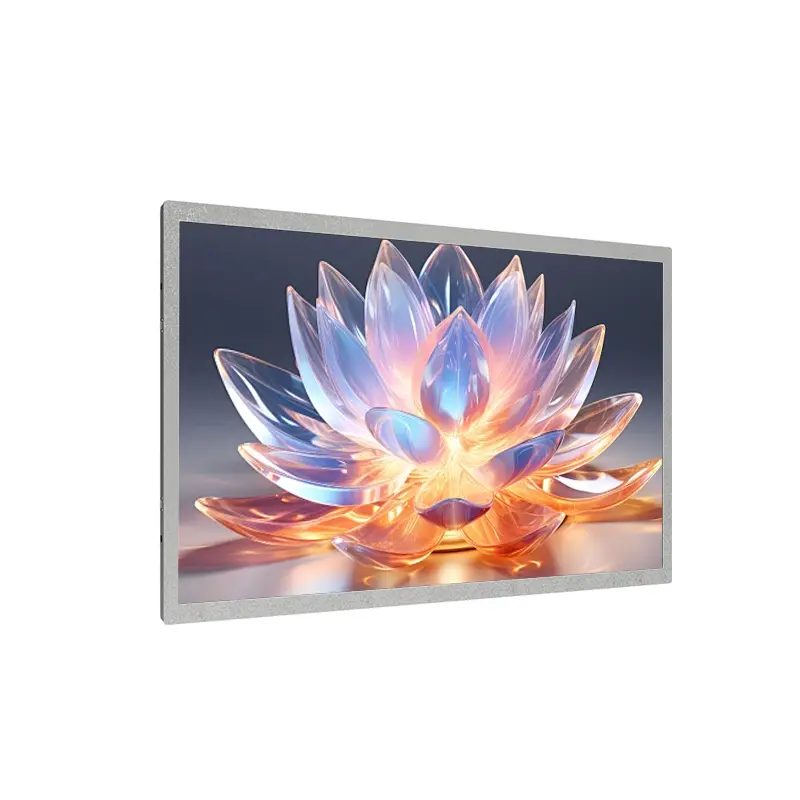
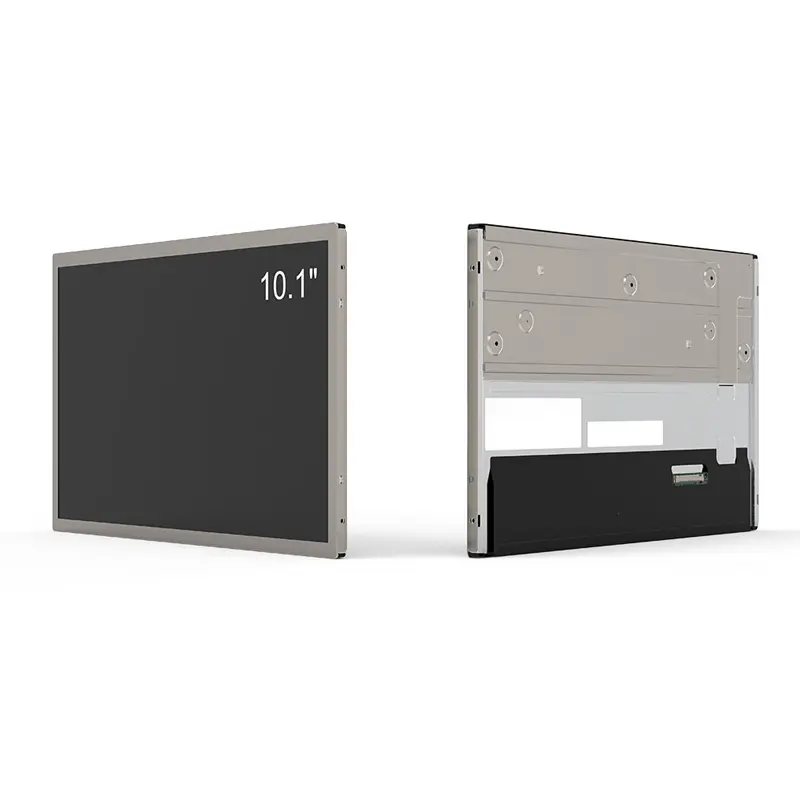
10.1 Inch Outdoor IPS LCD Screen for Industrial HMI
Model P/N
Size
Resolution
Brightness
Viewing Angle
Connector Type
Operating Temp
Overall(mm)
huisoar
HS101ENT-NE10
Brand
Panel Size (inch)
Model P/N
Resolution
Brightness (nits)
Viewing Angle
Contrast Ratio
Response Time
Overall (mm)
Active Area (mm)
Refresh Rate
Bezel Opening
Display Colors
Panel Type
Connector Type
Surface Treatment
Operating Temp
Touchscreen Type
Storage Temp
Work Mode
Pixel Format
Input Voltage (V)
Weight (g)
Operating Environment
Designed For
10.1 Inch Outdoor IPS LCD Screen for Industrial HMI
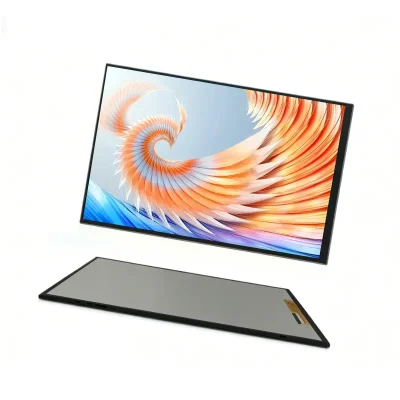
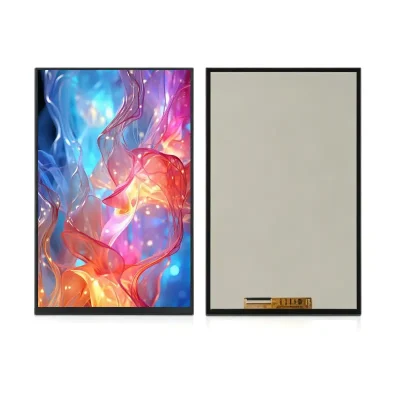
This Outdoor IPS LCD Screen combines a 10.1-inch WXGA panel, selected 1000 cd/m² output and 40-pin LVDS for compact HMI integration.
An Outdoor IPS LCD Screen for industrial equipment must balance daylight visibility with interface compatibility and enclosure fit. This 10.1-inch module uses a 1280 × 800 WXGA image area at 149 PPI, a selected 1000 cd/m² NE10 luminance grade, AAS/IPS normally-black transmissive optics and a matte 3H surface. A one-channel 40-pin LVDS interface and 3.3 V typical panel input support embedded-controller integration.
A matching connector does not prove LVDS compatibility. Timing, channel mode, bit mapping, pin assignment, voltage and connector orientation must be approved before a controller board or cable is released. The complete equipment also needs final-window and site-light testing before it is described as sunlight readable.
Key Specifications
| Item | Selected configuration |
|---|---|
| Display size | 10.1 inches |
| Native resolution | 1280 × 800 pixels, WXGA, 149 PPI |
| Selected luminance | 1000 cd/m² |
| Optical mode | AAS/IPS, normally black, transmissive |
| Active area | 216.96 × 135.6 mm |
| Viewable area | 218.96 × 137.6 mm |
| Module outline | 230.7 × 152.55 × 7 mm |
| Viewing angle | 85° / 85° / 85° / 85° left/right/up/down |
| Contrast ratio | 800:1 typical |
| Response time | 14/11 ms typical, Tr/Td |
| Color support | 262K / 16.2M colors, 52% NTSC |
| Surface | Matte, hard coating 3H |
| Standard refresh | 60 Hz |
| Signal interface | One-channel LVDS, 6/8-bit, 40-pin connector |
| Panel input | 3.3 V typical |
| Backlight | WLED with LED driver and listed 50,000-hour reference |
| Panel weight | 280 g |
| Touch | Standard module is non-touch; custom integration is optional |
| Temperature target | −20°C to +70°C, pending approved model-document reconciliation |
WXGA Content and Viewing Geometry
1280 × 800 Layout Planning
The 16:10 WXGA canvas provides useful vertical space for alarms, navigation controls and process information. Interface graphics should be authored at the native 1280 × 800 raster to avoid scaling artifacts.
The 216.96 × 135.6 mm active area controls the visible pixel region. The 218.96 × 137.6 mm viewable area and 230.7 × 152.55 × 7 mm module outline serve different enclosure functions and should remain separate in the mechanical drawing.
Wide-View AAS/IPS Structure
AAS/IPS normally-black transmissive operation supports stable off-axis viewing. The listed viewing data is 85° in the left, right, up and down directions. Mounting height, tilt and the final cover window should still be evaluated because reflections can reduce usable contrast.
Selected 1000 cd/m² Brightness Grade
NE10 Versus Other Family Versions
The NE10 model is the selected 1000 cd/m² configuration. The same family identifies 500 cd/m² and 1500 cd/m² variants, but those are separate grades rather than simultaneous output levels. Procurement documents should name one grade and define its tolerance and measurement condition.
The 1000 cd/m² route is a practical starting point for bright indoor, sheltered outdoor and window-adjacent HMI equipment. Stronger direct-sun exposure may require a different grade or a stronger optical stack.
Readability Depends on the Optical Stack
Panel luminance is only one part of outdoor readability. Cover glass, touch layers, air gaps, surface reflection, bonding and installation angle affect the contrast seen by the operator. The matte 3H surface helps manage reflected light, but it does not replace complete-assembly testing.
A representative sample should be checked with the actual cover window, enclosure angle and user position during the brightest operating period. Nighttime behavior should also be reviewed.
Outdoor IPS LCD Screen Integration for Industrial HMI
Verify the 40-Pin LVDS Definition
The interface is listed as one-channel LVDS with 6/8-bit wording and a 40-pin connector. Engineering approval should confirm the ordered 6-bit or 8-bit route, native timing, pixel clock, polarity, connector contact side and cable orientation.
HDMI, MIPI, eDP and USB hosts require a matched controller or bridge architecture; a 40-pin cable alone does not provide conversion.
Separate Panel and Backlight Requirements
The panel input is listed as 3.3 V typical. Backlight voltage, current, enable and dimming still need the approved electrical specification even though an LED driver is listed.
The standard refresh is 60 Hz. Family wording for 120 Hz or 240 Hz with MEMC should not be interpreted as proof of a higher native panel refresh.
Mechanical, Temperature and Touch Boundaries
Enclosure Fit
The 230.7 × 152.55 × 7 mm outline and 280 g panel weight suit compact equipment, but cover glass, touch, bonding, gaskets and brackets increase the final stack. Include FPC clearance, connector access and cable bend radius in the enclosure release.
Temperature Documentation
The selected project target is −20°C to +70°C. Because product-family text and older page data expose different limits, the approved model-controlled datasheet must govern qualification. Do not infer an IP rating or weatherproof enclosure grade from the panel temperature range.
Optional Touch
The standard module is non-touch. Adding touch changes optical transmission, thickness, interface routing and mechanics. Define the sensor technology, controller, electrical interface, cover-lens drawing and bonding method for a custom assembly. Touch integration and optical bonding are presented as customization routes rather than standard inclusions.
Application Fit
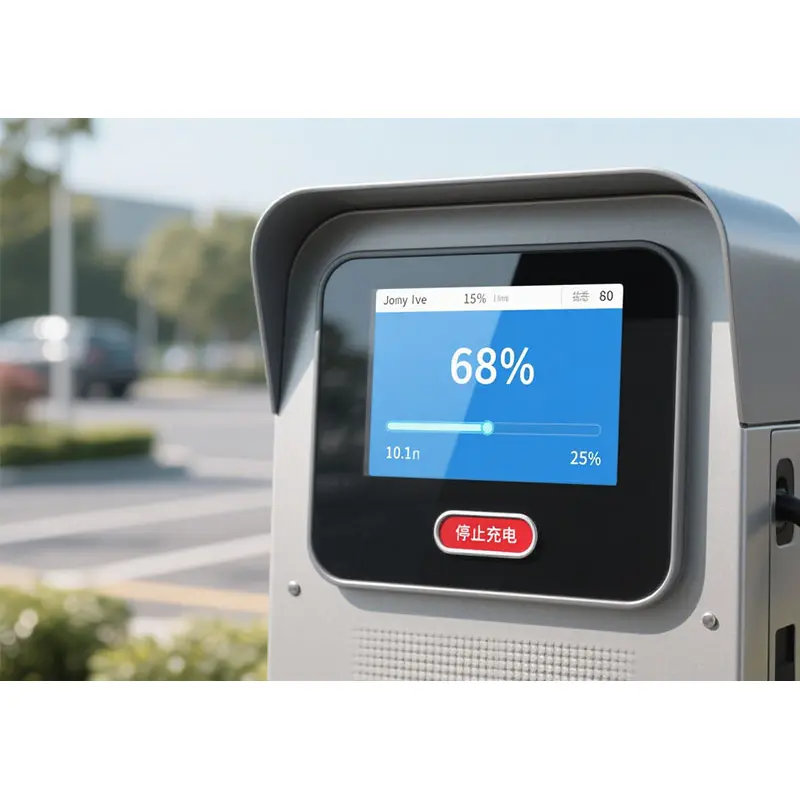
This Outdoor IPS LCD Screen is suitable for industrial HMI panels, EV charging interfaces, smart kiosks, marine and outdoor-navigation equipment, compact machine controls and bright-ambient information terminals. Approval remains conditional on host compatibility, finished optical performance, enclosure protection and temperature validation. These application categories are also used on the product page.
For public or marine equipment, separately define sealing, vibration, corrosion and power-transient requirements because they are not established by the bare LCD specification.
Customization Options
Project review may include 500/1000/1500 cd/m² grade selection, cover glass, AR/AG treatment, optical bonding, touch integration, LVDS cable definition, controller matching, mounting and enclosure adaptation.
Custom configurations are generally reviewed from 500 pieces. Sample and standard-module quantities are confirmed separately.
Procurement Checklist
- Confirm the HS101ENT-NE10 and supplier RS101ENT-NE10 revision.
- Resolve the RS101NET-N10 body-text typo.
- Lock the 1000 cd/m² grade and tolerance.
- Approve native 1280 × 800 timing at 60 Hz.
- Confirm one-channel LVDS and the exact 6-bit or 8-bit configuration.
- Obtain the complete 40-pin assignment and connector orientation.
- Confirm the 3.3 V panel rail and WLED electrical requirements.
- Approve active, viewable and outline dimensions separately.
- Define the cover-window reflection and bonding plan.
- State whether the product remains non-touch or requires touch.
- Reconcile temperature limits in the approved datasheet.
- Define sample tests, quantity and annual demand.

FAQ
About 10.1 Inch Outdoor IPS LCD Screen
What must be checked before connecting a 40-pin LVDS controller?
When should the 1000 cd/m² NE10 grade be selected instead of the 500 or 1500 cd/m² version?
Does 1000 cd/m² guarantee sunlight readability after a cover lens is installed?
What information is required to add touch to the standard module?
Do the 120 Hz and 240 Hz references establish a native high-refresh panel?
What is your MOQ and sample policy for HS101ENT-NE10?
MOQ and sample policy for HS101ENT-NE10 are For standard industrial display modules, MOQs typically range from a few dozen to hundreds of pieces, and samples are often available for evaluation before mass production. However, exact MOQ, sample availability, lead time, and any associated costs depend on your order volume and configuration. Please contact our sales team to confirm the current MOQ and sample policy for this model.
Can you provide sunlight-readable displays with anti-glare coating for outdoor transportation terminals?
For transportation terminals, we recommend verifying the operating temperature range (-20°C to +70°C) and conducting site-light testing to ensure optimal performance. Additional anti-glare coatings can be discussed with engineering.
Do you offer displays with In-Cell touch technology that are suitable for automotive dashboards or industrial HMIs with high reliability?
The HS101ENT-NE10 is a non-touch TFT-LCD module, so it does not include In-Cell touch technology. Please confirm specific touch and reliability requirements with our engineering team.
What interface options are available (e.g., LVDS, eDP, MIPI) for your panels?
The HS101ENT-NE10 uses a one-channel 40-pin LVDS interface with 6/8-bit support, operating at 3.3 V typical. For other interface options, we can provide guidance on standard alternatives, but exact availability and compatibility must be confirmed on request.
Can you customize the bezel size and mounting options for industrial LCD panels to fit existing enclosures?
Bezel size and mounting customization are not detailed on this page. Typically, we can adjust the bezel and mounting holes to fit existing enclosures, but this requires engineering review. Please provide your enclosure drawings and mounting constraints, and we will assess feasibility and lead time.
Freya Yang
+86 18318948097