Freya Yang
+86 18318948097
+852 62667476
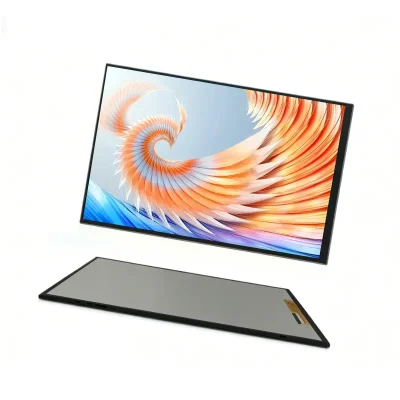
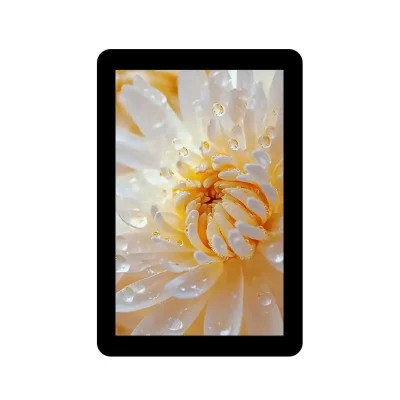
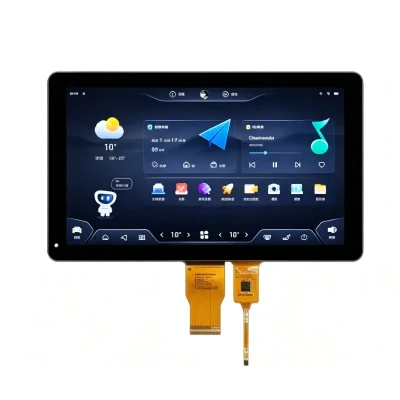
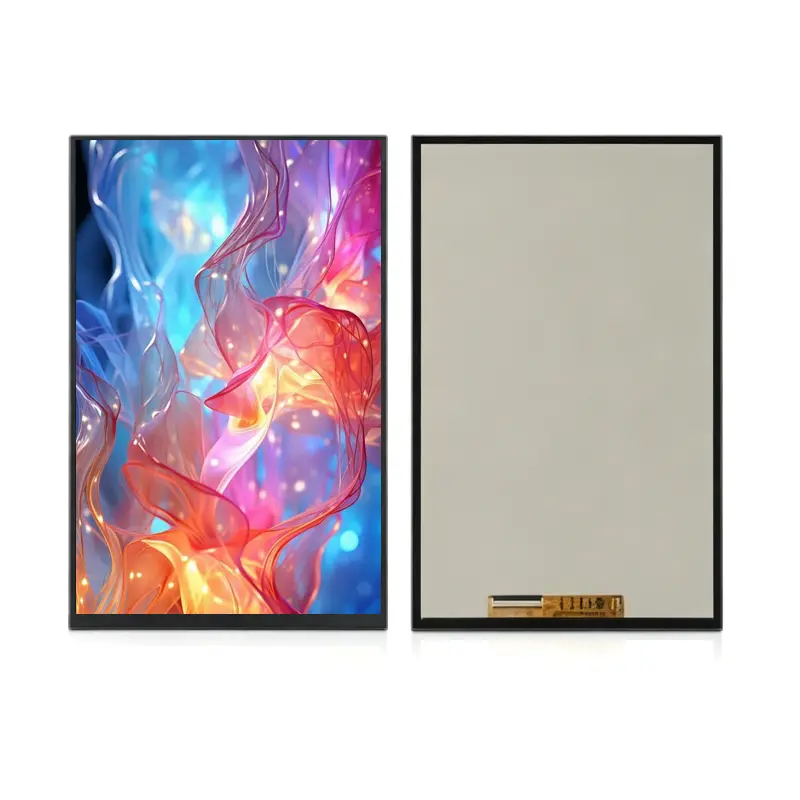
10.1 Inch MIPI IPS Embedded Display Panel Module for HMI

Model P/N
Size
Resolution
Brightness
Viewing Angle
Connector Type
Operating Temp
Overall(mm)
huisoar
HS100035B8
Brand
Panel Size (inch)
Model P/N
Resolution
Brightness (nits)
Viewing Angle
Contrast Ratio
Response Time
Overall (mm)
Active Area (mm)
Refresh Rate
Display Colors
Panel Type
Connector Type
Operating Temp
Touchscreen Type
Storage Temp
Work Mode
Designed For
10.1 Inch MIPI IPS Embedded Display Panel Module for HMI
A portrait 800 × 1280 IPS TFT-LCD with 500 cd/m² typical luminance and a 40-pin MIPI 4 Lane interface for embedded equipment integration.
Product Summary
The MIPI IPS Embedded Display Panel Module is a 10.1-inch portrait TFT-LCD component designed for equipment that needs a vertically oriented graphical interface, IPS viewing characteristics, and direct MIPI-based display integration. Its native 800 × 1280 resolution provides a 10:16 portrait workspace, while the 135.36 × 216.58 mm active area fits within a slim module structure.
The standard configuration is non-touch and uses a WLED backlight with 500 cd/m² typical panel luminance. A 40-pin MIPI 4 Lane connection provides the display interface, while final compatibility still depends on the host timing, pin assignment, voltage requirements, connector orientation, and complete module specification.
A 40-pin connector and MIPI 4-lane label do not guarantee host compatibility.
Key Specifications
| Parameter | Specification |
|---|---|
| Size | 10.1 inch |
| Resolution | 800 × 1280 pixels |
| Orientation | Portrait, 10:16 |
| LCD technology | a-Si TFT-LCD, IPS |
| Optical mode | Transmissive |
| Brightness | 500 cd/m² typical |
| Contrast ratio | 1000:1 typical |
| Viewing angle | 80°/80°/80°/80° L/R/U/D |
| Display colors | 16.7M colors |
| Interface | MIPI 4 Lane |
| Connector | 40 pins |
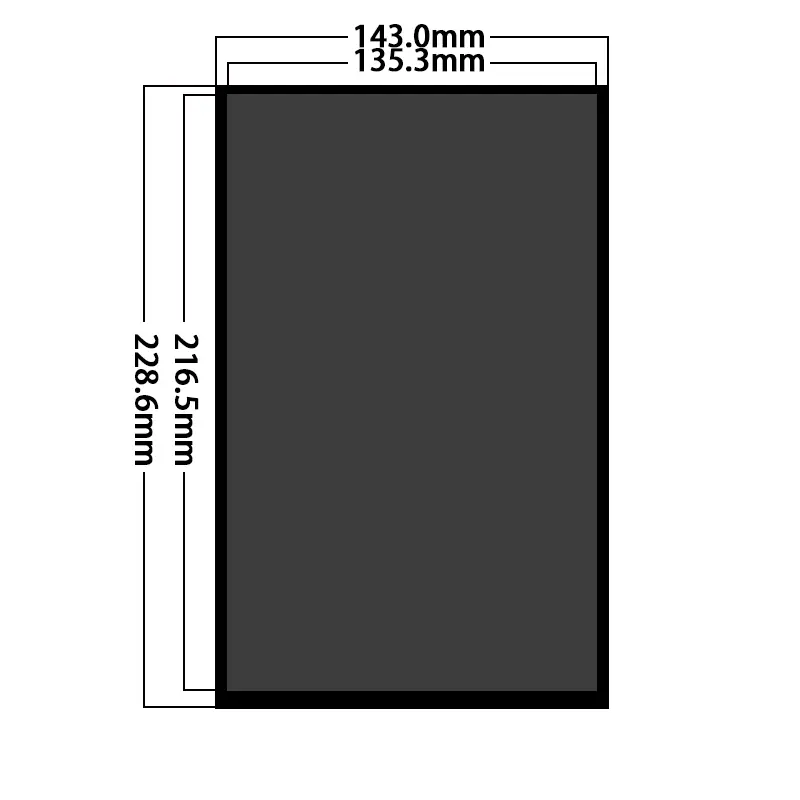
| Active area | 135.36 × 216.58 mm |
| Module reference | 143 × 228.6 × 2.8 mm |
| Backlight | WLED |
| Touch | Non-touch standard configuration |
| Operating temperature | −20°C to +70°C |
| Storage temperature | −30°C to +80°C |
| Display IC identifier | JD9365DA |
Portrait 800 × 1280 Interface Design
Native portrait workspace
The 800 × 1280 pixel matrix gives the panel a vertically oriented workspace suitable for menu-driven interfaces, equipment status pages, workflow prompts, access-control layouts, cabinet interfaces, and other applications where information is naturally arranged from top to bottom.
Using the native raster during UI development reduces unnecessary scaling and provides a predictable canvas for text, icons, status indicators, alarms, and graphical controls. The 135.36 × 216.58 mm active area should be used when defining the visible window in the front enclosure.
The native 800 × 1280 raster should be preserved when possible to avoid unnecessary image scaling.
IPS viewing and 500 cd/m² luminance
IPS construction provides broad viewing capability, with an identified viewing-angle specification of 80°/80°/80°/80° for left, right, up, and down. The panel also carries a 1000:1 typical contrast specification and supports 16.7M colors.
The 500 cd/m² typical luminance provides a practical optical level for many indoor and controlled-light embedded systems. Actual finished-product readability also depends on cover-glass transmission, reflections, air gaps, bonding, surface treatment, ambient illumination, and enclosure geometry.
The 500 cd/m² panel rating does not by itself establish direct-sun readability behind a finished front window.
MIPI IPS Embedded Display Panel Module Integration
MIPI 4 Lane host qualification
The display uses a MIPI 4 Lane interface, but the interface name alone is not enough to release a controller board or host design. Engineering qualification should include the native timing, complete signal definition, voltage requirements, connector orientation, reset or enable behavior where applicable, and approved panel documentation.
JD9365DA is identified in the product configuration. That identifier should be used when checking the approved display documentation, but it does not by itself establish a host-side initialization sequence, register-programming requirement, or power sequence.
40-pin connector checks
A matching 40-pin count is only one mechanical characteristic of the connection. Another 40-pin display may use different pin assignments, electrical levels, signal ordering, FPC orientation, contact side, pitch, or timing.
Before the controller PCB is finalized, the complete 40-pin definition and the approved production drawing should therefore be compared with the host design.
Mechanical Integration
Active area and module outline
The active image area is 135.36 × 216.58 mm. The product-specific configuration gives a module reference of approximately 143 × 228.6 × 2.8 mm.
These dimensions serve different design purposes: the active area controls the visible display window, while the complete module outline controls enclosure clearance, mounting, FPC routing, front-frame overlap, and internal stack depth.
Confirm thickness before tooling release
A separate general parameter table gives a rounded 143 × 228 mm outline and identifies a 2 mm maximum thickness, which differs from the 2.8 mm model-specific configuration.
For mechanical release, the approved production drawing should control the final enclosure and tooling dimensions rather than relying on the rounded table value.
Non-Touch Standard Configuration
The standard module is non-touch. This makes it suitable for equipment that uses physical keys, external controls, rotary inputs, or a separately engineered front-interface structure.
Capacitive or resistive touch can be evaluated as a separate project configuration. A touch project should define the required touch technology, cover-glass dimensions, touch interface, controller requirements, bonding method, FPC routing, front-stack thickness, and environmental targets before the assembly is approved.
The standard module is non-touch; interactive input requires a separately specified touch configuration.
Operating Range and Application Planning
The module is specified for operation from −20°C to +70°C and storage from −30°C to +80°C. These limits support evaluation for industrial terminals, control equipment, security interfaces, smart cabinets, equipment displays, portable test or service equipment, and other embedded systems.
Temperature limits should not be interpreted as proof of waterproofing, vibration qualification, vehicle qualification, medical certification, UV resistance, or outdoor weather protection. Those requirements belong to the finished-system qualification process.
The MIPI IPS Embedded Display Panel Module is particularly relevant when a project needs a portrait display component rather than a complete monitor or controller-equipped screen. Its combination of IPS viewing, 800 × 1280 resolution, MIPI 4 Lane signaling, 500 cd/m² typical luminance, and slim geometry provides a clear starting point for embedded HMI development.
Configuration and Project Options
Touch-panel development, cover-glass structure, FPC or pin-definition review, enclosure adaptation, brightness targets, optical treatment, controller matching, cable routing, branding, and packaging can be evaluated according to project requirements.
Custom configurations are generally reviewed from 500 pieces, subject to tooling requirements, material availability, and the requested specification. Sample and standard-module quantities are confirmed separately.
Procurement Checklist
Before sample approval or controller release, confirm:
- native 800 × 1280 timing and installed portrait orientation;
- complete 40-pin MIPI 4 Lane assignment and signal definition;
- connector pitch, contact side, orientation, and cable routing;
- panel electrical requirements and any approved initialization documentation;
- WLED voltage, current, enable, dimming, driver, and lifetime requirements;
- approved JD9365DA-related documentation where required;
- 135.36 × 216.58 mm active area;
- final approved overall drawing and thickness;
- 500 cd/m² luminance tolerance and measurement condition;
- 1000:1 contrast specification;
- 80°/80°/80°/80° L/R/U/D viewing specification;
- standard non-touch configuration or separate touch requirements;
- −20°C to +70°C operating and −30°C to +80°C storage requirements;
- sample quantity, annual demand, and project schedule.
FAQ
About 10.1 Inch MIPI IPS Embedded Display Panel Module
What must be checked before connecting a 40-pin MIPI host?
Is 500 cd/m² sufficient behind a front cover or protective glass?
How should an 800 × 1280 interface be prepared for this panel?
Can touch be added to the standard non-touch module?
Which thickness should be used for enclosure tooling?
Freya Yang
+86 18318948097