Freya Yang
+86 18318948097
+852 62667476
12.1 Inch Industrial Grade SVGA TFT Display Module for Machinery
Model P/N
Size
Resolution
Brightness
Viewing Angle
Connector Type
Operating Temp
Overall(mm)
huisoar
HS012.1B800
Brand
Panel Size (inch)
Model P/N
Resolution
Brightness (nits)
Viewing Angle
Contrast Ratio
Response Time
Overall (mm)
Active Area (mm)
Refresh Rate
Bezel Opening
Display Colors
Panel Type
Connector Type
Surface Treatment
Operating Temp
Touchscreen Type
Storage Temp
Work Mode
Pixel Format
Input Voltage (V)
Control Type
Operating Environment
Motherboard Type
I/O Interface
Designed For
12.1 Inch Industrial Grade SVGA TFT Display Module for Machinery
A 12.1-inch SVGA TFT module with 20-pin LVDS, 400 cd/m² luminance, dual-CCFL backlight, and wide-temperature operation for industrial equipment.
Product Summary
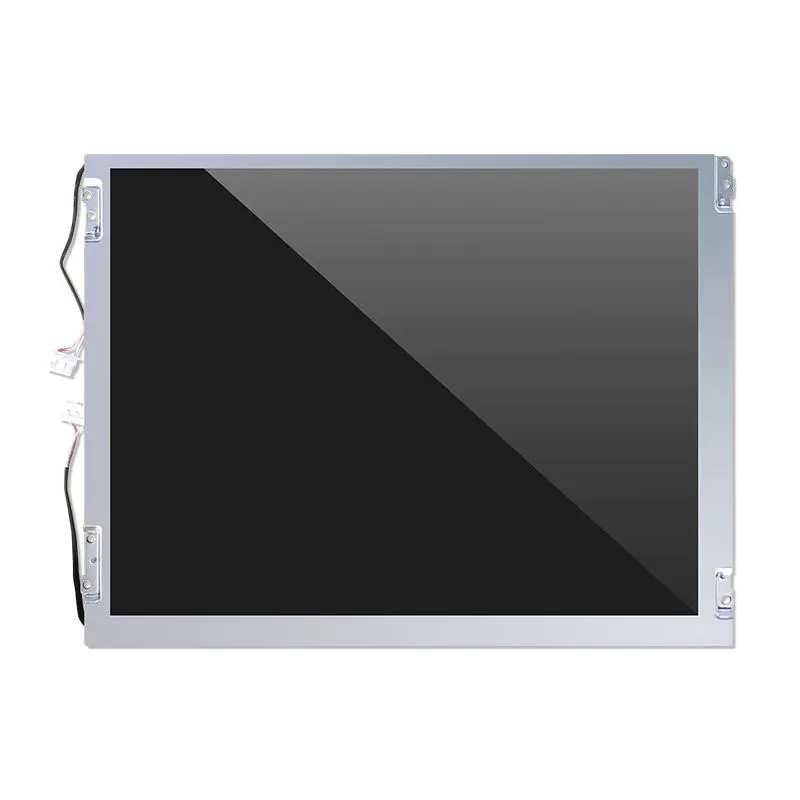
The Industrial Grade SVGA TFT Display Module is designed for equipment that still relies on the proven 800 × 600 display format. Its 12.1-inch screen, 20-pin one-channel LVDS interface, 3.3 V typical panel supply, TN optical structure, and dual-CCFL backlight make it particularly relevant to industrial machinery, legacy operator panels, and equipment-display replacement projects.
The native 4:3 SVGA format is useful when an installed controller, application interface, or HMI software was developed around 800 × 600 graphics and redesigning the entire system would create unnecessary integration work.
Key Specifications
| Specification | Value |
|---|---|
| Display size | 12.1 inches |
| Resolution | 800 × 600 SVGA |
| Panel structure | a-Si TFT-LCM, TN |
| Operating mode | Normally white, transflective |
| Luminance | 400 cd/m² typical |
| Contrast ratio | 600:1 typical |
| Viewing data | 80°/80°/50°/60° typical at CR ≥10 |
| Preferred viewing direction | 6 o’clock |
| Response time | 10/15 ms typical, Tr/Td |
| Color support | 262K / 16.2M listed modes |
| Refresh rate | 60 Hz |
| Native interface | 20-pin, 1-channel 6/8-bit LVDS |
| Panel supply | 3.3 V typical |
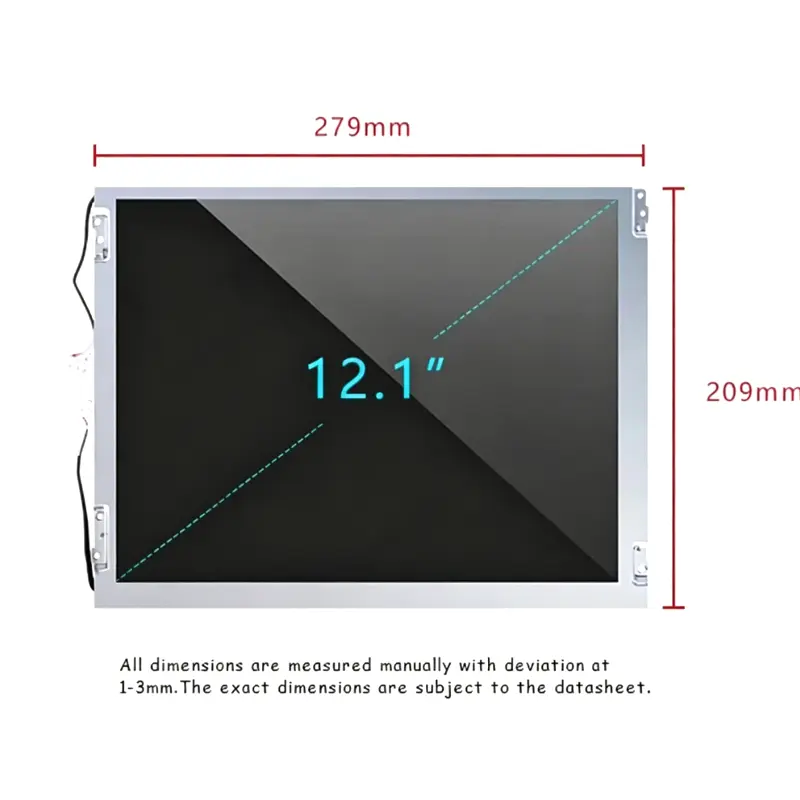
| Active area | 246 × 184.5 mm |
| Bezel opening | 249.05 × 188.3 mm |
| Outline | 279 × 209 × 11 mm |
| Surface | Antiglare, hard coating 3H |
| Backlight | Dual CCFL, driver not included in the stated backlight configuration |
| Backlight-life reference | 50,000 hours listed |
| Touch | Optional |
| Operating range | −30°C to +80°C for conservative system planning |
| Storage range | −30°C to +85°C |
SVGA Format for Legacy Industrial Interfaces
800 × 600 Content and HMI Continuity
SVGA remains relevant in factory equipment where the host computer, graphics controller, application software, and operator interface were designed around an 800 × 600 canvas.
For replacement projects, retaining the native raster can reduce UI rework and scaling problems. Existing buttons, status fields, trend windows, machine alarms, and operator menus can remain aligned with the original interface architecture when electrical and mechanical compatibility are also confirmed.
4:3 Geometry for Existing Equipment
The 4:3 aspect ratio also matters mechanically. Many older industrial control cabinets and machine interfaces were designed around a near-square display opening rather than a modern widescreen panel.
The 246 × 184.5 mm active area and 249.05 × 188.3 mm bezel opening should therefore be checked against the existing enclosure before the 279 × 209 × 11 mm module outline is approved.
Integrating the Industrial Grade SVGA TFT Display Module
20-Pin LVDS Host Qualification
The native signal path is one-channel LVDS through a 20-pin connector.
Matching a 20-pin LVDS connector does not by itself prove electrical or timing compatibility.
Before substitution, compare the host timing, connector pitch and orientation, pin assignment, panel supply, LVDS mapping, cable length, polarity, and enable signals against the ordered production documentation.
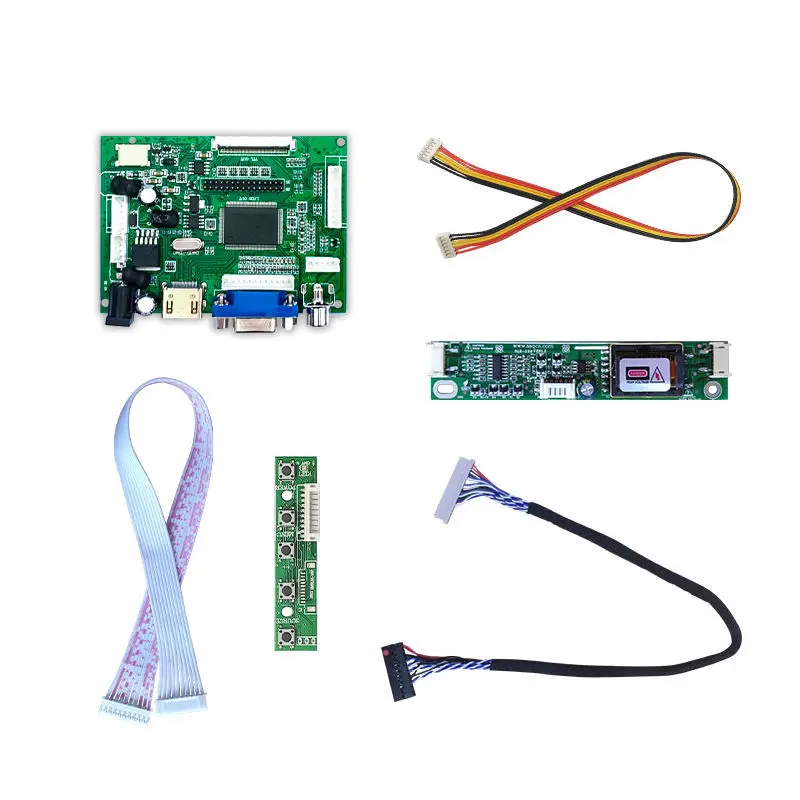
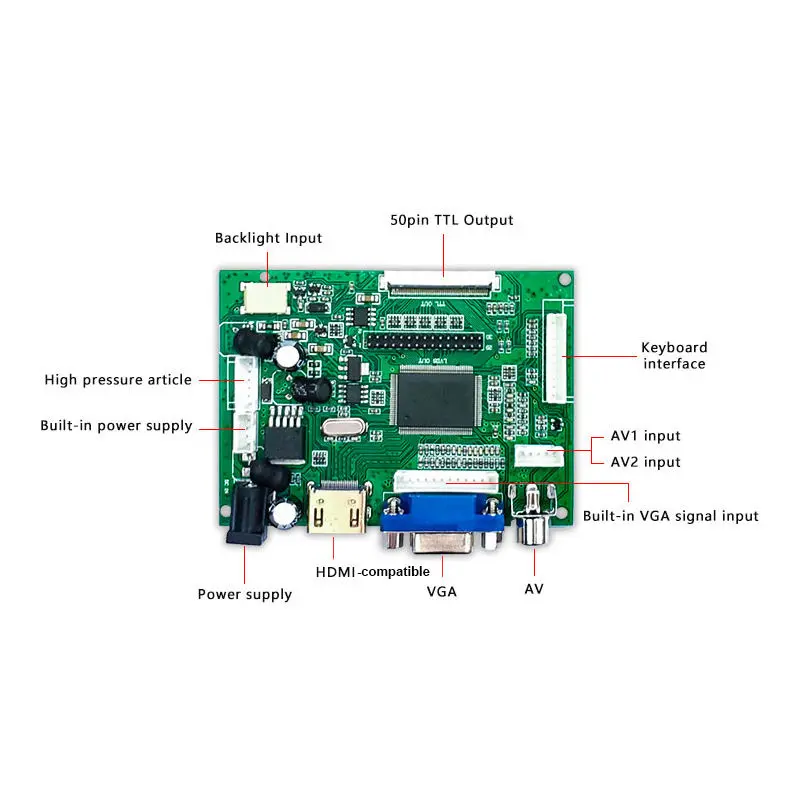
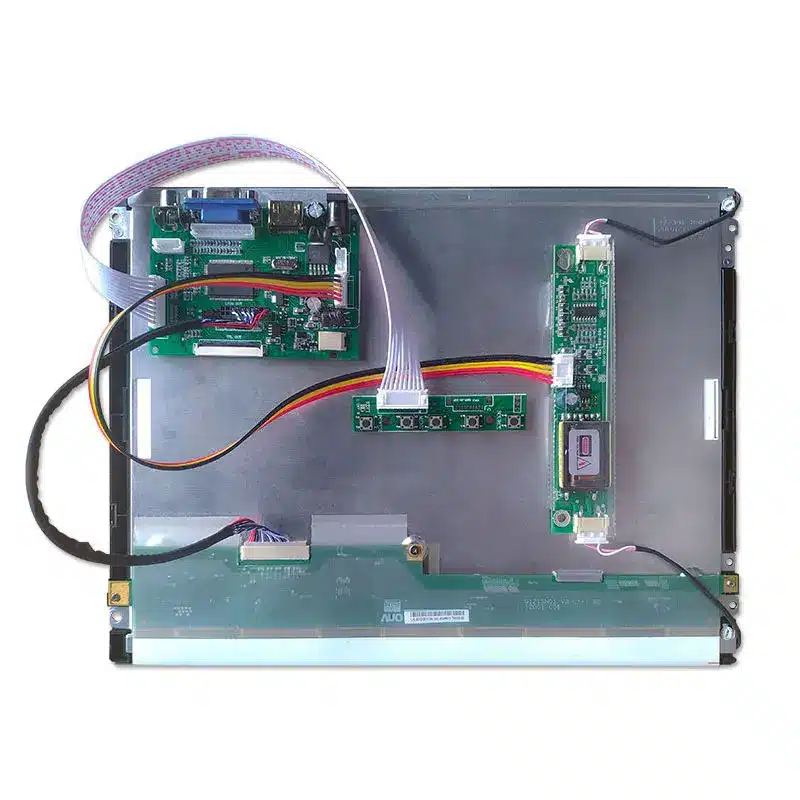
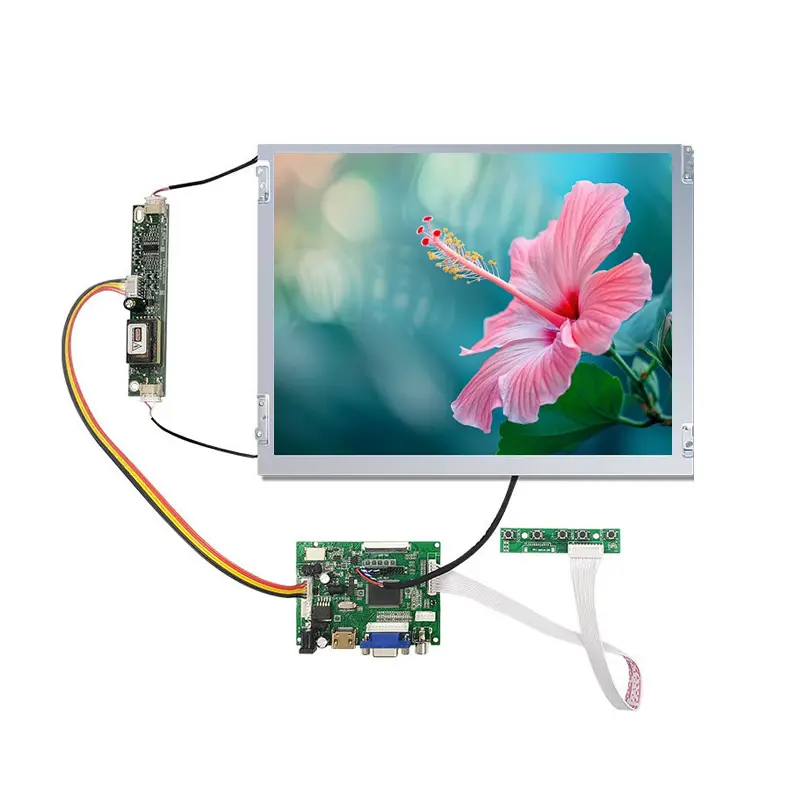
A controller board with HDMI, VGA or AV connectors may be used as a separate integration path, but those interfaces do not become native panel interfaces.
6-Bit and 8-Bit Mapping Must Match
The interface is identified as supporting a one-channel 6/8-bit LVDS class. This distinction matters because the host and panel must use compatible data mapping.
The listed color capability also includes 262K and 16.2M modes, so the ordered configuration and controller bit mapping should be confirmed together rather than inferred from connector count alone.
Dual-CCFL Backlight and Power Architecture
CCFL Driver Is a Separate Requirement
The panel uses two CCFL lamps, and the backlight specification identifies the configuration as being without a driver.
Panel logic power and CCFL backlight power are separate design paths.
The 3.3 V typical value applies to the panel electronics; it should not be reused as the CCFL backlight drive specification. Existing equipment may already contain a compatible inverter, while a new system may require a separately selected CCFL driver.
50,000-Hour Backlight Reference
A 50,000-hour backlight-life reference is listed for the dual-CCFL system.
For a maintenance or replacement program, confirm the life definition, operating conditions, inverter compatibility, connector arrangement, lamp condition, and whether the replacement strategy retains CCFL or moves to a separately engineered backlight conversion.
TN Optical and Viewing Characteristics
6 O’Clock Viewing Direction
The module is identified as TN, normally white and transflective, with a preferred 6-o’clock viewing direction.
That mounting characteristic should be considered when the operator normally views the display from above or below the center line. Mechanical orientation can materially affect perceived contrast on a TN panel.
The 80/80/50/60 viewing-angle specification should remain in its listed sequence unless the production document explicitly assigns each value to a direction.
400 cd/m² Industrial-Lighting Boundary
The typical panel luminance is 400 cd/m² with a 600:1 typical contrast ratio and antiglare 3H surface.
400 cd/m² supports controlled industrial lighting but does not establish sunlight readability.
For a machine panel behind additional protective glass, verify the finished optical stack under the actual factory lighting before deciding whether the luminance is sufficient.
Mechanical and Temperature Planning
Active Area, Bezel Opening and Outline
Three dimensions serve different design purposes:
- 246 × 184.5 mm defines the active image area.
- 249.05 × 188.3 mm defines the bezel opening.
- 279 × 209 × 11 mm defines the module envelope.
The enclosure opening should therefore not be designed only around the active area. Frame clearance, connector access, CCFL wiring, cable bend space, and mounting support also require review.
Operating-Temperature Revision Confirmation
For conservative system planning, use −30°C to +80°C as the operating envelope and −30°C to +85°C for storage until the ordered production revision is approved.
The ordered revision should control the final environmental qualification.
This is particularly important for machinery exposed to cold starts, hot enclosures, or large daily thermal variation.
Industrial Machinery Applications
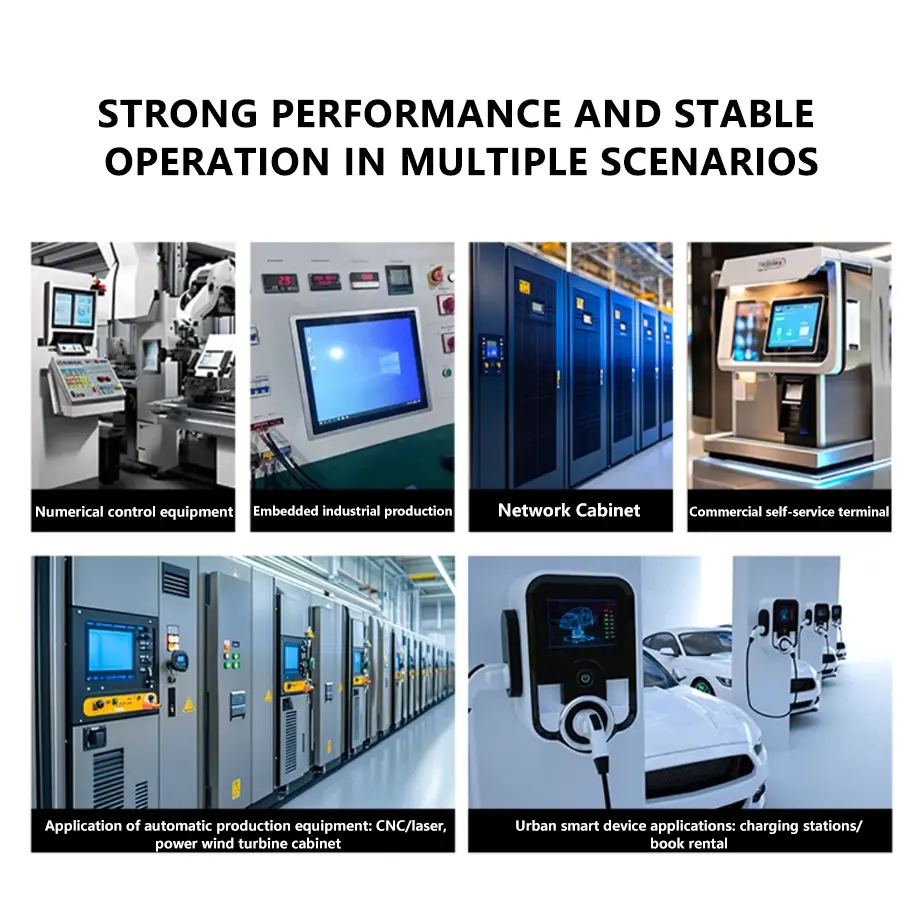
The Industrial Grade SVGA TFT Display Module fits projects where a proven 12.1-inch 4:3 display remains technically useful, including factory automation HMIs, CNC machine interfaces, process-monitoring equipment, test and measurement systems, embedded industrial computers, legacy control platforms, and replacement-display programs.
Its strongest value is not simply the screen size. It is the combination of SVGA continuity, 20-pin LVDS architecture, dual CCFL construction, exact legacy-style mechanics, and broad temperature capability.
Customization and Procurement Planning
Touch is optional rather than assumed to be part of the standard panel. If touch is required, specify the touch technology, interface, active area, cover structure, overall thickness, bonding method, controller, and cable routing before enclosure release.
Custom configurations are generally reviewed from 500 pieces, subject to tooling requirements, material availability, and the requested specification. Sample and standard-module quantities are confirmed separately.
Controller-board selection, LVDS cabling, touch integration, CCFL inverter solutions, and mechanical modifications should be treated as separate engineering scope rather than assumed standard accessories.
Procurement Checklist
Before approving the Industrial Grade SVGA TFT Display Module, confirm the 12.1-inch production revision, native 800 × 600 timing, 20-pin LVDS pin assignment, one-channel 6/8-bit mapping, 3.3 V panel rail, color mode, 60 Hz timing, TN 6-o’clock orientation, 400 cd/m² luminance, 600:1 contrast, 10/15 ms response reference, 246 × 184.5 mm active area, 249.05 × 188.3 mm bezel opening, 279 × 209 × 11 mm outline, dual-CCFL connections, inverter requirements, backlight-life definition, optional-touch configuration, environmental limits, sample acceptance criteria, quantity and annual demand.
FAQ
About 12.1 Inch Industrial Grade SVGA TFT Display Module
What must be checked before replacing another 20-pin LVDS panel?
What does “dual CCFL without driver” mean for system design?
When must 6-bit versus 8-bit LVDS mapping be confirmed?
Does optional touchscreen status mean touch is included?
Which temperature range should be used for equipment qualification?
Freya Yang
+86 18318948097