Freya Yang
+86 18318948097
+852 62667476
17 Inch 500 Nits EV Charger LCD Panel for Industrial HMI
Model P/N
Size
Resolution
Brightness
Viewing Angle
Connector Type
Operating Temp
Overall(mm)
huisoar
HS170ETN-NE05
Brand
Panel Size (inch)
Model P/N
Resolution
Brightness (nits)
Viewing Angle
Contrast Ratio
Response Time
Overall (mm)
Active Area (mm)
Refresh Rate
Display Colors
Panel Type
Connector Type
Operating Temp
Touchscreen Type
Storage Temp
Work Mode
Operating Environment
Designed For
17 Inch 500 Nits EV Charger LCD Panel for Industrial HMI
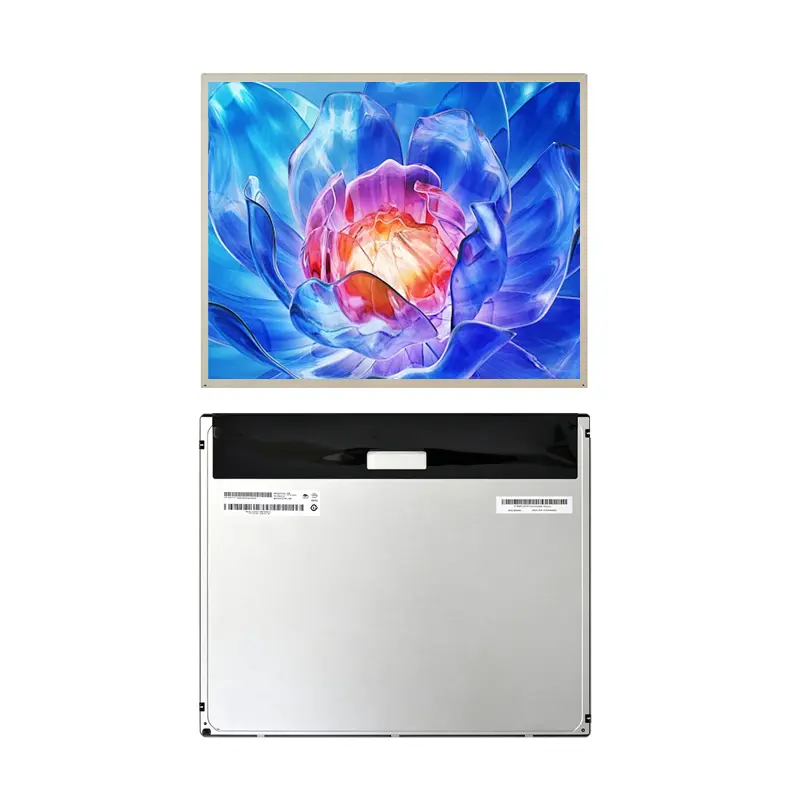
This 500 Nits EV Charger LCD Panel uses a 17-inch 1280 × 1024 TN TFT-LCD structure with 30-pin LVDS for sheltered charging equipment and industrial HMI integration.
Product Summary
The 500 Nits EV Charger LCD Panel is a 17-inch SXGA display component for equipment that needs a traditional 5:4 interface area, higher luminance than basic indoor panels, and panel-level LVDS integration. It combines 1280 × 1024 resolution, 500 cd/m² typical luminance, a 1000:1 typical contrast ratio, WLED backlighting, and a standard non-touch architecture.
Its 337.92 × 270.336 mm active area provides useful vertical workspace for charging status, service menus, diagnostics, and structured HMI layouts. For EV charging projects, the 500 cd/m² configuration is best evaluated for sheltered, shaded, or controlled-light installations rather than treated as a universal direct-sun solution.
Key Specifications
| Item | Confirmed value |
|---|---|
| Screen size | 17 inches |
| Resolution | 1280 × 1024 pixels |
| Aspect ratio | 5:4 |
| Panel technology | a-Si TN TFT-LCD |
| Optical mode | Transmissive |
| Brightness | 500 cd/m² typical |
| Contrast ratio | 1000:1 typical |
| Viewing angle | 85°/85°/80°/80° L/R/U/D |
| Preferred viewing direction | 6 o'clock |
| Display colors | 16.7M |
| Backlight | WLED |
| Signal interface | LVDS, 30 pins |
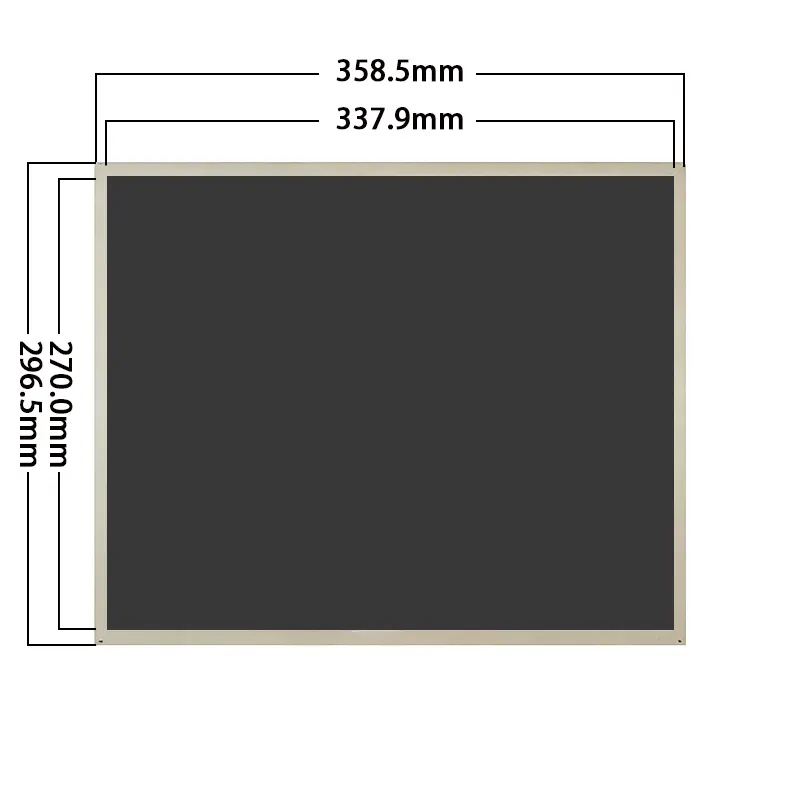
| Active area | 337.92 × 270.336 mm |
| Module outline | 358.5 × 296.5 mm |
| Maximum thickness | 10.8 mm |
| Touch | No touch |
| Operating temperature | 0°C to +50°C |
| Storage temperature | −20°C to +60°C |
Optical Fit for EV Charging and Bright Commercial Equipment
What 500 cd/m² Means in a Charger Front Stack
The selected module is specified at 500 cd/m² typical luminance. Finished visibility still depends on cover-glass transmission, air gaps, surface reflection, installation angle, and ambient illumination.
The bare-panel luminance should therefore be treated as an input to system design rather than a finished sunlight-readability guarantee. A representative sample should be evaluated behind the intended front window under the lighting conditions expected at the charger site.
TN Viewing Geometry and 6 O'Clock Orientation
The panel uses TN technology with confirmed 85°/85°/80°/80° viewing angles for left, right, up, and down, plus a preferred 6 o'clock viewing direction. This matters when the user eye line is above or below the display center.
The 6 o'clock direction should be checked against installed screen height and typical user position before enclosure orientation is fixed.
Integrating the 500 Nits EV Charger LCD Panel
30-Pin LVDS Host Qualification
The display uses a 30-pin LVDS connection. A matching 30-pin connector does not prove compatibility with another panel. Engineering qualification still requires native 1280 × 1024 timing, complete pin assignment, LVDS channel and bit mapping, connector geometry, cable orientation, panel supply requirements, and WLED backlight data.
This is especially important in retrofit projects. The same resolution and connector count can simplify comparison, but they do not replace model-specific electrical review.
Mechanical Fit for a 17-Inch 5:4 Opening
The active image area is 337.92 × 270.336 mm, while the complete module outline is 358.5 × 296.5 mm with a maximum thickness of 10.8 mm. The active area controls the visible image window; the full outline controls internal clearance.
Use an approved mechanical drawing before tooling release because connector position, mounting details, tolerances, and cable exits are not defined by the active-area dimensions alone.
Non-Touch Architecture and Interactive Charger Design
Standard Module Has No Touchscreen
The standard configuration is non-touch. An EV charger that requires on-screen interaction therefore needs a separately engineered touch solution or another input method. A touch overlay can change total thickness, front-window transmission, controller routing, grounding, and enclosure tolerances.
The LCD should not be marketed as a touch display unless the ordered assembly includes an approved touch sensor and controller.
Environmental Boundaries
Operating Range Is 0°C to +50°C
The confirmed operating range is 0°C to +50°C, with storage from −20°C to +60°C. Compare these limits with internal cabinet temperature rather than outdoor air temperature alone because charger electronics and solar load can raise the display-compartment temperature.
The temperature specification does not establish waterproofing, UV resistance, condensation resistance, or an IP rating. Those requirements belong to the finished charger enclosure.
Application Fit
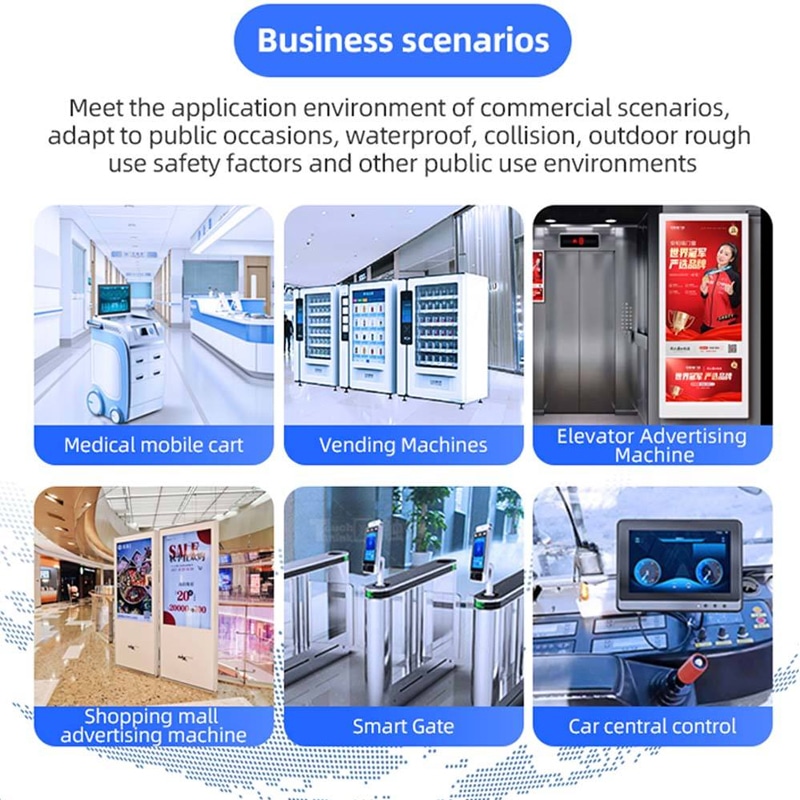
The 500 Nits EV Charger LCD Panel is best positioned for sheltered charging HMIs, charger status displays, industrial control terminals, vending-machine interfaces, access or gate equipment, and public information systems that can maintain the LCD within its optical and temperature limits.
The 1280 × 1024 5:4 format is useful where software or cabinet geometry already uses an SXGA layout. For direct-sun chargers, wider-temperature sites, or systems requiring integrated touch, another brightness grade or a more complete outdoor display assembly may be the better route.
Customization and Project Qualification
Optical and Interface Review
Projects may evaluate cover glass, reflection-control treatment, bonding strategy, LVDS cable definition, controller-board matching, and enclosure adaptation when drawings and operating conditions are available. Any front layer should be checked for its effect on the 500 cd/m² panel output.
Separate touch development may also be evaluated when the interaction method, controller interface, cover structure, and final mechanical stack are defined.
Custom configurations are generally reviewed from 500 pieces, subject to tooling requirements, material availability, and the requested specification. Sample and standard-module quantities are confirmed separately.
Procurement Checklist
- Confirm the exact 17-inch 500 cd/m² configuration and approved model revision.
- Provide native 1280 × 1024 timing and the complete 30-pin LVDS assignment.
- Confirm LVDS channel and bit mapping, connector geometry, and cable orientation.
- Obtain panel input and WLED voltage, current, enable, and dimming requirements.
- Approve the 337.92 × 270.336 mm active area and 358.5 × 296.5 × 10.8 mm maximum envelope.
- Confirm the 6 o'clock viewing direction against the installed user eye line.
- Validate 500 cd/m² behind the final cover glass under representative lighting.
- Keep the standard product identified as non-touch unless a touch assembly is approved.
- Verify that the LCD remains within 0°C to +50°C during operation.
- Define sealing, humidity, vibration, UV, and compliance targets at equipment level.
- Specify sample acceptance criteria, quantity, annual demand, and production timing.
FAQ
About 17 Inch 500 Nits EV Charger LCD Panel
Is 500 cd/m² enough for an outdoor EV charger?
What must be checked before replacing another 30-pin LVDS panel?
How does the 6 o'clock viewing direction affect charger mounting?
Can this panel be used in an interactive charger without changing the LCD?
What environmental information is needed before using it in a charging station?
Freya Yang
+86 18318948097