Freya Yang
+86 18318948097
+852 62667476
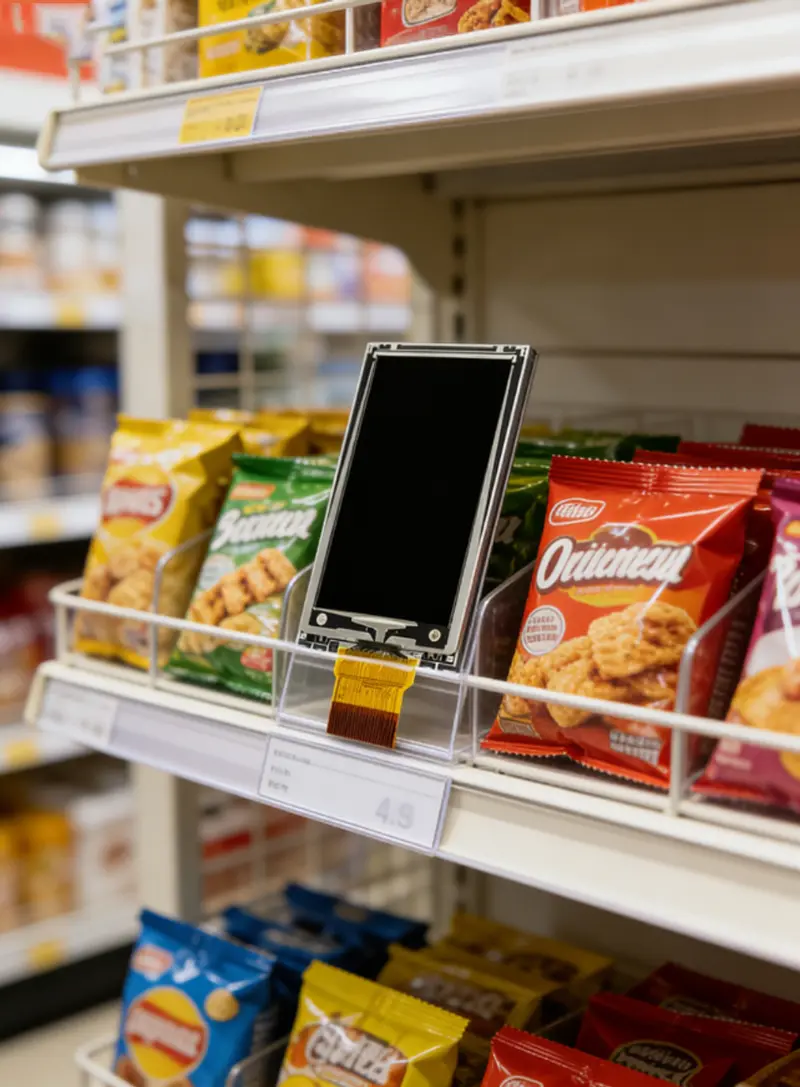
2.13 Inch Epaper E-Ink Screen for Retail Price Tags
Model P/N
Size
Resolution
Brightness
Viewing Angle
Connector Type
Operating Temp
Overall(mm)
huisoar
HS021308T03
Brand
Panel Size (inch)
Model P/N
Resolution
Brightness (nits)
Viewing Angle
Contrast Ratio
Response Time
Overall (mm)
Active Area (mm)
Refresh Rate
Bezel Opening
Display Colors
Panel Type
Connector Type
Operating Temp
Touchscreen Type
Storage Temp
Work Mode
Pixel Format
Input Voltage (V)
Operating Environment
Designed For
2.13 Inch Epaper E-Ink Screen for Retail Price Tags
This compact black-and-white electronic-paper panel uses a 122 × 250 pixel format, SPI signaling and a slim 24-pin FPC for low-update retail interfaces.
Product Summary
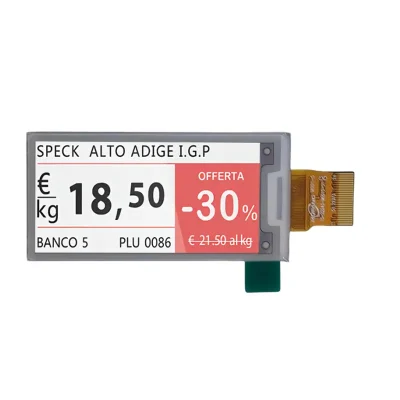
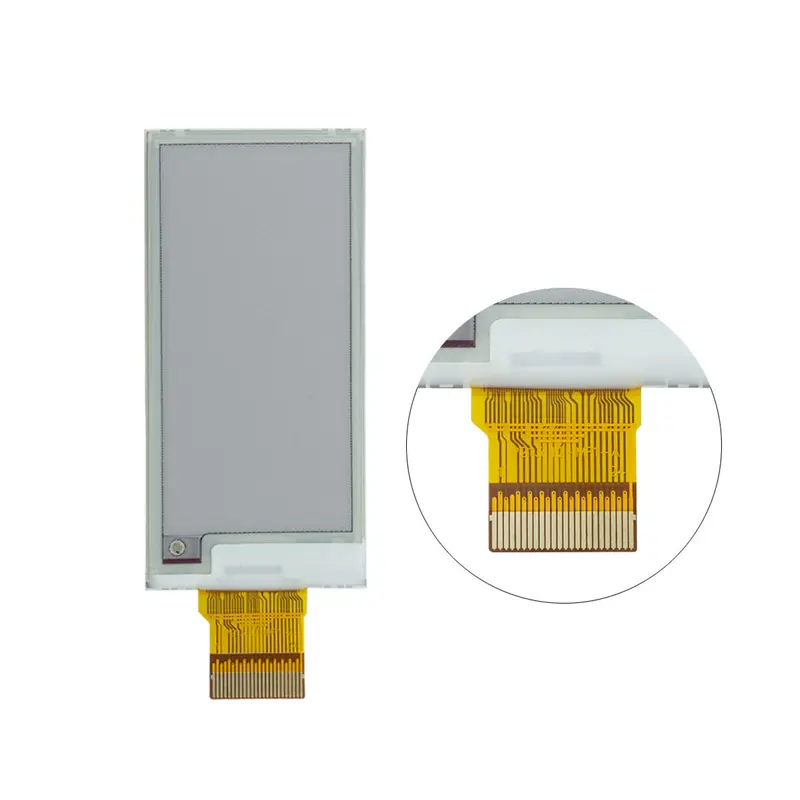
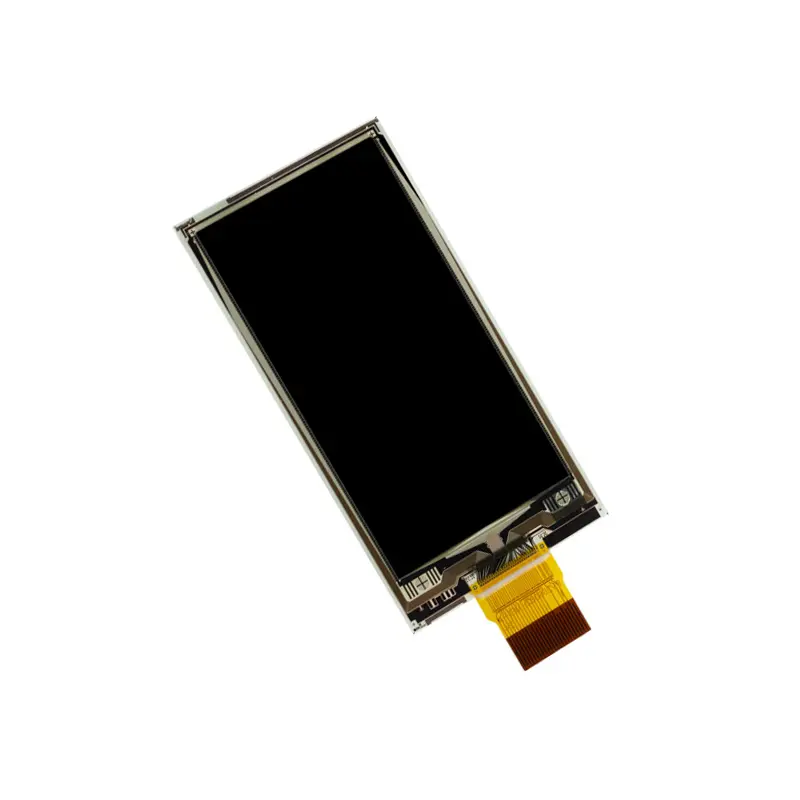
The Epaper E-Ink Screen for Price Tags is a 2.13-inch electronic-paper component for compact retail labels and other applications that display static information with occasional updates. Its black-and-white 122 × 250 pixel format provides a practical canvas for prices, product names, barcodes, stock indicators and short promotional messages.
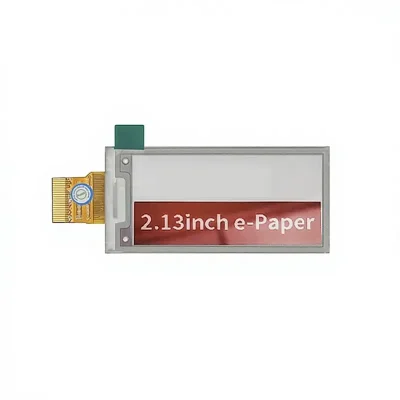
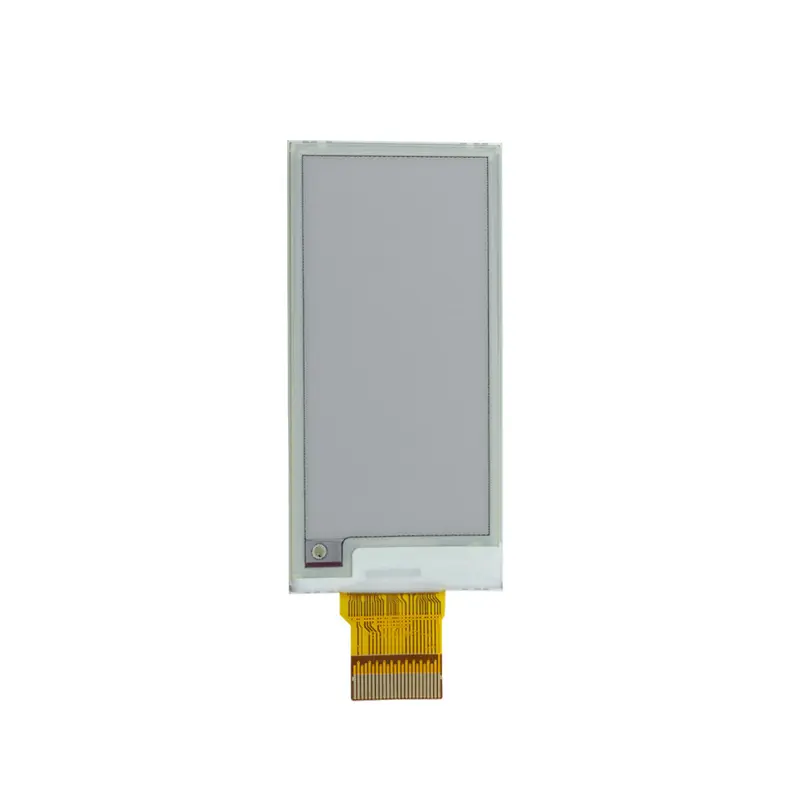
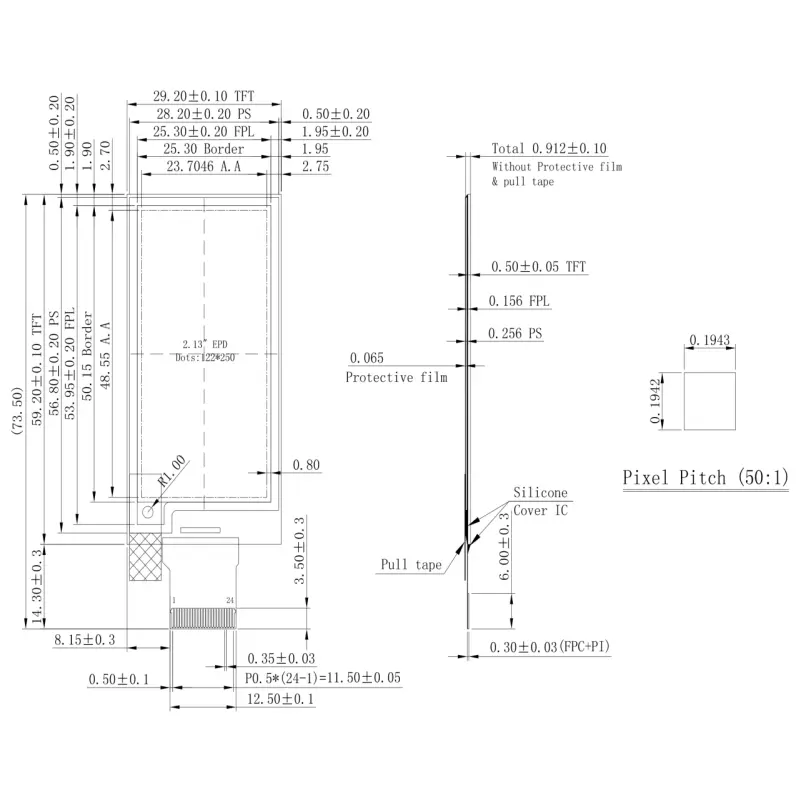
The panel combines a 23.7 × 48.55 mm active area with a 29.2 × 59.2 × 0.96 mm outline. A bottom 24-pin FPC provides the physical connection for SPI-based integration.
This is a raw display component rather than a complete wireless price tag. The finished product still requires host electronics, a compatible controller and waveform package, power circuitry, enclosure design and the required communication architecture.
Key Specifications
| Parameter | Confirmed value |
|---|---|
| Display size | 2.13 inches |
| Resolution | 122 × 250 pixels |
| Display colors | Black and white |
| Display type | Reflective electrophoretic e-paper |
| Interface | SPI |
| Connector | 24-pin FPC |
| Active area | 23.7 × 48.55 mm |
| Panel outline | 29.2 × 59.2 × 0.96 mm |
| Pixel pitch | 0.1943 × 0.1942 mm |
| Viewing angle | Nearly 180° listed |
| Operating temperature | 0°C to +50°C |
| Front light | Not confirmed |
| Touch | Not confirmed |
Black-and-White Content for Compact Price Tags
Build Artwork at the Native 122 × 250 Resolution
Price-tag artwork should be generated at the panel’s native pixel dimensions. Scaling a larger design at runtime may reduce the clarity of small numerals, barcode edges and narrow text strokes.
Use bold price figures, short product names and simple icons. Fine gray shading should not be assumed because the standard configuration is confirmed only as black and white.
Keep Prices and Codes Inside the Active Area
The usable image area is 23.7 × 48.55 mm. Mechanical borders and front-window tolerances can reduce the visible margin, so important content should not be placed directly against the pixel boundary.
A sample enclosure should be evaluated with realistic prices, currency symbols, barcodes and promotional layouts before the front window is released.
SPI Integration for the Epaper E-Ink Screen for Price Tags
Confirm the Complete 24-Pin Assignment
The 24-pin FPC and SPI description do not establish the full electrical interface. The approved pinout must define supply rails, grounds, SPI clock and data, chip select, data/command control, reset, busy status and any generated panel-drive requirements.
Connector pitch, contact side, FPC orientation and mating-connector height must also be checked against the production PCB.
Match the Controller and Waveform Package
Electronic-paper panels require an appropriate controller and waveform resources for the ordered panel revision. A controller selected for another 2.13-inch display is not automatically compatible, even when the resolution and SPI interface appear similar.
The engineering package should identify the controller, command set, initialization procedure, LUT or waveform files, temperature handling and recommended update sequence.
Reflective Display and Update Planning
Separate Image Retention from System Power
E Ink technology is bistable, meaning the displayed image can remain visible after an update without continuous power being applied to maintain that image. System-level consumption still depends on the host, controller, wireless radio, sensors and power architecture.
Battery-life estimates therefore require actual update frequency, refresh energy, controller sleep current, radio activity and battery capacity. A low-power panel alone does not establish a finished-tag operating life.
Confirm Full and Partial Refresh Behavior
Partial-refresh capability is not confirmed for this configuration. Do not build the user experience around rapid partial updates until the approved controller and waveform documentation identifies supported modes, timing and refresh limits.
Electronic-paper development manuals commonly address residual-image management and periodic full refresh, making waveform and update-policy validation a recurring integration question.
Mechanical Fit and FPC Routing
Use the 0.96 mm Panel Drawing Before Tooling
The panel measures 29.2 × 59.2 × 0.96 mm, with a total-thickness tolerance of ±0.10 mm. The glass-based display should be supported without concentrated pressure, twisting or enclosure interference.
The bottom FPC requires clearance for its bend path, reinforced section and connector engagement. Define a controlled bend radius and strain-relief method rather than folding the flex directly at the panel edge.
Operating Limits and Application Boundaries
The confirmed operating-temperature range is 0°C to +50°C. Cold-storage, freezer, exposed-outdoor or high-temperature installations require another qualified configuration unless additional documentation expands this range.
The nearly 180° viewing statement supports wide-angle visibility at panel level, but the finished front window, reflections, label angle and store lighting still affect readability.
The Epaper E-Ink Screen for Price Tags can be evaluated for retail price labels, electronic shelf labels, inventory tags, reusable logistics labels, room or asset tags and other low-update information interfaces.
Configuration and Customization
FPC geometry, connector definition, SPI mode, controller support, waveform resources, front-window design, enclosure adaptation and artwork conversion can be reviewed for the target project.
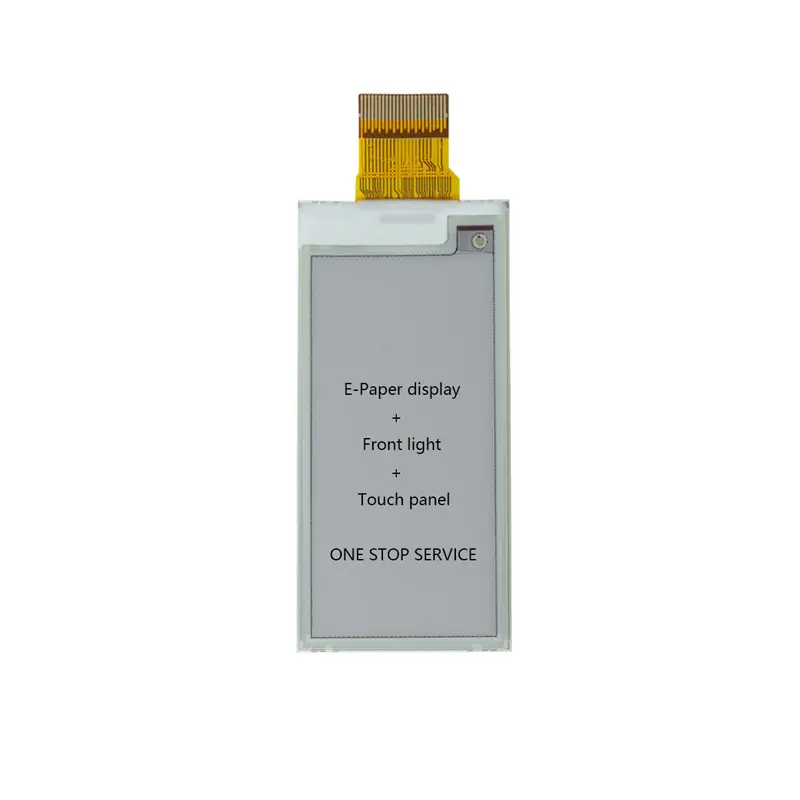
Front-light and touch integration are not part of the confirmed standard assembly. Either feature requires a separate optical, electrical and mechanical configuration.
Custom configurations are generally reviewed from 500 pieces, subject to tooling requirements, material availability and the requested specification. Samples and standard-panel quantities are confirmed separately.
Procurement Checklist
Confirm:
- Assigned model and supplier model revision
- Native 122 × 250 artwork orientation
- Black-and-white color version
- Complete 24-pin FPC assignment
- FPC pitch, contact side and connector
- SPI mode, clock and timing
- Logic and panel supply requirements
- Controller part number and command set
- LUT or waveform package
- Reset, busy and data/command behavior
- Full-refresh support and timing
- Partial-refresh support, limits and ghosting policy
- 23.7 × 48.55 mm active-area position
- 29.2 × 59.2 × 0.96 mm panel fit
- FPC bend and strain relief
- Front-window clearance and reflections
- 0°C to +50°C operating range
- Front-light or touch requirement
- Sample quantity and acceptance criteria
- Annual demand and production schedule
FAQ
About 2.13 Inch Epaper E-Ink Screen
What must be checked before connecting the 24-pin SPI FPC?
Is the panel a complete wireless retail price tag?
Can an image remain visible while the host is asleep?
Does this configuration support partial refresh?
What is required to add a front light or touch layer?
Freya Yang
+86 18318948097