Freya Yang
+86 18318948097
+852 62667476
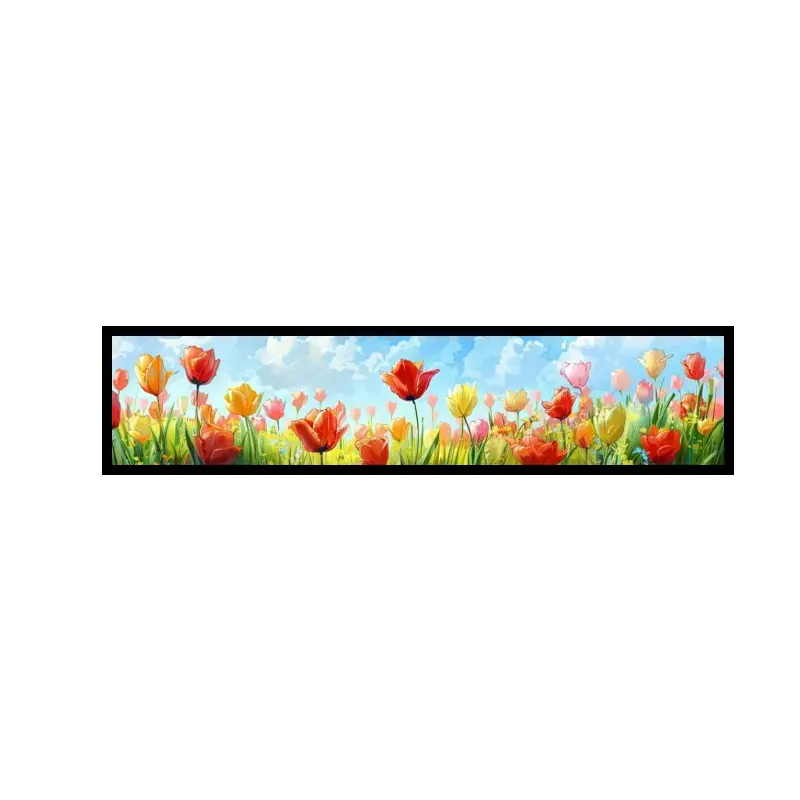
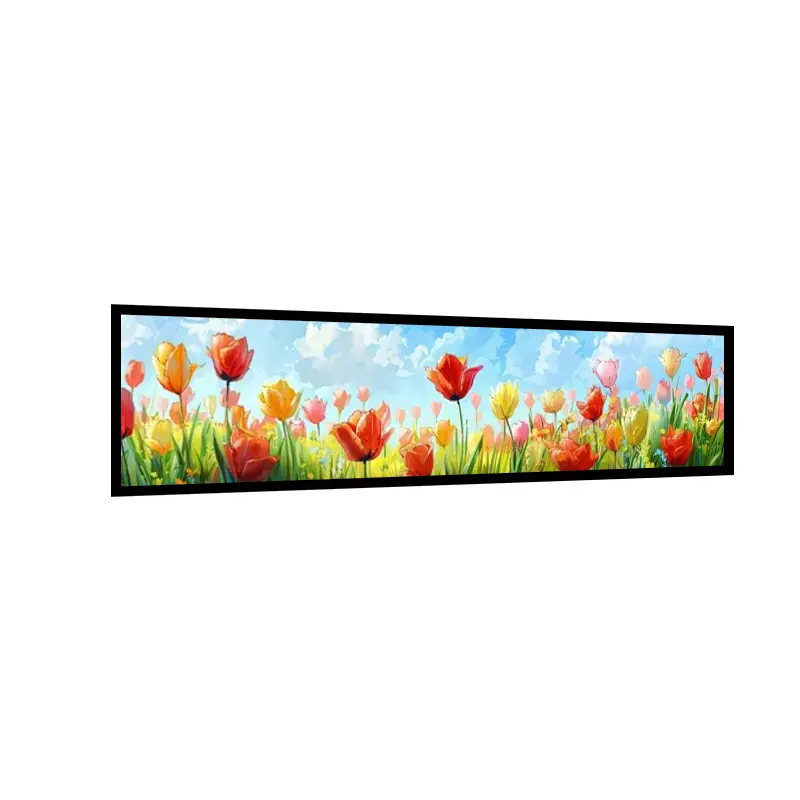
42 Inch Outdoor Wide Temperature Stretched Bar Display for Transit
Model P/N
Size
Resolution
Brightness
Viewing Angle
Connector Type
Operating Temp
Overall(mm)
huisoar
HS420IVN-GD30
Brand
Panel Size (inch)
Model P/N
Resolution
Brightness (nits)
Viewing Angle
Contrast Ratio
Response Time
Overall (mm)
Active Area (mm)
Refresh Rate
Display Colors
Panel Type
Connector Type
Surface Treatment
Operating Temp
Touchscreen Type
Storage Temp
Work Mode
Input Voltage (V)
Weight (g)
Operating Environment
Designed For
42 Inch Outdoor Wide Temperature Stretched Bar Display for Transit
The Outdoor Wide Temperature Stretched Bar Display is a 42-inch ultra-wide TFT-LCD module for passenger information, station guidance and other long-format public display systems. Its 1920 × 480 native canvas, 3000 cd/m² typical luminance, wide VA viewing performance and −20°C to +70°C operating range give equipment designers a strong component-level foundation for high-ambient and outdoor-facing installations. A 51-pin LVDS interface supports embedded integration, while the standard configuration remains non-touch.
Product Summary
The elongated screen format is intended for applications where a conventional 16:9 panel does not fit the available installation height. With a 1039 × 260 mm active area, the display can present route information, service notices, directional guidance, timetable data and commercial content in a continuous horizontal layout.
The module uses a transmissive VA TFT-LCD architecture with 3000:1 typical contrast and 89°/89°/89°/89° viewing in the stated left/right/up/down order. That wide viewing behavior is valuable in public-information environments where passengers approach the display from different positions rather than one fixed viewing point.
Key Specifications
| Parameter | Value |
|---|---|
| Screen size | 42 inches |
| Resolution | 1920 × 480 pixels |
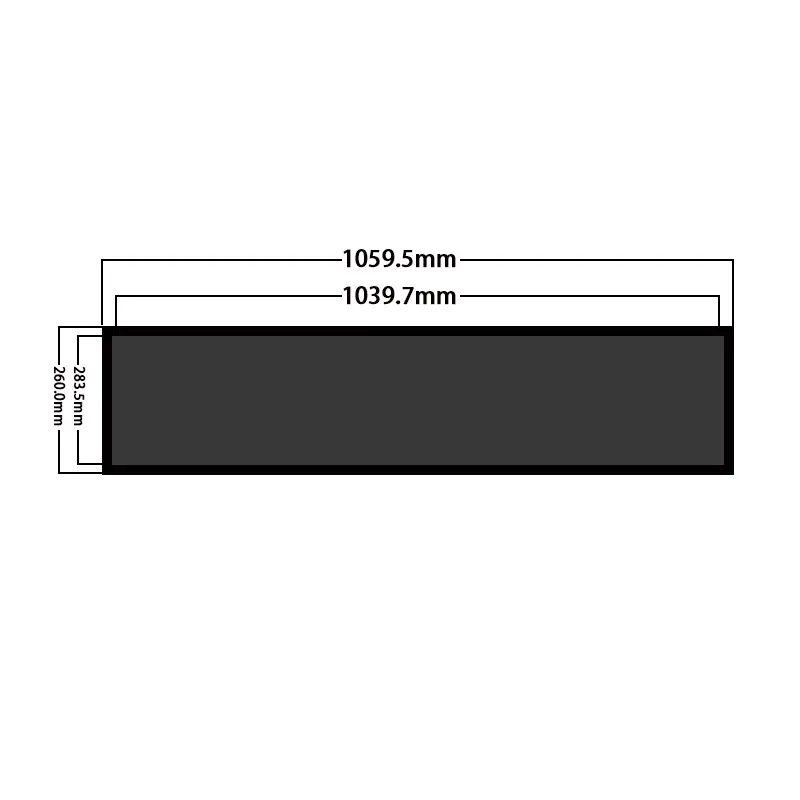
| Active area | 1039 × 260 mm |
| Maximum module envelope | 1059 × 283 × 40 mm |
| Panel technology | VA a-Si TFT-LCD |
| Optical mode | Transmissive |
| Luminance | 3000 cd/m² typical |
| Contrast | 3000:1 typical |
| Viewing angle | 89°/89°/89°/89° L/R/U/D |
| Display colors | 16.7M colors |
| Backlight | WLED |
| Interface | 51-pin LVDS |
| Touch | Non-touch |
| Operating temperature | −20°C to +70°C |
| Storage temperature | −20°C to +70°C |
1920 × 480 Content Planning for Long-Format Interfaces
Native Ultra-Wide UI Layout
The 1920 × 480 raster should be treated as the native design canvas rather than as a cropped version of conventional widescreen content.
A purpose-built layout can allocate horizontal zones for route names, upcoming stops, service status, arrows, timestamps, advertising or operational messages without wasting vertical space. Native content also avoids unnecessary scaling that can soften text or distort graphical elements.
The native 1920 × 480 raster should be used for long-format route and status content rather than scaling conventional 16:9 artwork.
Passenger Information Content Zones
For transportation systems, the screen can divide the long canvas into predictable information areas. A main zone may carry route or destination information, while secondary sections can show service notices, arrival data or directional prompts.
The exact information hierarchy should be validated at the expected viewing distance because character size, contrast and information density affect real-world readability just as much as panel resolution.
3000 cd/m² for High-Ambient Installations
Panel Luminance Versus Finished-System Visibility
A typical panel luminance of 3000 cd/m² provides a strong optical starting point for bright public installations and outdoor-facing equipment.
It should not, however, be treated as the only factor determining finished visibility. Front glass, reflections, air gaps, touch layers, installation angle and direct sunlight all affect perceived contrast.
A 3000 cd/m² panel still requires finished-system front-window and site-lighting validation.
Front-Window Reflection Control
If the display sits behind a protective lens, the front optical stack should be included in sample qualification. Cover-glass transmission and surface reflection can materially change the visible result.
AR or AG treatment, optical bonding and glass selection may be reviewed when the enclosure concept is available, but none of those features should be assumed to be standard parts of the base LCD module.
51-Pin LVDS Integration
Connector Count Does Not Prove Compatibility
The module uses a 51-pin LVDS connection, but connector count alone cannot establish compatibility with an existing controller.
A matching 51-pin connector does not guarantee LVDS timing, voltage, channel mapping, bit depth or pin compatibility.
Before hardware release, the controller, cable and panel documentation should be compared for complete pin assignment, signal mapping, timing, connector orientation and electrical requirements.
Controller and Cable Qualification
Cable direction and connector position also affect the final enclosure. A long-format LCD is often integrated into a narrow housing with limited space behind the display, so cable routing should be considered alongside mechanical supports rather than after the enclosure is completed.
Controller-board selection should therefore be tied to the approved module revision and native 1920 × 480 timing.
Outdoor Wide Temperature Stretched Bar Display Integration
Active Area and Visible Opening
The 1039 × 260 mm active area defines the visible image region and should guide front-window design.
The opening should preserve the required image area while providing enough tolerance for module positioning and assembly variation. Designers should not use the full outer module dimensions as a substitute for the visible area.
Module Envelope and Drawing Release
The controlled envelope for this configuration is 1059 × 283 mm with a maximum thickness of 40 mm.
Those dimensions affect cabinet width, internal support, connector clearance and front-lens alignment. Because different published references for this model family contain conflicting mechanical values, production tooling should be released only against the approved current-revision mechanical drawing.
Enclosure tooling should use the approved current-revision drawing before mechanical dimensions are frozen.
VA Viewing for Public Information
The 89°/89°/89°/89° viewing specification supports public-facing displays that may be read while users are moving along a platform, corridor or station area.
The VA transmissive architecture also provides a 3000:1 typical contrast reference for text, symbols and high-contrast route graphics.
Final viewing performance should still be evaluated with the actual front lens and installation geometry, particularly when the module is mounted above eye level or behind a reflective protective surface.
Wide-Temperature Design Boundaries
The component is specified for operation from −20°C to +70°C and storage from −20°C to +70°C.
This temperature range supports broader environmental design than a standard indoor-only LCD, but it does not establish a finished product's sealing, waterproof rating, humidity tolerance or outdoor certification.
Thermal design must account for the panel, high-output backlight, enclosure construction and solar loading as one complete system. The LCD temperature rating should therefore be treated as a component boundary rather than a complete outdoor-system qualification.
Application Fit
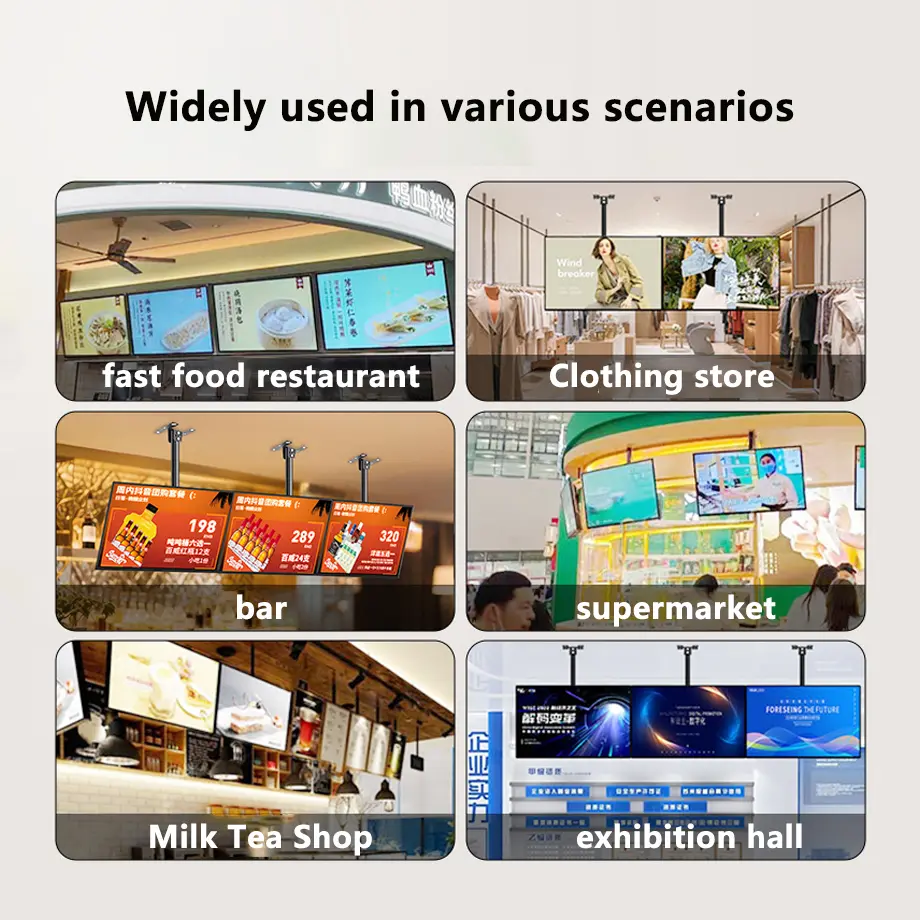
The Outdoor Wide Temperature Stretched Bar Display is a strong candidate for passenger-information systems, bus and rail guidance, station message boards, platform service displays and other long-format public-information equipment.
The same screen geometry can also serve outdoor-facing commercial information strips and industrial status displays where a narrow horizontal format is more useful than a standard rectangular screen.
Its selection value comes from the combination of a 42-inch long-format canvas, 3000 cd/m² typical luminance, 51-pin LVDS, wide VA viewing and a broad component temperature range.
Customization and Procurement
Project review can cover LVDS controller and cable matching, front-window treatment, cover glass, AR/AG options, optical bonding, enclosure adaptation, mounting support, thermal management and separately engineered touch.
Custom configurations are generally reviewed from 500 pieces, subject to tooling requirements, material availability and the requested specification. Sample and standard-module quantities are confirmed separately.
Procurement Checklist
Before approving the module for production, confirm:
- assigned HS420IVN-GD30 and supplier RS420IVN-GD30 revision;
- native 1920 × 480 timing and content orientation;
- complete 51-pin LVDS assignment;
- LVDS channel and bit mapping;
- connector pitch, contact side and orientation;
- panel input electrical requirements;
- WLED voltage, current, enable and dimming requirements;
- 1039 × 260 mm active area;
- 1059 × 283 mm outer dimensions;
- 40 mm maximum thickness;
- approved current-revision mechanical drawing;
- 3000 cd/m² luminance tolerance;
- 3000:1 contrast reference;
- 89°/89°/89°/89° viewing order;
- standard non-touch configuration;
- −20°C to +70°C operating and storage requirement;
- front-window transmission and reflection target;
- required sealing or IP level at the finished-system level;
- thermal and humidity conditions;
- sample acceptance criteria;
- quantity and annual demand.
FAQ
About 42 Inch Outdoor Wide Temperature Stretched Bar Display
What must be checked before connecting a 51-pin LVDS controller?
How should 1920 × 480 passenger-information content be prepared?
Is 3000 cd/m² sufficient for a fully exposed outdoor installation?
Which temperature range should control equipment design?
Which mechanical dimensions should control enclosure tooling?
Freya Yang
+86 18318948097