Freya Yang
+86 18318948097
+852 62667476
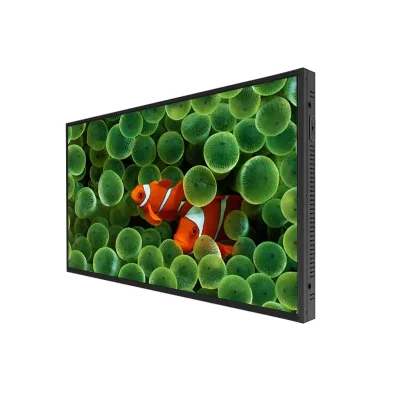
43 Inch Maintenance Free Signage Display for Transit Kiosks
Model P/N
Size
Resolution
Brightness
Viewing Angle
Connector Type
Operating Temp
Overall(mm)
huisoar
HS430HNX01-A01-BK
Brand
Panel Size (inch)
Model P/N
Resolution
Brightness (nits)
Viewing Angle
Contrast Ratio
Response Time
Overall (mm)
Active Area (mm)
Refresh Rate
Bezel Opening
Display Colors
Panel Type
Connector Type
Surface Treatment
Operating Temp
Touchscreen Type
Storage Temp
Work Mode
Pixel Format
Touch Interface
Control Type
Operating Environment
Motherboard Type
I/O Interface
Designed For
43 Inch Maintenance Free Signage Display for Transit Kiosks
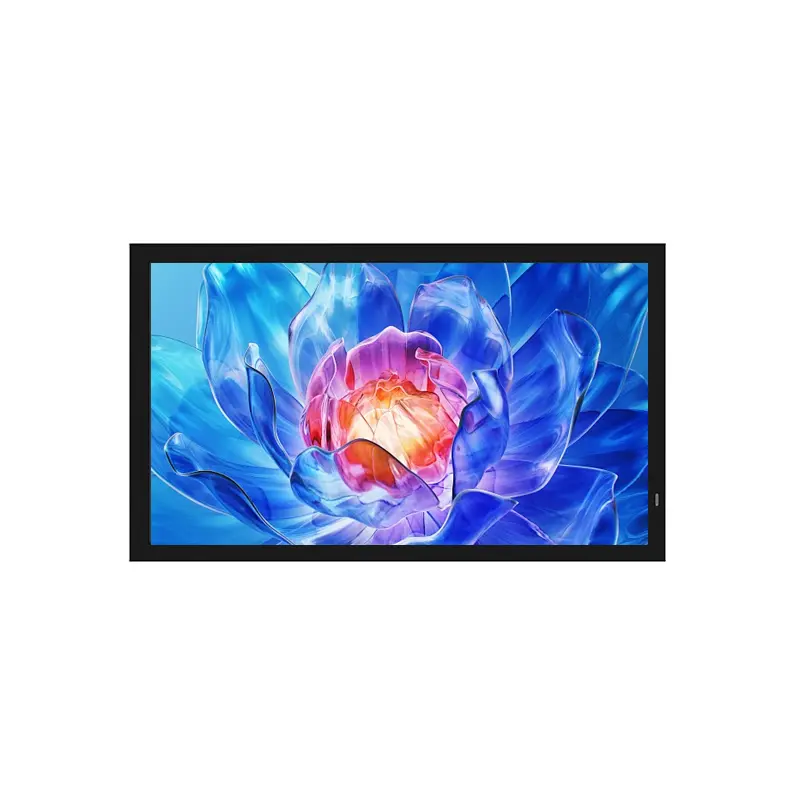
This compact FHD outdoor display combines passive cooling, IP66 protection and 2500 cd/m² luminance for exposed public installations.
Product Summary
A Maintenance Free Signage Display reduces routine fan and filter service points while providing the optical and environmental structure needed for public outdoor media. This 43-inch unit combines a native 1920 × 1080 image, 2500 cd/m² luminance, passive heat dissipation, IP66 protection and 5 mm anti-reflection IK10 front glass.
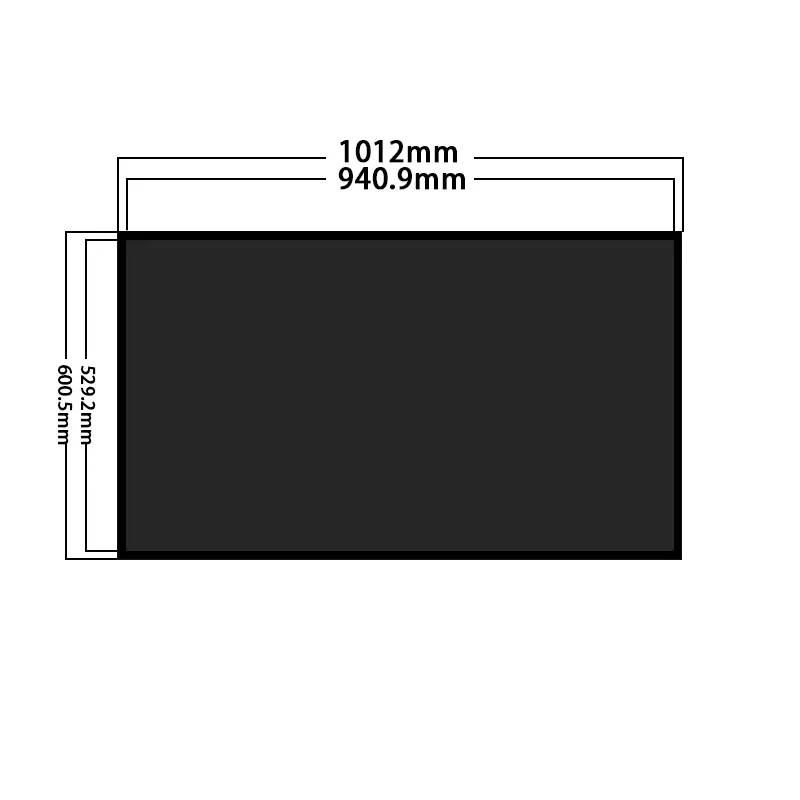
The 1012 × 600.5 × 98.5 mm enclosure and 400 × 400 mm mounting pattern make it suitable for compact transit kiosks, passenger-information points and wall-mounted public displays. AC100–240 V input and listed consumption below 200 W provide defined references for circuit planning and heat-load assessment. Optional Android, touch and communication configurations support both passive content delivery and interactive systems.
Key Specifications
| Parameter | Value |
|---|---|
| Display size | 43 inches |
| Native resolution | 1920 × 1080 pixels |
| Luminance | 2500 cd/m² |
| Active area | 940.9 × 529.25 mm |
| Aspect ratio | 16:9 |
| Contrast ratio | 1200:1 |
| Viewing-angle data | 89/89/89/89 minimum, CR ≥ 10 |
| Response time | 10 ms typical, Tr/Td |
| Display colors | 16.7M |
| Front protection | 5 mm anti-reflection glass, IK10 |
| Ingress protection | IP66 |
| Thermal system | Passive heat dissipation, fanless |
| Brightness control | Automatic adjustment through a light sensor |
| Backlight reference | Listed MTBF: 50,000 hours |
| Unit input | AC100–240 V |
| Listed consumption | Less than 200 W |
| Speakers | 5 W × 2 |
| Dimensions | 1012 × 600.5 × 98.5 mm |
| Mounting | 400 × 400 mm, four M8 points |
| Operating temperature | −20°C to +70°C |
| Storage temperature | −30°C to +80°C |
Android 11 with 4 GB RAM and 32 GB storage, 10-point capacitive touch and selected media or network interfaces are configuration options rather than universal standard inclusions.
Passive Cooling for a Maintenance Free Signage Display
Reduce Fan and Filter Service Points
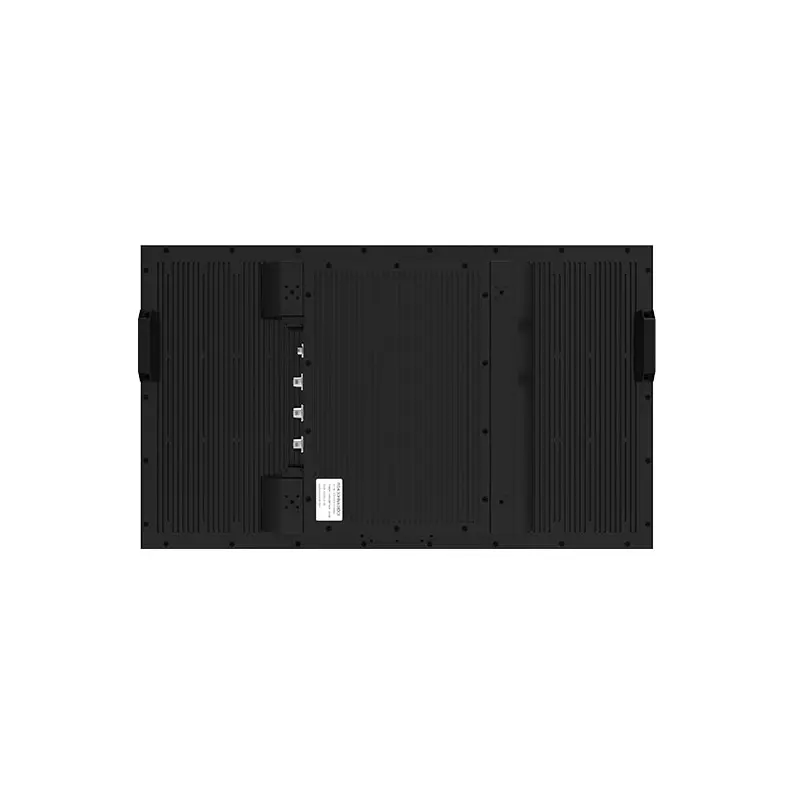
Passive heat dissipation removes cooling fans and replaceable ventilation filters from the standard thermal architecture. That reduces moving components that can collect dust, create noise or require scheduled replacement.
This maintenance direction is particularly relevant at transit stops, curbside kiosks and distributed public-information sites where access may require traffic control, specialist labor or interruption of a public service. Manufacturers commonly describe filter-free and fanless outdoor signage as a way to reduce routine cooling-system maintenance.
Passive cooling reduces fan and filter service points, but solar load, mounting clearance and the less-than-200-watt system heat budget still require validation.
Qualify Solar and Internal Heat Loads
A fanless enclosure still receives heat from the backlight, power electronics, media hardware, ambient air and solar radiation. Site review should document compass orientation, direct-sun duration, expected operating hours and any surrounding surfaces that reflect heat toward the front glass.
Rear and side heat-dissipation surfaces should not be blocked by a decorative cabinet or recessed mounting structure. The representative sample should be evaluated in the planned mounting geometry rather than only on an open test bench.
IP66 Enclosure and Front Protection
Preserve the Sealed Installation Boundary
IP66 protection supports exposed outdoor use, but the rating applies to the approved enclosure structure. Cable glands, interface openings, service doors, fasteners and mounting modifications all form part of the finished protection boundary.
An IP66 enclosure can lose its protection when cable entries, doors or mounting changes are not sealed to the approved design.
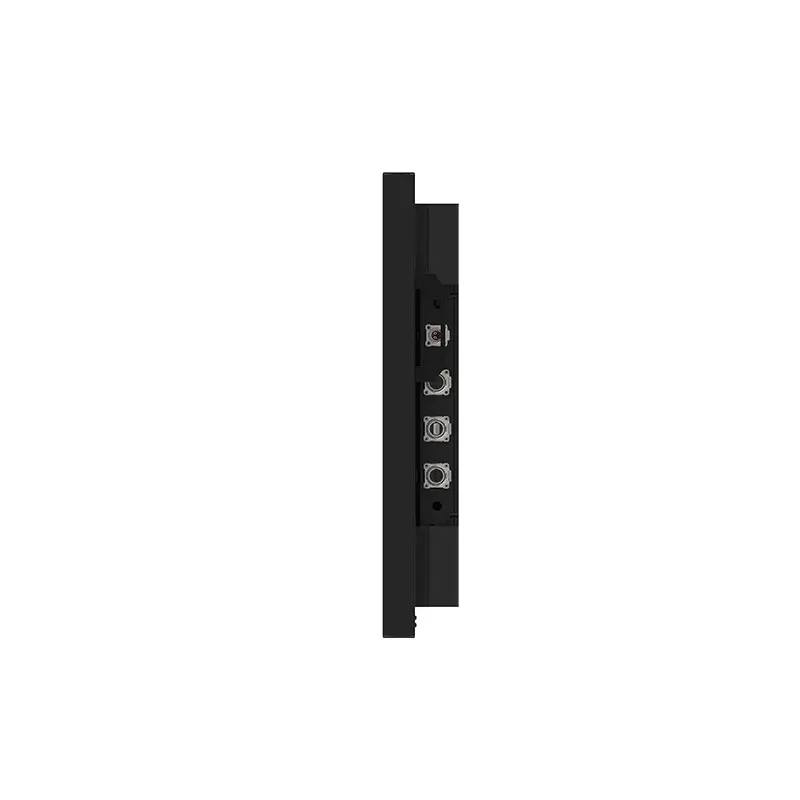
Projects using HDMI, RJ45, USB or an external player should define how power and data cables enter the enclosure. The installer should also retain access for inspection without creating an uncontrolled water path. Outdoor-signage guidance consistently identifies connection sealing and installation workmanship as critical to maintaining an IP rating.
Use the 5 mm AR IK10 Front Structure
The 5 mm front glass combines anti-reflection treatment with IK10 impact protection. Anti-reflection treatment helps preserve contrast in strong ambient light, while the impact rating supports use in unattended or high-traffic public locations.
The finished system should still be evaluated for reflections from the actual viewing position. Cleaning agents, edge sealing and replacement procedures should be approved for the selected front structure.
FHD Content and Automatic Brightness Control
Prepare Native 1920 × 1080 Media
The screen uses a native 1920 × 1080 raster. Advertising, service information, route maps and wayfinding content should be prepared in the native format to preserve text edges and graphical detail.
A 1920 × 1080 panel requires a validated FHD content and playback path.
An external-player configuration should confirm the selected HDMI implementation, startup behavior and content-management workflow. An Android configuration should confirm the exact board, software environment, application requirements and storage needs.
Validate the Ambient-Light Sensor
Automatic brightness adjustment can raise output under bright conditions and reduce it when ambient light falls. This can support readability while limiting unnecessary nighttime brightness and power use.
The sensor position, dimming range, response time and nighttime policy should be tested after installation. Outdoor-display guidance treats ambient-light sensing as part of both visibility and energy management rather than a substitute for correct brightness selection.
Android, External Player and Network Options
Android 11 with 4 GB RAM and 32 GB storage is optional. It can support a self-contained playback architecture where the approved application and content-management system run on the integrated board.
An external media player may be preferable when the buyer already uses an enterprise CMS, security platform or standardized player fleet. Optional physical interfaces include HDMI, RJ45 and USB, while communication options include Wi-Fi, Ethernet and 4G.
Optional Android 11 and 10-point capacitive touch are configuration choices rather than standard inclusions.
Touch projects must confirm the controller, communication interface, operating-system support and behavior through the protective front stack. Network projects should specify the required connection method, remote-management policy and offline playback behavior.
Mechanical, Power and Service-Access Planning
The enclosure measures 1012 × 600.5 × 98.5 mm and uses a 400 × 400 mm mounting pattern with four M8 points. The maximum mounting-thread depth is 15 mm. Final unit weight remains to be confirmed before the support structure is released.
Mechanical review should cover:
- Confirmed display weight
- Wind and dynamic loading
- Bracket stiffness
- Fastener engagement
- Rear heat-rejection clearance
- Cable bend radius
- Safe service access
- Front-glass replacement
- Drainage and water paths
- Installation orientation
The AC100–240 V supply and less-than-200-watt listed consumption should be included in circuit protection, grounding, surge control and thermal calculations. Optional media, communication and touch hardware may alter the complete system load.
Application Fit for Transit and Public Information
This Maintenance Free Signage Display provides a compact platform for transit kiosks, passenger-information points, outdoor wayfinding, EV charging interfaces, fuel-retail media and public advertising systems.
The 43-inch format offers enough active area for schedules, route graphics, service notices and promotional content without requiring the structural provisions of a much larger outdoor screen. Its passive cooling and sealed construction are especially relevant to distributed installations where frequent filter servicing would be disruptive.
Application approval should remain site-specific. A shaded station concourse and a west-facing roadside kiosk can impose very different optical and thermal loads even when they use the same display.
Configuration and Procurement
Project options may include:
- Android 11 media architecture
- 4 GB RAM and 32 GB storage
- HDMI, RJ45 and USB configuration
- Wi-Fi, Ethernet or 4G communication
- Optional 10-point capacitive touch
- Touch-controller and firmware selection
- Brightness-control settings
- Cover-glass treatment
- Optical bonding
- Cable-entry sealing
- Mounting adaptation
- Thermal review
- Enclosure-material review
- Branding and packaging
Custom configurations are generally reviewed from 500 pieces, subject to tooling requirements, material availability and the requested specification. Sample and standard-display quantities are confirmed separately.
Procurement Checklist
Confirm these items before sample approval:
- Approved model-specific specification and mechanical drawing
- Native 1920 × 1080 content and playback
- 2500 cd/m² target under actual site lighting
- Ambient-light sensor position and control behavior
- Viewing-angle sequence and direction order
- 5 mm anti-reflection IK10 glass
- IP66 documentation and sealing construction
- Cable-entry and service-access protection
- Compass orientation and direct-sun duration
- Maximum ambient temperature
- Daily operating schedule
- Passive-cooling performance
- Less-than-200-watt system consumption
- Android or external-player architecture
- Required HDMI, RJ45 and USB options
- Wi-Fi, Ethernet or 4G requirement
- Touch requirement
- Touch controller and communication interface
- Rain, glove and contamination test conditions
- AC100–240 V supply
- 1012 × 600.5 × 98.5 mm enclosure fit
- 400 × 400 mm mounting pattern
- Four M8 fasteners and 15 mm maximum depth
- Final unit weight
- Structural and wind loading
- −20°C to +70°C operating requirement
- −30°C to +80°C storage requirement
- Sample criteria
- Quantity and annual demand
FAQ
About 43 Inch Maintenance Free Signage Display
What must be checked before passive cooling is approved?
How can installation work affect IP66 protection?
When should optional Android be selected instead of an external player?
What must be confirmed for optional touch through the front structure?
Which mechanical and power values control sample approval?
Freya Yang
+86 18318948097