Freya Yang
+86 18318948097
+852 62667476
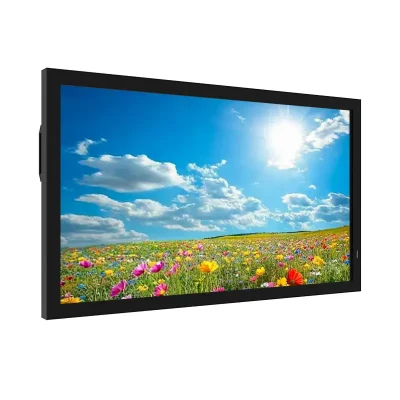
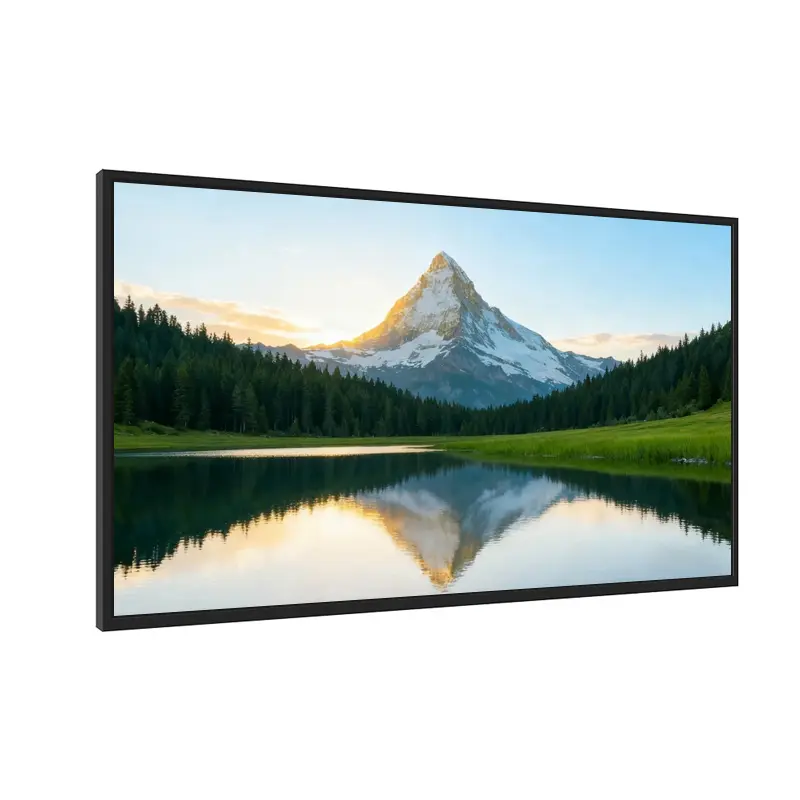
43 Inch Outdoor Open Frame Monitor for Kiosks
Model P/N
Size
Resolution
Brightness
Viewing Angle
Connector Type
Operating Temp
Overall(mm)
huisoar
HS430ENT-N25
Brand
Panel Size (inch)
Model P/N
Resolution
Brightness (nits)
Viewing Angle
Contrast Ratio
Response Time
Overall (mm)
Active Area (mm)
Refresh Rate
Bezel Opening
Display Colors
Panel Type
Connector Type
Surface Treatment
Operating Temp
Touchscreen Type
Storage Temp
Work Mode
Pixel Format
Input Voltage (V)
Operating Environment
I/O Interface
Designed For
43 Inch Outdoor Open Frame Monitor for Kiosks
This Outdoor Open Frame Monitor combines a 43-inch Full HD image, 2500 cd/m² typical luminance and flexible rear or VESA mounting for outdoor-facing kiosk integration.
Product Summary
An Outdoor Open Frame Monitor gives kiosk and equipment manufacturers a display assembly that can be integrated directly into a custom cabinet instead of forcing a finished consumer monitor into the design. The 43-inch format provides a large 1920 × 1080 canvas for public information, advertising, instructions, video and equipment interfaces.
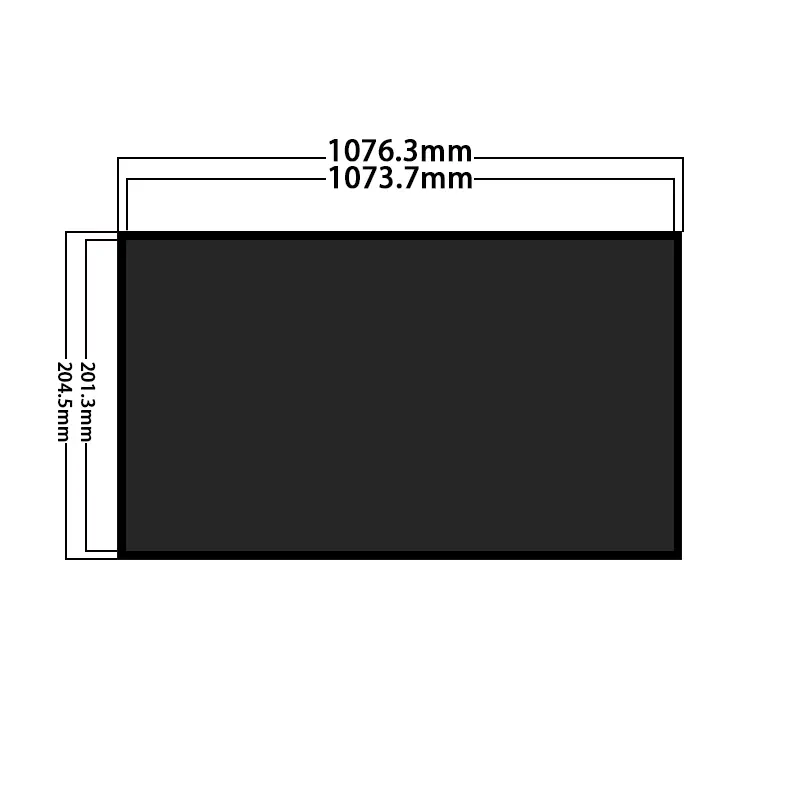
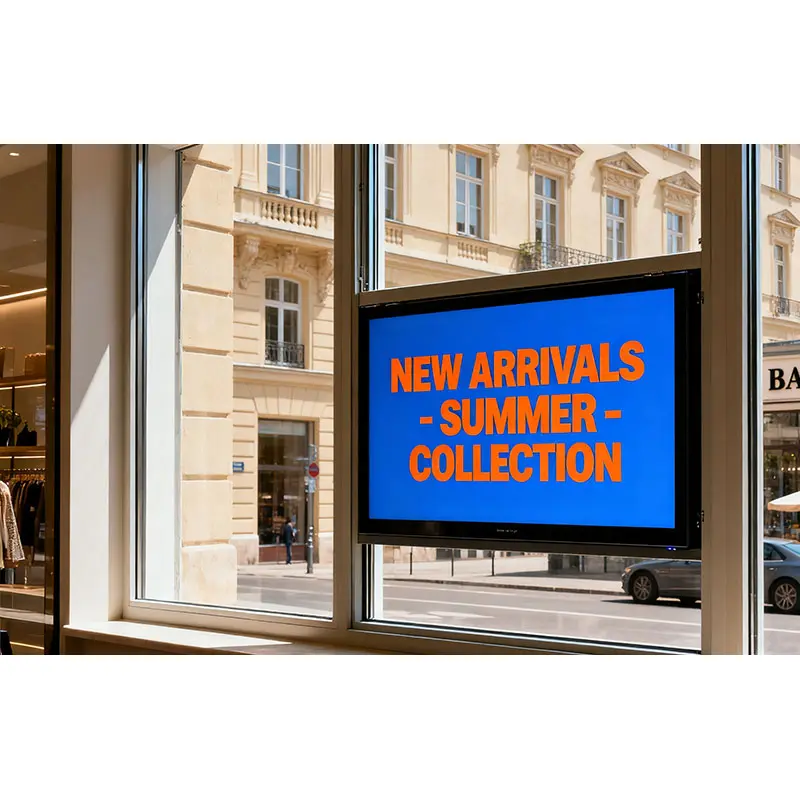
The monitor uses an IPS M+ WRGB panel with a 940.896 × 529.254 mm active area. Its model-specific configuration is rated at 2500 cd/m² typical luminance with glass, supporting evaluation for high-ambient-light installations where conventional indoor monitors would lose perceived contrast.
An open-frame assembly is not a completed weatherproof product. The final kiosk designer remains responsible for the external enclosure, front glass, seals, cable entries, cooling path and structural protection.
Key Specifications
| Parameter | Value |
|---|---|
| Display size | 43 inches |
| Native resolution | 1920 × 1080 pixels |
| Active area | 940.896 × 529.254 mm |
| Panel technology | IPS M+ WRGB |
| Typical luminance | 2500 cd/m² with glass |
| Static contrast | 1200:1 typical |
| Viewing angle | 178° × 178° |
| Display colors | 16.7 million, 72% NTSC |
| Response time | 8 ms typical G-to-G |
| Refresh rate | 60 Hz |
| Surface | 2H hard coating; reflection ≤1.0% |
| Listed lifetime | 50,000 hours typical |
| Operating range | −20°C to +70°C |
| Storage range | −30°C to +80°C |
| Orientation | Portrait and landscape |
| Touch | Optional IR or capacitive touch |
| Mounting | Rear, VESA, wall or side-bracket integration |
These values describe the coherent exact-model open-frame configuration rather than the unrelated stretched-panel table shown farther down the supplied product page.
High-Brightness Full HD Performance
The Full HD format provides a familiar 16:9 workspace for kiosk menus, maps, instructions, public notices, promotional media and multi-zone information layouts. It avoids the custom artwork requirements associated with stretched bar displays while remaining compatible with standard FHD content workflows.
Evaluating 2500 cd/m² Behind the Final Glass
The 2500 cd/m² specification provides a strong optical starting point, but installed readability depends on more than panel output. The front-glass transmittance, surface reflection, screen setback, installation angle and direct-sun exposure all affect the viewer’s perceived contrast.
High-brightness-display guidance commonly places 2500 cd/m² in the range used for direct-sun or demanding outdoor-display evaluation. Optical bonding and anti-reflective treatments may further improve installed contrast, but they must be assessed as part of the complete optical stack.
Before release, qualify the monitor with the actual cover glass and enclosure under representative daylight conditions. A laboratory luminance value alone cannot guarantee readability through every front-window construction.
Viewing Angle and Reflection Control
The 178° × 178° viewing specification supports applications where users approach the display from different positions. This is useful for wide kiosk aisles, retail information points, transport environments and public terminals.
The 2H hard-coated surface and maximum 1.0% reflection specification provide additional optical-selection data. The final cover glass can still introduce new reflections, so its coating, air gap and surface condition should be evaluated separately.
Integrating the Outdoor Open Frame Monitor
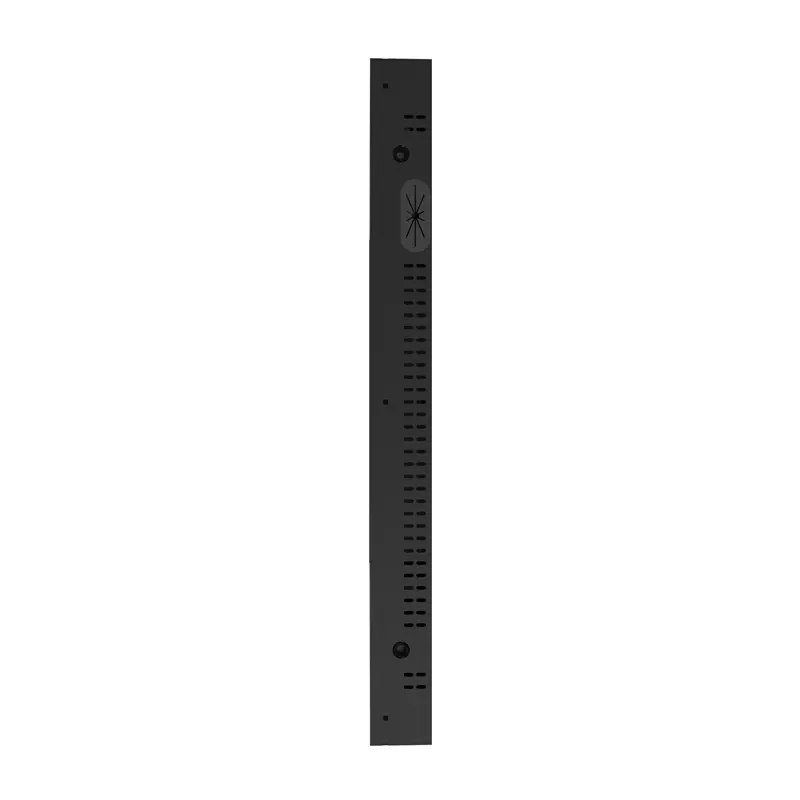
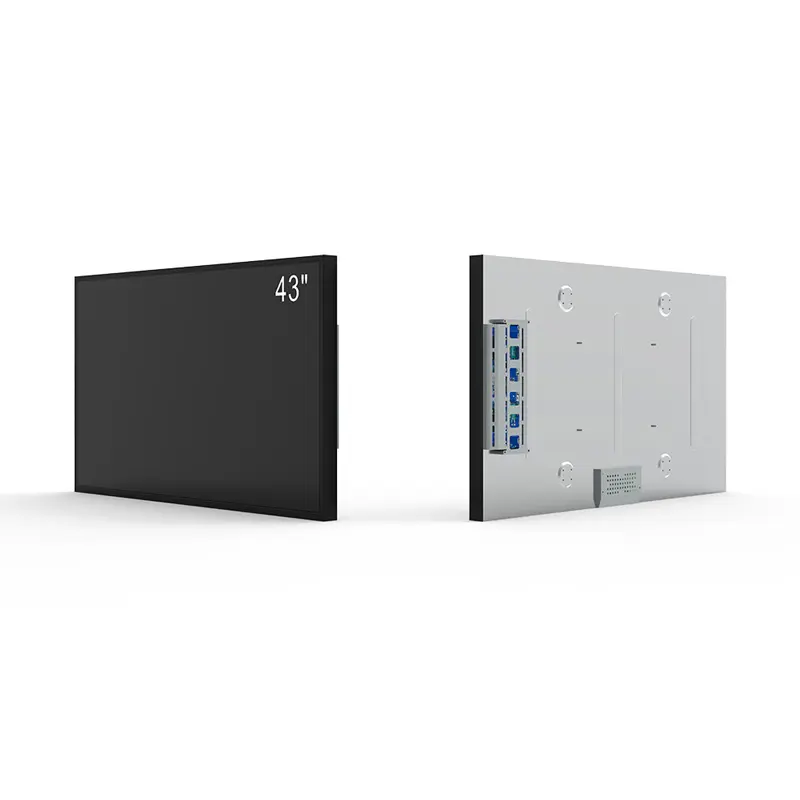
Open-frame monitors are designed for integration into a custom cabinet, machine housing or front panel rather than use as stand-alone consumer products. They typically retain the display core, electronics and mounting chassis while leaving the final external enclosure to the system manufacturer.
External I/O and Content Sources
The listed monitor configuration provides:
- Two HDMI inputs
- RS232C input
- RJ45 network connection
- IR input
- USB 2.0 Type-A
- DisplayPort output
- External speaker output
- RS232C output
LAN, WLAN and cellular-network support are also identified as available directions. These functions must be confirmed against the ordered board and bill of materials; a connector name does not prove that every networking or media function is standard in every configuration.
Engineering review should establish the content source, remote-control method, network architecture, audio requirement and required input/output combination before sample release.
Mounting, Orientation and Enclosure Fit
Rear mounting, VESA integration, wall mounting and side-bracket installation are supported directions. Portrait and landscape operation are listed, giving designers flexibility for horizontal information screens or vertical kiosk layouts.
The confirmed active area is 940.896 × 529.254 mm, but this is not the complete chassis outline. Enclosure release therefore requires the mechanical drawing, total depth, mounting-hole pattern, connector clearances, system weight and centre of gravity.
The support structure should carry the complete monitor and front-glass assembly without transferring harmful stress into the LCD.
Touch and Interaction Options
Non-Touch Baseline and Optional Touch
IR touch and capacitive touch are listed as optional configurations. Touch should not be assumed in the standard non-touch supply.
The selected technology affects:
- Front-glass thickness
- Bezel design
- Touch-controller interface
- Wet or glove performance
- Optical transmission
- Enclosure depth
- Cable routing
- Grounding
- Environmental sealing
A capacitive-touch version should be validated using the intended cover glass and user conditions. An IR-touch frame requires additional perimeter space and a different front-structure design.
Environmental and Continuous-Use Planning
The listed operating range is −20°C to +70°C, with storage from −30°C to +80°C. Continuous operation is also identified for the exact-model monitor configuration.
These ratings do not remove the need for system-level thermal engineering. A high-brightness backlight generates heat inside the kiosk, while direct sunlight can add substantial solar loading to the front glass and internal air.
The final design should address:
- Backlight heat rejection
- Controller and power-supply losses
- Solar load
- Airflow and ventilation
- Condensation control
- Service access
- Temperature-sensor placement
- Brightness reduction under high temperature
- Night-time dimming
The external enclosure must also provide the required dust, rain, impact and vandal resistance. The open-frame monitor itself does not establish an IP-rated finished system.
Recommended Applications
This Outdoor Open Frame Monitor can be evaluated for:
- Outdoor-facing information kiosks
- Ticketing and service terminals
- Retail product-information displays
- Public guidance systems
- Industrial automation screens
- Surveillance and broadcast installations
- Protected transport information points
- Embedded commercial signage
- Custom equipment interfaces
Applications involving unattended outdoor use require separate qualification of the enclosure, cover glass, sealing, cooling, power architecture and mounting system.
Configuration and Customization Review
Project evaluation may include:
- Brightness calibration
- Ambient-light sensing
- QWP or other front-glass optical treatment
- Anti-reflective coating
- Optical bonding
- IR touch
- Capacitive touch
- Rear or VESA brackets
- External I/O board configuration
- Network modules
- Enclosure adaptation
- Environmental sealing
- Thermal management
- Branding and packaging
Custom configurations are generally reviewed from 500 pieces, subject to tooling requirements, material availability and the requested specification. Sample and standard-monitor quantities are confirmed separately.
Procurement Checklist
Confirm before sample or production approval:
- Approved model specification and revision
- Native 1920 × 1080 content at 60 Hz
- Exact ordered brightness
- 940.896 × 529.254 mm active area
- Complete chassis drawing
- Product depth and total weight
- Rear or VESA mounting pattern
- Portrait or landscape requirement
- Cover-glass transmittance
- Cover-glass reflection and coating
- QWP requirement
- Touch technology and controller
- Wet or glove interaction requirements
- Exact HDMI, RS232C, RJ45, IR, USB and DP scope
- Audio-output requirement
- LAN, WLAN or cellular-network scope
- System input voltage
- Maximum power and thermal budget
- Enclosure sealing and required IP grade
- Operating-temperature qualification
- Sample acceptance criteria
- Quantity and annual demand
FAQ
About 43 Inch Outdoor Open Frame Monitor
How does an open-frame monitor differ from a finished outdoor display?
Is 2500 cd/m² sufficient behind protective glass?
What must be checked before adding capacitive or IR touch?
Which dimensions control enclosure release?
Which external interfaces are included in the ordered configuration?
Freya Yang
+86 18318948097