
~
~
~
~
~
~
M238DAN01.R ART.S 3-Side Borderless QHD Panel 23.8in AUO

Model P/N
Size
Resolution
Brightness
Viewing Angle
Connector Type
Operating Temp
Overall(mm)
auo
M238DAN01.R
Brand
Panel Size (inch)
Model P/N
Resolution
Brightness (nits)
Viewing Angle
Contrast Ratio
Response Time
Overall (mm)
Active Area (mm)
Refresh Rate
Display Colors
Panel Type
Connector Type
Surface Treatment
Operating Temp
Touchscreen Type
Storage Temp
Work Mode
Pixel Format
Input Voltage (V)
Vibration Resistance
Designed For
Product Details
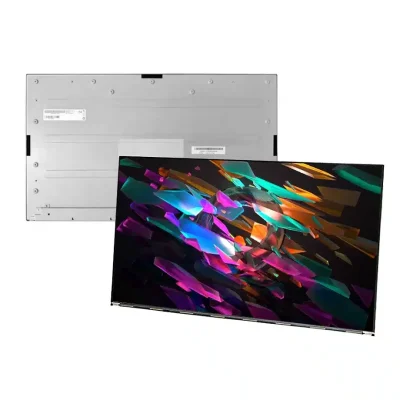
The M238DAN01.R ART.S 3-Side Borderless QHD Panel is a 23.8-inch AUO a-Si TFT-LCD module intended for desktop-monitor integration. The user-supplied record fixes a 2560×1440 Quad-HD image, 75 Hz refresh, four-channel 8-bit LVDS, 300 cd/m² typical luminance, 99% sRGB wording and a 900:1 typical contrast ratio. The same-model reference adds three-side-borderless, ART.S and 3S BLL feature wording. This is therefore a monitor-panel selection problem centered on scaler timing, LVDS channel mapping, optical acceptance and chassis geometry rather than on notebook-style eDP interoperability.
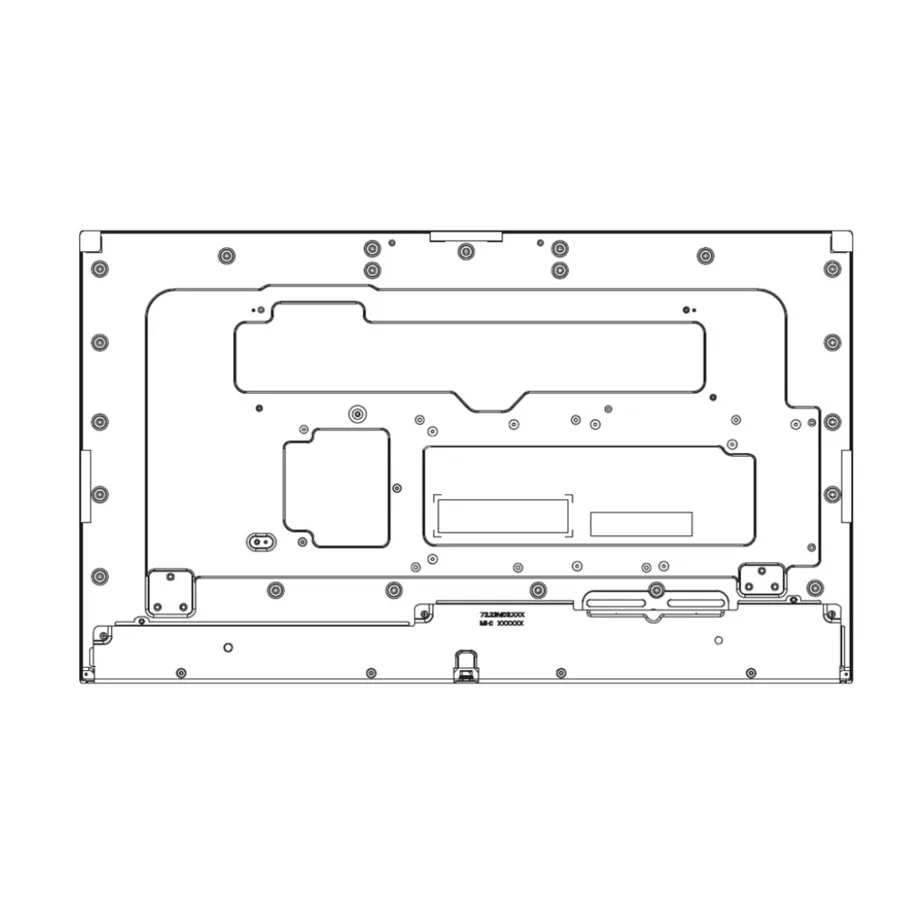
The supplied packet does not provide a complete outline size or module weight, so those fields remain blank rather than being borrowed from another M238DAN01 revision. That gap is important to preserve. A 23.8-inch QHD active area of 526.85×296.35 mm does not define the external frame, connector location or mounting datums. Mechanical release requires the exact M238DAN01.R drawing or a physical first article.
Three buyer value propositions
75 Hz QHD target for mainstream desktop-monitor platforms
The native 2560×1440 image at 75 Hz provides a practical monitor-performance point above 60 Hz without the signal demands of gaming-class 144 Hz panels. The buyer value is a defined scaler output requirement that can be verified with the exact four-channel LVDS mapping.
99% sRGB wording with ART.S / 3S BLL feature references
The supplied optical record combines 300 cd/m² typical luminance and 99% sRGB wording, while the same-model description references ART.S and 3S BLL. These facts support a color-conscious monitor baseline without implying factory calibration, a specific anti-reflection certificate or any health-related guarantee.
Three-side-borderless positioning for modern monitor chassis
The same-model description explicitly identifies a three-side-borderless format. That is useful for narrow-bezel monitor design and multi-display layouts, but the missing external outline dimensions mean chassis tooling should not proceed until the exact mechanical drawing is available.
Key Specifications at a Glance
| Brand | AUO |
|---|---|
| Model P/N | M238DAN01.R |
| Size | 23.8 inch |
| Resolution | 2560(RGB)×1440, Quad-HD, 16:9 |
| Active Area | 526.85(W)×296.35(H) mm |
| Brightness | 300 cd/m² (Typ.) |
| Viewing Angle | 89/89/89/89 (Typ.)(CR≥10) |
| Display Colors | 16.7M, 99% sRGB |
| Refresh Rate | 75 Hz |
| Connector / Native Interface | LVDS (4 ch, 8-bit) |
| Input Voltage | 5.0 V (Typ.) |
| Operating Temperature | 0 ~ 50 °C |
| Storage Temperature | -20 ~ 60 °C |
| Vibration | 1.5G (14.7 m/s²) |
| Panel Type | a-Si TFT-LCD, LCM |
| Pixel Format | RGB Vertical Stripe |
| Surface Treatment | Antiglare (Haze 25%), Hard coating (3H) |
| Contrast Ratio | 900:1 (Typ.) |
| Response Time | 14 ms (Typ.)(G to G) |
| Work Mode | AHVA, Normally Black, Transmissive |
| Backlight / Emission | 30,000 hours (WLED, no integrated driver) |
| Designed For | Desktop monitor integration; 23.8-inch QHD borderless monitor platforms |
| Touchscreen Type | Without touch screen |
How should a four-channel LVDS scaler be matched?
Confirm that the scaler board can output the exact four-channel 8-bit LVDS timing required for 2560×1440 at 75 Hz. Channel count alone is insufficient: verify bit mapping, clock/data polarity, connector definition and the panel's 5.0 V supply behavior. Use the production cable and run long-duration patterns, repeated power cycles and source-mode changes. If the monitor accepts HDMI or DisplayPort externally, remember that those are scaler inputs; the panel itself remains an LVDS device. Keep the external-input architecture separate from the panel-facing interface in the BOM.
What does the missing outline dimension mean for mechanical release?
Do not infer the outer dimensions from the 526.85×296.35 mm active area or from another M238DAN01 family member. The exact M238DAN01.R packet leaves outline size blank, so bezel opening, mounting tabs, rear clearance and connector location remain unresolved until the drawing or sample is obtained. A three-side-borderless designation is not a mechanical drawing. Treat chassis freeze as blocked until engineering has direct exact-model evidence for the frame geometry.
How should 99% sRGB be verified in a monitor product?
Use the panel's 99% sRGB wording as a gamut-coverage target, then define the monitor's own color acceptance. If the product requires a white point, gamma or Delta-E limit, measure those values after the scaler, backlight control and factory calibration process are applied. Test at the brightness settings the user will actually see. Component gamut coverage does not establish finished-monitor calibration accuracy, and the 300 cd/m² typical luminance should not be converted into a higher marketing claim.
ART.S, haze and the front optical stack
The user-supplied surface fact is antiglare with 25% haze and 3H hard coating; the same-model description additionally references ART.S. Preserve both evidence streams without assuming a specific certified reflection figure that is not supplied. If the monitor adds a protective front plate or special coating, measure reflection and haze again on the completed stack. A three-side-borderless chassis can place the panel surface close to the outer bezel, making handling and cleaning processes relevant to cosmetic acceptance.
Backlight-driver ownership in the monitor electronics
The WLED system is listed at 30,000 hours without an integrated driver. The monitor power/scaler architecture must therefore provide the appropriate LED-driver function. Obtain the exact backlight electrical definition before production design, then validate current regulation, dimming curve, enable behavior and thermal performance. The 5.0 V panel input is not the LED backlight drive specification. If the LED-driver circuit changes during cost reduction, repeat brightness and thermal qualification because optical output depends on that implementation.
75 Hz timing, response and perceived motion
The panel is specified at 75 Hz and 14 ms typical G2G response. These numbers describe different aspects of motion and should not be conflated. Run scrolling text, video and representative desktop animation to judge visible behavior at the intended overdrive/scaler settings. Do not infer a faster OD mode when none is supplied for the exact model. For office or general-purpose monitors, stable timing and artifact-free transitions can be more important than a headline response number.
Thermal and reliability checks for a desktop enclosure
The documented panel operating range is 0 to 50 °C and the same-model reference provides a 1.5G vibration level. Measure temperature inside the finished monitor near the backlight and scaler under sustained brightness. Rear-cover ventilation, power supply heat and mounting pressure can affect panel conditions. The 30,000-hour backlight figure is a component rating, not a warranty or system-lifetime promise. Keep service assumptions separate from the exact electrical and optical facts.
Procurement control when family members look similar
AUO has multiple M238DAN01 revisions with similar QHD specifications. Do not copy dimensions, contrast, brightness or connector details from a sibling model to fill gaps. Release M238DAN01.R against its own exact drawing, four-channel LVDS definition, 75 Hz timing and optical record. If a sibling revision is proposed later, run it as a new candidate and compare field by field. This identity discipline prevents family-level similarity from becoming an unsupported drop-in claim.
First-article monitor validation without a complete outline drawing
Until the exact drawing is available, use a sample to confirm connector orientation, rear clearance and visible border geometry, but keep those measurements provisional rather than silently converting them into canonical manufacturer dimensions. Once the drawing is obtained, reconcile the sample against it and update only through the approved workflow. Electrical validation can proceed in parallel using the four-channel LVDS timing, 5.0 V supply and 75 Hz mode. Separating mechanical uncertainty from known electrical facts prevents one missing field from contaminating the rest of the record.
Scaler firmware and source-mode transitions
Test the monitor scaler through the source modes the finished product will support. Repeatedly switch between HDMI/DisplayPort input timings while confirming that the panel-facing LVDS output returns to the approved 2560×1440/75 Hz mode. Check power-save entry, wake, source loss and recovery. These are system functions, but they interact directly with panel timing. Preserve the scaler firmware revision used during approval so later firmware changes can be regression-tested against the known-good panel behavior.
Incoming inspection for a borderless monitor panel
Incoming inspection should confirm the exact M238DAN01.R marking, glass and surface condition, connector integrity and any agreed cosmetic limits. Because the module is intended for a narrow-bezel chassis, edge damage and surface contamination can be especially visible after assembly. A small functional sample can verify 75 Hz timing and basic optical behavior. Do not use stock counts or marketplace availability as lifecycle evidence; sourcing status and technical compatibility are separate decisions.
Release gate for the eventual exact drawing
When the exact M238DAN01.R mechanical drawing becomes available, compare its outline, mounting datums, connector coordinates and thickness with the first-article chassis. Do not substitute a family-member drawing. The product record should remain blank for unsupported outline values until exact-model evidence resolves them. This discipline protects downstream service documentation and prevents a provisional measurement from being mistaken for a manufacturer specification. Once resolved, rerun only the affected mechanical and content dependencies before treating the new dimensions as production truth.
Evidence and engineering references
Use the supplied M238DAN01.R reference for exact-model evidence. For LVDS engineering background, see Texas Instruments LVDS resources; panel pin mapping must still come from AUO exact-model documentation.
Engineering and sourcing review
For release, keep M238DAN01.R tied to the exact current-run fact set, approved drawing or first article, native interface definition, power sequence, optical acceptance and the target system configuration. Replacement approval should be evidence-based and model-specific; shared size, resolution, connector count or family name is not sufficient proof of interchangeability.
Recommended: Same Size
(23.8")
Applications & Value of LCD Panel

- Fast sourcing with in-stock panels & cross-reference alternatives
- Stable supply chain with long-term availability
- Engineering-level support from panel to integration
- Custom solutions: cable, touch & optical bonding
- Strict quality control with IQC / OQC / aging test
- Full traceability system for quality assurance
- Complete technical documentation & drawings
- Compliance support: RoHS & certification files
