~
~
~
~
~
~
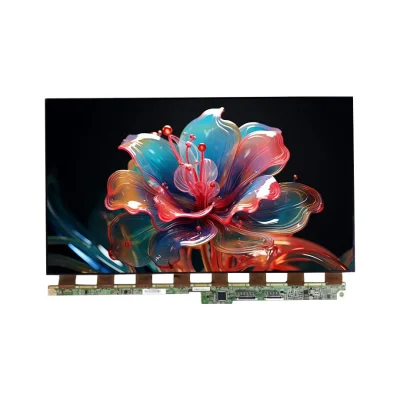
MV238FHB-NY1 Borderless Gaming Monitor Cell LVDS 23.8in BOE
Model P/N
Size
Resolution
Brightness
Viewing Angle
Connector Type
Operating Temp
Overall(mm)
boe
MV238FHB-NY1
Brand
Panel Size (inch)
Model P/N
Resolution
Viewing Angle
Contrast Ratio
Response Time
Overall (mm)
Active Area (mm)
Refresh Rate
Display Colors
Panel Type
Connector Type
Surface Treatment
Operating Temp
Touchscreen Type
Storage Temp
Work Mode
Pixel Format
Input Voltage (V)
Designed For
Product Details
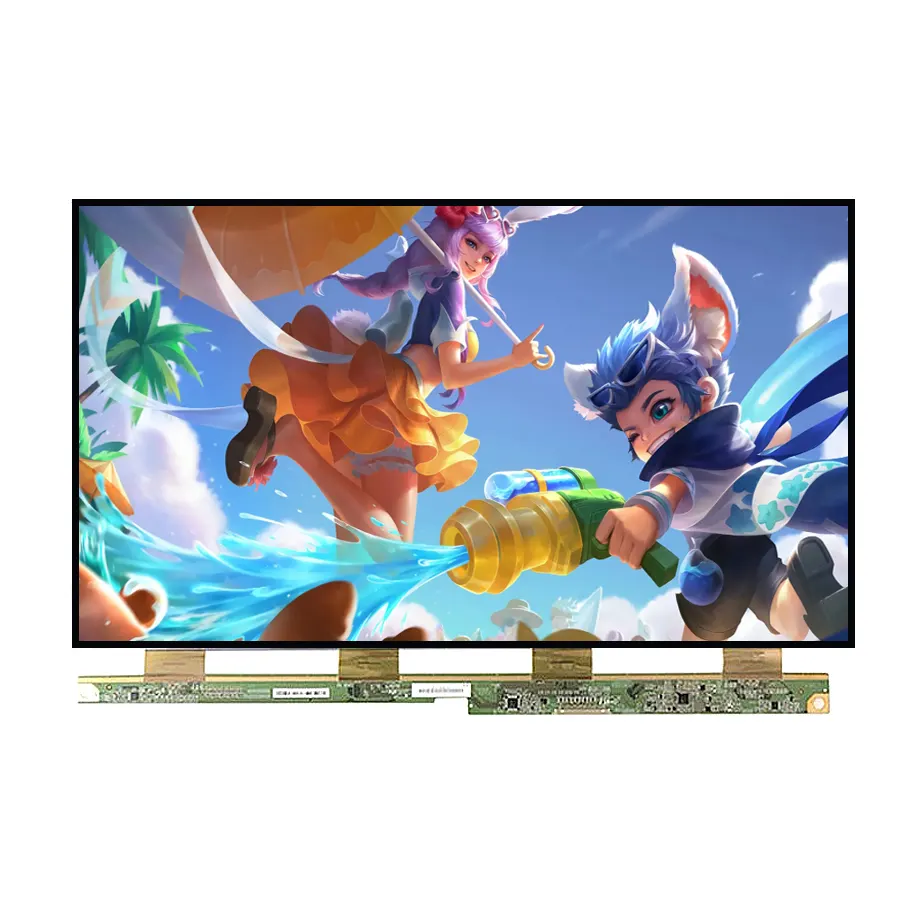
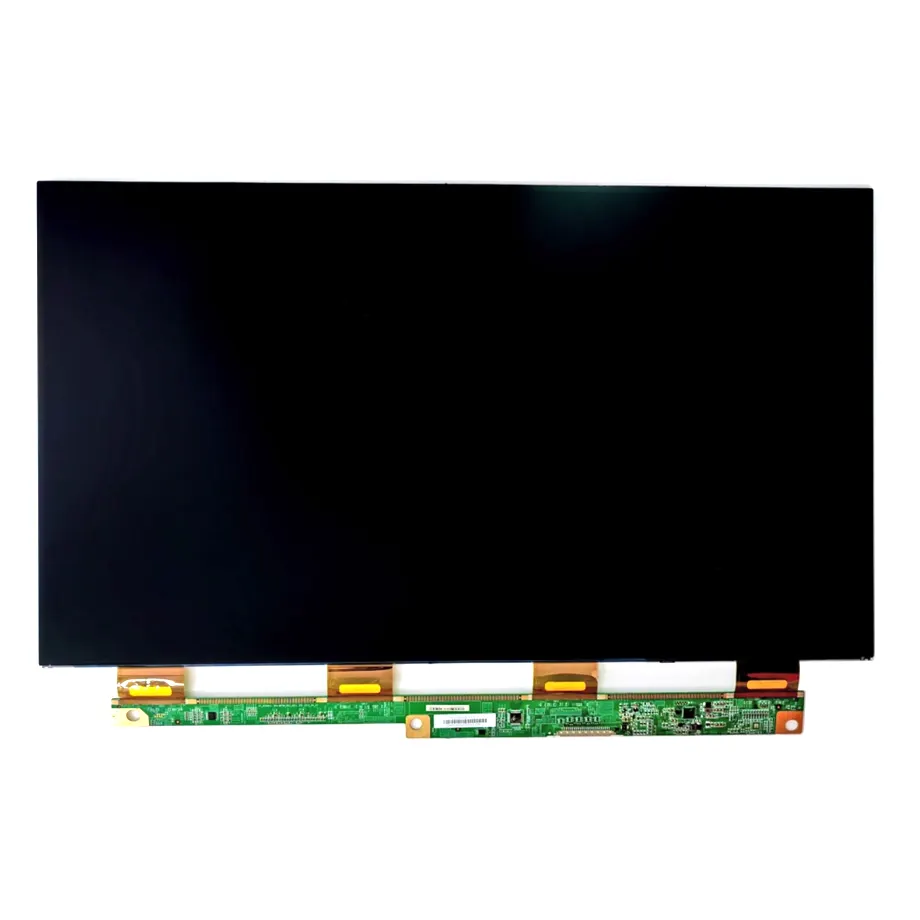
MV238FHB-NY1 Borderless Gaming Monitor Cell is a 23.8-inch BOE a-Si TFT-LCD CELL for desktop-monitor and gaming integration, with a native 1920×1080 FHD image, 120 Hz refresh and dual-channel 8-bit LVDS. The exact-model record is explicit that this is a CELL without backlight or backlight driver. Its stored luminance value is therefore 0 cd/m² because the CELL itself does not generate finished-display light; that value must not be presented as the brightness of a completed monitor. Instead, system luminance is created by the external backlight and optical architecture selected by the monitor manufacturer.
The active area is 527.04 × 296.46 mm inside a 534.84 × 306.86 × 1.32 mm glass/panel outline. The source specifies ADS, Normally Black, Transmissive operation, 1500:1 typical contrast, 89/89/89/89 degree viewing angles and 16.7 million colors with 99% sRGB. A 5.9% typical transmissivity value with polarizer is especially relevant to CELL-level backlight design because it influences how much illumination must pass through the LCD stack to reach a target monitor brightness.
Why a backlightless CELL is different from a finished LCD module
A CELL provides the LCD switching structure and polarizer stack but does not provide the LED light source, light guide, diffuser system or LED driver needed by a conventional transmissive monitor. Procurement teams should therefore avoid comparing this part directly with an LCM whose brightness and power figures already include a factory backlight assembly. For MV238FHB-NY1, the design team owns the separate illumination architecture, optical uniformity, thermal path and luminance-control strategy.
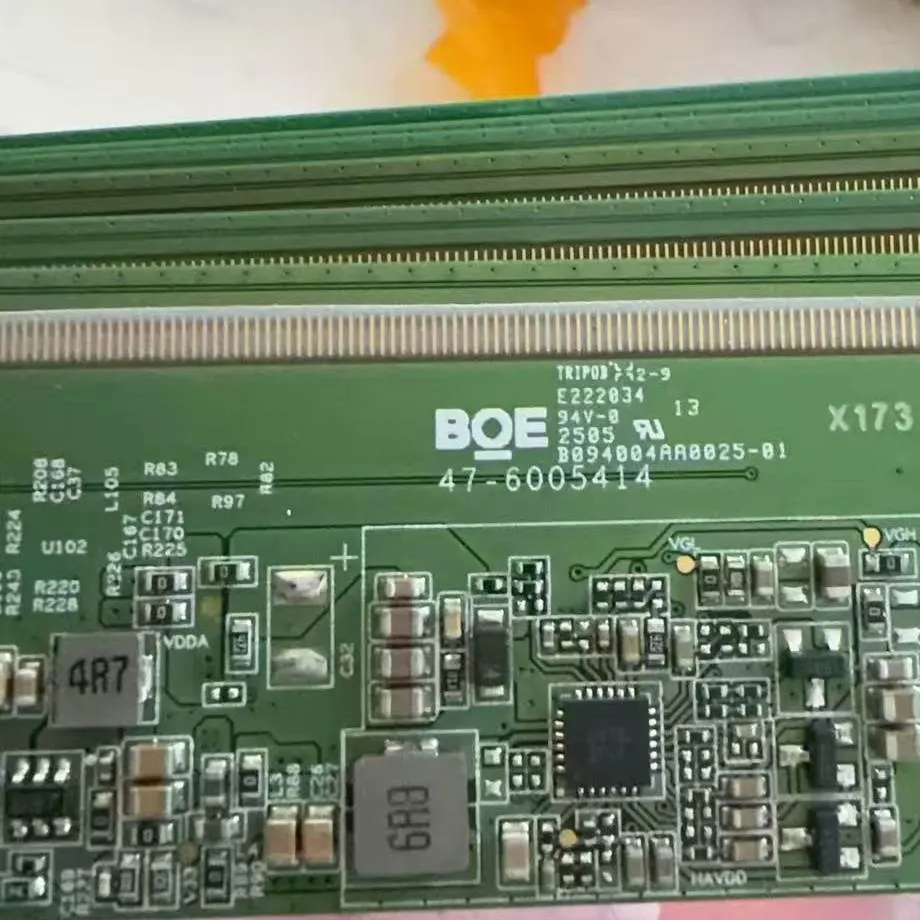
The exact model includes four source-driver chips in a COF implementation. That integration fact is useful for controller and flex planning, but it is not a substitute for the detailed timing or source-driver documentation. The host electronics still need to deliver the required LVDS timing and panel power, while the separately engineered backlight subsystem must operate independently but coherently with image blanking, brightness control and system power states.
Three Core Buyer Value Propositions
1. A 120 Hz FHD CELL gives monitor designers a defined gaming timing target
The 1920×1080 native image at 120 Hz provides a clear motion-performance target for mainstream gaming-monitor projects. It allows scaler selection, frame-rate testing and internal timing design to be based on an exact panel requirement rather than on a vague “gaming capable” description. The 120 Hz panel rating does not guarantee the input behavior of a finished monitor; the scaler, external ports, firmware and graphics source must sustain the intended mode.
2. 5.9% transmissivity and 99% sRGB support deliberate optical-stack engineering
The exact CELL specification includes 5.9% typical transmissivity with polarizer and 99% sRGB color coverage. Those values are useful inputs when engineers size the external backlight and evaluate color performance. They do not define finished-monitor brightness or calibration by themselves. LED spectrum, light-guide efficiency, diffuser films, current setting, thermal behavior and factory color tuning all influence the final result.
3. Dual-channel LVDS narrows the electronics architecture for monitor integration
The native signal interface is two-channel, 8-bit LVDS through a 30-pin 1.0 mm connector with a 5.0 V typical supply. This gives the monitor controller team a specific internal signal family and connector target. It should not be confused with external HDMI or DisplayPort inputs. A scaler board must convert those consumer inputs into the exact LVDS timing and electrical behavior required by the CELL.
Key Specifications at a Glance
| Specification | MV238FHB-NY1 value |
|---|---|
| Display size | 23.8 inch |
| Panel form | a-Si TFT-LCD, CELL (FOB) |
| Resolution | 1920(RGB)×1080, FHD, 16:9 |
| Active area | 527.04 × 296.46 mm |
| Outline | 534.84 × 306.86 × 1.32 mm |
| Surface | Antiglare, Haze 25%, hard coating 3H |
| CELL luminance field | 0 cd/m² — no backlight |
| Contrast | 1500:1 (Typ.) |
| Viewing angle | 89/89/89/89 (Typ.)(CR≥10) |
| Response | 14 ms (Typ.)(G to G) |
| Transmissivity | 5.9% (Typ.)(with Polarizer) |
| Color | 16.7M, 99% sRGB |
| Refresh | 120 Hz |
| Interface | LVDS, 2 ch, 8-bit, 30-pin 1.0 mm |
| Supply | 5.0 V (Typ.) |
| Touch | Without touch screen |
| Operating / storage | 0 to 50°C / -20 to 60°C |
Backlight design is a required system workstream
MV238FHB-NY1 Borderless Gaming Monitor Cell must be paired with a separately engineered backlight if it is to become a visible monitor. The CELL's 5.9% transmissivity helps frame the optical challenge, but it does not specify the LED count, string topology, current, light-guide material, diffuser stack or target luminance. Those decisions belong to the monitor architecture. Brightness should be validated after the complete backlight and optical films are assembled, not inferred from another BOE module using the same diagonal.
Uniformity is equally important. LED placement, edge coupling, reflective films and mechanical compression can create mura, edge brightness or temperature-sensitive changes. Prototype testing should cover white, gray and dark patterns across the full active area and at representative brightness settings. The optical stack should also be evaluated after the enclosure is assembled because frame pressure and thermal expansion can influence visible uniformity.
LVDS controller and timing qualification
The dual-channel 8-bit LVDS interface and 30-pin connector provide the core electrical starting point. The exact timing table, clock requirements, pin assignment and power sequence should come from the current model documentation. A controller board that supports generic 1080p LVDS is not automatically suitable. The board must generate the correct 120 Hz timing and provide a stable 5.0 V panel supply while coordinating display enable and backlight behavior at startup and shutdown.
Bring-up should include power cycling, input switching, resolution changes, sleep/wake and sustained 120 Hz video. Engineers should watch for line artifacts, intermittent synchronization and color-bit errors, particularly at cable lengths representative of the final monitor. External HDMI or DisplayPort bandwidth also needs to support the desired user-facing modes, even though those external interfaces are not native panel interfaces.
Optical performance: contrast, surface and color
The ADS normally-black transmissive mode is specified at 1500:1 typical contrast with wide 89-degree viewing angles. The antiglare surface includes 25% haze and a 3H hard coating. These component characteristics influence the finished display, but front bezel geometry and any added protective layer can alter reflections. The page therefore does not assign a sunlight-readable or outdoor-grade classification.
The exact model specifies 16.7 million colors and 99% sRGB. A complete monitor can use this as a color-gamut foundation, while final white point, gamma and color accuracy remain dependent on the LED spectrum, scaler processing and calibration procedure. Procurement requirements should separate the CELL's gamut specification from any finished-monitor certification or calibrated-color promise.
120 Hz motion and response boundaries
The panel refresh rate is 120 Hz and the source lists a 14 ms typical gray-to-gray response time. Those values describe different parts of motion performance. Refresh defines frame presentation opportunity, while pixel transition behavior determines how rapidly the liquid crystal changes state. The finished monitor's perceived motion also depends on overdrive algorithms, frame pacing and source content. It would be unsafe to translate the component response number into a guaranteed end-to-end gaming latency.
For qualification, use scrolling patterns, game-like motion and dark transitions at the intended native timing. If a controller board applies overdrive, validate overshoot and inverse ghosting across representative temperatures and brightness settings. The CELL should be assessed with the actual optical stack because backlight drive and panel temperature can affect observed motion and contrast.
Mechanical handling for a thin CELL
The 1.32 mm panel outline depth reflects a thin CELL construction without a protective backlight chassis. That makes mechanical support important. The monitor structure should avoid point loads, twisting and excessive bezel pressure. The exact drawing should define support zones, COF clearances and connector keep-outs. Packaging for incoming parts should also protect the exposed panel from flex and localized force.
Because the module mass is unresolved in the exact data, the production weight field remains blank rather than using a similar model's value. This is consistent with the exact-model evidence rule: unresolved objective fields stay unresolved. Mechanical calculations that require mass should use the approved sample or current manufacturer documentation before tool or packaging release.
Application fit: desktop monitors and gaming displays
Desktop Monitor and Gaming are documented applications. That supports evaluation in 23.8-inch FHD monitor platforms requiring a 120 Hz CELL and external backlight architecture. It does not establish compatibility with a named retail monitor, controller board or backlight unit. Exact timing, physical outline, connector position, COF clearances and optical design must all be matched.
MV238FHB-NY1 Borderless Gaming Monitor Cell is especially relevant when a monitor maker wants control over its own backlight, light-guide and optical-film stack. That flexibility comes with added engineering responsibility compared with purchasing a complete LCM. The buyer should decide whether the system team has the required optical, thermal and manufacturing controls before choosing a CELL architecture for volume production.
Procurement and incoming-quality checklist
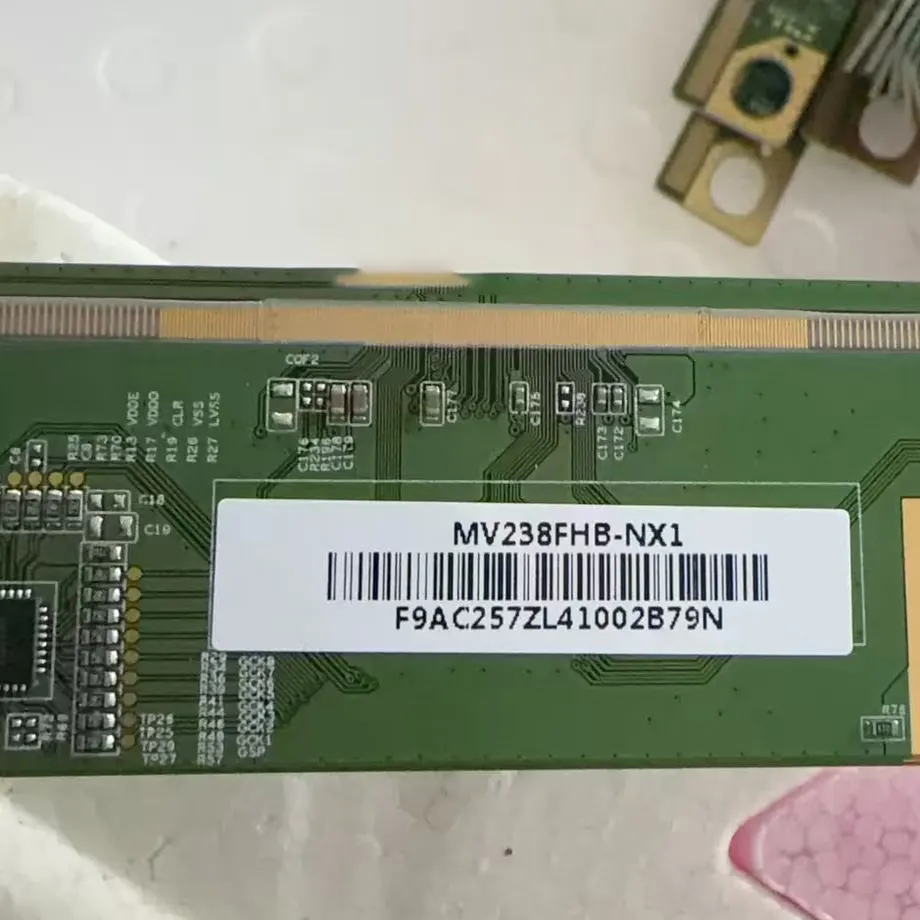
Confirm the exact MV238FHB-NY1 label and revision, then inspect the glass edges, COF areas, polarizer surface and 30-pin connector. Verify the 534.84 × 306.86 × 1.32 mm outline against the mechanical drawing. Electrical testing should prove native FHD 120 Hz LVDS operation and stable 5.0 V power behavior. Optical qualification must be performed with the intended external backlight because the CELL itself has no finished-display brightness specification.
Keep the backlight design revision, controller firmware, cable and approved CELL sample linked in the qualification record. A later change to LED type, optical films, controller timing or panel suffix should trigger targeted revalidation. Stock level, lead time and lifecycle remain current procurement questions and should not be inferred from historical third-party listings.
Engineering summary
MV238FHB-NY1 Borderless Gaming Monitor Cell is a 23.8-inch FHD ADS CELL with 120 Hz refresh, 99% sRGB, 5.9% typical transmissivity and dual-channel 8-bit LVDS. Its main design advantage is the ability to integrate the exact BOE LCD CELL into a custom monitor optical system. Its main boundary is equally clear: no backlight is included, so brightness, uniformity, LED drive and much of the thermal behavior must be engineered and validated at system level.
Recommended: Same Size
(23.8")
Applications & Value of LCD Panel

- Fast sourcing with in-stock panels & cross-reference alternatives
- Stable supply chain with long-term availability
- Engineering-level support from panel to integration
- Custom solutions: cable, touch & optical bonding
- Strict quality control with IQC / OQC / aging test
- Full traceability system for quality assurance
- Complete technical documentation & drawings
- Compliance support: RoHS & certification files