Freya Yang
+86 18318948097
+852 62667476
8.8 Inch Ultra Wide MIPI TFT Module for Control Panels
Model P/N
Size
Resolution
Brightness
Viewing Angle
Connector Type
Operating Temp
Overall(mm)
huisoar
HSD088IPW1-A00
Brand
Panel Size (inch)
Model P/N
Resolution
Brightness (nits)
Viewing Angle
Contrast Ratio
Response Time
Overall (mm)
Active Area (mm)
Refresh Rate
Display Colors
Panel Type
Connector Type
Operating Temp
Touchscreen Type
Storage Temp
Work Mode
Pixel Format
Input Voltage (V)
Weight (g)
Designed For
8.8 Inch Ultra Wide MIPI TFT Module for Control Panels
This 4:1 IPS panel combines a native 1920 × 480 canvas, 600 cd/m² typical luminance and a four-lane MIPI connection for compact embedded interfaces.
Product Summary
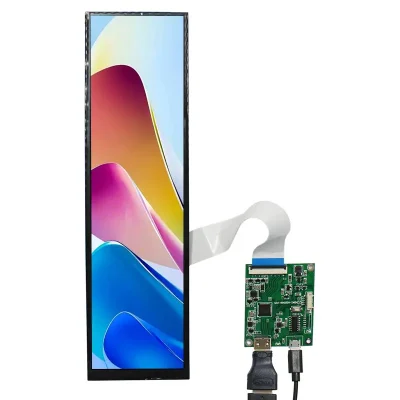
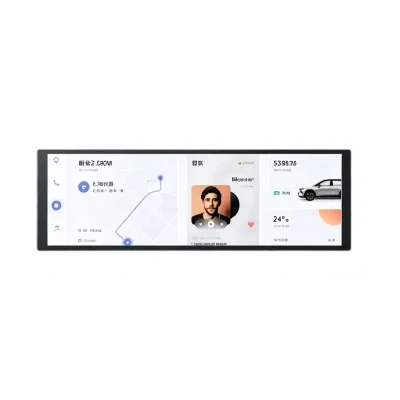
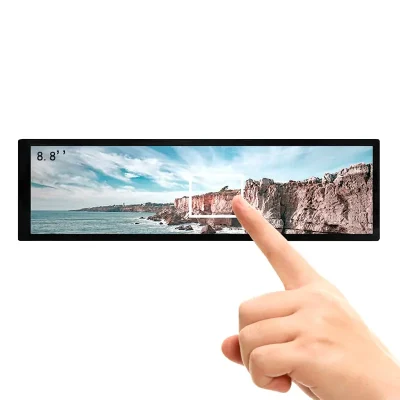
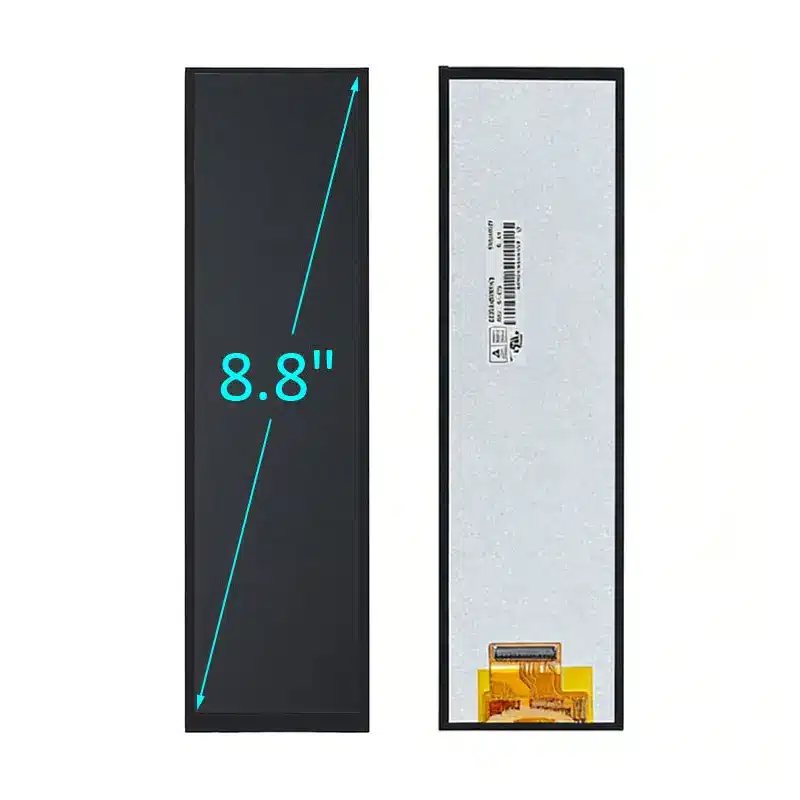
The Ultra Wide MIPI TFT Module is an 8.8-inch bar-format display component for control panels, equipment status strips and embedded interfaces that need a long horizontal canvas without the height of a conventional 16:9 screen.
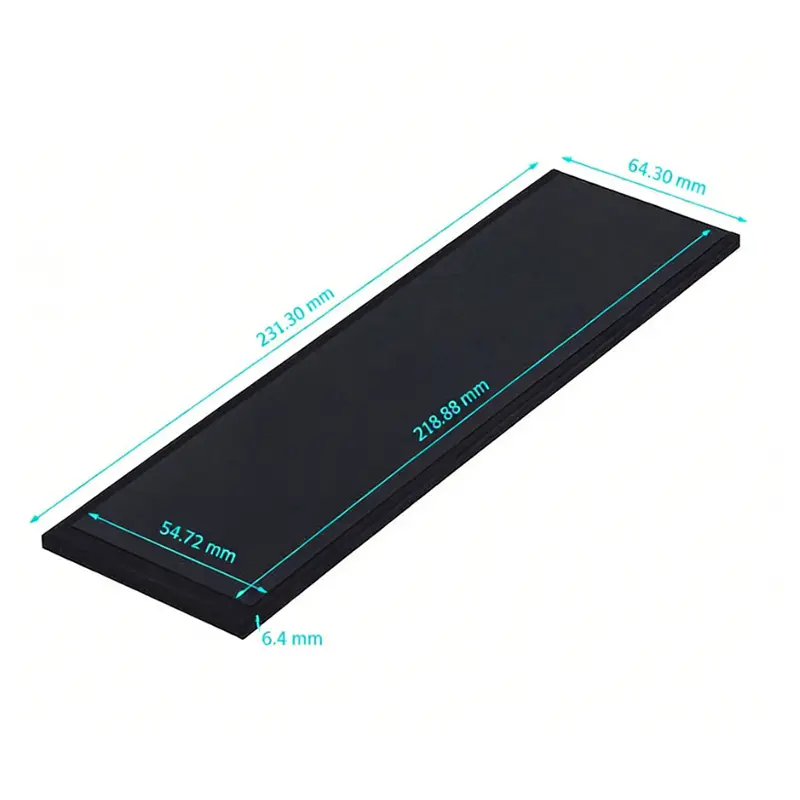
Its native 1920 × 480 pixel matrix provides a 4:1 format within a 218.88 × 54.72 mm active area. The complete listed panel outline is 231.3 × 64.3 × 6.4 mm.
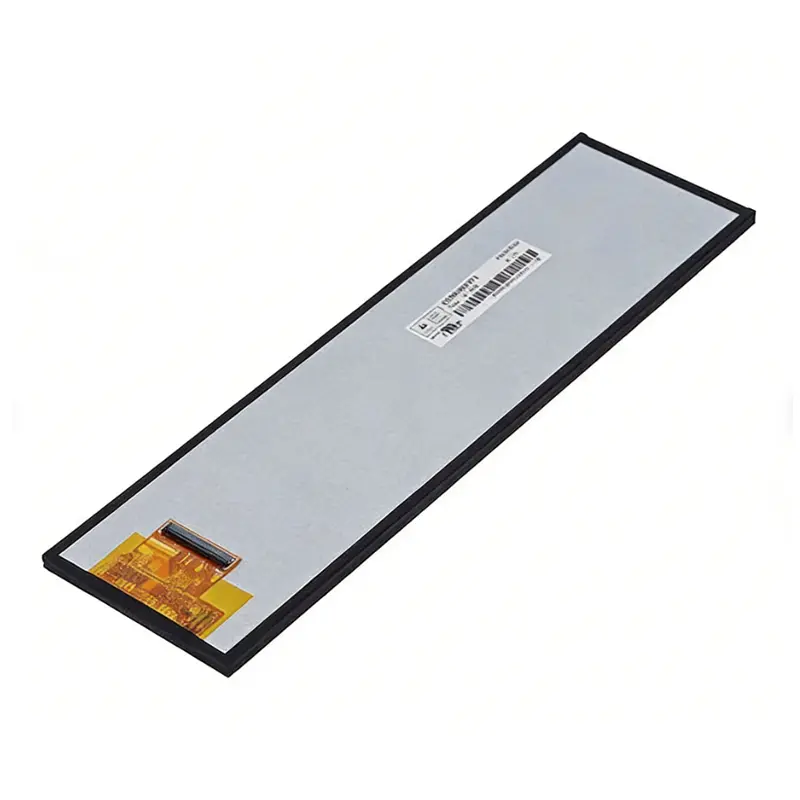
This is a direct-interface TFT module rather than a finished HDMI monitor. The host must provide compatible MIPI DSI signaling, display timing, rail generation, reset control and backlight management.
Key Specifications
| Specification | Value |
|---|---|
| Display size | 8.8 inches |
| Native resolution | 1920 × 480 pixels |
| Aspect ratio | 4:1 |
| Panel technology | IPS Pro TFT-LCD |
| Display mode | Normally black, transmissive |
| Luminance | 600 cd/m² typical |
| Contrast ratio | 800:1 typical |
| Viewing-angle listing | 85/85/85/85 typical, CR ≥10 |
| Response time | 30 ms typical |
| Color depth | 16.7 million colors |
| Color gamut | 50% NTSC |
| Active area | 218.88 × 54.72 mm |
| Outline | 231.3 × 64.3 × 6.4 mm |
| Interface | Four-lane MIPI |
| Connector | 40 pins |
| Backlight | WLED |
| Backlight lifetime | 30,000 hours typical |
| Operating temperature | −20°C to +70°C |
| Storage temperature | −30°C to +80°C |
| Touch | Optional configuration |
A four-lane MIPI label does not establish compatibility without lane rate, video timing, pixel format, pin mapping and electrical requirements.
Designing a Native 1920 × 480 Interface
Build for the 4:1 Canvas
The native display area is four times wider than it is high. It works best when the application is designed specifically for a panoramic information hierarchy rather than adapted from a conventional desktop screen.
Suitable interface structures include:
- process stages arranged from left to right
- machine-state summaries
- charging or battery-status bars
- production-line indicators
- alarm and maintenance strips
- compact navigation or mode selectors
- transaction or order-status summaries
- multiple small data zones displayed simultaneously
Use native 1920 × 480 artwork wherever possible. Scaling a 1920 × 1080 interface into the bar format can make controls too small, crop important content or leave unusable space.
Check Orientation and Scaling
The product may be mounted in landscape or rotated into a narrow vertical format, but the host and application must agree on:
- framebuffer orientation
- active width and height
- rotation method
- touch-coordinate rotation, when touch is added
- font scaling
- icon dimensions
- video timing
- boot-screen orientation
The specification is commonly written as either 1920 × 480 or 480 × 1920 depending on physical orientation. The native pixel matrix remains the same, but the software configuration must match the installation direction.
IPS Optical Performance and Visibility
Use the 600 cd/m² Rating Correctly
The panel has a listed typical luminance of 600 cd/m². This provides a stronger optical starting point than many lower-luminance embedded panels for well-lit indoor equipment and protected operator interfaces.
The panel value must still be evaluated with the actual system stack:
- cover glass
- air gap or bonding layer
- antiglare treatment
- internal reflections
- front-bezel shadowing
- mounting angle
- ambient light
- backlight drive level
A 600 cd/m² panel rating does not by itself establish finished-system sunlight readability.
Plan for the 30 ms Response Grade
The listed response time is 30 ms typical. This grade is generally more aligned with status data, control graphics, equipment information and moderate interface animation than with fast-motion video.
Use sample testing when the application contains:
- rapidly scrolling text
- moving maps
- continuous camera video
- fast gauges
- animated transitions
- frequently changing fine lines
The response grade should be reviewed together with operating temperature because liquid-crystal response can vary across the environmental range.
Ultra Wide MIPI TFT Module Host Integration
Qualify Four Data Lanes
The display uses four MIPI data lanes. MIPI DSI is designed as a high-speed serial link between a host processor and display, but host support must be evaluated at the complete configuration level.
Confirm:
- four-lane DSI availability
- D-PHY support
- maximum lane rate
- video or command mode
- burst or non-burst mode
- RGB pixel format
- horizontal active timing
- vertical active timing
- blanking intervals
- frame rate
- clock-lane behavior
- low-power state handling
- reset and enable controls
Lane count alone is not sufficient. MIPI controller configuration depends on active pixels, blanking, frame rate, pixel format and lane bandwidth.
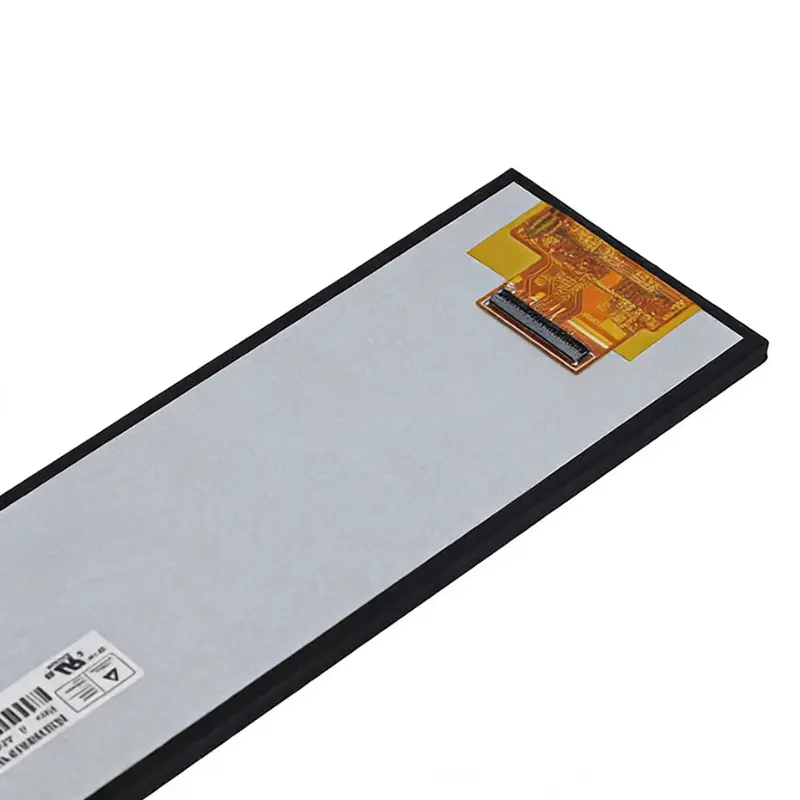
Verify the Complete 40-Pin Definition
The connector has 40 pins, but the complete pin assignment is required before schematic or PCB release.
The approved documentation should define:
- MIPI lane polarity
- clock-lane polarity
- lane order
- grounds
- panel supply rails
- reset
- enable
- backlight control
- identification or test pins
- unused pins
- connector contact side
- FPC insertion direction
- connector manufacturer and part number
Do not assume compatibility with another 40-pin MIPI display. Pin count is a mechanical attribute, not an interoperability guarantee.
Multi-Rail and Backlight Engineering
Treat Listed Voltages as Rail References
The technical table lists 3.3 V, 12.0 V, 20.0 V and −10.0 V for VDD, AVDD, VGH and VGL.
These rail references indicate that panel integration may require more than a single logic supply. Before hardware approval, obtain:
- nominal voltage
- allowable tolerance
- startup order
- shutdown order
- current demand
- ripple limits
- discharge timing
- enable behavior
- fault handling
The listed rail set must not be converted into an assumed power sequence.
Control the WLED Backlight Separately
The module uses a WLED backlight with a listed 30,000-hour typical lifetime. The available information does not confirm the LED string arrangement, drive current, forward voltage or whether a backlight driver is included.
Review:
- LED string topology
- driver output range
- dimming method
- PWM frequency
- minimum stable brightness
- startup surge
- thermal behavior
- cable and connector definition
- backlight enable timing
The lifetime figure is a typical backlight grade, not a complete system-life guarantee.
Mechanical Fit and Optional Touch
Use the Panel Outline for the Standard Version
The standard module dimensions are:
- active area: 218.88 × 54.72 mm
- outline: 231.3 × 64.3 × 6.4 mm
- active-area ratio: 4:1
The enclosure design should also reserve space for:
- FPC and connector
- backlight structure
- rear component clearance
- panel tolerances
- mounting support
- bezel overlap
- cover-glass opening
- assembly tools
- cable strain relief
The mechanical drawing should control the design rather than a simplified product-page thumbnail.
Requalify the Touch Configuration
Touch is optional, but the evidence does not establish the standard touch technology, controller, interface, glass thickness or bonded outline.
A touch version may change:
- total thickness
- outer dimensions
- visible opening
- connector count
- power demand
- firmware
- coordinate mapping
- cover-glass design
- optical performance
- environmental behavior
Optional touch must be qualified as a separate mechanical and electrical configuration.
Suitable Application Directions
Industrial control panels
The long format can present process stages, alarms, operating modes and status values without consuming the vertical space of a conventional HMI.
Equipment status strips
The 1920 × 480 canvas can divide machine information into several left-to-right zones for rapid scanning.
Charging interfaces
The bar shape supports charging progress, battery status, user prompts and system-state messages in compact housings.
Embedded HMI bars
The module can serve as a secondary information surface beneath switches, controls or a larger primary display.
POS operator interfaces
The display may be evaluated for order status, operator prompts, product information or queue data. It should not be described as a certified payment display.
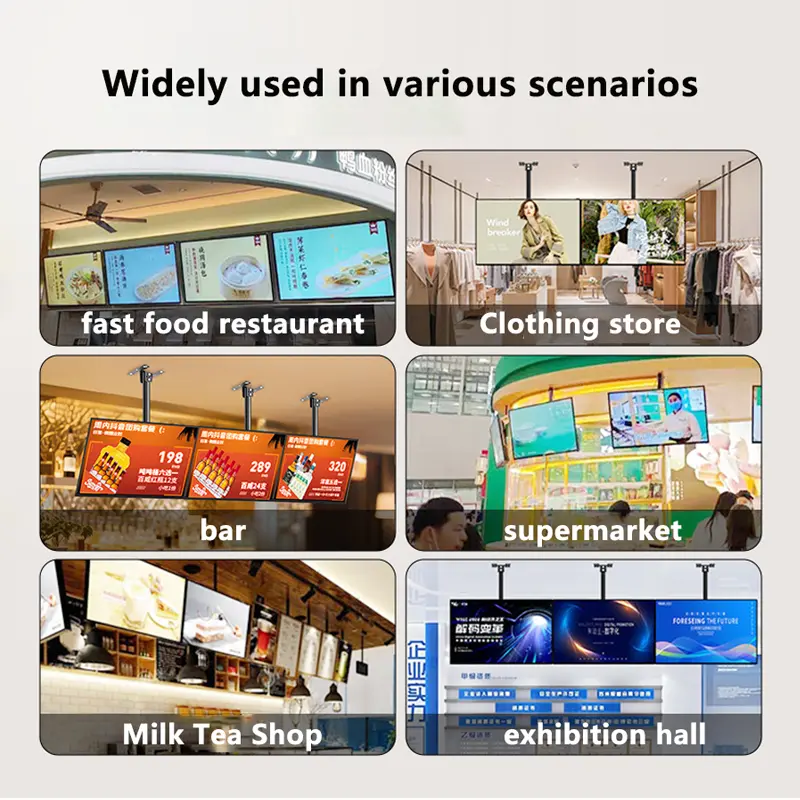
Long-format information panels
The panel can support indoor information strips where a conventional screen is mechanically too tall, subject to host and enclosure qualification.
No automotive, medical, marine, aerospace, outdoor or safety-critical grade is implied by these application directions.
Customization Scope
Project review may include:
- optional touch
- cover-glass dimensions
- surface treatment
- FPC geometry
- connector orientation
- pin-definition adaptation
- backlight configuration
- luminance target
- cable set
- controller-board support
- enclosure integration
- logo and packaging
Custom configurations are generally reviewed from 500 pieces, subject to tooling requirements, material availability and the requested specification. Sample and standard-module quantities are confirmed separately.
Procurement Checklist
Submit:
- host processor or SoC
- MIPI DSI controller details
- four-lane confirmation
- required lane rate
- video or command mode
- burst/non-burst mode
- pixel format
- complete horizontal timing
- complete vertical timing
- frame rate
- 40-pin assignment
- rail voltages and tolerances
- startup and shutdown requirements
- reset and enable handling
- WLED driver plan
- dimming method
- FPC orientation
- connector choice
- enclosure drawing
- active-area opening
- touch or non-touch version
- ambient-light target
- operating-temperature requirement
- sample quantity
- annual demand
- production schedule
FAQ
About 8.8 Inch Ultra Wide MIPI TFT Module
What must be checked before connecting a four-lane MIPI host?
How should the 1920 × 480 interface be configured?
Is 600 cd/m² sufficient for an outdoor display?
Which dimensions should control the enclosure design?
How does the optional-touch version affect integration?
How should the listed voltage rails be qualified?
Freya Yang
+86 18318948097