Freya Yang
+86 18318948097
+852 62667476
8.8 Inch MIPI Vertical Bar LCD Screen Kit for Embedded HMI
Model P/N
Size
Resolution
Brightness
Viewing Angle
Connector Type
Operating Temp
Overall(mm)
huisoar
HS088MP-V1
Brand
Panel Size (inch)
Model P/N
Resolution
Brightness (nits)
Viewing Angle
Contrast Ratio
Response Time
Overall (mm)
Active Area (mm)
Refresh Rate
Display Colors
Panel Type
Connector Type
Surface Treatment
Operating Temp
Touchscreen Type
Storage Temp
Work Mode
Pixel Format
Input Voltage (V)
Weight (g)
Operating Environment
I/O Interface
Designed For
8.8 Inch MIPI Vertical Bar LCD Screen Kit for Embedded HMI
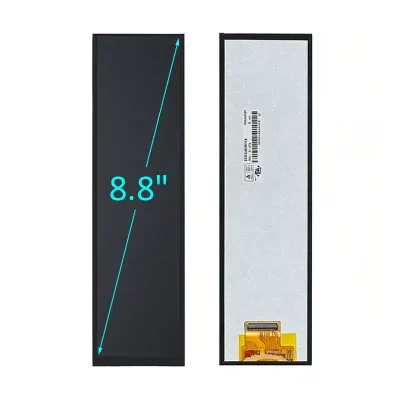
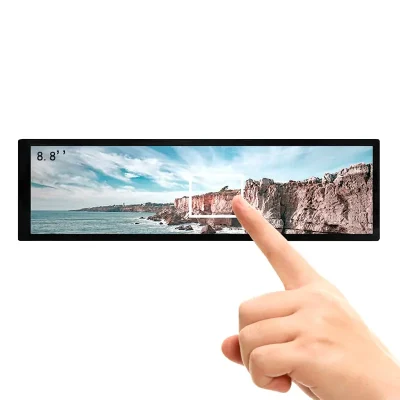
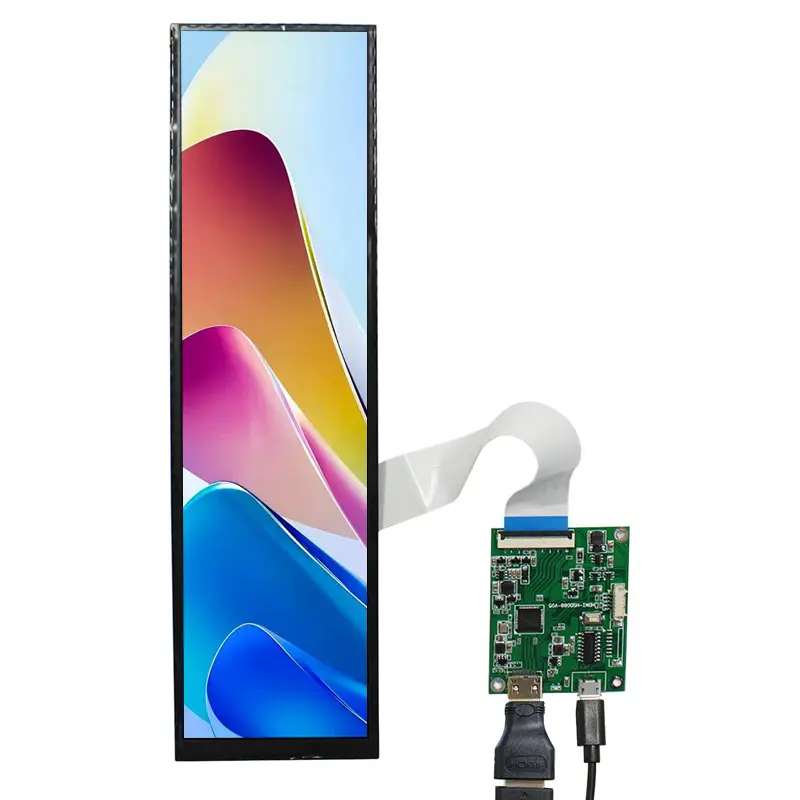
The MIPI Vertical Bar LCD Screen Kit is built for embedded interfaces that need a tall, narrow visual area rather than a conventional 16:9 panel. Its 8.8-inch TFT uses a native 480 × 1920 raster, 600 cd/m² typical luminance, 800:1 typical contrast and a 40-pin MIPI connection. A compact controller board is included for evaluation, giving development teams a practical starting point for vertical HMI, equipment-status and slim information-interface projects.
Product Summary
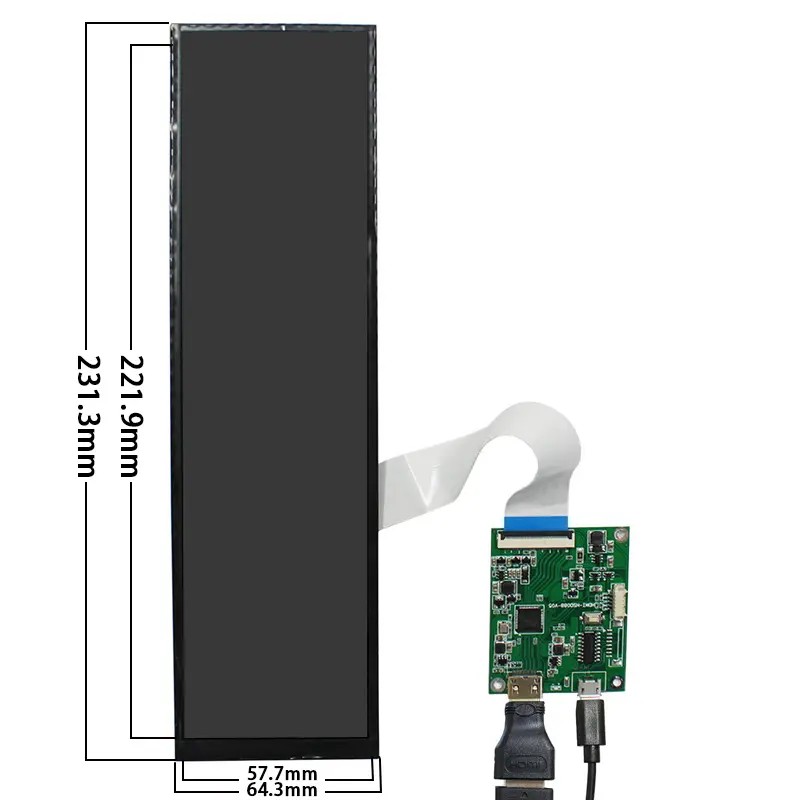
The display uses a normally black, transmissive TFT structure with 85° / 85° / 85° / 85° viewing performance for left, right, up and down at CR ≥ 10. The panel envelope is 231.3 × 64.3 × 6.4 mm, while the active area for this kit is 221.9 × 57.7 mm. WLED backlighting and a 40-pin MIPI connector support a compact system architecture.
A Native 480 × 1920 Vertical Canvas
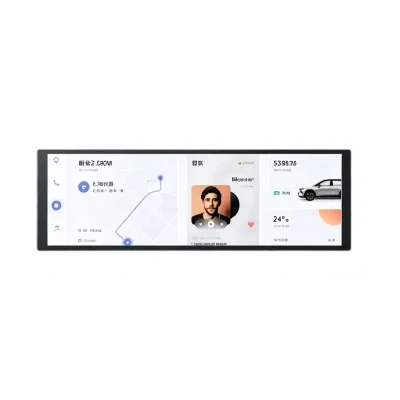
The framebuffer is suited to vertically stacked content. Interface designers can allocate separate regions for status values, menus, icons, progress indicators and alerts instead of compressing the same information into a short landscape window.
600 cd/m² for Bright Indoor Interfaces
A 600 cd/m² typical panel target gives the screen strong presence in controlled indoor lighting. It should still be evaluated behind the final cover because glass transmission and reflections can reduce effective readability.
Key Specifications
| Specification | Value |
|---|---|
| Display size | 8.8 inches |
| Native resolution | 480 × 1920 pixels |
| Display mode | Normally black, transmissive TFT |
| Brightness | 600 cd/m² typical |
| Contrast ratio | 800:1 typical |
| Viewing angle | 85° / 85° / 85° / 85° L/R/U/D at CR ≥ 10 |
| Active area | 221.9 × 57.7 mm |
| Panel outline | 231.3 × 64.3 × 6.4 mm |
| Backlight | WLED |
| Panel interface | MIPI, 40-pin connector |
| Panel rail references | 3.3 V / +20.0 V / −10.0 V typical |
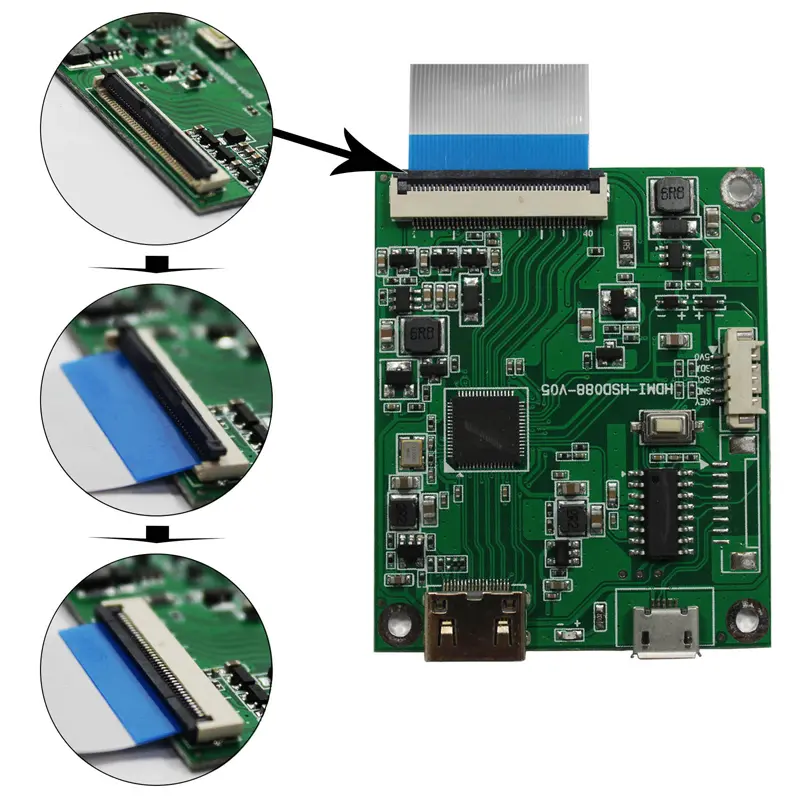
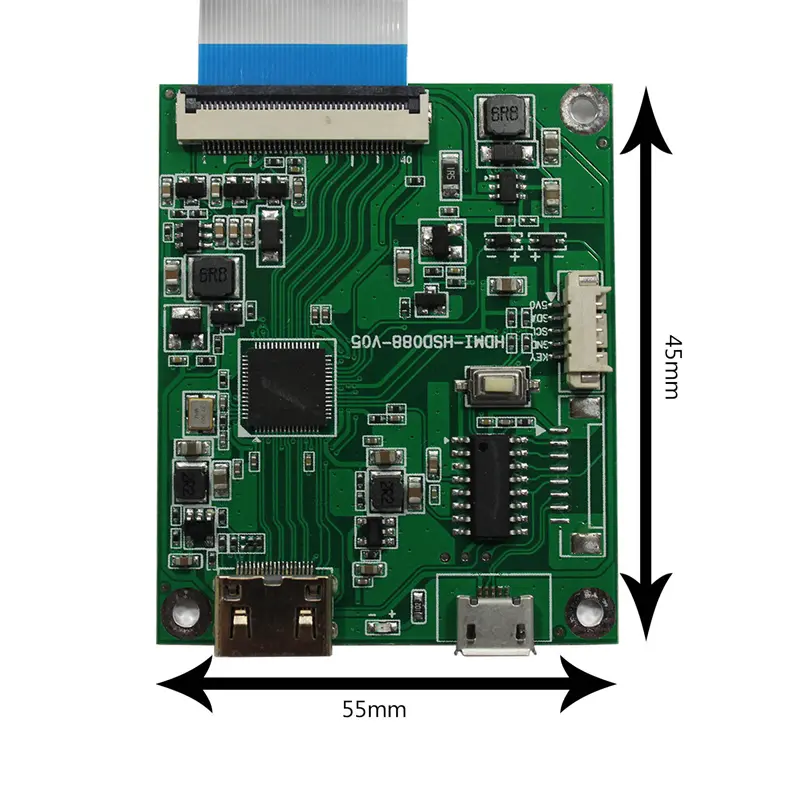
| Controller board | VS-HSD088 |
| Controller size | 55 × 45 × 5 mm |
| Controller input | 5 V DC, more than 1 A |
| Controller standby | <0.3 W |
| Included items | Controller board, LCD screen, signal cable and converter board |
Native Content Planning for a Tall Bar Display
A bar-format display works best when the UI is designed for its actual raster. Scaling a standard desktop or 16:9 interface into 480 × 1920 can produce blank areas, distorted proportions or text that is too small at the intended viewing distance.
Structure Content in Vertical Zones
For embedded HMI use, the screen can be divided into functional zones such as system state at the top, navigation in the middle and alarms or actions near the bottom.
Validate Rotation in the Complete System
The mechanical installation, controller output and operating system should use the same orientation convention. If a host renders 1920 × 480 and rotates the image in software, confirm scaling, text rendering and boot graphics before enclosure release.
MIPI Vertical Bar LCD Screen Kit Integration
The MIPI Vertical Bar LCD Screen Kit should be treated as a matched panel-and-controller architecture rather than as a generic 40-pin replacement display. The same pin count does not establish MIPI mode, lane configuration, timing, voltage, data rate, initialization or pin compatibility.
40-Pin MIPI Qualification
Before replacing the supplied controller or connecting the panel directly to another processor, confirm the complete 40-pin assignment, MIPI operating mode, lane configuration, data rate, clocking, reset behavior and required initialization data.
Separate Panel Rails from Controller Input Power
The panel identifies 3.3 V, +20.0 V and −10.0 V rail references, while the controller requires 5 V DC at more than 1 A. These values belong to different parts of the system. The <0.3 W figure is controller standby, not maximum kit power.
Compact Mechanical Integration
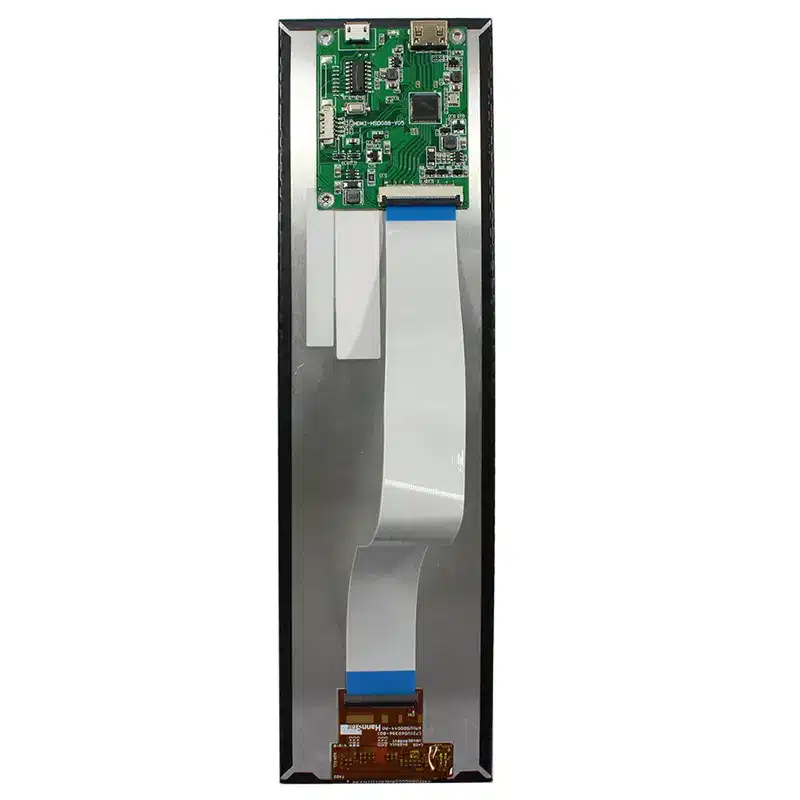
The 231.3 × 64.3 × 6.4 mm panel outline should be reviewed together with the 55 × 45 × 5 mm controller footprint, converter board and ribbon-cable path.
Reserve Space for Cable Routing
Mechanical drawings should include connector access, FFC bend radius, controller mounting points and service clearance. A housing designed only around the visible window can create cable stress or make servicing difficult.
Lock the Production Drawing Before Tooling
Use the approved 8.8-inch production drawing for the active area, outline, mounting and cable exit before releasing enclosure tooling.
Controller Board and Raspberry Pi Evaluation
The controller board creates a practical route for prototype work, including projects using Raspberry Pi hardware. Compatibility should still be qualified by exact Raspberry Pi model, controller revision, output timing and software configuration.
Controller Revision and Input Function
The controller is identified as VS-HSD088 with a 55 × 45 × 5 mm footprint. An H-D-compatible input label is associated with the board, so the exact port function should be confirmed for the ordered controller revision.
Non-Standard Resolution Setup
A host must output or correctly scale to the 480 × 1920 target. Verify boot-screen behavior, desktop scaling, application resolution, rotation and any custom timing required by the controller.
Application Fit
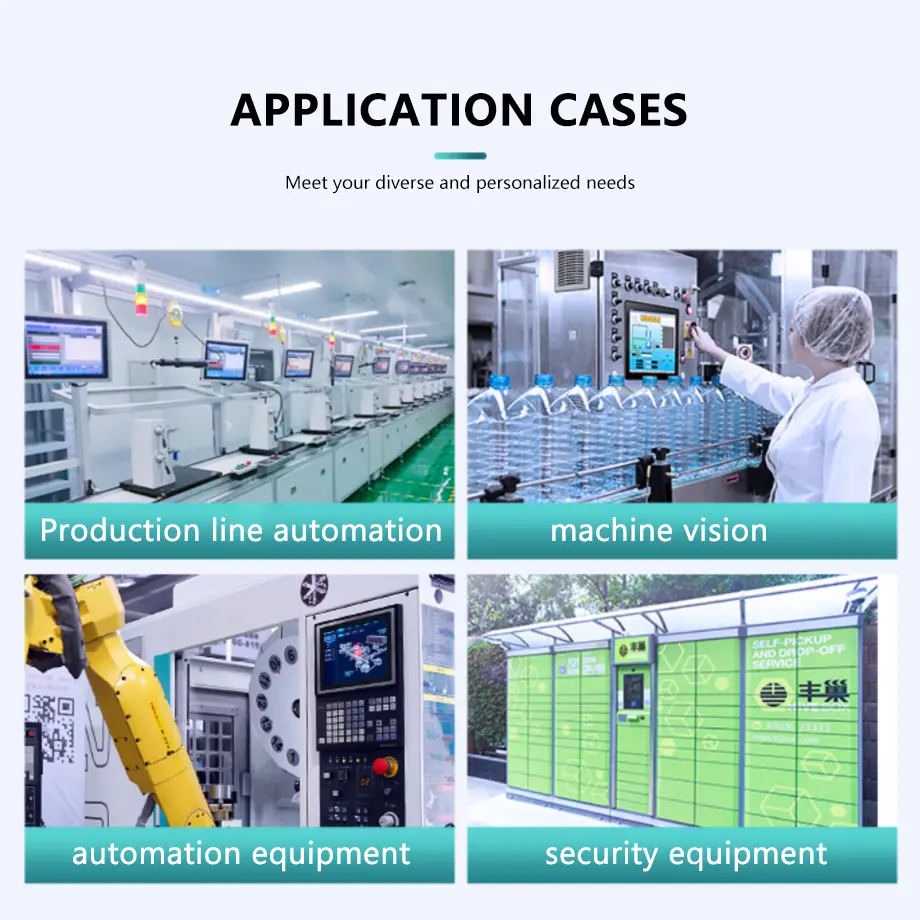
The MIPI Vertical Bar LCD Screen Kit suits controlled-light embedded projects that benefit from a tall information canvas. Application directions include equipment status columns, slim HMI areas, appliance side interfaces, vertical information terminals, compact menu displays, branded device fronts and development fixtures.
Where the Format Adds Value
The strongest fit is a product with a long, narrow opening. In that geometry, the 480 × 1920 display can provide structured information without increasing front-panel width.
Where Additional Qualification Is Required
Outdoor exposure, direct-sun readability, touch input, protective-glass performance, ingress protection and regulated-use requirements need separate engineering evidence. The 600 cd/m² panel target alone does not establish those finished-system properties.
Configuration and Customization
Project review can cover MIPI cable and pin definition, controller revision, FFC routing, cover glass, optical treatment, enclosure adaptation, mounting, touch development, branding and packaging. Custom configurations are generally reviewed from 500 pieces, subject to tooling requirements, material availability and the requested specification. Sample and standard-kit quantities are confirmed separately.
Procurement Checklist
Confirm the 8.8-inch panel and kit revision; native 480 × 1920 timing and orientation; 600 cd/m² luminance; 800:1 contrast; approved active-area and outline drawing; 40-pin MIPI lane, mode, data-rate and pin definition; panel power rails; VS-HSD088 controller revision; 5 V DC input above 1 A; standby scope; converter and signal-cable set; Raspberry Pi model if applicable; front optics; touch requirement; mounting; environment; sample criteria; quantity and annual demand.
FAQ
About 8.8 Inch MIPI Vertical Bar LCD Screen Kit
What must be checked before connecting this 40-pin MIPI panel to another host?
How should 480 × 1920 content be prepared for a vertical installation?
Is 600 cd/m² sufficient behind a protective window?
Which power value applies to the screen and which applies to the controller?
What should be confirmed before using the kit with Raspberry Pi hardware?
Freya Yang
+86 18318948097