Freya Yang
+86 18318948097
+852 62667476
12.1 Inch Anti-Glare XGA TFT LCD Module for Industrial HMI
Model P/N
Size
Resolution
Brightness
Viewing Angle
Connector Type
Operating Temp
Overall(mm)
huisoar
HS03Q121TC-V1
Brand
Panel Size (inch)
Model P/N
Resolution
Brightness (nits)
Viewing Angle
Response Time
Overall (mm)
Active Area (mm)
Refresh Rate
Display Colors
Panel Type
Connector Type
Surface Treatment
Operating Temp
Touchscreen Type
Storage Temp
Work Mode
Input Voltage (V)
Control Type
Operating Environment
Designed For
12.1 Inch Anti-Glare XGA TFT LCD Module for Industrial HMI
This Anti-Glare XGA TFT LCD Module combines a 4:3 IPS screen, 1200 cd/m² luminance and 20-pin LVDS connectivity for industrial HMI integration.
Product Summary
The 12.1-inch module provides a native 1024 × 768 XGA workspace for industrial interfaces, monitoring equipment, measuring instruments and embedded control systems. Its 4:3 format is particularly useful when an equipment design must retain an established HMI layout rather than move to a widescreen panel.
A 1200 cd/m² luminance specification supports evaluation in high-ambient-light environments, while the anti-glare surface helps reduce mirror-like reflections. The module uses a 20-pin LVDS interface and an LED backlight, allowing it to be integrated with a suitably qualified host controller.
Key Specifications
| Parameter | Value |
|---|---|
| Display size | 12.1 inch |
| Native resolution | 1024 × 768 pixels |
| Resolution format | XGA, 4:3 |
| Panel technology | IPS TFT-LCD |
| Luminance | 1200 cd/m² |
| Surface treatment | Anti-glare |
| Signal interface | 20-pin LVDS |
| Active area | 245.76 × 184.32 mm |
| Module outline | 260.5 × 202.0 × 10.5 mm |
| Backlight | LED backlight |
XGA 4:3 Format for Industrial Interfaces
Native 1024 × 768 Content Planning
The native 1024 × 768 raster should be used for HMI graphics, text and status pages. Preparing content at the panel’s native resolution helps avoid scaling artifacts, uneven line thickness and reduced text clarity.
The XGA workspace can accommodate:
- machine-status graphics
- process diagrams
- alarm lists
- measurement values
- control buttons
- maintenance pages
- diagnostic screens
- tabular operating data
A 1024 × 768 source also preserves the intended 4:3 geometry.
4:3 Enclosure and UI Continuity
Many established industrial systems were designed around 4:3 or 5:4 displays. Replacing those panels with a widescreen module can require significant changes to the enclosure, mounting frame and user interface.
The 245.76 × 184.32 mm active area provides a conventional XGA workspace that may simplify migration from earlier industrial monitor and control-panel designs. Mechanical compatibility must still be checked against the complete 260.5 × 202.0 × 10.5 mm outline.
1200 cd/m² Optical Performance
High-Ambient Visibility
The 1200 cd/m² luminance specification provides a stronger starting point than standard indoor LCD modules for equipment installed under bright factory lighting, near windows or in other high-ambient conditions.
Final visibility depends on the complete optical stack, including:
- cover glass
- air gaps
- optical adhesive
- surface reflections
- enclosure shading
- viewing angle
- backlight control
- operating temperature
- user viewing distance
A 1200 cd/m² panel still requires cover-glass and reflection testing before finished-system sunlight readability is claimed.
Anti-Glare Surface Considerations
The anti-glare surface diffuses reflected light and can reduce distracting mirror images. It does not eliminate all reflection and should not be treated as an anti-reflection coating.
The final optical design should evaluate:
- haze level
- image sharpness
- ambient-light scattering
- cover-glass reflectance
- black-mask design
- optical bonding
- surface-cleaning requirements
An additional protective lens can change the visible performance of the original anti-glare surface.
Anti-Glare XGA TFT LCD Module Integration
20-Pin LVDS Host Qualification
The module uses a 20-pin LVDS connection, but connector count alone does not establish compatibility.
The host design must confirm:
- complete pin assignment
- LVDS channel count
- data-bit mapping
- clock polarity
- signal voltage
- panel supply voltage
- enable signals
- backlight control
- connector orientation
- cable orientation
- timing parameters
A matching 20-pin connector does not guarantee LVDS timing, channel, bit-width, voltage or pin compatibility.
Controller and Cable Verification
An LVDS controller board should be selected using the approved timing specification and complete pin definition. A board advertised for another 12.1-inch XGA panel may still use different channel mapping, voltage or backlight control.
Before sample testing, verify:
- controller output timing
- panel power rail
- backlight driver architecture
- cable length
- shielding
- grounding
- connector retention
- startup sequence
- image orientation
- color mapping
HDMI, DisplayPort, VGA, USB, MIPI DSI and eDP hosts require suitable conversion hardware before they can drive the native LVDS panel interface.
Mechanical Integration
The active area is 245.76 × 184.32 mm, while the complete module measures 260.5 × 202.0 × 10.5 mm.
The enclosure drawing should define:
- visible opening
- active-area position
- module outline
- mounting points
- connector clearance
- cable bend radius
- rear-component clearance
- bezel overlap
- ventilation
- service-removal path
The module thickness must be included in the complete rear-clearance calculation rather than treated as the only installation-depth requirement.
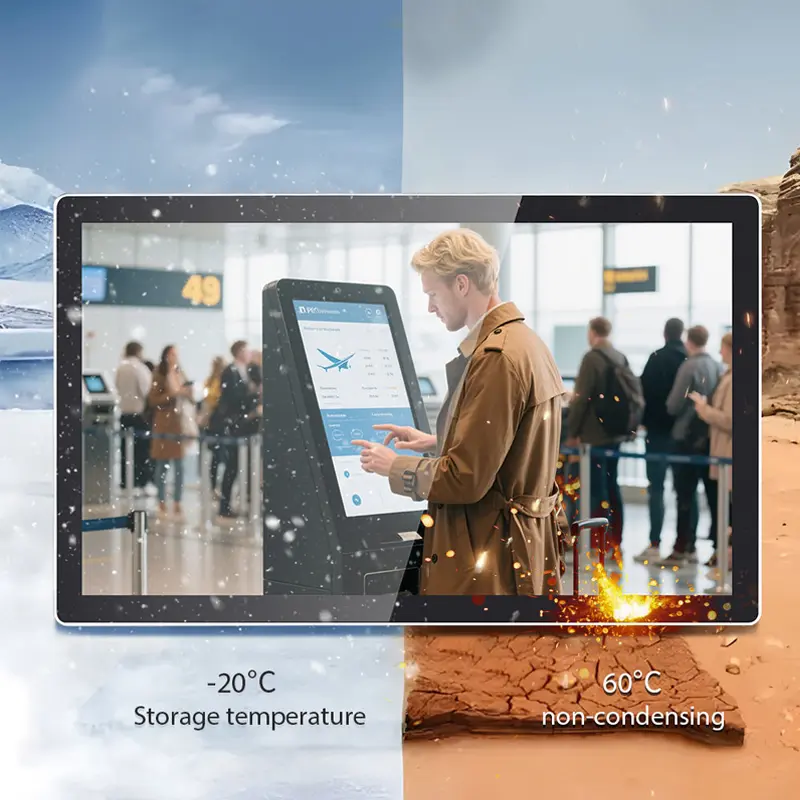
Temperature-Grade Confirmation
The exact temperature grade must be confirmed before environmental qualification because different operating ranges are associated with the product information.
Do not release the product solely on a general “wide-temperature” description. The approved documentation should identify:
- operating minimum
- operating maximum
- storage minimum
- storage maximum
- cold-start behavior
- high-temperature luminance
- backlight derating
- thermal cycling requirements
- humidity limits
- condensation conditions
The selected sample and production units should use the same confirmed panel and backlight configuration.
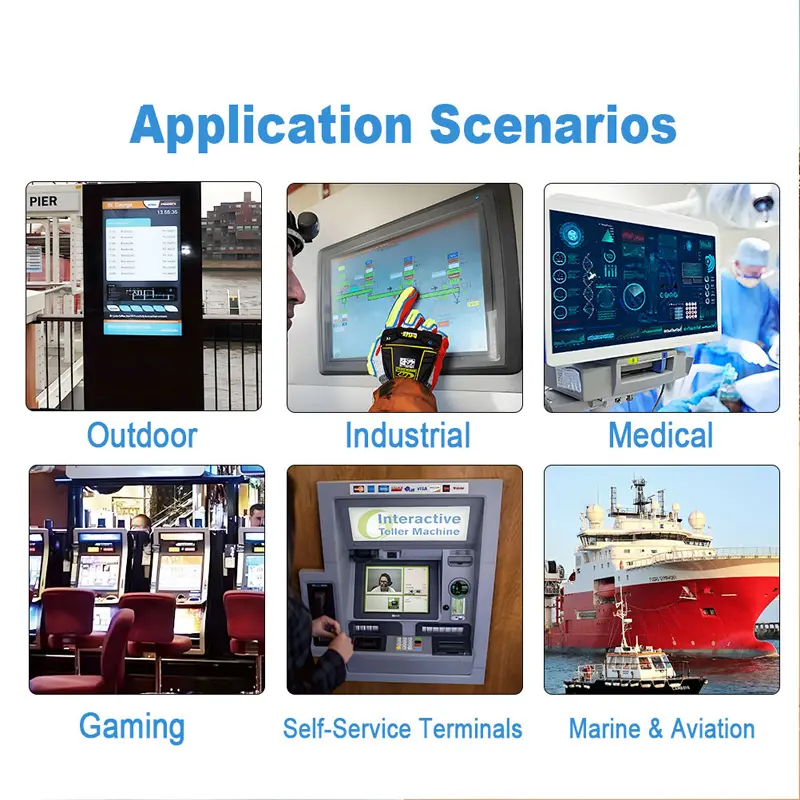
Recommended Applications
Industrial HMI
The 4:3 XGA format is suitable for control pages, process diagrams, alarm interfaces and status monitoring in embedded industrial systems.
Monitoring Equipment
The panel can present data tables, camera feeds, system states and operator messages where a conventional 4:3 screen layout is preferred.
Measuring Instruments
Its 1024 × 768 workspace can support graphs, numerical readings, test sequences and configuration menus in professional measurement equipment.
Embedded Control Systems
The LVDS interface supports integration into purpose-built controller architectures after timing, voltage and pin mapping are qualified.
High-Ambient Professional Displays
The 1200 cd/m² luminance and anti-glare surface support evaluation in bright indoor and controlled high-ambient environments. Finished-system optical performance must be tested with the final front cover.
Custom Integration Options
Project review may cover:
- LVDS cable design
- controller-board matching
- complete 20-pin definition
- backlight-driver selection
- cover glass
- anti-reflection treatment
- optical bonding
- touch overlay
- bezel design
- enclosure adaptation
- mounting hardware
- cable routing
- branding
- packaging and labeling
Custom configurations are generally reviewed from 500 pieces, subject to tooling requirements, material availability and the requested specification. Sample and standard-module quantities are confirmed separately.
Procurement Checklist
Before sample or production approval, submit or confirm:
- native 1024 × 768 timing
- complete 20-pin LVDS pinout
- LVDS channel count
- bit mapping
- panel voltage
- backlight voltage and current
- backlight control method
- connector orientation
- cable orientation
- approved mechanical drawing
- 245.76 × 184.32 mm active area
- 260.5 × 202.0 × 10.5 mm outline
- anti-glare surface requirement
- cover-glass stack
- target ambient lighting
- exact operating temperature
- exact storage temperature
- touch requirement
- controller-board requirement
- sample quantity
- annual demand
- production schedule
The approved drawing, interface definition and representative sample should be validated before enclosure tooling or production release.
FAQ
About 12.1 Inch Anti-Glare XGA TFT LCD Module
What must be checked before connecting a 20-pin LVDS controller?
How does the 4:3 XGA format affect HMI development?
Does 1200 cd/m² guarantee outdoor readability?
Which dimensions control enclosure release?
Which temperature range should be used for qualification?
Freya Yang
+86 18318948097