
~
~
~
~
~
~
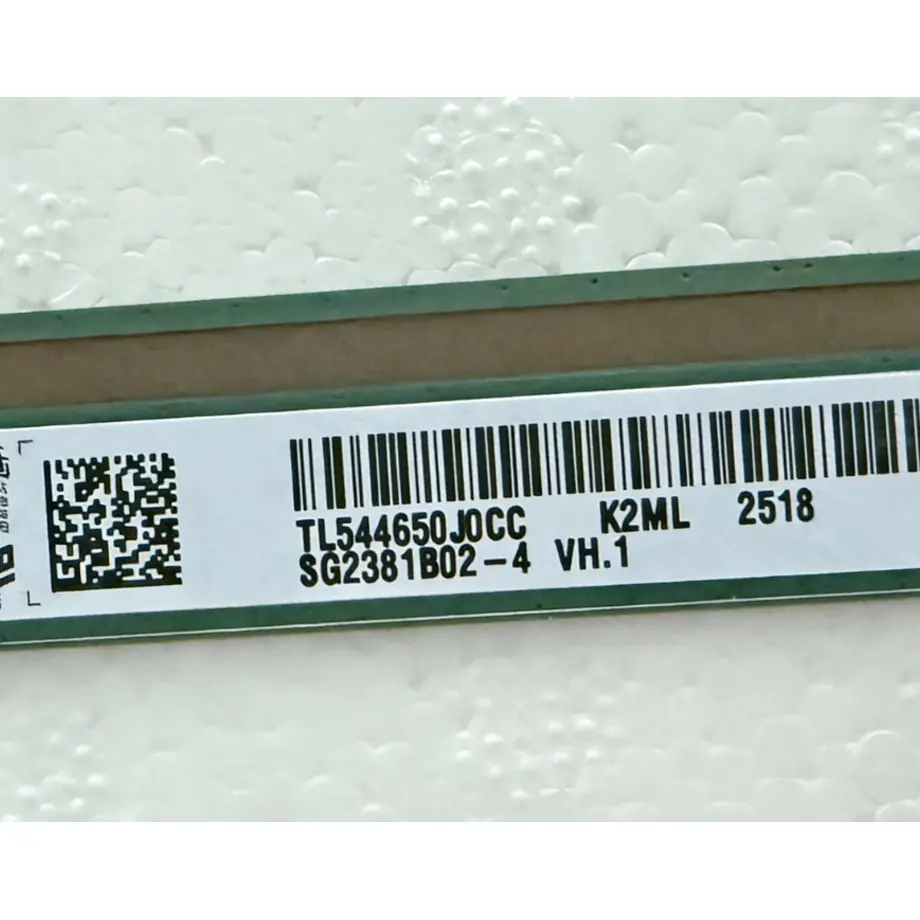
SG2381B02-4 25% Haze FFS Glass Cell 23.8 Inch CSOT
Model P/N
Size
Resolution
Brightness
Viewing Angle
Connector Type
Operating Temp
Overall(mm)
csot
SG2381B02-4
Brand
Panel Size (inch)
Model P/N
Resolution
Viewing Angle
Contrast Ratio
Response Time
Overall (mm)
Active Area (mm)
Refresh Rate
Display Colors
Panel Type
Connector Type
Surface Treatment
Operating Temp
Touchscreen Type
Storage Temp
Work Mode
Pixel Format
Input Voltage (V)
Weight (g)
Designed For
Product Details
Product Overview
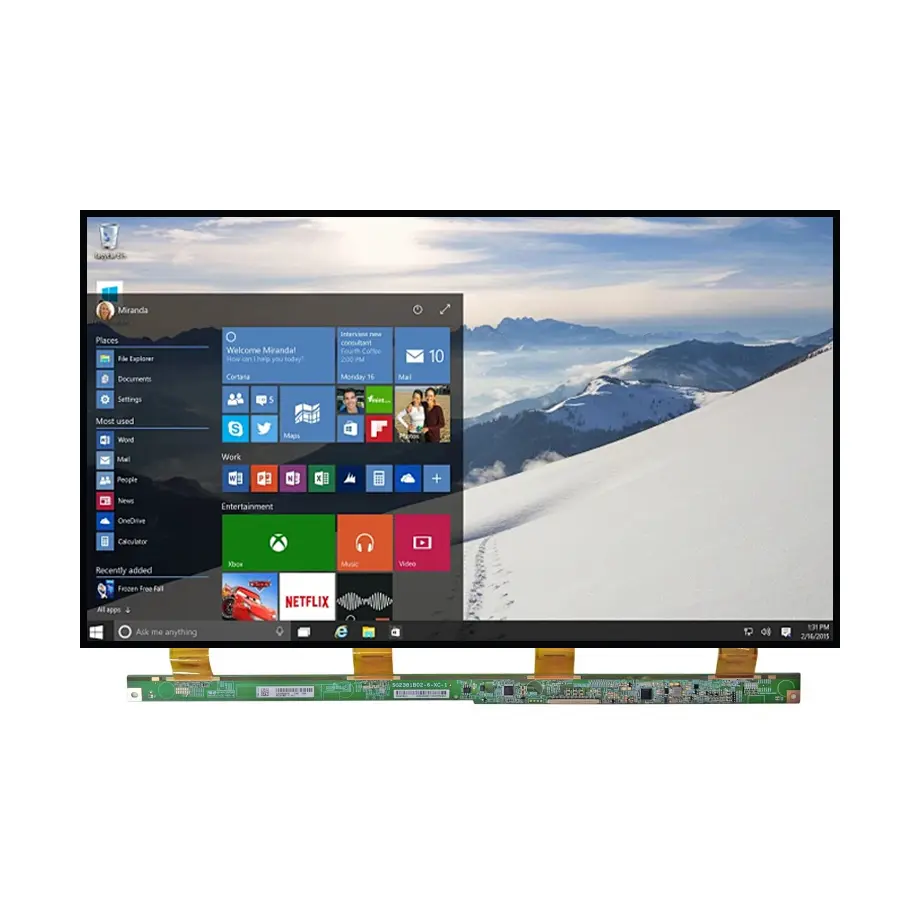
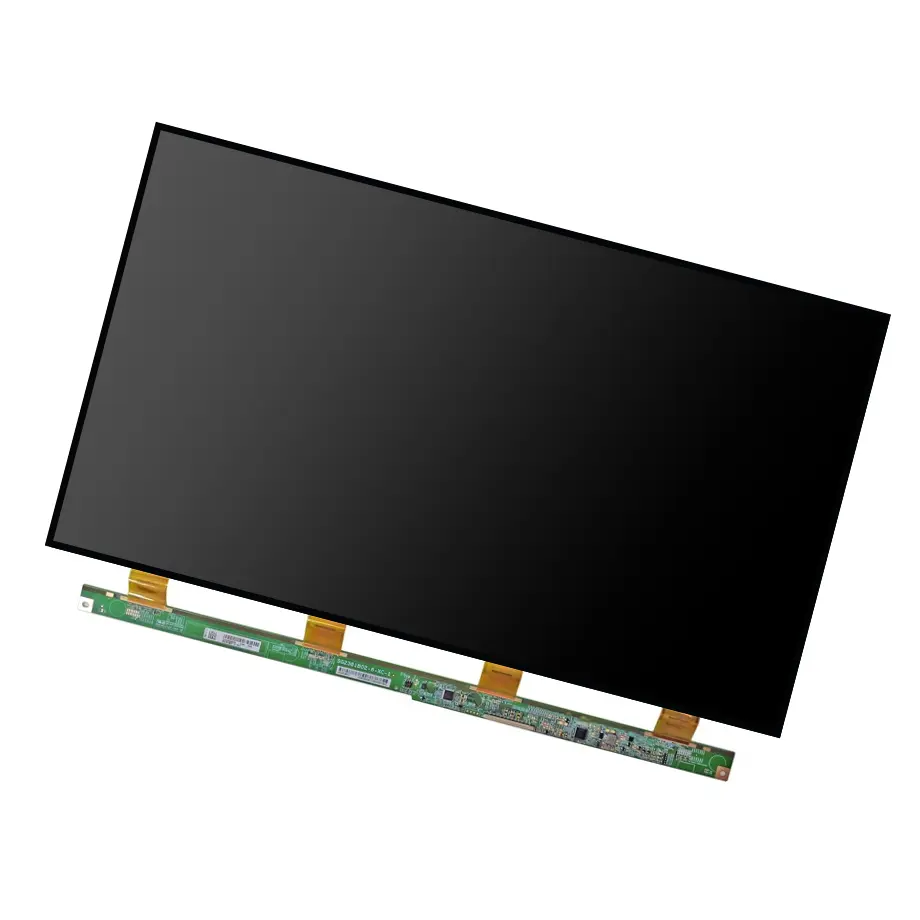
SG2381B02-4 25% Haze FFS Glass Cell is a CSOT a-Si TFT-LCD CELL for monitor integration, not a finished display module. The 23.8-inch panel glass provides 1920(RGB)×1080 FHD resolution in a 16:9 format, a 527.04 × 296.46 mm active area, and a 100 Hz refresh rate. Its FFS normally-black transmissive mode, 1300:1 typical contrast ratio, 16.7M colors and 100% sRGB coverage make it a practical image engine for desktop-monitor projects that already have a separate backlight, mechanical frame and controller architecture.
The CELL is supplied without a backlight and without touch. That distinction controls the engineering scope: the source luminance value is 0 cd/m² because this is bare display glass rather than an illuminated LCM. System brightness, uniformity, thermal load and optical efficiency therefore depend on the backlight assembly selected by the integrator. A 30-pin, 2-channel 8-bit LVDS interface and 5.0 V typical panel supply define the native electrical boundary.
For manufacturer context, TCL CSOT lists monitor display as a core product direction. Interface-level LVDS design should be validated against electrical requirements rather than connector appearance alone; the Texas Instruments LVDS Owner's Manual is a useful engineering reference for differential signaling behavior and layout considerations.
Three Core Buyer Value Propositions
1. 100 Hz FHD cell architecture for responsive monitor platforms
The 1920×1080 native format at 100 Hz gives monitor designers a higher-refresh starting point than a basic 60 Hz cell while retaining a familiar FHD timing target. That can support smoother cursor motion, UI animation and general desktop interaction when the controller, TCON path and backlight system are designed around the exact timing. The boundary is important: 100 Hz at the panel does not by itself guarantee gaming features, variable refresh, low input lag or a particular finished-monitor performance level.
2. Defined optical glass data for front-stack planning
The CELL uses an antiglare surface with 25% haze and 3H hard coating, 5.3% typical transmissivity with polarizer, and a symmetric 89/89/89/89 typical viewing specification at CR≥10. Those facts help an optical engineer screen the front treatment, polarizer behavior and viewing geometry before prototyping. Final luminance and contrast in the finished monitor still depend on the selected backlight, optical films, bezel pressure, cover materials and assembly tolerances.
3. Compact 1.295 mm cell depth for custom mechanical stacks
The glass outline is 534.84 × 308.16 × 1.295 mm and the typical weight is 505 g. That thin cell profile gives an OEM flexibility to build its own backlight and chassis rather than accommodating a thicker complete module. It also transfers more responsibility to the integrator: glass support, edge protection, pressure distribution, FPC/connector clearance and backlight-to-cell spacing must be engineered from the mechanical drawing.
Key Specifications at a Glance
| Parameter | Confirmed value |
|---|---|
| Manufacturer / model | CSOT SG2381B02-4, source revision VH.1 |
| Display size | 23.8 inch |
| Composition | a-Si TFT-LCD CELL, no backlight |
| Resolution | 1920(RGB)×1080, 16:9, FHD |
| Active area | 527.04 × 296.46 mm |
| Outline | 534.84 × 308.16 × 1.295 mm |
| Refresh rate | 100 Hz |
| Contrast ratio | 1300:1 typical |
| Viewing angle | 89/89/89/89 typical at CR≥10 |
| Color | 16.7M, 100% sRGB |
| Native interface | LVDS, 2-channel, 8-bit, 30-pin connector |
| Panel supply | 5.0 V typical |
| Response time | 14 ms typical G-to-G |
| Surface | Antiglare, 25% haze, 3H hard coating |
| Transmissivity | 5.3% typical with polarizer |
| Operating / storage temperature | 0 to 50 °C / -20 to 60 °C |
| Touch | Without touch screen |
What Does a CELL Product Mean for the Monitor Designer?
A CELL product contains the LCD glass, polarizers and associated source-driver implementation but omits the backlight module that turns the image into a visible illuminated display. For SG2381B02-4 25% Haze FFS Glass Cell, the 0 cd/m² entry should therefore be read as a composition boundary, not as a failed optical specification. The buyer must provide a compatible backlight assembly, optical films, frame, heat path and controller solution before evaluating finished-screen brightness.
This architecture can be attractive when an OEM controls the complete monitor stack. It allows the designer to choose LEDs, light-guide geometry, diffuser/prism films and chassis depth for a specific industrial design. The trade-off is qualification effort. Backlight spectral output affects white point and color appearance; mechanical pressure can create mura; light-guide alignment changes uniformity; and thermal gradients can affect long-term optical consistency.
Backlight and optical qualification
Start with a prototype stack that reproduces the intended production spacing and materials. Measure center and edge luminance, uniformity, black level, color coordinates and warm-up behavior at the planned drive setting. Because the supplied cell is specified for 100% sRGB color coverage, do not assume that every backlight spectrum will preserve the same finished-system gamut. Confirm the complete optical stack rather than using the cell data as a finished-monitor claim.
How Should the 30-Pin LVDS Interface Be Qualified?
The native electrical path is LVDS with two channels at 8-bit color depth on a 30-pin connector. The controller must generate the correct FHD timing at the required refresh rate and match the exact pin assignment, voltage levels, polarity and mapping for the target revision. A 30-pin connector on another panel is not sufficient evidence of interchangeability because different models can assign power, grounds and differential pairs differently.
SG2381B02-4 25% Haze FFS Glass Cell uses a 5.0 V typical panel supply. That value applies to the cell electronics and should not be reused as the assumed input voltage for a separate controller board or backlight power stage. Define separate power rails in the system architecture, then confirm startup sequencing and signal validity against the exact panel specification. Cable length, pair routing, impedance control and return-current paths should also be reviewed to reduce signal-integrity margin loss.
Controller selection boundary
If the host device provides HDMI, DisplayPort or USB-C, the finished monitor needs a scaler or bridge that outputs the panel's native LVDS timing. The presence of the right host connector does not prove compatibility. Controller approval should be based on panel-side timing, pin mapping, refresh support and power control, followed by a sample test that includes cold start, warm operation and repeated mode changes.
Why Do 100 Hz, 1300:1 Contrast and FFS Matter Together?
The refresh, electro-optical mode and contrast ratio describe different aspects of the image. A 100 Hz refresh target can improve temporal smoothness relative to 60 Hz operation, while the FFS normally-black transmissive mode supports wide viewing behavior. The 1300:1 typical contrast ratio defines the panel-cell optical separation under the specified test method. None of these values should be converted into a claim about finished-monitor latency, overdrive tuning or backlight strobing without system evidence.
The 14 ms typical gray-to-gray response time is also a panel characteristic, not a direct prediction of perceived motion quality. Motion performance depends on the selected timing, overdrive algorithm, frame rate, content and controller implementation. For an office monitor, industrial desktop terminal or information workstation, qualify the intended usage profile instead of ranking the cell solely from one response-time number.
The symmetric viewing specification is useful for desks and shared screens where users may not sit perfectly on axis. Still, final viewing performance can change after adding a cover window or changing the air gap. If the project adds decorative glass, EMI shielding or a touch overlay in front of the cell, repeat contrast and reflection testing in the assembled configuration.
Which Mechanical Checks Reduce Replacement and Integration Risk?
The active area, overall glass size and cell depth answer different mechanical questions. The 527.04 × 296.46 mm active area defines the visible image region. The 534.84 × 308.16 mm outline controls internal frame clearance. The 1.295 mm depth describes the cell itself and does not include a custom backlight, rear cover or controller. A replacement candidate can match 23.8 inches and 1920×1080 yet still fail because of glass outline, connector location, tabs or handling constraints.
The 505 g typical weight is modest compared with a complete monitor assembly, but the cell is fragile. Mechanical design should prevent point loads, twisting and bezel pressure on the active region. Use the current mechanical drawing to locate safe support zones and cable exits. During pilot build, inspect for pressure marks and mura after the front frame is torqued to its production fastener settings.
Environmental envelope
The specified operating range is 0 to 50 °C, with storage from -20 to 60 °C. These limits are component values, not a certification for a complete monitor. Check internal air temperature around the cell and source-driver area during extended operation with the selected backlight. If the monitor is intended for an unconditioned industrial site, environmental margins should be established at the finished-system level.
Where Does This 23.8-Inch Cell Fit Best?
The supported application is desktop monitor use, and the same-model public information also positions it within monitor projects. SG2381B02-4 25% Haze FFS Glass Cell is most relevant to OEMs that already design or source a separate backlight unit and need a 23.8-inch FHD, 100 Hz, wide-view cell for their own mechanical platform. It is not a drop-in finished monitor because there is no backlight, touch subsystem, enclosure, stand, external video input or AC power architecture included at the cell level.
Potential use can extend to commercial desktop terminals, control-room workstations or equipment consoles when their engineering requirements match the confirmed 0 to 50 °C operating envelope and the integrator is prepared to build the illumination and controller stack. Such use is an integration scenario, not a claim of special industrial qualification. The exact cell revision, controller timing and mechanical implementation should be frozen before volume procurement.
What Should Procurement Confirm Before a Sample or Volume Order?
First, confirm identity. The batch target is SG2381B02-4, while the supplied specification evidence is the VH.1 configuration. Procurement should state the required revision explicitly so a similar SG2381B02 family member is not substituted without engineering review. Second, request the current electrical and mechanical specification and verify the 30-pin LVDS pin assignment, 5.0 V panel supply and 100 Hz timing.
Third, treat the CELL composition as a sourcing package rather than a complete display. Ask what is included, how the glass is packed, how it should be handled, and whether a matched backlight or mechanical set is available as a separate project item. If the OEM will qualify its own backlight, define acceptance criteria for luminance, uniformity, white point, color gamut, temperature and cosmetic quality.
Finally, separate present availability from lifecycle planning. Current production or supplier stock information is a snapshot, not a guarantee of future support. For multi-year equipment, request current lifecycle status and change-notification practices before design freeze. A disciplined sample plan should verify optical performance, interface stability, mechanical fit and thermal behavior with the exact intended stack.
Procurement Checklist
- Confirm SG2381B02-4 target identity and the required VH.1 revision.
- Verify 1920×1080 at the intended 100 Hz timing with the selected controller.
- Check 2-channel 8-bit LVDS mapping and the 30-pin connector pin assignment.
- Keep the 5.0 V cell supply separate from controller and backlight power requirements.
- Validate the 534.84 × 308.16 × 1.295 mm cell outline against the custom frame.
- Design and qualify a separate backlight because the CELL has no integrated illumination.
- Measure finished brightness, uniformity, color and reflection with the production optical stack.
- Confirm current revision, production status and change information before volume commitment.
For an OEM monitor platform that needs a thin, high-refresh FHD cell, SG2381B02-4 25% Haze FFS Glass Cell provides a clearly defined starting point. Production approval should follow full controller, backlight, mechanical and thermal validation of the complete monitor assembly.
Recommended: Same Size
(23.8")
Applications & Value of LCD Panel

- Fast sourcing with in-stock panels & cross-reference alternatives
- Stable supply chain with long-term availability
- Engineering-level support from panel to integration
- Custom solutions: cable, touch & optical bonding
- Strict quality control with IQC / OQC / aging test
- Full traceability system for quality assurance
- Complete technical documentation & drawings
- Compliance support: RoHS & certification files
