
~
~
~
~
~
~
SG2381B01-8 98%-sRGB VA COF Monitor Cell 23.8in CSOT
Model P/N
Size
Resolution
Brightness
Viewing Angle
Connector Type
Operating Temp
Overall(mm)
csot
SG2381B01-8
Brand
Panel Size (inch)
Model P/N
Resolution
Viewing Angle
Contrast Ratio
Response Time
Overall (mm)
Active Area (mm)
Refresh Rate
Display Colors
Panel Type
Connector Type
Surface Treatment
Operating Temp
Touchscreen Type
Storage Temp
Work Mode
Pixel Format
Input Voltage (V)
Designed For
Product Details
Monitor Cell Overview
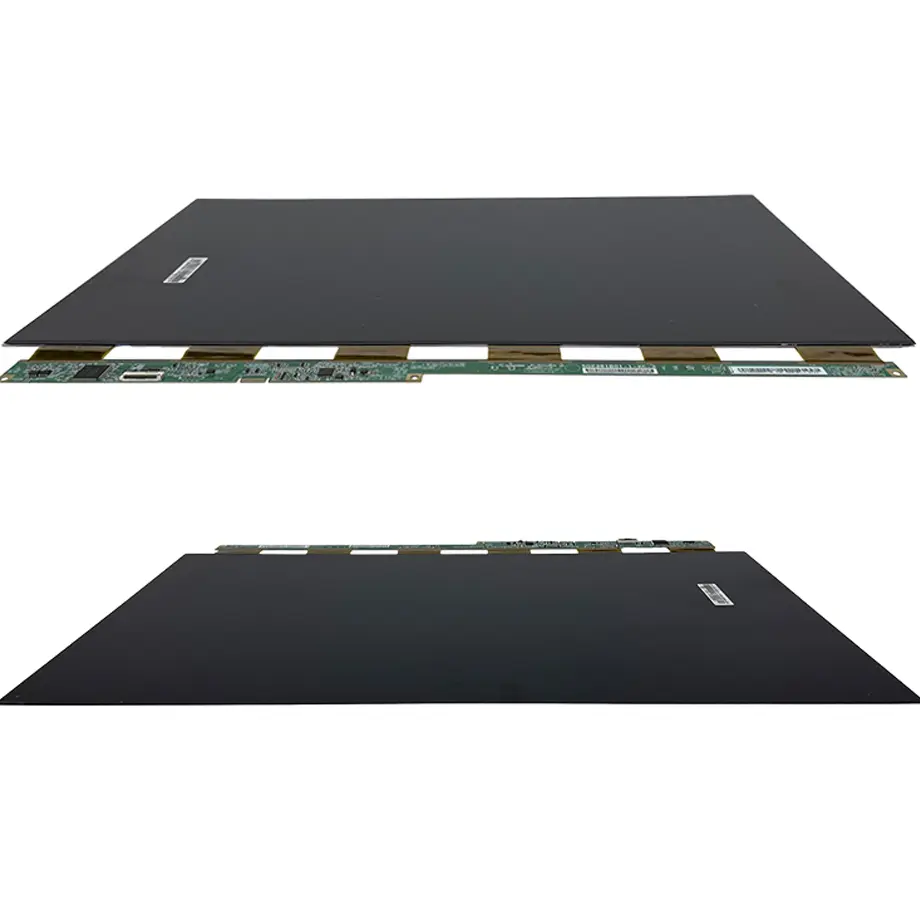
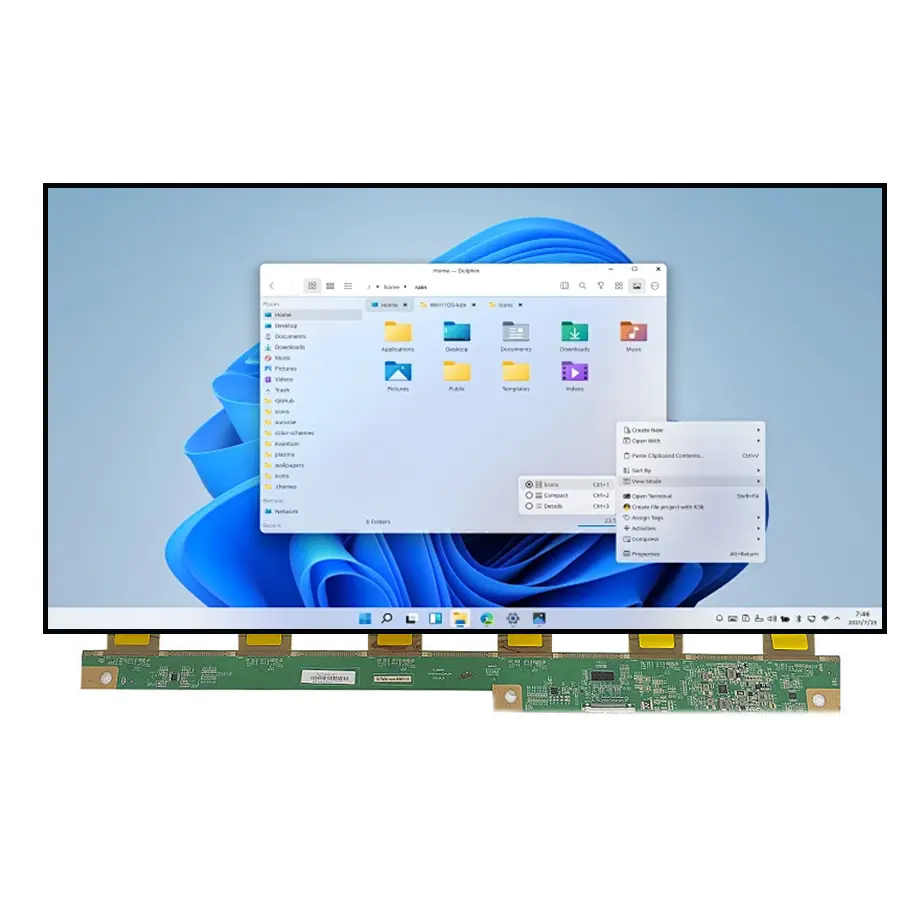
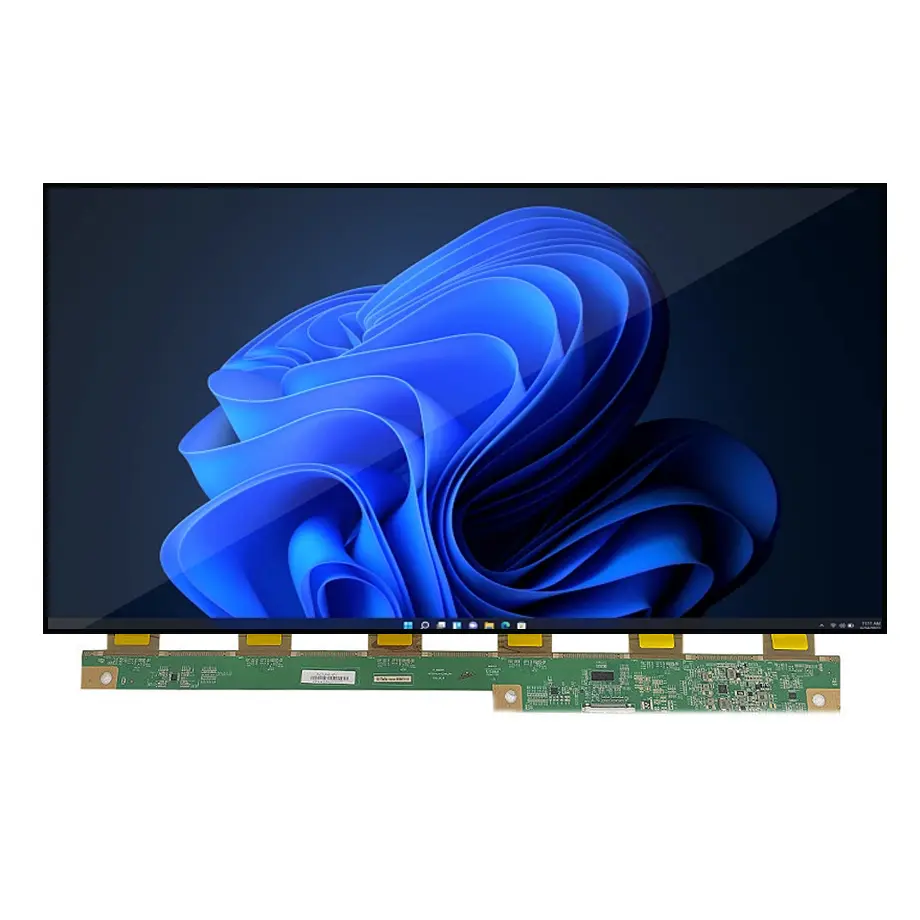
The SG2381B01-8 98%-sRGB VA COF Monitor Cell is a 23.8-inch CSOT FHD LCD cell intended for desktop-monitor integration. It uses VA normally-black transmissive technology, 1920×1080 resolution and a 75 Hz frame rate. The cell offers 3000:1 typical contrast, 89-degree four-direction viewing and 16.7 million colors with 98% sRGB coverage.
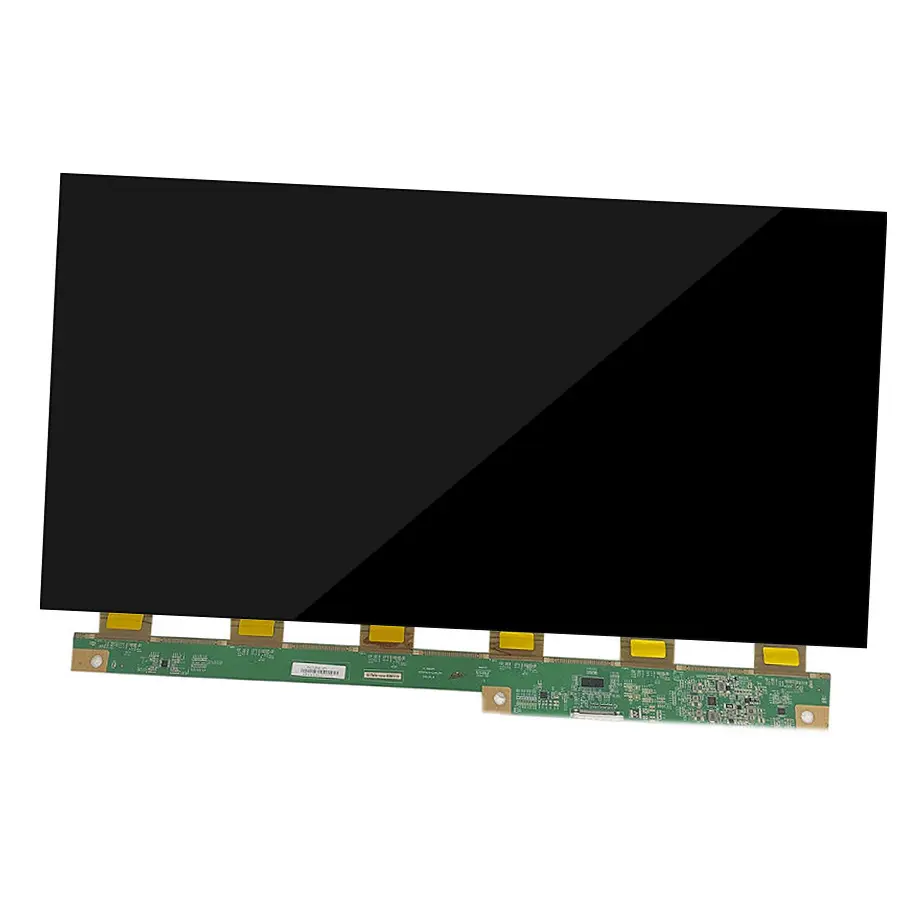
This is a CELL/FOB product rather than a complete backlit monitor module. The supplied 0 cd/m² value reflects the absence of an integrated backlight. A finished monitor still needs a backlight system, mechanical frame, power design and controller architecture even though the cell already exposes a native LVDS interface.
Three Core Buyer Value Propositions
- 75 Hz FHD monitor cell with high VA contrast. The 1920×1080 raster, 75 Hz refresh and 3000:1 typical contrast suit conventional desktop-monitor image requirements where high-refresh gaming claims are not required.
- 98% sRGB color coverage for mainstream PC content. The exact-model data gives a useful color-gamut baseline for productivity and general desktop use. Finished-monitor color accuracy still depends on backlight spectrum, calibration and system color management.
- Cell-level flexibility for OEM monitor construction. Because the product is supplied without backlight, OEMs can build the illumination and chassis around their own cost, power and industrial-design targets. That flexibility comes with added optical and thermal engineering responsibility.
Key Specifications at a Glance
| Model | CSOT SG2381B01-8 |
|---|---|
| Form | 23.8-inch FHD VA LCD cell (FOB) |
| Refresh | 75 Hz |
| Contrast | 3000:1 typical |
| Color | 16.7M, 98% sRGB |
| Interface | 2-channel 8-bit LVDS, 30-pin |
| Cell input | 5.0 V typical |
| Temperature | 0 to 50 °C operating; -20 to 60 °C storage |
Why does the cell format change the integration plan?
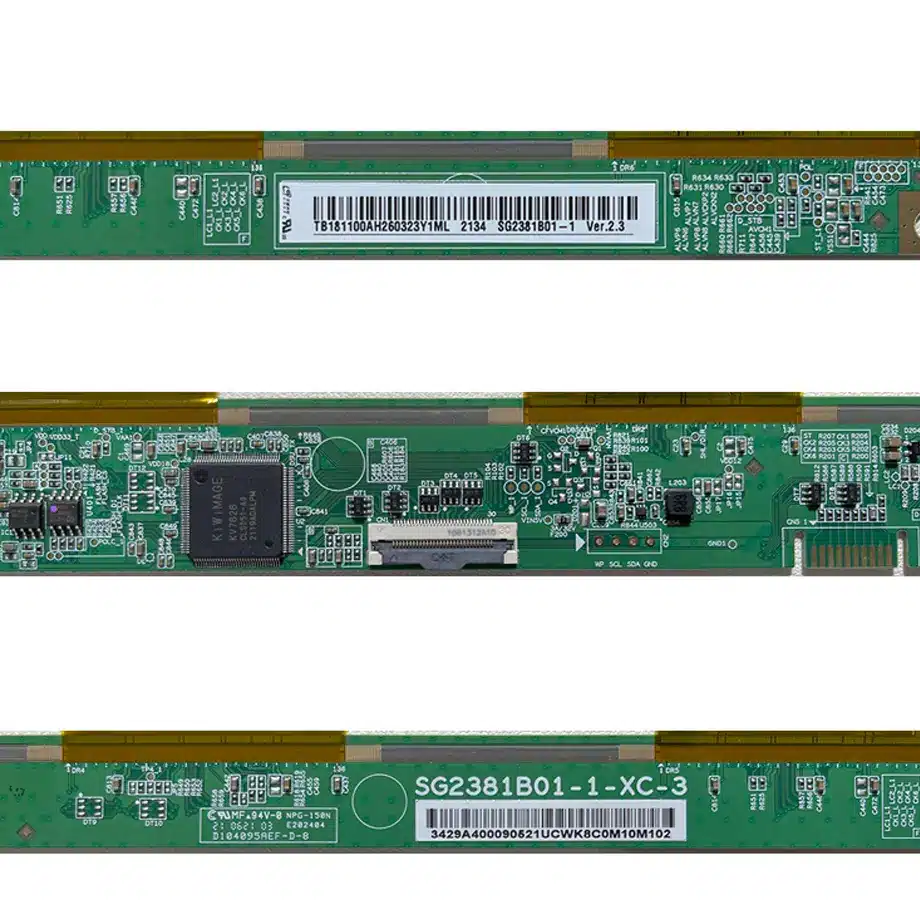
The SG2381B01-8 98%-sRGB VA COF Monitor Cell includes the LCD cell and source-driver implementation but not a complete backlight assembly. The 534.64 × 308.46 × 1.1 mm cell outline therefore cannot be treated as the complete monitor-module thickness. A finished product must add light guide, LEDs, optical films, rear structure, controller board and enclosure.
Brightness is a system target
The cell-level brightness is 0 cd/m² because no light source is integrated. Final luminance depends on LED flux, optical efficiency, polarizer transmission, cell transmittance and drive current. Set the monitor’s brightness target at system level and validate it after the backlight stack is built.
5.45% transmittance is not a nit rating
The 5.45% typical transmittance value with polarizer describes optical throughput under the source test condition. It cannot be directly converted into finished luminance without the backlight spectrum and geometry.
How should the native LVDS interface be used?
The cell uses two-channel 8-bit LVDS on a 30-pin connector with 5.0 V typical input. Analog Devices LVDS implementation guidance explains core differential-signaling considerations, while the exact SG2381B01-8 timing and pin assignment must come from the model documentation. Verify pixel clock, data mapping, enable timing and connector pins before controller release.
Controller and scaler role
A desktop monitor normally accepts HDMI, DisplayPort or USB-C through a scaler/controller, then drives the panel-side LVDS interface. The external connector on the finished monitor is therefore not the same thing as the cell’s native interface.
COF source drivers
The supplied product data lists six built-in source chips. That is part of the cell architecture, not a reason to infer a different host bus. The host design should still treat the 30-pin LVDS interface as the confirmed native signal path.
Key Specifications
| Active area | 527.04 × 296.46 mm |
|---|---|
| Cell outline | 534.64 × 308.46 × 1.1 mm |
| Weight | 440 g typical / 462 g maximum |
| Mode | VA, normally black, transmissive |
| Viewing | 89/89/89/89 typical at CR≥10 |
| Response | 20 ms typical gray-to-gray |
| Transmittance | 5.45% typical with polarizer |
| Surface | Antiglare, Haze 25%, hard coating 3H |
| Glass | 0.40 + 0.40 mm |
| Backlight | Not included |
How does 75 Hz affect monitor positioning?
75 Hz provides a modest refresh increase over a 60 Hz baseline and is common in productivity and general-use monitors. It should not be marketed as high-refresh esports performance. The controller must output the panel’s approved native timing, and the monitor electronics should be tested for stable operation at 75 Hz across the intended input resolutions and scaling modes.
TCL CSOT monitor-display technology overview shows that TCL CSOT’s monitor business spans multiple resolutions, refresh rates and panel technologies. That manufacturer context supports monitor positioning for this exact model while avoiding any claim that SG2381B01-8 shares the performance of CSOT’s higher-refresh gaming products.
What does 3000:1 VA contrast mean for the finished monitor?
The 3000:1 typical transmissive contrast ratio is a strong cell-level characteristic for dark content and office use. Final perceived contrast depends on backlight leakage, polarizer quality, ambient reflections and calibration. A bright room can reduce perceived black depth even when the panel’s intrinsic contrast is high.
The antiglare Haze 25% surface helps manage reflections but can affect perceived sharpness or sparkle. Test text rendering and fine UI elements under the intended office lighting.
How should the optical stack be designed?
Use the 527.04 × 296.46 mm active area to define the illuminated aperture and make the backlight uniform beyond visible edges. The light guide, diffuser and reflector should be selected together. Validate center luminance, multi-point uniformity, color temperature and edge leakage after full assembly.
Color-gamut interaction
The exact-model cell is listed at 98% sRGB. The actual finished-monitor gamut depends strongly on the backlight spectrum. Select LEDs and optical films that preserve the intended gamut rather than assuming the cell alone guarantees final color coverage.
Where does this model fit?
Published application data for SG2381B01-8 identifies Desktop Monitor as the intended application. The SG2381B01-8 98%-sRGB VA COF Monitor Cell is therefore appropriate for OEM desktop monitors and embedded PC-display assemblies that intentionally use a cell-level construction. It should not be promoted as an industrial, automotive or outdoor panel without separate exact-model evidence.
The cell’s 440 g typical weight is useful for subassembly planning, but the finished monitor weight will be dominated by the backlight, metal chassis, stand, electronics and enclosure.
What should replacement engineering compare?
Compare the 23.8-inch active area, 534.64 × 308.46 × 1.1 mm glass envelope, LVDS pinout, native 75 Hz timing, VA mode, 3000:1 contrast, color gamut, surface treatment and backlight geometry. A 23.8-inch FHD cell from another source can have different COF placement, connector location or timing.
Backlight compatibility
If replacing a cell inside an existing monitor, the original backlight aperture and optical film stack are critical. A cell with similar active area may still have different border geometry or transmission, changing uniformity and brightness.
What should procurement confirm?
Request the current SG2381B01-8 specification, exact revision and any cell-handling requirements. Confirm whether the quoted item is bare cell/FOB or a value-added assembly. Current third-party production and stock signals do not establish HS-LCD inventory, lead time, MOQ, second-source coverage or guaranteed supply duration.
If the buyer needs a complete monitor-ready module, specify that requirement explicitly so backlight, mechanics and controller responsibility are not confused with the bare-cell scope.
Engineering Answers in Brief
SG2381B01-8 is a 23.8-inch VA LCD cell without integrated backlight.
Its native signal interface is two-channel 8-bit LVDS on a 30-pin connector at 5.0 V typical.
The 75 Hz refresh rate is a monitor-oriented operating point, not a high-refresh gaming claim.
98% sRGB is a cell-level color baseline; finished-monitor gamut still depends on the backlight and calibration.
Procurement Checklist
- Confirm exact -8 suffix and current specification revision.
- Verify 75 Hz timing and 30-pin LVDS mapping.
- Design or validate the backlight and optical-film stack.
- Check COF locations and 534.64 × 308.46 × 1.1 mm cell geometry.
- Validate final brightness, uniformity and color gamut.
- Keep current stock signals separate from lifecycle commitments.
How should the first article be qualified?
Bring up the cell at native FHD/75 Hz timing, then integrate the intended backlight and measure luminance, uniformity, contrast and color. Install the complete display into the production monitor chassis and repeat thermal and reflection checks. The SG2381B01-8 98%-sRGB VA COF Monitor Cell should be approved only after cell timing, backlight optics, controller behavior and mechanics pass together.
What monitor-level tests should be planned around the bare cell?
Because SG2381B01-8 is not a finished monitor module, validation should include the complete optical and electronic assembly. Test brightness and uniformity at multiple backlight levels, black-level stability, 75 Hz timing, gray transitions, color gamut, front-surface reflections and thermal behavior. Repeat the checks after the rear frame and enclosure are installed because chassis pressure and thermal conditions can alter cell behavior.
Pixel-pattern testing
Use solid colors, grayscale ramps, checkerboards, fine text and moving windows to reveal data-mapping problems, inversion artifacts, mura and response behavior. A 75 Hz desktop monitor should also be exercised through the intended scaler modes so the input processing does not introduce frame skipping or unstable timings.
How should OEMs manage cell handling and assembly yield?
A 1.1 mm cell with exposed COF regions is more fragile than a complete metal-framed module. Define ESD controls, glass-edge handling, clean assembly conditions and fixtures that avoid twisting the panel. Inspect incoming cells for edge chips, contamination and COF damage before they enter the backlight assembly.
Yield planning should separate cell defects from backlight and mechanical defects. If bright spots, mura or pressure marks appear only after assembly, review frame pressure and optical-film flatness before rejecting the cell itself. This makes root-cause analysis faster and reduces unnecessary component replacement.
Recommended: Same Size
(23.8")
Applications & Value of LCD Panel

- Fast sourcing with in-stock panels & cross-reference alternatives
- Stable supply chain with long-term availability
- Engineering-level support from panel to integration
- Custom solutions: cable, touch & optical bonding
- Strict quality control with IQC / OQC / aging test
- Full traceability system for quality assurance
- Complete technical documentation & drawings
- Compliance support: RoHS & certification files
